Showing posts with label CDAI. Show all posts

Saturday, March 12, 2022

Conferencing on Ottawa Defence and Security

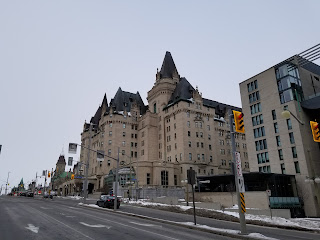
So great to be in quiet downtown at Hogwarts.
Today, I watched and participated in the Ottawa Conference on Security and Defence, a 90 year tradition run by the Conference of Defence Associations Institute (the think tank associated with the various veterans associations).  I have attended regularly in the past and appeared once or twice before.  CDAI is a CDSN partner, so we try to support them in this and their other efforts.  This big show is THE Canadian defence conference of the year, with the Minister of National Defence, the Chief of the Defence Staff, and other bigwigs from here and elsewhere giving talks.  There have been US 4 star officers regularly on the program and even, once, an ex-defence minister/plagiarist from Germany. In the past, I have live tweeted and summarized the conference.  Today, I did a little bit of the former, and here's my attempt at the latter.

To start, I missed the virtual first day and the in-person second day due to competing commitments.  I missed the big speech by the Chief of the Defence Staff yesterday alas.  This morning kicked off with Dr. Cynthia Watson of the US National War College having a conversation with Richard Fadden, the former National Security/Intell Adviser (the closest thing Canada has to a National Security Adviser), focusing on China.  It was very interesting.  The focus at the start was on what does the Ukraine situation mean for Taiwan, with the possibility that it might change the timeline but not alter the CCP's stance--that Taiwan can't become independent and that it might just be invaded someday.  One thing I hadn't thought of--the war in Ukraine has important implications for China's food security since it gets much grain from Ukraine and Russia. 
Because she had to go after about 25 minutes, Fadden shared his thoughts, and he was quite sharp and coherent despite his assertions to the contrary.  The big question: now that there is pressure to increase the defence budget, who much and to what end?  He argued that while the developing countries support the sanctions against Russia, they will blame the west for the higher food prices that will harm them. He then asked whether the government is thinking beyond the short term--what is our strategy down the road?
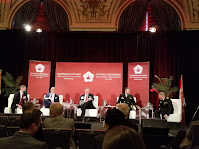
This was not a manel as the French MoD
speaker was zoomed in

The next panel was on the Indo-Pacific with a mix of Canadian naval officers, retired American admiral (who spent way too much time talking about his background), French defense civilian, and Aussie attaché.  I found it interesting, but I took poor notes.  
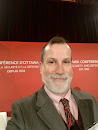


I cleaned up
for this event

The next panel was the one where I chatted with Darren Bricker, who has written much on Canadian politics and works for the polling firm IPSOS.  He once wrote a book about the Laurentian elite, so he took my question about the Ottawa bubble and ran with it.  He discussed how it is not really inflation that is upsetting Canadians but the high price of housing--that the young folks are upset that they may not be able to buy a house.  We discussed public opinion and the Canadian Armed Forces--that the scandals have had an impact on how the public views the CAF.  
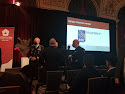

Most people were waiting for Minister of National Defence Anita Anand's talk, and the number of folks with multiple leafs on their shoulders increased by quite a bit.  I don't think they were disappointed.  She didn't say anything very controversial, but she was far more dynamic, interesting, and engaging than her predecessor.  She made prof jokes while also doing a nice prof job of outlining her talk--focusing on Ukraine first, the wider international picture, and then the CAF.  Her talking points were similar to other NATO leaders--that we would defend "every inch of NATO territory" which does not make Ukraine or Moldova or Georgia feel great, but, well, these various lines do matter quite a bit. She emphasized that the weapons and other equipment we promised to Ukraine have been delivered, which is remarkable for a government that decides slowly and procures even more slowly (except for vaccines). 
She emphasized the focus on NORAD/northern warning modernization--that it is in her mandate letter--with $250m allocated and that is just the start.  This was very much in line with the new consensus in town--that defence budget cuts are not going to happen anytime
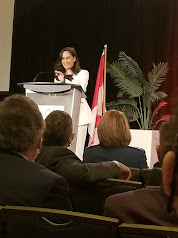
soon thanks to Putin/Russia.  In the Q&A, she was asked about whether we would go farther on NORAD stuff--to join the US anti-ballistic missile efforts.  This is where she got the most careful in her wording--that we would be working very closely with the Americans.  The ABM stuff is controversial because Canada didn't opt in way back when Bush was president since he was tossing out a key international agreement, and the Liberals are huge fans of the rules-based order.  I think at this point, the ABM treaty is dead, so resisting is moot (that the US still can't reliably shoot down ballistic missiles is an issue, of course), but this seems to be a Liberal bugaboo. 
Regarding the efforts to reassure the Baltics and deter the Russians, Canada is now indefinitely extending (which makes much sense and here's the episode of #BattleRhythm with a former commander of the battlegroup), surging a bit, and committing to another rotation of air policing in Romania (see this episode of #BattleRhythm for my interview with the officer who commanded the previous rotation).  She noted that having more than 3k troops on alert is straining the force.
In the last part of her planned comments, she talked about the CAF.  Much of her discussion was rah-rah--that the troops are doing amazing things in a very difficult time.  And this makes sense--she needs their buy-in for the reforms she will be pushing AND the troops have been doing great things.  However, resistance is already building to the culture change and other stuff that needs to be done as the past year has been a bit of a reckoning for the CAF--that the abuse of power scandal has revealed much about the CAF, and we need more clarity of what is being changed to inflict civilian control upon the military.  She discussed procurement, committing to the 15 ships (of course) and to making a decision about the fighter replacement (seemed like she committed to this happening this year, but I may have heard wrong).
In the Q&A, Anand pushed back against having a new defence review, arguing that she is moving now to change stuff, and does not want to wait for a review.  I would argue that Canada needs to have regular reviews, like other countries, so that we have a regular set of benchmarks that get evaluated and revised, that we adapt in a more regular fashion.  She brought up the domestic operations (floods, fires, pandemic) in the Q&A, but I would have liked to have seen her discuss that as part of her comments.  We need to move from domestic ops as an afterthought or as a fourth priority towards making that aspect of the CAF's work as important as expeditionary operations/alliance support.
Anand noted that she does not know how long she will be in this position as they have a minority government, so her focus is on doing what she can every day.  Anand did a far better job yesterday answering a question I asked Vance when he was CDS in 2018: how do you make sure this stuff lasts beyond you?  She talked about institutionalizing the reforms, so that these things will continue after her party loses an election (or if she gets elevated to another post). I didn't ask her any questions as I will have an opportunity to do that in the near future.
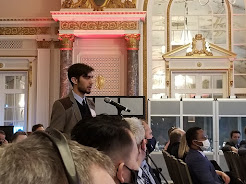
Dan does NPSIA proud.
The last thing I'd like to note is that in the one day I was present, I'd say the majority of audience questions were asked by NPSIA MA students who did us proud.  They asked sharp, interesting, relevant questions of the various speakers.  Well done!


The view from the stage


Thursday, March 5, 2020

Ottawa Conference on Defence and Security, Day 1

This week is the big show--the Conference of Defence Associations Institute's annual two-day conference that brings together much of the Canadian command staff, defence contractors, other folks in government, and some random academics.  CDAI is a CDSN partner, so I was most proud to see how well things went despite the overabundance of hockey references: "

STICKHANDLING THROUGH ROUGHING AND INTERFERENCE:

How to position Canada in a world of great power plays

Really. 

The conference actually kicked off Tuesday evening with a book launch: Phil Lagassé, Srdjan Vucetic, and Thomas Juneau presented their book, Canadian Defence Policy in Theory and Practice.  The CDSN was proud to support that event especially since the editors and most of the contributors are members.  Indeed, Phil and Srdjan are two of the co-directors of the CDSN, and it would not exist without their help along the way.  We had a good turnout, including a rare appearance by Mrs. Spew at a CDSN event.


On Wednesday, we started with an address by the Deputy Minister--Jody Thomas.  She was replacing the Minister of Defence who could not make it.  Thomas often has interesting things to say, but, in this capacity, it was a fairly standard intro speech with only one notable aspect--emphasis on spending more on modernization North American defence--referring to the warning systems and such in the north, essentially.  She indicated that this was in the Strong Secure Engaged defence policy review document--vaguely so, maybe, but definitely not a major commitment that had been costed out--which makes it distinct from the rest of the issues in the document.

The first panel had LtG Christ Coates, DepCom of NORAD; Janis Garisons, Latvian State Secretary; Andrea Thompson, who used to work in the Trump Administration; and Frederick Kagan, think tanker and well-noted advocate of MOAR.  Coates, as a serving officer, didn't have much to say. Garisons made clear that the Russian threat is still quite real and that Latvia wants the allies to stick around.  Andrea Thompson?  Chock full of empty platitudes and most unimpressive.  Kagan was advocating more confrontation with Russia, which I would be mostly ok with except he tended to argue that we need to engage in more risky behavior to push the Russians on their heels.  Um, no.  I have come to the firm belief that democracies aren't good at playing chicken, but autocrats are.  So, this is not a game the west can win.  We need to change the game.  Mercedes Stephenson was the moderator, and she did a nice job of pushing on some issues.

The second panel was the highlight of the day, I think.  Its focus was supposed to be great power competition in the Mideast, but it was mostly a display of sharp women taking on the problematic positions of the dudes.  Jennifer Cafarella, Institute for the Study of War, provided a clear eyed assessment of the politics of the mideast at this moment.  My friend, Bessma Momani, of Waterloo absolutely nailed both the Chinese Ambassador and the Israeli defence attache by pointing out that their two countries are the greatest exporters of surveillance technology, and thus present significant threats to freedom of expression.  Murtaza Hussain, a journalist for the Intercept, really held the Chinese ambassador's feet to the fire by asking about the concentration camps for the Muslim Uighurs.  When the ambassador called that fake news, I snorted quite audibly.  Hussain also pushed the ambassador on the two Michaels--two Canadian businessmen held captive by China in retaliation for the extradition process, still on-going, of a Huawei exec. 

The third panel involved senior officers from the UK, US, France, and Canada, but I went off to conspire with a friend about future CDSN support.

The Chief of Defence Staff Jon Vance spoke next.  He always gives one of the more dynamic and engaging talks at these things.  There was not too much that was notable except again a reference to North American modernization that makes clear that this is a major priority--not just an entry into the Mandate letter--but a key focal point.  This seems to be part of a larger effort to get this town ready for a major spending commitment.  I noted at the CGAI conference a few weeks ago that the government was focusing on this, and it was even clearer yesterday.  I did speculate that his initial comments, thanking his staff and Jody Thomas, sounded like a goodbye, but I got pushback from online.  I would still bet that this is Vance's last appearance at this conference as the head of the Canadian Armed Forces.  But I have been wrong about that before. 
Bailey receiving the award from CDS Vance

The last part of the day was the Nichola Goddard Gamechanger Award.  It was really a moving presentation, as they had Goddard's sister (Goddard was the first female Canadian combat officer killed in combat in Afghanistan) read some letters from Nichola before she died.  They presented a video of Sgt. Leslie Bailey at work, and then she gave a terrific, short thank you speech.  I work with one of the previous winners, Leah West, and my co-host of the Battle Rhythm podcast and keystone CDSN co-director Stéfanie von Hlatky is the other winner.  Bailey is in great company and so are they.


In between sessions, I chatted with a bunch of folks--my effort to build a network has led to me being well networked.  I learned a lot from these side conversations, and I have new commitments for the CDSN to keep.  Plus I advertised our Summer Institute and next week's Capstone.  And we could check out the displays by various defence contractors.  This soldier to the right wore an exoskeleton that reminded me less of Iron Man and more of a Black Lightning bad guy. 

See you there today.  You can check out my live-tweeting at #cdai2020.