So, Russian hackers hit the Democratic National Committee servers a month ago, Wikileaks just dumps the emails (exposing people's social security numbers), as Clinton is about to nominate her VP candidate, a day after Trump's big speech. Hmm, what can we learn from this?
Putin wants Trump to win. Well, we knew that because Trump has been promising to gut the current international order that benefits the US and constrains Russia. Sure, people have pointed out all the ties between Putin and the Trump campaign, calling him the Manchurian candidate. Now, we have the most concrete evidence (although attributing hacking to the right source can be tricky) that folks in Russia want to help Trump. Had this happened two months ago, it could have been that this an effort to help Bernie, but now there is only one possible beneficiary.
Wikileaks doesn't mind carrying Putin's water. Well, we knew that, too, but it is now more abundantly clear. Where is the release of Trump's emails? The RNC's? Nope, just the Democrats. The friends of Assange are trying to make it seem like the Democratic National Committee was biased in the primaries. Well, duh. Of course, it was, as Bernie had been a card carrying democrat for a few weeks/months. Why now? To mess with Hillary's VP choice and to mess with the Democrats' convention. So, I have always had a low opinion of wikileaks, and this just deepens it. Being Putin's dupes? Not a good look.
If the best dirt is that one guy wanted to raise Sanders' faith and the campaign said no, this is weak sauce. There is probably more in the leaks, but I am not impressed.
The only potentially striking thing about this data dump is that Putin is not being subtle. And really, since when has Putin been subtle about anything? The old KGB guy's game is off, as the lines to draw here are abundantly clear--from Putin to Wikileaks to Trump. That might encourage a few Bernie Bros on one side of the spectrum, but many already queasy Republicans may see this as a final straw, along with Trump's NATO statements.
Update: for more on this historical pattern/relationship, see this.
Why is Trump spending any time on NATO? Why did he jam it into his speech? Most Americans are supportive of NATO and of the United States in the
alliance, so playing up the hard bargaining/protection racket stuff is
not going to win votes from the majority of Americans.
Well, it fits a broader pattern which then needs explaining: the RNC convention was narrow-casting, playing to those who are already Trump fans and not trying to broaden his appeal. There was no effort in any of the four days to appeal to independents, moderates, and disaffected Democrats except for token appeals to Bernie fans (which Bernie swatted away via twitter).
I have two guesses about this: (a) Trump thinks that what worked for the primaries works in the general election; and/or (b) Trump thinks he does not need to get more votes beyond his base, but just simply get more of his base to turn out.
Regarding (a), Trump is such an amateur and his organization is small, thin, and mostly full of people who would never make a regular campaign's A team that they may think that the primaries and the general election are the same thing. They aren't. Getting pluralities in a 3-15 candidate race against people who don't want to offend one's base is one thing; getting pluralities in 50 states simultaneously (or whatever number of states gets one to 270 electoral votes) against one committed, organized candidate who can ignore/disparage/attack your base is something else entirely.
Regarding (b), I am flummoxed why Trump might think that he could get so many more disaffected whites (mostly male) to do much better than Romney in order to overcome alienating so many more "sub-groups" as Steve King put it. Is Trump thinking that #voterfraudfraud will be so successful that getting historically low %'s of African-American and Latino-American votes will not matter? Given recent court decisions, that would be a bad bet. The numbers I have seen (thanks to my tweeps) indicate that Trump cannot win by just mobilizing a few more million white folks if HRC does as well as among minorities as Obama did. Given Trump's awful stances on all these groups, she should do fine with them.
Oh, and the magical thinking of more turnout runs into a real problem: turnout requires organization and teamwork. Having his campaign manager attack the Governor of Ohio means losing the networks and organization of the establishment in one of the most critical swing states. Who is going to beat the bushes to get rural voters (who are, by definition, dispersed) for the Trump Campaign? Oh, and alienating the Colorado delegation on the first day of the convention also cuts against the strategy of mobilizing more folks, as I doubt that the Colorado folks will be helping turn out Republicans for the candidate that crapped on them.
So, either way, Trump's decision to focus just on his base is going to bite him in a big way. Which is good for me as I see my role in talking down my Democratic friends and non-Americans over the next four months. Yes, we should not be complacent about the darkness that Trump would bring and there is some risk of him winning, but we should not panic either. Trump is the man of fear and desperation, ceding optimism (a basic American approach) and hope to HRC and the Democrats.
Sure, folks can look back at American history and find bits of Trump-ness in the past, but we tend to view those times as big mistakes, such as internment of the Japanese. FDR gave into fear despite his admonition about fearing fear itself. Yes, the US used to have a mercantilist trade policy, but that is not how we got from being a minor inconvenience to a superpower. The international order the US created in the aftermath of World War II was surely not altruistic, but it was largely aimed at producing a better world than the one that preceded it.
Free trade? Trade has never been completely free, but by reducing the barriers to trade, the US through bilateral deals and multilateral institutions helped the world rebound from the war and the Great Depression. This created markets for American goods and later for American services. It meant, ultimately, that the countries elsewhere would develop some comparative advantages, which led to declines in key sectors of the American economy. Yes, it hurt, but we are far better off with economies that can buy the rest of our stuff, with products made elsewhere that are much less expensive than they would be protected market (clothes, ipads, cars, etc). The decline in poverty around the world is in part due to the American fostering of trade. Don't care about poverty elsewhere? Well, the best way to prevent immigration, if one is intolerant, is to support economic growth elsewhere.
One of the ironies of Trump's ascension in the Republican Party is that he wants to impose tariffs on imports. Tariff is a fancy word for TAX! That Americans would have to pay more for the stuff that they like because there would be taxes on imports. Where is the Republican objection to taxes now?
Security? Yes, the US has fought wars since World War II, but entirely at our choosing and with declining costs. Europe has been stable since 1945, first because the US deterred the Soviet Union and since because the US supported institutions such as NATO to continue to keep the peace and foster democratization. Yes, it costs real money to keep Europe and Japan and South Korea secure, but our allies do pay AND we are not doing it out of altruism. The American economy depends on freedom of the seas and stability in Europe and Asia (sorry, Africa).
Instead, Trump wants to undermine the security architecture and solve problems by having heaps of meetings with Putin and other autocrats he admires. Selling out the allies to a Russian authoritarian leader is, yes, un-American. Running alliances like protection rackets, "hey, it would be really sad if something happened to you, Estonia, if you didn't pay up ....," is not the American way. Burden-sharing is an issue, certainly, but this is not the way to get the allies to pay the bills. While we can be skeptical about credibility and resolve as the keys to American foreign policy, alliances do matter, and the credibility of the US commitment to its NATO partners is important. They literally sacrificed lives for us, as they were mostly out of the fight on 9/11, but joined the US in Afghanistan anyway.
How Trump proposes to lead the US in the world is exactly what the US does not stand for. Exploitation of allies? Coercion of democracies (the US tries to coerce authoritarian regimes)? Striking up mercantilist deals (so much for NAFTA)? These are not the American way.
While I remain confident that Trump will lose and probably in a landslide, the damage he is wreaking within the US via inciting violence and empowering white supremacists and outside via undermining America's standing in the world will endure past November. And that does, indeed, make me sad.
Ok, the advent of Trump has been thoroughly depressing. What good news can we glean from our political world? How about Hillary Clinton focusing on the LGBT stances of the GOP and of Mike Pence? What makes this good news?
Sure, HRC could be taking this stance because she genuinely believes that the government should not discriminate against LGBT people. Or, one could be thinking that she is pandering to a small portion of her base.
I cannot help but think that Clinton will only focus on issues and themes that are focus-grouped/poll-tested winners. That is, that Clinton has many ways to attack Trump and Pence, and she has chosen to focus much of the attention on LGBT. This kind of surprises me since it was not that long ago that the Democrats were afraid of issues relating to LGBT, that referendas in states on LGBT issues would be seen as hurting the Democrats' chances in those states due to the effect on turnout.
What has changed? Mostly American public opinion. The Republicans, with their heinous platform and with Pence as the poster boy of intolerance, are fighting old wars. HRC, I am guessing, has done the homework to figure out that the polls we know about are pretty valid--that the tide has turned. Sure, there are states and parts of states where intolerance towards LGBT play, but as Hillary Clinton looks to the patterns across the country, the need to pick up a number of battleground states, she is seeing this issue as a winner.
Yes, because I am cynical about the Clintons--that Bill always went by the polls and that Hillary is not going to base her campaign just on what is right but on what will work, I have some hope about where the country is on this. Of course, we still have way too much support for xenophobia, for anti-Muslim stances, for racist politicians (that go by the name of Trump), but I see glimmers of progress in HRC's stances. Given the awfulness of the GOP convention, complete with homophobia, racism, xenophobia, ignorance, hate, white supremacy, misogyny and all the rest, I will take what I can get.
One of the hard parts about understanding Trump is whether he is just not very bright, incredibly lazy or just doesn't care. Of course, these are not mutually exclusive categories. But I got to thinking about this after it came out during his VP nominee's speech that Trump had an interview with the NYT on foreign affairs, and he said stupid/ignorant stuff on NATO. Is Trump's incompetence deliberate and strategic, or just a product of a man who does not care, is lazy, and perhaps not that smart?
Some folks are thinking that Trump doesn't want to win so most of his strange/dysfunctional/self-destructive actions/stances are purposeful because he does not care about the consequences. I don't really buy this since the man's ego is, um, fragile, and drives much of what he does, and losing would be a blow to that ego, even if he can then blame everyone else (Trump never takes responsibility). Still, not caring is definitely on the table.
How about lazy? A Presidential candidate usually studies a bit before doing an interview, and this deep in the campaign should know some basic stuff about NATO and its members. If Trump is only willing to have the US defend those that meet NATO obligations, then Estonia would be ok if the focus is on spending (at the 2% of GDP but Latvia/Lithuania are short), and all three would be deserving of defense if one factors in their Afghanistan performance. Each country deployed a significant number of troops. Latvia had the second highest percentage of troops deployed to available troop, and the ratios of the other two were greater than France's.* In terms of what they did, these countries sent contingents that were, in general, far more flexible than much of Europe, leading to significant prices being paid--Estonia lost the second highest number of troops per capital, Latvia was seventh, and Lithuania was in the middle of the pack.** One does not have to read my stuff to figure this out, but just do the basic homework. Ah, but Trump doesn't do homework as that would require ... work.
How about dumb? Trump should know that the majority of the American public, even if it does not care that much about foreign policy during elections, supports NATO and the American commitment to its allies. That Hillary Clinton's campaign is centered on the idea that he is unqualified to be President, so why give her more fodder? That his party is already riven with cleavages, so why give folks leaning #neverTrump to take the next step? At this point, Trump needs to move beyond his base, and this kind of stance does not do it at all.
Back to not caring, perhaps Trump doesn't care because he has other interests in mind. Yes, it is pretty far out there to name Trump a fellow traveler of Putin, a dupe of our adversary. But the evidence keeps rolling in--the economic ties, the background of his campaign manager, and the consistent stances Trump takes (a man who rarely takes consistent stances) about cutting breaks for Putin. The funny thing about this is that eight years ago, the GOP made a big stink that Obama had some kind of links to a long irrelevant domestic terrorist (Bill Ayres).
These days, much of the GOP seems not to care that its candidate actually supports the views of one of the most significant adversaries to American interests. Where is the House Un-American Activities Committee when you need it? Trump's supporters throw around the words "traitor" and "treason" quite carelessly, but giving aid and comfort to the enemy may best describe what Trump's positions are when it comes to NATO and Putin. Yes, I went there. Not that I am calling for Trump to be shot, unlike Trump's Veterans advisor, just that he should not get any votes from anyone who cares about America's place in the world, not to mention the security and stability of Europe (and Asia and Latin America and Africa...).
I am sure there is more, but this is the state of the shit-show* at 3pm. The convention has not even started today, and this is where we are at. My vote for most disturbing? The call for violence due to HRC's "crimes". The GOP did this before, and it did not end well. The most predictable? Three way tie? No, I think it is the first--that Trump is a lazy sack of extrement, that he would not want to do the hard work, but does want to get all the credit.
What say you?
* I have been using shit-show, which might offend some folks. I tend not to curse when I do social media, but to call this campaign a dumpster fire or a train wreck would be to insult both.
I really like 538's coverage of elections, but their focus on the probability of who wins drives me a bit crazy:
Currently, the odds of HRC beating Trump are roughly 2 to 1. That is mighty scary--that Trump has that much of a chance. Yes, poker has taught me that a 1% chance of something happening (like
my opponent catching the exact card s/he needs both on the turn and on
the river--the last two cards dealt in Texas Hold 'Em) means something
can indeed happen. That unlikelihoods can happen, as demonstrated in the climax of Dodgeball.
I saw someone on my facebook feed make a reference to Russian roulette, and this is where I have a problem. On election day, it is not like people will spin a wheel to see who they vote for. The election is not a game of chance. The probabilities relate to the certainty/uncertainty of the predictions based on past performance, the number of polls, what impact the third and fourth party candidates will have and so on, and not that the election is a coin toss or dice roll or card flip at the end,
So, yes, I would prefer if HRC was ahead by much more (Trump is truly awful on so many dimensions), but she is ahead. The uncertainties we can really point to are: the possibility that events may happen that shift voters' attention, that alter turnout patterns, that the polls are not hitting the folks who will actually vote, and so on. But what is certain? What can we focus on so that we don't get swept up by whatever the latest poll suggests (and I am guilty of confirmation bias, focusing on those polls that put HRC ahead and dismissing those that Trump even or ahead)?
I prefer to focus on the fundamentals of this campaign. This usually means the state of the economy and whether the country is at war. That stuff matters and mostly favors HRC (low unemployment, low inflation, markets have weathered Brexit well thus far, small wars with few American casualties don't count as much as larger wars with many body bags coming home). But what I am referring to are the fundamentals of the campaign itself:
African-Americans will simply not vote for Trump, and there is little Trump can or will do to change that. Indeed, he has had speakers that have tripled down on racism--Steve King's no "sub-group" has contributed to civilization crap.
Latino-Americans are going to vote overwhelmingly for HRC and are very likely to turn out (large voter registration drives) as Trump has thoroughly alienated this group.
Women are going to vote far more for HRC than Trump since the misogyny in his campaign is deep and is likely to worsen as the confrontation between the two candidates goes on and gets face to face in debates. Trump will have to do far better than Romney among white males to compensate for his failures to get minority votes and the votes of women.
The gap between the Clinton campaign and Trump's campaign is about as wide as it has ever been in terms of organization, professionalism, depth, breadth, resources, etc. The hiring of Manafort was seen as a good move to improve the campaign. This convention has demonstrated that he has either not made much of a difference or he is wildly overrated. Either way, this campaign is not getting better at the basic stuff.
The convention demonstrates again the wide disparity in the two parties at this stage. The GOP is divided--people are forgetting about Monday? Not the delegates from Colorado. Not the governor of Ohio. Who is Trump trotting out in prime time at this convention? Who are his surrogates? His family, Chris Christie (who would have thought that the bridge scandal would be so overwhelmed by the sycophancy and desperation that has destroyed his reputation?), Ben Carson, and Newt Gingrich. Who will speak for HRC? A popular President Obama, Elizabeth Warren who will strengthen HRC's weak flank, Bernie Sanders, Joe Biden, and on and on.
Trump lacks discipline. That could be my biggest understatement in seven years of blogging. To message well means sticking to scripts and schedules, but Trump called into Fox during one of the more moving speeches at the convention. He simply has no ability to focus and stay the course. Indeed, Trump's personality is a fundamental part of the his campaign--it works for him in some ways (when the audiences are narrow) and not so much in other ways.
HRC is the anti-Trump. She listens (as Ezra Klein illustrated quite well) and, most importantly, learns. She learned from her defeat in 2008 and from Obama's successes in 2008 and 2012. She is disciplined, mostly. She is used to dealing with crazy attacks from the far right. She should be able to do well in the debates next fall.
So, yes, there is uncertainty in the forecasts, as there should be. And this thing is about as close as it is going to get, in the aftermath of the FBI report and during the RNC convention. My brother constantly urges me not to get complacent, but I think Brexit has helped solve that one. That and Trump's utter awfulness. Only white privileged folks will think of voting for Stein or Johnson, as the outcome here matters a great deal. But it comes back to the fundamentals that will be constant throughout the summer and fall: Trump is awful, he is awful for larger groups of voters, the demographics favor the Democrats and Hillary Clinton has figured out how to campaign. None of that is changing. Focus on the uncertainties if you must, but I am going to keep on focusing on what I know and what will not change.
Thanks to the latest Trump-tastic night of conventioneering, self-plagiarism is now mainstream. Last night, Donald Trump Jr.'s speech used the words from an article in the American Conservative by F.H. Buckley:
Turns out that the guy who wrote the article also wrote the speech (despite assertions that Trump wrote it himself). Recycling your work is self-plagiarism, which is not as bad as the old-fashioned plagiarism that Don Jr's step-mom did the night before.
To be clear, self-plagiarism is not as clearly problematic. I don't think I heard the phrase until a few years ago. Scholars often published pieces of the same research in different places, and there used to be very little comment about it or expectations. Over time, the norms have changed, with the expectation that one publishes distinct enough pieces from the same project OR one clearly acknowledges the source material.
Sometimes, it is hard to be completely new, as the data speaks most clearly in a certain way. I have used the same graph of the percentage of question period in Canada dedicated to the detainees issue in my book and in a piece on executive-legislative relations for a special issue (if it survives the R&R process). But, of course, for the latter piece, I include a note referencing the former piece.
Political speeches don't have footnotes, so one cannot treat them quite like academic pieces of work. Stump speeches are the same basic speech over and over again with just some revisions to fit the news or fit the location. Big speeches at conventions have higher expectations, and speechwriters are expected to write completely new speeches rather than recycling old material. Buckley was either too lazy or too enchanted with his previous phrasing to write a completely new speech or strangely enough to toss in, "as argued recently in the American Conservative."
The larger point is that this Trump organization is a bunch of amateurs who are poorly supervised, led by those with really no principles. Donald Trump Sr has made a career of taking other people's stuff and then only reluctantly paying, usually underpaying. It has worked so far, so why should he change his ways?
Many folks will say this plagiarism stuff is distraction sauce, as it causes us to focus on this rather than the racism in some speeches, the anti-democratic content of others, and the lunacy of Carson. I focus on the rancid serving of distraction sauce here less because I am an outraged academic and more because there is something positive about these bursts of writing misdemeanors. That is, Trump's campaign is a mess--it is poorly organized, is messing up the easy stuff, and stepping all over its messages. This is good news for November, as it is very unlikely that the campaign will become more professional as it goes along. The learning curve is simply very flat here, and even if lessons are learned, the organization and the candidate lack the discipline to follow the lessons.
I went to sleep last night thinking that Melania Trump's speech was the only decent highlight of the night. The political experts I follow were wondering how the Trump campaign could not close with it, as LTG (Ret.) Mike Flynn's speech was more of the shit-show that was the rest of the day at the RNC. I wake up, I find myself having flashbacks to plagiarist episodes in my career. Why?
First, plagiariasts, like pathological liars, often look better than their colleagues. I had one class where the best student was the plagiarist: he/she could do the reading and talk about it during the class sessions because he/she was not doing the writing. He/she had more time! Melania looked better than the rest of the speakers because she was using, in part, the words that had been well written and revised and edited by professionals .... unlike the rest of the speakers. That should have been the giveaway.
Second, Chris Christie really said tried to excuse the speech as being 93% original since only 7% appeared in Michelle Obama's speech in 2008--the part about hard work and ethics!!!! This reminds me of the plagiarist who, when asked by a staff member in my department if he/she plagiarized, said a little bit. Which leads to two responses:
A little bit plagiarized is like being a little bit pregnant. You either are or you are not. No middle ground.
93% My guess is that that other parts of the speech came from other sources, as plagiarists, in my humble experience, tend to borrow from more than one source. Folks just found the most obvious source--the speech by a candidate's wife at a national convention. [Update: I forgot that she RickRolled].
Third, Chris Christie is willing to defend this after being humiliated not only by not being picked to be VP nominee by Trump but the leaks about his begging for it? Ah, his journey is now complete.
This reminds me of the Iraq invasion. I knew that Rummy and his folks would screw it up, but I could not imagine how badly they would screw it up. I thought this convention would be a shit-show (sorry, no other word for it), but I had no idea that the first day would start with:
Alienating the Colorado delegates by messing up the voting procedures
Alienating the Utah delegation with Trump fans threatening one in a (women's) bathroom. She wasn't even trans gender, which would have been going along with the general GOP policy guidance, I guess.
Alienating the Ohio delegation as Paul Manafort, the campaign "manager", spouted off about the Governor of Ohio, John Kasich.
Platform gets more news than they would like as it softens language on Putin, because GOP just love Russia?
Donald Trump walking in to the music of a gay man who died of AIDS--Freddie Mercury.
The candidate's wife was given a speech that might have been 93% original.
Scott Baio.
My remaining questions are:
Did this set such a low bar the media can claim that the next three days are successful simply because they are better than the first day?
Could it possibly get any worse? (Not sure the country could handle it)
This convention stuff is actually supposed to be the easy part of the campaign as it can all be stage-managed. If Trump and Manafort and the rest of his dis-organization cannot handle this, how will they handle the debates, the media as it gets more assertive, HRC and her surrogates as they ramp up their attacks, etc?
Just don't expect anyone to take responsibility for this, as that is simply not Trump's way. No apologies, many excuses, deflect all blame and learn precious little.
Why do the two parties behave so differently? Will things change much? Well, if these two pictures represent the present and future of the two parties, then yowza.
Okay I just had to get 'em side by side. L: GOP Capitol Hill interns. R: DNCC interns. #2016 pic.twitter.com/KCuPhWUujn
Nearly entirely white for the GOP, incredibly diverse for the Democrats. Sure, Trump is a friend of white supremacists, but if that pic is a semi-accurate depiction of the GOP base, then any candidate is going to play to whites. Indeed, all of them will, and will try to compete to be the best representative of white people--ethnic outbidding.
The Democrats did have a white set of candidates, but they tried to appeal to non-whites, and the winner of the nomination was the one who was more appealing to minorities. In future primaries, expect to see Democratic candidates continue to say "stronger together," "build bridges" and all that. It is not just good values (yes, racism is wrong), but good politics for the Democrats.
The GOP are caught in a trap--if they start appealing for real to non-whites, they will lose significant parts of their base. But if they do not, then they will lose elections as the country is increasingly diverse. How to square that circle? Voterfraudfraud--deny the right to vote to non-whites.
My guess is that whoever HRC appoints to the Supreme Court will be less enthused about restricting the franchise. Which will mean that the GOP will be denied its primary tool for managing to be a white party in a diverse country.
What next for the GOP? Damned if I know. The party elites did realize after 2008 and 2012 that the party had to broaden its appeal, and yet it is here, with a friend of white supremacists, relying heavily not on dogwhistles but air horns of racism, xenophobia, misogyny, homophobia, etc. There is a learning curve, but the party's demographics provide disincentives. I doubt we will see much change in 2020, although the winning candidate might not be quite as clear about their racist appeals than Trump. That would be hard to do--be more racist than Trump.
I am not a Turkey expert, but I do teach civil-military relations and have read much on coups, so much of what happened last night, despite/because of the chaos, was very familiar. Also, playing the game Junta can be instructive.
So, what did we see that was so familiar?
Most coup attempts fail. Anyone reading the failure and thinking that a failed coup means it must have been a plot by Erdogan ignores the many, many cases where coups fail.
Coups are risky: those who fail face jail at the best, and death is quite likely. So, who is going to fake-coup with the stakes that high?
Coups are huge gambles. Coup plotters will not know when they start who will be with them, who will be against them, and, most critically, whether their forces and/or their opponents will be willing to shoot. Coup plotters cannot engage in surveys to assess which elements of the military or of society will support them, as any effort to get beyond a small circle of trust risks being found out and then defeated before they even start. This uncertainty is inherent in coups not just because plotters cannot survey, but because one never knows who is willing to kill their own citizens and brothers/sisters in arms. In conventional war, the expectation is that units will hold together and fire their weapons, although many studies have shown that unit cohesion and firing weapons varies widely. In coups, there is much more uncertainty because of who the targets are.
Surprise is, thus, a dual edged weapon. The coup plotters need it to succeed. Without it, they get stopped before they start as most governments, especially those where coups have happened before, are fairly vigilant. The other edge of surprise is, again, the coup plotters are largely blind about who will support them.
Coups are fast or they are not coups. The plotters must seize the commanding heights of the political system and then impose upon the forces of the status quo the hard choice of whether to shoot or not. Most of the action is in the capital and not throughout the country--as the coup plotters seek to capture the politicians, control the media, and present an image of inevitability. This all has to be done quickly. If done slowly, the officials can escape and can find the parts of the security forces that are dependable to defend the key spots.
Coups are about perceptions and momentum. Lots of fence sitters will try to figure out which side will win and join that side before the outcome is determined, so that they both reap any rewards for being loyal to the winning side AND avoid being punished for joining the losers. This applies not just to those inside the country but also outsiders (did the US and others support democracy a smidge late? Hmmm).
One of the primary ways that governments prevent coups and defeat them is to distribute the means of coercion among a variety of agencies. This creates more uncertainty for potential coup plotters, which often deters coups, and means that there are likely to be forces available to defend the government from the other branches of the armed forces. It is too soon to tell who was doing what in Turkey, but it seemed like the police were loyal to the government, that the army was split, the air force seems to have supported the government, and the navy was irrelevant (in Junta, much effort is made to make the navy relevant, but these things are settled on land).
What about outsiders? Mostly irrelevant as things happened pretty quickly with the locals responding to domestic incentives/risks. NATO does not intervene in civil-military crises in members--there have been more than a handful over the years. In countries with smaller militaries and with colonial histories, the old colonial power (we will call it France) can swiftly move in and be a force one way or the other. But in this case, there was no one that could intervene. Oh, and the nuclear weapons that may be stored in Turkey were never at risk despite the best efforts of those online to create some fear about them.
People power can matter. It does seem to be the case that the coup plotters were somewhat stymied by crowds of citizens. But calling the people out to confront the coup plotters is a desperate and problematic move. The people can stop a coup in its tracks if the shooting hasn't started yet, if that critical barrier has not been bridged. Once the firing starts, the citizens are very likely to be harmed as the shooters may not stop shooting. But coup outcomes do not depend on whether the public loves the coup or not, but whether the coup plotters have enough support throughout the military and other security forces.
Coups are not progressive--coups and coup attempts do not lead to more democracy, less corruption and more economic growth. The coup plotters claim such stuff, but the track record of military governments is not a good one. The best one can say is that human rights may not suffer after coup failure.
The dynamics of coups are a smidge different in the age of social media, as the coup plotters seized TV stations but could not stop the president from facetiming a message to the public and to outsiders. Not sure it was critical since the actual effort seemed to suggest weakness and not strength. It did indicate that Erdogan was still alive and uncaptured, and that was significant.
Turkish TV broadcasts a message from Erdogan claiming he's in control and will punish the coup leaders pic.twitter.com/8grmFarUfl
There is much left to read on coups, as I have been meaning to read this book, which got heaps of tweets last night (and an interview with the author last night is here). Something to do on my sabbatical.
Yesterday, I was on CBC Syndicated Radio from coast to coast to coast early in the morning to talk about Canada's efforts to block/stymie/defeat Iraq. Why? Because the Minister of Defence was visiting Iraq, and CBC wanted to check in on how we are doing.... and then we have another serious attack that is probably inspired by ISIS in France.
One of the key things that people are saying, and I repeated: that as ISIS loses ground in Iraq, it has/will amp up its terrorist attacks. As it has lost the aura of inevitability, as its caliphate reverts from being territorial to being virtual, ISIS has to deny the gains made by the counter-ISIS coalition by increasing insecurity, by demonstrating that it still has reach and by causing governments to overreact.
Which leads to a second set of timing issues: that the Nice attack happened as Trump was about to announce his VP candidate. In reaction, two of the candidates, the two that are most desperate to prove how awful they are, Newt Gingrich and Mike Flynn, are outbidding each other to fan the flames of xenophobia. The best response to terrorism is ... not to be terrorized, but Gingrich and Flynn seem think that the best response to terrorism is to be scared, to overreact, to engage in collective punishment, to sell out our values, and to alienate the Muslims who actually are the best allies of a counter-ISIS effort.
So, it is a thoroughly depressing morning, not just because of the horror on the streets of Nice, but the disgusting display of craven ambition by two of the least suitable people to lead the GOP or any party into the future.
While I am not a fan of Mike Pence, it could be worse--we are seeing the competition to be the worst live on tv/radio/twitter.
The idea was that there are other folks who play a role in sharing/defending American values. That a free press, for instance, is fundamental to democracy even it happens to be reviled right now. If only the press were mentioned in one of those early amendments....
He got some pushback since some folks think that the troops always come first. I did as well from folks who said that I would know better if I had served. Actually, many veterans and current soldiers/sailors/airfolk/marines feel awkward about the excessive veneration of the troops, about getting to go on the plane first and all of that.
The joy of living in a democracy is that the armed forces are not a major force in the political or social system. Civilian control of the military is a fundamental part of any democracy, and most folks in the military know their role is a subordinate one.
I get it that there is a history here--that people regret how the troops returning from Vietnam were treated, so and so we all decided to "support our troops." Given that these folks put their lives on the line so that we and others can enjoy our various freedoms, sure, they should be supported. Not sure they need to be recognized on July 4th, when we already have Veteran's Day and Memorial Day. Anyhow, supporting the troops makes a great deal of sense, especially if we feel guilty about the tempo of operations over the past fifteen years--troops constantly being sent off to wars that are often not well planned.
But supporting the troops does not mean that they should be either venerated as demi-gods or immune from criticism. While much of the responsibility for the mixed outcomes of the recent wars is in the hands of the civilians, the armed forces do share some blame. In Afghanistan, the leaders of the effort decided not to follow the President's orders to do population centric counterinsurgency. Likewise, the Marines thought it would be best to have unified Marine units rather than dis-aggregating and then cooperating with Canadians and others. Both of these ran against what was best for the mission. Yes, bureaucratic politics is alive and well in the modern military, and it can lead to bad outcomes. Indeed, there is much criticism of the modern officers by .... other modern officers. But how much have the senior leaders been held accountable for mistakes?
The key is this: the folks in the military have chosen a particularly difficult occupation, and are deserving of respect. Deserving of worship? Not in this or any democracy.
So, HRC's folks had to name Admiral (ret) Stavridis as a possible VP choice after Trump's folks listed a bunch of generals. Lovely. To be clear, I am a fan of Stavridis--he wrote an excellent blurb for the NATO book! So, why do I find the idea of nominating VPs or Presidential candidates based success in a military career (reaching the highest ranks) so problematic?
Folks always list the generals who did great: Washington, Ike, Teddy Roosevelt. Yeah, but those men were exceptional in every sense of the word. There have been plenty of generals (not any admirals!) who have become President who, um, were not so good: Andrews Jackson and Johnson, Grant, Hayes, Harrison, Taylor, Garfield.... So, we have confirmation bias, eh? How about about a President Tommy Franks? Yeah, I didn't think so.
While war is politics by other means, generals are not necessarily gifted in political skilz. Getting ahead in the military and doing well in politics are not identical, and the skills don't always translate. One realm requires obedience and authority, the other requires persuasion and coalition building.
We live in a time of deep distrust of institutions. Picking military officers because the US military is the most respected institution is not a good move. It sends signals that we need more authoritarian leaders (such as Mattis?), that the politicians cannot be trusted with key spots, and on and on. Just a very bad message to send.
As General Kelly opined very recently, it poisons civil-military relations as Presidents will have to worry whether the advice they are getting is the best military advice (what will advance the US's interests in a particular conflict/crisis at less risk/costs) or is it the best political advise for the officer making the recommendations?
I am not saying that military experience is a bad thing or disqualifying. I am saying that nominating a former senior military officer to one of the highest offices (a heartbeat away) is a simple idea, but with complex and quite negative consequences. I gained a great deal of respect for many military officers in my time in the Pentagon, although I did tend to lose respect for the folks at the tippy top (Myers/Pace). Oh, and while most of the blame for how the wars of the 21st century have gone lays with the politicians, the US military leadership has not quite been super-swell.
Well, the process here seems to be a bit different than usual. In past NATO missions, once the North Atlantic Council (the representatives of each NATO country--can be ambassadors, ministers or leaders, depending on the fora) make a decision, the head of the NATO military, SACEUR drafts a plan (called an oplan) which then gets vetted by the Military Committee (each member has a senior officer, equivalent to a three-star general/admiral for many/most), and then the oplan is approved. The plan sets up the force requirements and the general parameters of the mission.
The oplan includes the rules of engagement--what can the NATO troops do and what can they not do? To be clear, NATO, at least in Afghanistan and Libya and probably everywhere else, sets up broad rules of engagement, and then countries that participate craft their own, opting in to some/all of what NATO permits. For instance, in Afghanistan, NATO's rules of engagement permitted national contingents to engage in offensive operations, and some countries chose to allow such efforts and others did not. See the pic to the side, as Germany opted out of much that was allowed and also changed policies over time.
One of the big questions here is: how would NATO forces respond to Russian aggression? Will the rules be fired if fired upon? No need for offensive ops to be allowed without further decisions since this is a defensive/deterrent mission, but will the various contingents be allowed to shoot at little green men (the Russian special ops guys)? Given that it is likely that the local forces (Polish, Estonian, Latvian, Lithuanian) have already been delegated authority to respond to aggression (since Russia has demonstrated an ability to jam signals and crash computer connections), it would be difficult/awkward/problematic if the locals were firing at the Russians and the NATO forces amongst them are not. So far, I have not seen any of this discussed or worked out, but a lot of this would be classified.
Usually, the terms/conditions under which a contingent will serve, its caveats, will be presented to NATO and the countries in leadership positions when a country transfers control of its contingent. Countries sometimes do not inform NATO of all of the conditions--unstated caveats are "insidious" one Canadian general said.
This ties into the second big question: who is doing what where? The force generation process is where NATO gets the various contributions to the mission--NATO specifies what it needs and then countries volunteer to provide some of the specified units. "Force generation is begging" as no countries are actually required to do anything--it is all voluntary.
Ordinarily, force generation is led by SACEUR's staff at SHAPE in Mons, Belgium (Supreme Headquarters Allied Powers Europe]. When countries do not kick in enough units, then deputy SACEUR asks the higher ranking officials in NATO countries to contribute. When that fails, SACEUR and perhaps the Secretary General ask the leaders of NATO countries to help out. If that fails, the President of the US exerts some influence. To be clear, the magic spreadsheet containing the list of required units and which countries are providing which assets, the Combined Joint Statement of Requirements, is never completely filled. In 2001-02, six years after NATO started the Bosnian effort, its CJSOR was still incomplete.
Anyone, what makes this NATO mission different is that the onus for filling out the requirements does not seem to be a NATO thing but a Framework Nation responsibility--that US/UK/Germany/Canada seem to be responsible for figuring out what is needed and getting commitments for their sector (their assigned country).
And this is where I have a decent clue that Canada is late to the game. Other framework nations have announced who is participating in their effort and with how much. Canada apparently has been told by some members that they will assist Canada, but nothing official has been announced. UK/Germany are ahead because they agreed a while back that they would be Framework Nations and have been working on filling out their force. Canada? Not so much, I think. It is not that problematic since there are probably about 15-20 NATO countries that have not made commitments yet and it is not like Afghanistan, where being slow to get an assignment might mean getting a crappy sector (the John Manley explanation of Kandahar--see Adapting, chapter three).
This will all get worked out, but we may not get the details, especially the rules of engagement and caveats, as they are often classified. Still, we will learn a lot once we know who is serving where. And, yes, I certainly hope that the CAF continue their old tradition of having "opinion leaders" visit Canadian missions so that we can learn how this stuff works.
The summit in Warsaw received a great deal of attention from the Canadian media and other outlets, and deservedly so. Was it the most important NATO summit since the end of the Cold War? Maybe. If so, both because it made some very important commitments to the allies in the East and because it was the first major NATO meeting after the Brexit vote.
Some folks wonder if the 4000 soldiers to be based on Estonia, Latvia, Lithuania, and Poland are just a symbolic token or is it meaningful? The answer is: yes. It is a symbolic force that could not even be a "speedbump" for a Russian invasion, but symbols can have much importance. In this case, NATO has made a dramatic change as the onus to avoid the risk of escalation has moved from NATO to Putin--that any thought that he could break NATO by invading the Baltics and then forcing NATO to dither is now gone. The Wales summit led to the creation of the Very High Readiness Task Force, which was supposed to be able to respond to a crisis quickly. But it was not really very ready--it would have required a decision at the North Atlantic Council to move, and that would come too late in a crisis, even if they managed to fix the challenge of having troops move across boundaries to get to the Baltics (not to mention the existence of Russia's anti-access/area denial forces in Kaliningrad). The situation instead will be this: American/British/Canadian/German/etc/etc troops will be in the Baltics on any and every given day, which means no opportunity for Putin to present NATO with a fait accompli.
Can Putin cause trouble? Yes, but not the same kind. He hoped to break NATO, and that did not happen. And now it will not happen. NATO has made an important commitment, one that ties the hands of the leadership in a crisis. I have been calling out for this for the past two years. No, NATO did not declare, as I have, that the NATO Russia Founding Act is dead, but NATO has declared that Russia cannot veto NATO decisions over deployments or over enlargement (Montenegro's joining NATO at this meeting is a small but powerfully symbolic move to remind Russia of this).
On the radio this afternoon, I was asked about Putin and the relevance of Russia--is this another cold war? No, because in the Cold War, the Soviet Union was a near-peer competitor with the United States with an ideology that played in much of the world and with allies (some). Today, Russia's most significant ally is in year five of a civil war, led by someone who is hated by an entire region. Russia has no ideology and no appeal. Its economy is in turmoil due to the drop in the price of oil and now the sanctions. So, let's not be too impressed with what Putin has accomplished, as it has backfired--NATO unity on some key issues with other countries much closer to membership than ever before (that would be Sweden).
Back to the 450 Canadians and the 4000 NATO troops--this is the most and the least that could be done. Least in that NATO needed to have a semi-coherent fighting unit in each of the four countries (Romania is not included in this effort but in a related one--that a Romanian brigade will get some troops from elsewhere to create Multinational Brigade). You really cannot have a smaller unit that a battalion to have a presence--a multinational battlegroup of one thousand soldiers can staff a headquarters and have enough capability to, well, um, fight a battle and then lose it. This is the tripwire that would force leaders across the NATO countries to respond to a Russian attack.
It is also the most that could be done--in this time of austerity and strapped defense budgets, it is hard to get 1k from the non-Americans of the world. The Canadian commitment of 450 is almost 1/9 of the deployable army, which means that with a six month rotation system, one third of the army will be affected by this deployment--one there, one getting ready for it, and one recovering from it. The stress is far lower than that of Kandahar or any peacekeeping mission. But it is a significant commitment for the foreseeable future. Canada still needs to develop agreements with various partners (unnamed but apparently real enough) to get the 450 up to 1000. The good news is that by putting this force into a relatively inexpensive location (far easier to provide logistical support to the edge of Europe than to landlocked Afghanistan--no Pakistan in this equation), by replacing the continuous exercising mission with this and by cutting the Ukraine training mission (I think), it will not really mean that many more troops are deployed in East Europe. Instead, they will be in one place with a beach and hockey rinks nearby.
Also, this allows Germany to keep the NATO Russia Founding Act alive--that the agreement essentially bans basing of substantial numbers of troops. Four thousand, the equivalent of a brigade is apparently short of "substantial" whereas four brigades or one division, would have been substantial. Plus, as I said, getting countries to kick in more troops would have been real hard.
As always, force generation is begging (chapter two). And, yes, we have a song for this:
I didn't have time last night to post my storify of day 2, so I am putting it here. And I will blog about the second day and the entire event when I get home tomorrow. As always, the nexus/goes card paid dividends on the way from Munich to Boston.
I didn't live tweet the Warsaw Summit Experts's Forum as much today, as I had a bit less focus. Still, an interesting day (storify to come later as I need to go to the NATO BBQ and then the NATO disco [insert jokes about caveats and rules of engagement here]). The highlights/lowlights:
I was part of a media scrum! The Canadian pool of reporters wanted to chat with some academics, so I had four or five reporters asking me questions while the cameras taped. It looked something like this:
That is my Canadian NATO partner in crime: Stefanie Von Hlatky
It was fun but different. I have no idea what they will or have used. The questions ranged, so I was asked about NATO and cyber (um, I dunno), the Canadian deployment to Latvia (now that, I have some opinions about), and other stuff.
The Afghanistan panel was poorly attended, which turned out to be a good decision by most as the chair of the panel decided to lecture us about Afghanistan's history. Only after one of the organizers whispered in his ear did he relent. He didn't ask very good questions of the panelists, and left one, Michelle Basra, poorly utilized. She was quite incisive about the role of women in the conflict. Learned a lot in a short period of time. Alas, much wasted time (and, yes, I was playing a game of Eagles songs tweets at the time).
The NATO communique came out during the afternoon, and those around me sped-read it. SVH gave me some highlights, so I tweeted thusly:
And then word came out that the wonderful NATO-EU agreement yesterday was facing friction from the head of the EU after she saw NATO's Mediterranean commitment.
The big question of the day: why 1k of soldiers per Baltic/Poland? Why four thousand over all? I will blog about it, of course, but the basic logic, I think, is that this was both the most and the least that NATO could do. What does that mean? Read a subsequent spew for some spew-planation.
I am a participant (audience member only) of the Warsaw Summit Experts's Forum that is taking place adjacent to the actual Warsaw Summit. We have had a number of speakers who are doing double duty--as they participate in the main event. The whole thing is taking place at a major stadium (soccer, I would guess), with the Presidents/Prime Ministers working in a tent inside the stadium, and our conference taking part in a tent just outside the stadium but inside the security corridor. [see storify here]
The first speaker was Poland's President Andrzej Duda. He was pretty clear about the Russian threat and the need to do more. NATO has to prove it is a living alliance he said.
The second speaker was Jens Stoltenberg, the Secretary General of NATO, and he provided an excellent summary of the major decisions/issues that would be discussed at the summit. Of course, the reality is that all of the decisions were made ahead of time, and are now being rolled out here. The summit, as I keep saying, is like an academic conference, in that it forces folks to do the work--make decisions and commitments.
Anyhow, the notable thing about the SG's presentation was that it seemed
like there were two sets of issues: Russia and everything else. That
is not quite right, but that was an important impression. The big news,
which everybody knew ahead of time is that NATO is sending a persistent
reassurance presence to the Baltics and Poland as the pic to the right illustrates. Each country will provide the plurality of troops to an East European country to be a tripwire to deter the Russians. One of the debates throughout the day was: how much of a deployment would be enough--do you need enough capability to slow down the Russians or just enough to get many NATO soldiers killed and thus tie the hands of their politicians? The latter, I think.
The next question, only partly answered is: who is joining the party? Each deployment will be a multinational brigade. So far, it looks like the Danes are joining the British. Who is joining the Canadians? I would bet on more US troops and the Dutch, but I have no idea really.
The other issues covered by the Sec Gen:
projecting stability into North Africa, Midleast. This is the so-called Southern Front that France, Spain, Italy, Greece care about--preventing refugees. So, train the security folks in these countries and hope for the best.
Afghanistan effort will continue until 2020--more training.
NATO AWACS (airborne warning and control aircraft with the frisbees on top) to provide info to the coalition fighting ISIS as well as training Iraqis
Help Ukraine/Georgia/Moldova resist outside pressures (that would be the Russians).
Notably, enlargement, except for welcoming Montenegro was not mentioned. A Swedish defence association person asked about it in the short Q&A, and it is clear Georgia and Ukraine need to be patient because they are not becoming members anytime soon. I would bet on Sweden before those others
Madeleine Albright spoke twice, once on her own and once as part of a panel. She was delightful, angering the Russia and Serbia fans in my twitter feed. Ah, the mute button is lovely. She was direct about Russia, about Brexit and about Trump.
The third most impressive speaker was Croatia's President, who spoke in an wonderfully American accented English. She was sharp, interesting, engaging. We also heard from the Polish Minister of Foreign Affairs, the President of Latvia and the Prime Minister of Montenegro which is joining NATO this year.
There were a couple of panels with Heather Conley of the Center for Strategic and International Studies making the biggest impression in the "peace through strength" panel on responding to Russia. Her best points were focused on how we don't understand the signals the Russians send, they don't understand the signals we send, and we used to have rules for our relations, but not anymore. Uh oh.
The good news is that there were women on all of the panels, and they were all quite sharp. The bad news is that the crowd was only 80/20 which meant for a short bathroom line for the women and a long one for the men!
The evening session--"Night owl" breakout panels--are ahead. We shall see if I can stay conscious.
The big themes of the day:
Russia bad but we need to talk to them.
Summit is making the right decisions, but need to keep momentum.
We need new rules to manage our relationship with Russia.
I am in an airport, getting ready for my first leg of the trip to Warsaw for the NATO summit, taking place on Friday and Saturday. What do we expect, other than jet-lagged Steve being more incoherent than usual?
Lots of decisions to be announced, none to be made. These summits are akin to academic conferences--events that force folks to do the work. So, all of the work to come to agreements, make commitments, draft talking points has been done. Now, it is about announcing them.
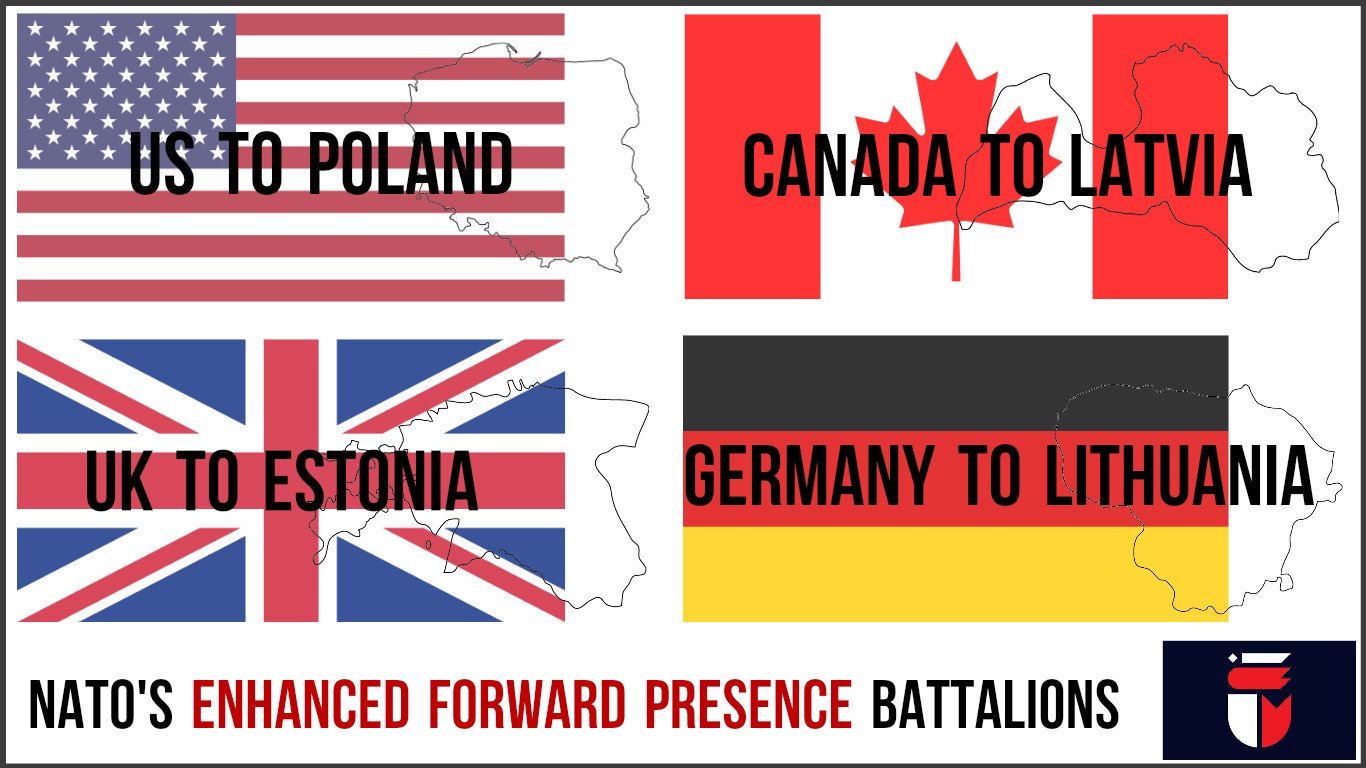
The big decision--a persistent presence. Two years ago, many allies were reluctant to provoke Russia with a long-lasting deployment of troops to the Baltics and Poland. The old agreement was "continuous" presence via an endless series of exercises. But something could interrupt such exercises--like sequestration. So, now, we have permanent basing that is by another name--persistent presence. Four major force contributors are leading the effort, each in a different country, so Canada in Latvia, US in Poland, Germany and UK in Estonia/Lithuania (I forget which), but others will kick in some forces. The numbers may or may not be announced here. As always, as we got a NATO officer to admit in our book, "force generation is begging."
Some language will be included about working with Russia to deal with the various crises, as Germany insists on talking with the Russians in exchange for its support of the persistent presence effort.
Spending! NATO released new numbers on who is spending what, putting pressure on countries to increase their defense spending. I wrote about this earlier today from the Canadian perspective. The hectoring to spend more happens at each NATO summit, as plenty of countries are spending less than their supposed share--2% of GDP. This is not just about more Canada but more Italy, more Germany, more damn near everybody. Countries have mostly stopped cutting but returning to 2% is not going to happen anytime soon.
The Southern front! Lots of concern about ISIS and North Africa. Why? Mostly due to refugees but also due to terrorism. Not sure what specific steps will be announced on this one, but do expect more noise about NATO providing training and capability development for African countries that could use some help developing their security sector. Not much NATO can do to really improve the governance of places--that depends on the interests of the various actors within each society.
Arctic? Probably not much as Norway wants more but wants to lead such efforts. Canada is not enthused but is less hostile than the previous government.
Other stuff. I have lost track of the other stuff as I have been focused on the persistent presence piece.
What am I going to do in Warsaw? There is an Experts Forum run by the Polish Institute of International Affairs, and I plan to drink from the firehose--listen to a lot of interesting stuff and figure out what it means. I will, of course, blog about it as it happens and then afterwards.
Yesterday, NATO put out its report on spending by its members. It sets some of the context for the summit later this week. By the traditional measure, the aspiration to eventually spend 2% of GDP on defence, Canada is, um, not doing well. Canada is now under 1%, and there is no chance that it will double its defence budget in the near, medium or distant future.
A closer look at the report suggests that Canada does not suck as much as it appears:
Yes, Canada is below 1% and ranks fifth worst on % of GDP.
Canada is close to the NATO standard on percentage of budget spent on equipment. Of course, if one spends a lot on getting a little, that is a problem (which I return to below).
If one focuses on the total amount spent on defence, controlling for exchange rates and all that, Canada is behind the US, UK, France, Germany and Italy.... and that is it. So, total spending does not look bad.
If one focuses on total amount spent per person (controlling for population size), Canada is about the average for non-US members of NATO.
But this exercise does raise questions and concerns.
That spending is a lousy measure since it is a measure of inputs, not outputs or outcomes. This is a relatively new but constant theme here at the Semi-Spew--that folks tend to measure what is easily measurable. Spending is easy to measure, but what does it mean for capability or impact? Um, not sure.
Spending compared to one's ability to pay (GDP) makes sense as a way to measure the effort to share the burden, but again, Greece does really well on this, and no one thinks Greece ranks highly as reliable/useful ally. Greece ranks highly because its denominator (GDP) is small. So, if one's economy does well, the measure here can be deceptive.
Spending on what? Canada tends to pay a lot for whatever kit it buys because it does so slowly (defence inflation always bites), it always requires Canadianization for whatever is purchased (making stuff fit Canadian military standards--some of this is reasonable but is all of it?), and the desire for "industrial benefits" means protectionism. And protectionism is always inefficient, leading to higher prices and lesser quality (yes, I am a Classic Liberal when it comes to trade).
I am a big believer in focusing on the doing more than the spending, so Canada did Kandahar and it is doing Latvia while others are not. BUT it is not clear this is sustainable--all these operations plus the relatively fixed costs of procurement (well, commitments that only seem to grow in cost) and personnel (the Minister of Defence has promised not to cut the size of the force despite having an extensive Defence Review) means that there will be less training and maintenance. And that will mean a hollow force that is of whatever size, but not so sharp. And a dull knife is far more dangerous to the user than a sharp one, alas.
So, we can read a lot into the NATO report. The good news is that Trudeau can use the Latvia mission as a shield against criticisms this week. The bad news is that Canada is not spending enough or spending smartly enough. The Navy is facing that crisis right now. The rest of the CAF will face it soon enough.
First they came for the Socialists, and I did not speak out— Because I was not a Socialist. Then they came for the Trade Unionists, and I did not speak out— Because I was not a Trade Unionist. Then they came for the Jews, and I did not speak out— Because I was not a Jew. Then they came for me—and there was no one left to speak for me.
The relevance today: some Jews are saying that Trump is not anti-Semitic. I have two responses to that: hell's yeah, he is; and if not, so the fuck what?!
Trump has targeted African-Americans, so should you speak out?
Trump has targeted Muslim-Americans, so should you speak out?
Trump has targeted Mexican-Americans, so should you speak out?
Trump has targeted Native Americans, so should you speak out?
Trump has targeted disabled Americans, so should you speak out?
Trump has targeted Prisoners of War and other vets, so should you speak out?
We can go on and on.... but any Jews who remain silent about Trump are betraying every lesson of the Holocaust. Side with him? Make excuses for him? I am not an us vs. them kind of guy. You don't have to be for Hillary Clinton, but you have to be against Trump if you have any decency. Even if he has not quite gotten to your group yet.
We now have FBI report about Hillary Clinton's servers and email stuff. What a shit-show! Yep, that is the technical term. Or "unforced error". The good news, like her husband, is that HRC can survive the dumb mistakes and still get to the highest office, in part because her competitor has lowered the standards for judgment.
I don't think this is disqualifying in a legal sense--but damn, this whole thing was just stupid from the get-go. Yes, working in government can be damned inconvenient. But there are reasons to keep classified and unclassified stuff separate.
In my year on the Joint Staff, everyone had their own classified computer hooked up to the SIPRINET (if I remember the acronym correctly), so that folks could and did shoot email around DC and around the world chock full of Excel, Powerpoint, and Word documents that were classified as unclass, confidential, secret, and top secret. I was not cleared for code-word stuff that is more compartmentalized. In some meetings, I was kicked out when such stuff was being discussed. The general rule was that if it involved signals (NSA) or Special Ops, I had to leave the room.
One could not ship stuff from that system to the unclassified system. We had one unclassified computer hooked up to the internet, and the folks at higher ranks had two computers on their desk--one for each system. There were not connected in any way. Yes, you could insert a USB key, but that was forbidden since those things are great ways to deliver viruses/malware/etc. Still, one could do use a USB key or burn a disk (Chelsea Manning) to get stuff off of the classified system--it required work and effort.
The folks I worked with were adept at talking about a topic in different ways, depending on who they were speaking with--they could have an unclassified conversation, a confidential one, a top secret one altering what they would say and with varying levels of detail. I was not so skilled, but I don't think I blew any big secrets in my year.
We also had a secondary phone system for secure conversations. I used it all of one time--to chat with an American who was serving as the Assistant Chief of Staff for Operations for the Stabilization Force in Bosnia. His name happened to be MG David Petraeus. Small world?
For secure videotele conferences (SVTC's), we had to go another part of the Pentagon--the National Military Command Center, which is a building within the building. That was where we had to drop off our classified documents on 9/11 since we couldn't get back into our office (none of us had the combination to the door lock). Why did we have a combo on the door? Our office was a SCIF--which stands for Sensitive Compartmented Information Facility. We could leave classified docs (not those above Top Secret) laying around.
Anyhow, all of this is to say that we took this classified materials stuff quite seriously. I wish our former Secretary of State did so in her time in office.
I have not spewed about Trump in a while, so I am overdue. Given the news of the weekend: posting this anti-Semitic picture on twitter and then us all learning that the pic was not created by Trump/his campaign but borrowed/stolen/plagiarized from a white supremacist website, I cannot help but vent a bit.
First, I have learned to be a bit more careful with my rhetorical devices on twitter:
Oops, as I got a slew of folks tweeting at me the long history of Trump's anti-Native American slurs from the recent Elizabeth Warren stuff to his rivalry with Indian casinos. What I was trying to say there is that Trump is a white supremacist who has targeted pretty much everyone who is not a white male.... ok, non-disabled, non-POW, white male. I keep forgetting what he said most recently about LGBT folks. Still, the basic point remains: his white supremacism is actually quite consistent.
Second, the consistency is Trump--he has been doing this stuff longer than this campaign: his Birther obsession. So, one cannot just say it is strategic or tactical. It is the man himself. So, when Trump uses the phrase "American First", it probably is not due to ignorance (although his shallow dumbfuckery can often be Occam's Razor in all of this), but due to his affinity for white supremacy, fascism, and all that stuff.
Third, CNN is dead to me. Spending heaps of money on hiring a failed hack, Corey Lewandowski, who happened to have assaulted a journalist is really the step too far. Corey spent yesterday defending the tweet. CNN, you have lost whatever corporate soul you had. The boycott starts today.
Fourth, the big question is how long will the damage last? Has Trump done for the GOP what Pete Wilson and others did for California--kill the party for a generation or two? The country is increasingly diverse, yet the GOP moved from dog whistles to air horns.
Forget about losing African-Americans for another generation thanks to the tolerance of the birther nonsense. How about losing Latinos for a generation or two as they become an increasingly important force in US politics? Sarah Palin's "Real America" in 2008 was subtle compared to this, and that was already a call for self-marginalization of the party--white, rural voters uber alles.
Fifth, I understand why #NeverTrumpers want to call Trump Liberal since that is a way to get Conservatives to not vote for him, but Trump's only consistent ideology is ... white-supremacy. His policy stances are all over the place and change regularly depending on what he heard most recently or who he is talking to. The "the rules don't apply to me or rich people" is not American Liberalism. I don't think Trump is Conservative either, because Trump does not have much in the way of conservative values either. Well, any values.
The more this goes on, the more we need an election outcome that is a landslide to demonstrate how intolerant we are of this intolerance. Probably will not get quite the landslide I want since HRC is not loved and because polarization means that many Republicans will vote for Trump regardless of what he says and because the number of white supremacists out there are, alas, more than we want to think.
It has been ten years since my previous (and only sabbatical). I lost a heap of credit (most places that have sabbaticals require something like six years of service for one year of sabbatical) moving to Ottawa. I don't regret the decision at all as I am very happy to be starting my fifth year in Ottawa this week. The timing is good as well, as I am now ready to really get into this new project now that most of the older projects are out of my hands.
So, what I am doing with my sabbatical?
The focus of the year is making progress on the Dave and Phil and Steve project: understanding the varying roles played by legislatures in their countries' civil-military relations. Dave has already done much of his work talking to Europeans as he is also working on an Arctic Security project. Phil was supposed to be on sabbatical, but his move to NPSIA (woot!) disrupts that a bit. Still, he is going down under as well as over there for his part.
I will be spending October and part of January in Japan asking politicians, officials, and military officers about their roles and perceptions. I will also be working on related projects on Japan's civil-military relations with Takako Hikotani, who teaches at Japan's National Defence Academy. I am very grateful to the Social Sciences Research Council and the Japan
Foundation Center for Global Partnership for both funding this part of the sabbatical and for fostering the circumstances that lead to partnering with Takako.
I will be going to South Korea and Brazil for shorter trips to do the same thing. I hope to squeeze in a trip to Argentina and Chile.
If I manage all of these trips (I was supposed to go to Brazil this year, but their impeachment politics got in the way), then I will have completed nearly all of the research for the project.
A secondary focus is on completing a bunch of smaller projects that have been mostly sitting on a shelf:
What do Canadian IR academics think of gaps between the academic and policy worlds?
I have long had an idea about bureaucratic politics from my year in the Pentagon that I just never got around to articulating.
Finish an R&R or two.
Apply for a Partnership grant that would link Canadian academics, defence scientists in government, Canadian military institutions, and private actors. This is going to be a huge commitment of effort, not just by me but by the other folks involved. I tried a smaller version of this before, which didn't work out. I have put off the larger version as I was more focused on funding my own research, but now that I have done that, it is time to return to this effort.
Read. During my first sabbatical, I tended to grab anything I found interesting in two areas: civil war stuff (Kalyvas, Weinstein, etc.) and the mess in Iraq (Imperial Life, Assassin's Gate, Cobra II). This year's reading will be both more and less focused:
Catching up on the major journals in my field. I am woefully behind. I hope to dedicate one day per week (probably going to be one day ever other week) to reading journal articles from the past five years.
Reading some of the books I have bought over the past five years or so that have gone unread.
This reading effort is not just due diligence, but also to inspire me to see what questions I want to ask after the current project. I have some ideas, but I am open to doing something completely different for the next sabbatical.
I know that sabbaticals appear to be a luxury to non-academics, but they are so helpful and so very important for recharging one's intellectual batteries, for making major progress on big research projects, and for broadening horizons and amping imaginations. I am very grateful that I have this opportunity. I am very thankful for the resources that will allow me to meet and work with interesting people in parts of the world I have barely glimpsed. I know that I am lucky. And as I always say on the ultimate field when a teammate catches one of my lousier throws, saving the point, better to be lucky than good!
This time last year I was studying for the Canadian citizenship test. I got a perfect score although the hockey question challenged me. Really, but only because I was so cocky about hockey that I skipped over that part of the booklet. I still don't remember all the words to the Canadian national anthem, but I am willing to stand guard for thee.