Spoilers will dwell beneath the break along.
Spoilers will dwell beneath the break along.
I spent part of this afternoon being interviewed by television outlets about the missiles that hit

This is looking like a grave and possibly deliberate provocation by Russia, but it does not mean that NATO countries must, or will, become militarily involved, even if Poland invokes Articles 4 or 5. It’s worth actually reading the North Atlantic Treaty https://t.co/Y9TNNoUmFK pic.twitter.com/kztaPvF3Lb
— Doug Saunders (@DougSaunders) November 15, 2022
FFS! NATO is a collective organization--one country cannot wave a magic wand and shout "Accio alliance! Tada, Article V is invoked!!!" Nope. What any country in NATO can do is call a meeting so that the alliance could consider invoking these famed article. A5 is the "an attack upon one is equal to an attack upon all." The Dave and Steve book on NATO explored how obligatory that is (it's not) and what explains how countries behave when asked by the alliance to do something.
But getting back to that attacked thing: it only counts as an attack that deserves a collective response if a consensus among the members. Everything at NATO operates by consensus--no one is ordered to do anything by any specific country or any sub-group of countries. This means there is a lot of lowest common denominator kind of decisions with opt out clauses (did you read the Dave and Steve book yet?).
So, one of the first things Poland (or anyone else seeking to invoke A5) has to consider is: can they get consensus? If not, don't ask because it is more than a bit embarrassing to ask and then be denied. Ask Turkey about that. It is kind of like going up for Full Professor when you don't know what the result will be--it only ends in pain and sadness (and moving which then leads to joy). Can Poland get damn near all of the alliance (Greece or Hungary or Turkey can agree not to be too disagreeable but not support the decision and then not deploy troops)? Um, no. France, Germany, and Italy, to name a few obvious, more powerful members, have been just a wee bit ambivalent all the way along, and they certainly don't want to be involved in a shooting war with Russia.
One of the other things Poland has to consider is: would A5 be good for Poland? Um, no. Because if NATO would go to war with Russia, which is what invoking A5 means, that would mean that Russia is no longer restrained from attacking the supply lines leading from the West to Ukraine through ... Poland.
The existence of A5 in the treaty is working--for both the alliance and for Russia. Until today, after nine months or so of war, Russia had refrained from hitting any NATO country and specifically Poland. And today was probably an accident. An accident that may have been made more likely by a loosening of Russia's rules as they hadn't attacked border cities all that often. But Kherson and other developments may have changed the risk calculus for Russia. Anyhow, A5 has been good for NATO's eastern members as it has restrained Russia. It has also been good for Russia since it has restrained NATO from engaging in direct violence.
So, no, Article 5 is not going to be invoked. Article 4, which is a way to indicate the need for serious discussions against a threat, will be. Poland will get reinforcements as will other NATO allies, Ukraine will get more anti-aircraft equipment, but Ukraine will not get what it wants for an early Christmas present--a NATO intervention. This would be great in the very short term, but might also lead to nuclear war, which would be bad for a very long time. As I said at the start of this, rule #1 of avoiding nuclear war is for nuclear powers not to fight each other directly. India and Pakistan have made us all very nervous. US and Russia have stuck by rule number one, and that is not going to change now.
So, as I told CBC Kids last month, no, Virginia, there will not be a nuclear war.
But then again, some elements of the media want to scare folks for sales and market share and ratings, I suppose. For shame, Globe and Mail, for shame.

Last week's awful speech set me on edge immediately. The first words about handouts were a signal, but the thing that confirmed that the talk would be awful was Maisonneuve invocation of "woke." Whenever I hear anyone tossing around that word contemptuously, I immediately code that person as not worth listening to. Why?
To be clear, woke refers to folks who have become aware of the historical legacies of discrimination and the present-day implications. That's pretty much it, that woke people understand that there is and has been significant discrimination. That's it.
To be anti-woke, which many folks on the right are now so proud of, means denying that discrimination happened and/or it has made an impact on today. Of course, it is more complicated than that--it can mean being opposed to the measures used to address the remedial efforts aimed at reducing discrimination and compensating for its impact. The classic case of this maybe opposing affirmative action as it may be seen as unfair to white men, and the opponents usually say that such measures are unfair as it means that those who are more meritorious are being denied opportunities due to the sins of their fathers. There is a lot built into that including the notion that today's procedures would be otherwise focused entirely on merit if not for considerations of race, ethnicity, gender, etc.
The reality of today's politics is that when one loudly proclaims that one is anti-woke, one is doing one of two things (or both):
a) one is signaling to one's white, male, "Christian" supporters that one is with them, an enthusiastic supporter of some past status quo (real or imagined) where the woke folks were kept in their place; folks, including myself, refer to this as vice-signaling.
b) one is actually one of these folks who are actually an enthusiastic supporter of some past reality (fake or real) where the uppity folks knew better and that one could discriminate, harass and do more without being called out for it.
I tend to think Ted Cruz, for instance, is in the first category--that he does not really believe anything but wants power and signals being anti-woke to appeal to his racist, homophobic, xenophobic, misogynist supporters. That does not make these folks better even if they don't believe in the hate they are inciting--it makes them just as bad as the genuine article as they are inciting and providing comfort for them. Vice signaling is dangerous and awful and should be called out.
Is this cancellation? No, free speech means one has the right to engage in vice-signaling, but it also means that others have the right to call it out for what it is.
Maisonneuve got more than just a right to speak last week--he got to have a platform to do it. And he abused it. And I have the right to call him out as does everyone else who considers his speech to be awful, intolerant, and retrograde.

The reception was super loud, which was a problem for aging Steve, but I greatly enjoyed it anyway. I got to meet with a number of former students who are now professors, civil servants, students elsewhere, and more. I bumped into some diplomats who had been at an event we had held the previous day at Carleton--a talk by the Norwegian State Secretary for External Affairs. They discussed how important it is for academics to be able to speak freely when so many others, such as themselves, can't.
Which leads to the rest of this post--I feel like a crappy guest to criticize the speaker at this event, but speaking plainly about stuff that happens in the Canadian defence community is part of my job and my identity. Lt. General (retired) Michel Maisonneuve was honored for a lifetime in service as he was given the Vimy Award. Vimy, of course, is the site of a key battle in World War I that has become a key part of not just the Canadian military's identity but a key aspect in Canadian nationalism. When I think of World War I, I think of a key lesson learned along the way that the French President of the time, Georges Clemenceau said--that war was too important to be left the generals--eventually leading to higher expectations for the role of civilians in controlling the armed forces. Alas, this speech did not meet my expectations for good civil-military relations.
His speech reminded me of debates that American civil-military analysts often have about the role of retired senior military officers--that their words matter since they are freer to speak than those still serving, and they are often seen as speaking for the active military folks. Canada tends not to have the same debate as there are far fewer analysts of civil-military relations up here, and they are focused on other things, and so I am not sure what the norms here are of retired senior officers and their speeches.

Maisonneuve is allowed to speak, despite his frustration at cancel culture, but I am also allowed to criticize his opinions. After nearly two years of scandals involving members of the Canadian armed forces at the very highest levels--two chiefs of defence staff, two chiefs of personnel, several other 2-3 star officers, and so on, one might think that the retired senior officers who helped foster a culture of entitlement and abuse of power might develop a bit of humility. I guess this is why the CAF has a culture crisis--that there was not much of a learning curve after repeated scandals and reports about sexual misconduct and abuse of power.
 |
| Hanging with the intrepid Leah and Steph |
As I left the building, an older person shared with me her concerns about the next generation of Canadians based on what Maissoneuve had to say. I tried to assure that the next generation is pretty terrific and that we will be in good hands.
Yesterday, news broke that the Canadian Armed Forces will be open to permanent residents. I had heard rumors of this at the recent Inter-University Seminar on Armed Forces and Society-Canada conference which had a bunch of people from CAF Personnel, the Culture and Professional Conduct Command, the Director General for Military Personnel Research and Analysis and more.
This is such a no-brainer I have been advocating for it and more (see below) for the past few years. It would make sense even if the military was not down at least 10,000 and facing a real personnel/recruiting/retention crisis. How so? Let me listicle:
And then there is the current personnel shortage. Which makes the obvious more obvious. Why resist the obvious? Some will argue that there is a risk that the permanent residents are not real citizens and are not as loyal to their country than actual citizens. Um, have you taken a look at the greatest threat to Canadian security these days? That would be far right extremists/white supremacists. They are citizens, but their loyalty is not to democracy, good governance, and all that stuff. Including more permanent residents, who are more likely to have non-European backgrounds than the traditional recruiting pools, will have the added benefits of bringing in people who are less likely to be white supremacists and are more likely to antagonize those far right extremists who are in the CAF--making them easier to identify and also perhaps driving them out.
Why else resist the obvious? I always heard that security clearances were a hurdle--that it is hard to get the info needed about those who lived elsewhere. Hard is not a good enough reason to deny access to a huge pool of potential recruits. How risky is it to have less than completely vetted people in the first few jobs in the military? How much of a threat do they pose to secrets as new recruits? It is also the case that the vetting can continue (and should continue) as they serve. And as a general told me recently, there is always risk--you just have to figure out ways to mitigate it.
Oh, and some folks in the CAF and in the political system may not want to include these "others" because they are "others"--that they want to keep the CAF an old boys network and they want to keep it the very white institution it has been. The less satisfied these folks are, the better.
I have been arguing that the CAF should go further, and this would require legislation: make service in the CAF a pathway to citizenship. Encourage folks from other countries to come to Canada and then get permanent residency and then citizenship faster/easier if they serve in the military. There are some criticisms one can lodge here
Yes, the CAF may have to get smaller before it gets larger, as the CDS has acknowledged. But it is both good for the numbers and good for the health of the CAF and of civil-military relations to have a military that looks like the society. Given that something like 25% of Canadians were born abroad, it is time we make the military a more welcoming place for the newer Canadians.
I am so very frustrated and angry that Elon Musk is musking twitter. I don't care about losing a hundred followers (even though I was just on a nice round number until this happened), but I do care about the loss of community, the loss of key vectors for getting information, the loss of important ways to, yes, market, the stuff that I do, and especially, the loss of a key way that the CDSN communicates.
It ain't gone yet, but twitter's future ain't bright. I will stick around and hope that this is a phase or that the community of people can resist the bad stuff. The thing about twitter and all social media is that the stuff that is most important are the users--they set the tone, they create the value, they make it worthwhile or not. I stopped being a twitterevangelist years ago when I started to get that my experience was not the experience that women, LGBTQ+, African-Americans, and others from historically excluded communities were having. I never got much grief on twitter--some, but not much. One rape threat, I don't recall any death threats, and more than a few insults, but nothing that really affected my day to day experience. So, I stopped pushing it quite so energetically.
But I still recommended that people join even if they don't post. Twitter was and maybe still is a good way to find interesting research before it gets published and find out when such stuff is published and to get good takes on events as they occur. The folks who are really sharp on Ukraine, for instance, have provided tons of insights on the war since it started. As a curious person and as a scholar of International Relations, I have found twitter to be super useful for good (and bad) info.
As hinted above, it is terrific for networking. I know far more people in the DC national security community, in the Canadian journalism scene, and more. After I realized how mighty white my feed was, I made an effort to follow people of color in and beyond North America, in and outside of poli sci and IR. It is just so cheap (free except for the selling of my information by twitter) to meet and learn from all kinds of folks. It can be a time suck, but I found it incredibly rewarding.
What now? Well, my first step was to find out that I already had a long comatose Mastodon account: @smaideman@mastodon.social or https://mastodon.social/@smaideman. I haven't figured out Mastodon yet... and you can tell as I currently have more followers than posts. That probably won't last. It seems decent, but the federated nature--that there are different "instances" of Mastodon on different servers, which makes connecting a bit tricky--is a challenge. The servers can be slow, but posting pics is getting faster all the time, and I needs to meme. Oh, and I realized that I mispelled my preferred name for social media (smsaideman) and am now stuck with smaideman, which is growing on me.
I may try other alternatives, but, of course, this will mean yet more time sucks as I monitor and participate in twitter, mastodon, and whatever else. Hmmm. Can there be too many social media outlets? Well, yeah. Because if the communities that I have enjoyed get fragmented, I really don't want to do the work to make sure I get what I used to get on twitter. But my biggest neurosis is FOMO, so I expect to be trying more than a few alternatives.
Anyhow, just posting here as this will always be where I post my half-baked thoughts that are more than 140 or 280 or 500 characters.
Good luck in the confusing days ahead!
 |
| and yes, I will continue to rely on the same set of memes while generating new ones from time to time. |
 |
| Colonel Cathy Blue, our visiting defence fellow, introduces the Vice-Admiral |
Japan has to scramble aircraft twice a day to confront Chinese and Russian aircraft. Ito spoke on a record-setting day as North Korea sent more missiles near and over Japan while it was also engaging in greater tensions with South Korea. He did not address the difficulties with South Korea that would make a more coordinated response more complicated.
Ito discussed Canada's exercises in the region including the monitoring of sanctions against North Korea and the freedom of navigation operations in the South China seas.
Perhaps most striking, Ito made it clear to the Canadian audience that a Taiwan scenario--the imminent attack by China (sometime between now and 2027)--is also a Japan scenario for a couple of reasons. First, there are some Japanese islands mighty close to Taiwan, and it is hard to imagine these islands would not become part of China's invasion plans. Second, the US has pivotal bases in Japan, which might be specifically targeted to prevent US intervention in a Sino-Taiwan war.
 |
| Here, Vice-Admiral Ito illustrates the evolution of Self-Defence and how it fits into the constitution |
Ito talked about the need for what he called counter-attack systems--which are essentially first strike systems designed to hit missiles aimed at Japan before they are launched. This is part of a larger effort to squeeze today's realities into the constraints posed by Article 9 of the Japanese constitution. That clause prohibits Japan from having a military, although Japan has one by another name: Self-Defense Force. Its navy, Ito said, was the second largest or more powerful in the world after the US. The dodge has always been that all sovereign countries are entitled to defend themselves, so the SDF is legitimate (not all Japanese parties agree). But what counts as defense? Knocking down incoming missiles is obvious. Having the ability to pre-emptively strike those that have not yet launched? Hmmm.
Japan is doubling its defense spending, getting to 2% when the controversy used to be whether it would exceed 1% of GDP on defense. What will it spend money on? Perhaps F35s and missiles? Unfortunately, we ran out of time so we could not get more specific answers to this and other questions.
It was very useful and interesting to see the Indo-Pacific from a different perspective. I always this this map I saw all over Tokyo in government offices to illustrate:
 |
| This point of view best illustrates how China is hemmed in by Korea/Japan/Taiwan/etc. |

I can't express how impressed I am by the work these folks have done and how grateful I am to them for taking the CDSN objectives and running with them. Below, I am posting the slides from my presentation that reported my take on where things stand.
 I discussed the original goals set out in the SSHRC grant and suggested that we made clear progress in four and, well, hard to measure progress in the other two. How do we know we are helping to improve the defence and security literacy of Canadians? This is something we will be considering in the next few years.


The big challenges have been trying to get folks to apply for our opportunities. We get only handfuls of applications for our post-doc, for our book workshop, for our undergraduate excellence scholars. It has also been difficult to get larger audiences for our activities. Neither of these problems are unique to the CDSN as our friends in other networks have had similar problems. We need to get more creative and put more resources to get more folks to show up. I also suggested that we could do better communicating with each other. The Midterm Conference was partly aimed at addressing this.

Overall, I am most proud and pleased about what the CDSN has done and what it has become. As I told everyone, my role is mostly taking credit for everyone else's hard work. I am very grateful for the teams we have built--the staff at Carleton, the co-directors leading the research efforts, the advisory board, the emerging scholars, scientists, and policy makers that have contributed so much to our events, and the partners in academia, government, the military, and the private sector. And yes, I enjoy the associated dinners when we meet!


I am very thankful that we finally got to go back to LA where Executive Assistant Spew is 
thriving. The pandemic had preventing us from going there, but she had made it to family events on the east coast. We got to meet 1/3 of her roommates, her cat kind of (shy cat), and we took her to Disneyland. It was, indeed, the happiest place on earth if happy means packed! It was set up for Halloween, which was fun but not as much fun as Busch Gardens about ten years ago with chain saw clowns and crazy doctors popping out. Instead, we explored the new stuff--the Avengers complex with heaps of Spidey stuff and the new Star Wars land, which was most impressive. We tried the blue and green milk which tasted more like sweet tarts than like milk. We missed the big new ride--Rise of the Resistance--as it broke just as it was our turn. Yuck. Still, it was a great silly day.

What else am I thankful for? The help of friends in all that I do. The CDSN stuff, the


I hope you and yours had a great Thanksgiving. The joy of being a dual citizen is that I get to do this twice!
After news of Canadian Armed Forces moving to the Atlantic provinces to help with the post-Hurricane Fiona, I tweeted that we need to think about CAF priorities thusly:
I keep harping on this, but since Canada will never have a real FEMA, CAF needs to get used to domestic emergency ops as its day job, not just an inconvenience that gets in the way of training. Rather than 4th of 4 priorities, it really needs to accept this as tied for 1st https://t.co/tD8K1C7avg
— Steve Saideman (@smsaideman) September 24, 2022
It is not a new thing for me to say, but it seemed to get a lot more play than usual. Some active/retired CAF people took it most personally, so I thought I would explain what I meant and then discuss the (over)reaction.
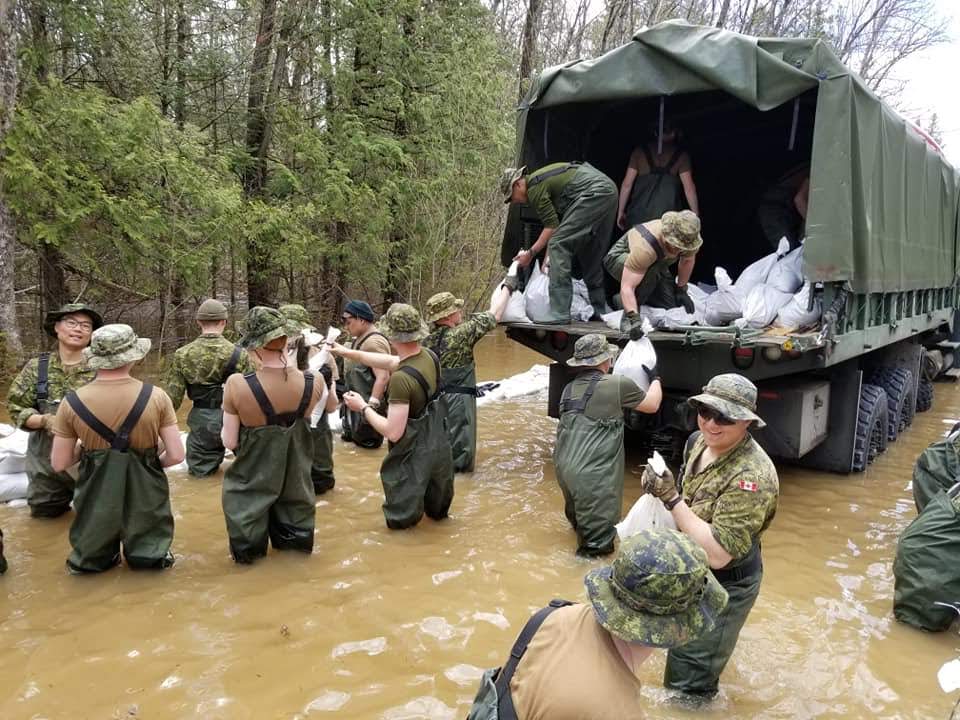 In every defense review, domestic emergency operations, known as aid to civil power, is listed as one of the four major priorities (defence of Canada, defence of North America, NATO--if I recall correctly--are the other three), but is always fourth. And it is fourth when it comes to spending, training, promotion, procurement, etc. In public and private discussions, senior CAF officers tend to refer to domestic emergency operations as an inconvenience--something that disrupts training cycles and deployment schedules. However, as the pandemic made abundantly clear,
Canadians face far greater threats from viruses and weather than from distant authoritarian regimes. Oh, and if those regimes wanted to get super serious and throw nukes around, there is nothing that the CAF could do to stop it (and nothing the US could do either--ABM tech is still not proven/reliable/nor ever able to knock down every missile sent our way).
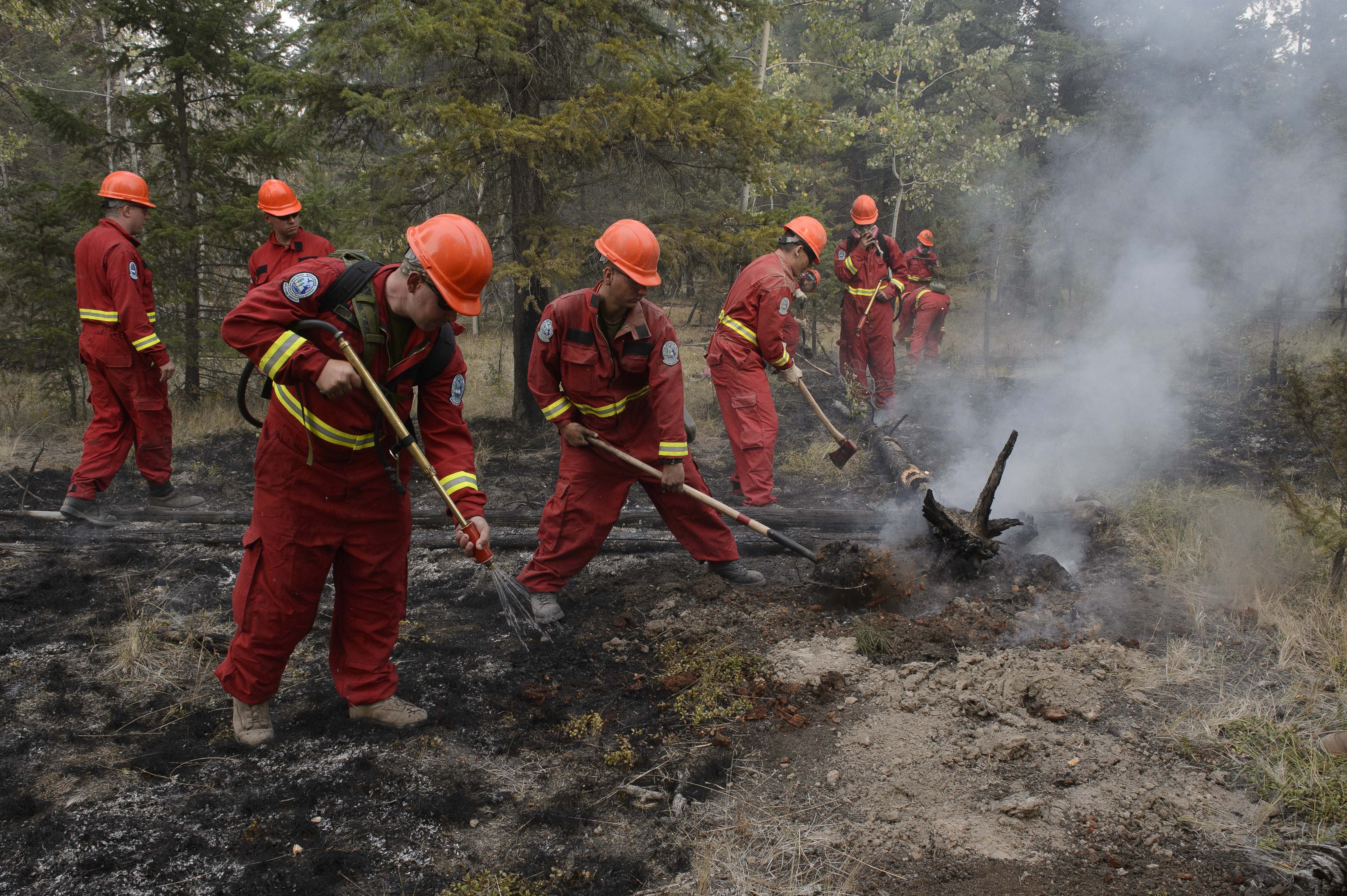
The pace of these nature-induced domestic operations has been increasing due to climate change, something that the current Chief of Defence Staff Wayne Eyre noted when he was army chief way back in 2020 before the pandemic struck North America:"“If this becomes of a larger scale, more frequent basis, it will start to affect our readiness.” Note the sense here that the domestic ops are getting in the way of the day job.
In my conversations with CAF folks, I have heard that promotion and leave calculations reward folks who go on operations abroad but not so much for operations at home. This helps to foster a mindset and a focus.
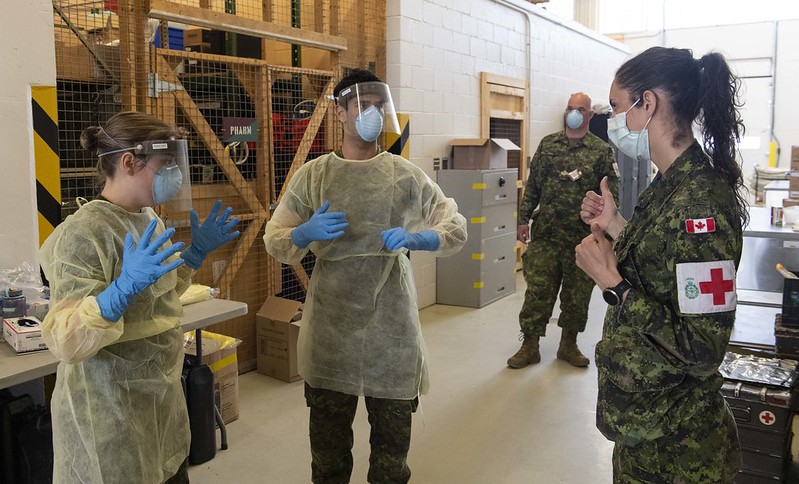
The question I was raising essentially is not whether the CAF is trained to do ops at home, but whether they spend enough time, money, procurement, effort, etc to do the stuff at home really well. Or is it a matter of short training for each potential emergency and showing up when asked? I really don't know how much more training/spending/etc is required, but I do think we/they need to have a real conversation about how priority #4 is perhaps approaching priority #1.
The pushback I got was from folks saying that if we spent more time training for domestic ops, that leaves us less well trained to fight at the highest, most intense levels AND that training for that stuff puts us in good shape for the domestic stuff. I honestly don't know how transferable the skills are from combat to dealing with floods/fires/ice storms/pandemics/etc. I think this is all worth exploring.
I also wonder how much effort has been done to learn from past operations. It seems to me that most of this stuff happens at lower levels, so that there is not much lesson learning across the country. A lot of this involves relationships with provinces and municipalities, and I can't help but wonder if there is variation in all of this stuff. Alas, defence scholars haven't spent much time studying this stuff. Our latest big grant at the CDSN has this as one focal point, so perhaps my tweet was about establishing ourselves on this corner and justifying it.
Tis worth noting that some folks seemed super-insulted by the tweet, that suggesting that the military work harder on non-kinetic (not combat stuff) is not only a huge mistake but an insult to the troops. Not sure why that is, unless one's identity is entirely bound up with the combat stuff. So, I can't help but think that the discussion of culture change, which has focused mostly on sexual misconduct, somewhat on better inclusion and equity of historically excluded groups, a bit on abuse of power, might also consider other elements of the CAF culture. Valorizing combat at the expense of helping Canadians at home? That seems a bit problematic to me. But then again, I am an ivory tower know-nothing prof.
To be clear, I would much rather have a civilian agency equivalent to the American Federal Emergency Management Agency doing this stuff, but I doubt that will happen. It would require the provinces and the federal government to get along well enough to solve the cost-sharing, moral hazard problems that are rife here. Given that the provinces are still asking for more health $ from the feds as they cut taxes and spend previous allotments of health care money on anything but the pandemic, I am skeptical about the prospects of a real Canadian FEMA.
And, yeah, not so long ago, I scoffed at the idea of military folks spending heaps of time on domestic emergencies. When I first moved here and started doing research on the CAF and Afghanistan, I was stunned to see officers have the ice storm of 1998 as one of the most significant operations. But after watching Vancouver isolated by floods perhaps more effectively than a Russian or Chinese attack could, the pandemic leading to soldiers in elder care facilities (another provincial failure), and on and on, I am realizing that we have to at least ask if we have our priorities right. If folks fear those questions, then those questions need to be asked more loudly.

Before getting to the list itself, let's think about the signers and this moment. The signers include men who screwed this stuff up. I am not just talking about the obviou
s case of James Mattis but also Robert Gates, for instance, who blamed Obama for the state of civ-mil in his time when, yeah, it is the SecDef's job. Myers and Pace? Well, part of civ-mil is giving their best advice to the President even when it disagrees with the SecDef, and they mostly caved to Rummy. Dunford played along with Mattis's privileging of the Joint Staff over the civilians during the Trump Era. Of course, this stuff is really hard, and the balancing act never satisfies anyone. But, oh my, to see some of these folks stand up for basic principles that they themselves messed up reminds me that neither SecDefs nor Chairman tend to have much humility or self-awareness. At least Rummy had the self-awareness (UPDATE: sorry, he died last year) not to sign since he broke American civ-mil in his time.
Now this moment--this statement in some ways is quite ordinary as pretty much all of it is the conventional understanding of what normal civil-military relations looks like in the US (and I wish some of it was understood in Canada the same way--but Canadians don't have the same hierarchy--something to complain about on another day). But it is extraordinary to have these folks get together and enunciate this as it is very much a declaration that things are amiss thanks to ... Trump and the MAGA Republicans. While Democrats screw up civilian control of the military as well, ignoring the military's advice at times or appointing crappy SecDefs (how good was Panetta, one of the signers here?), today's Democrats would mostly buy into the list. Today's GOP? Hardly.
Which gets to the big thing we talk about in civ-mil--that while the old conventional wisdom says that the military should not be political, the reality is that all things military (and all things policy) are political. Clausewitz was right--war is politics by other means. So, trying to stay apolitical tends to breed generals and admirals who can't think strategically. So, we civ-mil folks mostly say that militaries should be aware of their place in politics but not be partisan. That whatever they advocate as policy options will have political ramifications and should take into account the likely political effects on the place they are operating BUT they should not be partisan. That uniformed officers should not be seen, for instance, advocating for one party.
The challenge of our moment is this: the Constitutional basics are partisan ever since Trump started talking about his military and about rigged elections and all the rest. Much of this list is in direct contradiction to things Trump said and did while in office and since then. So, taking a stand in favor of the traditional norms of civilian control of the military and American civil-military relations is now not just political but partisan. This list is clearly a condemnation of Trump and his acolytes, which includes many GOP Senators--Cotton, Hawley most obviously.
So, this is all very troubling--that this might be necessary, that espousing the norms of civilian control of the military might just be a violation of the norms?
Ok, that's the context, what about the list? It is really basic stuff--that civilians are key to civilian control of the military, that all three branches play a role, that the executive is the key with the SecDef playing a fundamental role (hey, Bob, did you read what you signed?), that everything gets "chopped" by the legal folks in every relevant office, that Congress matters a whole lot, that civs have a heap of responsibility and aren't just there to listen to the generals, the military advises and obeys legal orders, military does not lead in law enforcement, military stays out of partisan politics, and out of elections.
What is missing? Something about how retired military officers should be careful about becoming involved in partisan politics? Maybe advising that uniformed officers should not serve in inherently partisan jobs like National Security Adviser? Maybe that SecDefs should never be retired senior officers? What else would I add? Perhaps an overt declaration that Sam Huntington is wrong? That the military needs to listen to the sharp folks who study this stuff (Lindsay Cohn, Risa Brooks, etc) who raise critical questions about what it means to be a "professional" these days?
 | |||
| Great views from the top of Mont Royal. Yes, the hill is what the city is named after, and it is a great way to spend some time--walking up and down. | |
First, to get into the country (yes, Canada is a different country, with its own border stuff and everything including roaming rates for your phone), you need passports (this ain't the 1980s) and to have filled out the ArriveCan app. You can download it via your phone, either android or iphone, and then you input a heap of information within three days of your entry into Canada. You have to do it shortly before you come to Canada. Airlines may check that you have done so, you definitely will be checked at the border posts either via land or air. Downloading the app feverishly filling it out as you wait in the border line in NY or Vermont is not a great strategy as it will require info and maybe even pics of your covid vax records. The good news is that you won't need a test (that changed last spring).
Update: I forgot to mention that masking in Canada is ... not consistent. The mandates went away but a fair amount of people still mask indoors.
Second, there are multiple ways to get from the airport to downtown--train, bus, taxi. Downtown is not that far away, but traffic in Montreal sucks with construction season always a challenge (rush hour is not great in the morning and starts early in the afternoon). If you are driving to Montreal, well, vaya con dios, as the drivers and the structure of the system both are awful. People will make right turns from the left lane, for instance. Merging on highways can be a challenge since there may be very little space/time/visibility. So, my best tip is this: if you are driving and you see a merging sign, head to the far lanes (far right if your lane is on the right side of the merge, far left if you are on the road on the left that is merging towards the right) as this will allow you to avoid being in that magical lane that merges instantaneously.
Third, it is is a fun place for language politics. One of the controversies of late has been the tradition of bonjour/hi. That generally service folks in downtown (more so as you go west, less so as you go east, and this might be my most outdated bit of info) speak both English and French and will respond with French if you respond to their bonjour and in English if you respond to hi. I lived ten years in Montreal (suburbs and McGill, so not the most French of places) and never had to speak much French to get by. When I got stopped for speeding, I asked the cop if we could it in English since I didn't want to mess up the high stakes conversation, he said "I don't have to" and then we continued on in English. If you can speak French, go ahead, of course, although the accent may mess you up some. Far more nasal than French French.
Fourth, it looks like a bit of rain next week. Bring a jacket as we are already in fall with temps in the low 70s as the high and low 60s and even high 50s as the lows.
Fifth, I mentioned above as an aside but it is serious--Canada's cell system is expensive and your phone will work but at a price, so check your phone provider if they have any deals for roaming in Canada. No, no worries about moose roaming.
The important thing is Montreal is a great city and easy to get around. The metro system works well, although the whole "underground city" tourist thing is wildly overrated. The conference is south of downtown so it is close to the Old Port area which has a heap of restaurants and bars. Quebec beer is better than Ontario beer, and heaps of great crafty stuff is available. Here's what I wrote for the 2011 ISA re tourism:
Also:
Basic navigation: If you are on Rene Levesque Boul and are looking at the Sheraton--you are looking North, and uphill. The main east-west streets are Sherbrooke, Maisonneueve, St. Catherine and Rene Levesque. St. Catherine is the most interesting--it has the most shopping, restaurants, naked lady places, and so on. If you walk either east or west on St. Catherines, you will find a restaurant or an area that is interesting. And have much to talk about. St. Laurent and St. Denis to the east are the main streets with heaps of stuff. Indeed, they sometimes call St. Laurent "the Main" especially when they are tearing it up. At the bottom of St. Laurent is a small China town. There are Vietnamese places there and nearby.
Money: C$ is about US$.80 these days. Lots of places to change money, especially on St. Catherine street
(handy for the lap dance places, I guess), but any bank will trade US
and CA dollars. Best bet is just using an ATM.
This gets us to cuisine where there are just a few key rules as almost all food in Montreal is terrific:
1. The only reliably meh food is Mexican. Pretty much everything else is terrific. There are a few key streets that have lots of restaurants--Crescent to the West and St. Denis to the right had heaps of places 10 years ago. I don't know what the pandemic did.
2. French, Middle Eastern, Vietnamese are all reliably terrific. Indian and Portuguese and Thai are all good, too. My old guide lists specific places but I can't tell you how many of them are still open and good. My old students commented on the thread and have some great suggestions.
3. The beer is quite good. Again, from my old guide: I like Blanche de Chambly. Boreale, Le Cheval Blanc, McAuslan, Dieu du Ciel are all good. I like some of the more national brands as well: Alexander Keith's and Sleeman's. You can find these two in most places.
4. Chez Cora has a heap of choices for breakfast. It is a wonderful Quebec breakfast chain.
5. Tim Horton's is always super slow so only go if you have time to stand in line and learn how to be polite and patient (you would then be on your way to becoming Canadian).
6. Poutine sounds scary but is really tasty. Not at all healthy but super tasty--fries, cheese curds (WTF?), gravy. Yum.
7. Quebec food at nice restaurants features duck, rabbit, and other stuff--very good cuisine in its own right.
8. I didn't mention Montreal bagels because I wanted this to be a nice, positive post. Smoked meat is also a thing in Montreal, but is not that special.
So, do get out beyond the hotel--there are plenty of great bars and restaurants. All over the place.
 |
| hard to see the pointy spring at the bottom |
 |
| We inhabited the snazzy Board of Governors room |
I tweeted out a bit of my distant experience to clarify some of the whole Trump madness and realized I remembered a heap from my brief time having TS but not SCI clearance. Let me explain and maybe along the way, it will become even more obvious how egregious Trump's behavior has been regarding classified materials.
First, a caveat, yes, too much material is classified at too high a level. This makes it hard for various actors to coordinate when they can't talk clearly/openly about stuff. Tis why we now have fusion cells that include folks from multiple agencies. But it does make it hard to communicate with the public about stuff that is not super secrety.
Second, my experience is exactly 20 years old as I was finishing up my Council on Foreign Relations International Affairs Fellowship in the Pentagon as a desk officer on the Bosnia desk. So, maybe stuff has changed, but, not really, as these processes are pretty static.
Ok, so I had a top secret clearance. I needed one for my job as I literally could not access the computer systems in the Pentagon without it. Sure, the unclassified network could be accessed, but we used that only for surfing the web and checking our email. All of our work was on the classified network. I also needed access to documents that were often classified as Secret or Top Secret in order to do my job--coordinating Joint Staff policy stuff with State, National Security Council, NATO, US military folks, etc.
How did I get this TS clearance? I was investigated, private contractors (I am guessing) looked into my criminal records, tax stuff, interviewed people who knew me, etc. I have been on the other end of this, getting calls asking to give me evaluation on the reliability of applicants for governments (in the old days in the US, in Canada the past 20 years).
I did not get an SCI clearance--Secure Compartmentalized Information. I was not vetted so thoroughly that I could be trusted with such info. Nor did I need it to do my job because I had a teammate on the Bosnia desk who did. So, whenever Special Operations stuff or signals (National Security Agency work) came up, I got kicked out of the meeting.
With my clearance, I was given a specific kind of badge. It allowed me access to the hallways of the Pentagon unescorted and with the ability escort those without such a badge. It did not allow me to be in the National Military Command Center, a building within the building, unescorted. I went in there a few times--for briefings/meetings, but none that stick out in my memory.
Our entire office was a SCIF--sensitive compartmented information facility. It meant we could leave secret stuff laying around (although I think we had to put away TS stuff, but I don't remember). Our door had two locks--one for all the time and one for overnight or when folks evacuated (it was quite relevant for my 9/11 story).
A key irony is that I only used the secure telephone system a couple of times (we did almost all of our work by email with word/excel/power point attachments) and meetings. Once was calling the US general who was the Assistant Chief of Staff for Operations of the NATO Stabilization Force [SFOR] in Bosnia. Why is this ironic? That dude happened to be Brigadier General David Petraeus, who went on to violate rules about intel, as he brought home classified documents and shared them with his graduate student/girlfriend. Ooops. He was caught and got slapped on the wrist.
The key is this: other than General Dave and President Donnie, people took this stuff super seriously. We went back into a burning Pentagon on 9/11 because my team was carrying classified documents, and we did not want to do the paperwork that would be necessary to explain why we took the docs home. And, no, I didn't hear what the folks said at the meetings I was ejected from--I didn't learn what the NSA had found or what the SOF dudes were doing in Bosnia. I could make reasoned guesses, but I didn't have info. Nor did I share any of the classified info I received in my year outside of the building.
Sure, thanks to the glossy morning pamphlet of worldwide intel stuff, I got to learn bits and pieces about Iran's nuclear program and North Korea's (those are the bits and pieces I remember now). I found it fascinating, so I was at first astonished that Trump was bored by the daily intel briefs. But then he is the most incurious person ever. Which raises questions why he kept holding onto classified docs...
All I know is that the rules are clear, they are obeyed damn near most of the time, that the folks in the US national security business take it seriously, and that it really is not that hard to follow the rules. Plus there are all the docs I signed that said I could go to jail if I broke them. So, yeah, I am hoping Trump goes to jail for this. No one should be above the law, and no, Presidents can't waive a golf club to declassify stuff, and certainly, ex-Presidents cannot.
Oh and this thread is mighty useful for the basics: https://twitter.com/MarkHertling/status/1557911395836071940

Why do basically all staff and war college curricula include lengthy discussions of schools of international relations?
— the duality of man (@JungianThings) July 30, 2022
Why does any of that matter?
Practitioners don’t use it. It’s mostly just erotica for academics.
Practitioners don't use it? Hmmm. I wonder. A year hanging out with practitioners--desk officers in the Pentagon, and, no, they didn't include citations of Waltz, Keohane, and Wendt in their one page action memos. So, let's just skip this stuff, eh?
Before going on, a caveat: I am not really an IR theorist despite what I claimed on my job applications way back when. Sure, I theorize about international relations, but when folks say IR theory, they tend to mean the big approaches to understanding the international system--realism, liberalism, constructivism, critical theory, etc. My only piece that directly engaged that literature only tests hypotheses about trends in IR theory. I have always considered myself a middle-range theorist, focusing on how the domestic politics of countries influence what they do abroad. It is IR theory, but it isn't IR THEORY.
Anyhow, getting back to this discussion, I always taught the big approaches in my Intro to IR classes for a few reasons:

Folks may say that they get tons of information about the adversary and about the allies (folks often lose wars they start because they got wrong what the likely allies of the adversary would do--see Iraq 1990-1 and, yes, Ukraine 2022). But that is the precise problem that Robert Jervis identified long ago--having a lot of information just means that folks need to simplify to focus on that which is truly important. How do we sift that information? With the theories we already have in our heads. Again, the best way to address the biases these cognitive maps are likely to cause is to be aware of them.
 |
| Not quite max Saideman but close. |
So, how did I get COVID? By conferencing. I went to the European Initiative on Security Studies conference in Berlin at the end of June/beginning of July. It was both a good networking opportunity to build more bridges between the EISS and the CDSN and a chance to learn what the sharp folks are studying these days. I wasn't presenting--I served as an overly talkative discussant for a civil-military relations pane. Was this conference worth getting COVID? Since Mrs. Spew and I both had very mild cases--sore threats, headaches--for about a week, I would have to say it probably was. Why?
I had symptoms the day after I returned, and after three days of negative tests, I got a positive antigen test. So, we hid out and progressively ran out of stuff. The dechero of May had depleted our frozen food stock, so my freezer was not as full as usual. I had planned on going shopping right after the Berlin trip to fill our cupboards and frig and freezer and, well, covid happened. Still, we were able to hide out after canceling plans and got through it ok. I managed to get some work done, but also felt far less guilty about taking a day off and then not getting much done on other days.
We recovered after about ten days. I kept in mind that (a) while the health authorities said 5 days after symptoms, one could start doing stuff, that probably was built on earlier variants--the more recent variants seem to last longer and (b) any notion of the average case being contagious for x days needs to keep in mind that "average" means half before and half after. So, we stayed at home for the full ten days and then only went out masked for the necessary stuff--shopping.

 |
| It ain't a real Steve fest without a flight of wheat and Belgian beers and a stout to round it off. |
We have been hitting Philly hard the past few years as it is hard for my mother to travel--the summer vacation has been there since my father died. We had one day at the shore--Asbury Park for the first time, no Bruce sightings. A couple of good steak sandwichs, great bagels (I recoil in disgust when I pass by a Montreal bagel place on South Street) and lox, and a very good brew pub for my own Steve-fest.


My sister made birthday cake for me, and, yes, I asked for funfetti!


Save the clock tower! Ok, my annual Mrs. Spew and I in front of Independence Hall. I found it quite appropriate that the building is askew at a time where the institutions (SCOTUS) are broken.


Despite the COVID kickoff, Stevefest has been a good one. Tomorrow, I play ultimate for the first time in more than a month, and, yeah, one of the last times... but more on that later.

