Showing posts with label pop culture. Show all posts

Sunday, January 7, 2024

If the United Federation of Planets Were an International Organization

Yesterday, a bluesky discussion focused on whether the Federation of Planets was essentially the UN with US domination or something else. 
While I have written far more here about Star Wars, I have actually used Star Trek more in my teaching, and I have watched far more Trek (there is simply many more hours of Trek content).  Plus having written about NATO (the ebook is less than $18!), I have a few views on the matter.

To start, what is the United Federation of Planets and what is Starfleet?  The Federation is an alliance of planets, more so than it is a true federation a la the US.  Not even a confederation like Canada.  How so?  The planets still have their own foreign policies--we see plenty of meetings of diplomats from members to various proceedings.  Note, diplomats, not just leaders or representatives.  Just as I always like to make fun of Texas secessionists for having their embassy in Texas when it should be in Washington, DC or London or some place beyond the territory of the "country" it is representing, federal units (with the funky exception of Quebec) don't have embassies and ambassadors.  This is a short cut, a bit of evidence, for the basic idea that the units in the federation are more independent, more akin to nation-states than they are to units in a federal country.  So, yeah, the name is deceptive.  

Starfleet adds to the confusion because it is the military (despite denials) of the Federation.  This would make the Federation appear more like a country if it had a monopoly--if Starfleet was the only armed force within the federation.  However, I seem to remember various planets within the fed having their own armed starships including Vulcan.  

So, despite the name, the Federation is not akin to a single country.  It is easier to dispense with the idea that the Federation is the European Union.  How much of the series and movies are about economic regulations and subsidizing agriculture?  Ok, more directly, the European Union, despite many attempts, does not really have a military, and it does not have a common foreign policy.  The EU forces that have shown up in Bosnia and elsewhere only do so (this will be brutal, sorry) after NATO has done all of the heavy lifting. It was NATO that ended the Bosnia conflict, it was NATO that compelled Serbia to let peacekeepers into Kosovo, it is NATO deterring the Russians from attacking the Baltics, and so on.  In trade negotiations, the EU acts as a single actor and with great power.  In other stuff?  Not so much. 

Which leaves the United Nations and the North Atlantic Treaty Organization.  Clearly, from the name and from Gene Roddenberry's idealism, the United Federation of Planets is just a spacey UN, right?*  The stuff above that makes the Federation not a country but many countries or nation-states works toward the UN idea--a bunch of different sovereign entities constantly negotiating, sending diplomats hither and yon to settle all kinds of issues.  The big questions are what is the Federation for and what is Starfleet for?  The classic answer is collective security: to deter aggression by any member against any member by providing assurances that any target of aggression will receive assistance from the rest of the community.  Until Alexander Wendt has his way, the entire imagination of the role of the UN is focused on members.  The UN is a universal organization...on Earth--the only countries that are not in the UN are Taiwan and ... depending on how you count the Vatican and Palestine and various unrecognized separatist folks.  The key things about this notion of collective defense are that no member is excluded from its protection, and it is not aimed at any particular aggressor. 

The UN does not have a standing military, but has "sent" massive interventions when the membership have agreed, to thwart North Korea's aggression in 1950 (because the Soviet diplomats were stupidly boycotting the UN Security Council at the time) and Iraq's in 1990-91.  In both cases, it was really the US military and some allies under a UN banner in the former and nearly so in the latter.  One could argue that Starfleet is mostly a Terran/American endeavor and its activities are simply under a federation banner.  But again, the aim is at members.  In the original Trek, maybe some of it was aimed at fostering peace among members, but for most of Trek's history, Starfleet was aimed at protecting its members from non-members.

Which gets us to NATO, which is not really a collective security organization, but a collective defense organization.  It is not so much aimed at protecting Greece from Turkey, but all of the members from external threats--mostly the Soviet Union/Russia but also terrorism, maybe China, etc.  "An attack on one is an attack on all", Article V, the heart of the alliance, is aimed at outsiders. All of NATO's military endeavors have been on the border of or entirely outside the territory of its members.  Kind of like how much of Starfleet's activities are at the borders, patrolling nearby neutral zones, or going beyond to intervene, despite the Prime Directive, in non-members.  How many episodes are akin to the Kosovo effort?  A boodle. 

Of course, the parallel is not perfect, since Starfleet is a coherent military organization from the academy to the command staff and in between, which NATO is not.  Its captains may buck orders (Kirk more so than others, but all of them did so), but not because their home country/planet had different rules than the Federation for operating in place x or y.  That is, the Steve and Dave book on the Federation would focus far less on the political systems of members states and far more on the personalities of individual ship captains, compared to our work on NATO (our book and articles focused mostly on whether countries had coalition governments or not, what kinds of coalitions they had, and personality of presidents and prime ministers only kicked in if there were no coalitional bargaining).

Of course, there is no perfect parallel between the Federation and an existing Terran international organization, but given the focus of the Federation and the activities of Starfleet, NATO appears to be the closest, and I didn't even discuss enlargement.


*  I'd argue that Babylon 5 comes a lot closer to that, but that is a post for another day. 


Saturday, June 17, 2023

More Spideys, More Rankings, More Better

 Back in the days of yore, I used to talk about and rank pop culture a fair amount here.  So, with my fave comic book character getting another fantastic movie, tis time to rank again.  Spidey was always my favorite.  I used to collect multiple spidey comic books  every month pretty much for all of the 1980s and stopped only in the mid-1990s for two reasons: the increasingly expensive comic books were roughly a month's worth of diapers and it was diaper changing time; and clones.  The spidey series went deep into clones, and I did not like that very much.  Multiverses?  That is something else entirely.  

When the first Tom Holland movie came out, I ranked the Spidey movies.  That was four spidey movies and a heap of appearances elsewhere ago.  I will start each category with the previous ranking and now how it has changed both due to re-watching and the addition of the new movies.  To be clear, there are now ten movies to rank: Tobey's S1, S2, S3; Andrew's S4, S5; Tom's S6, S7, S8, and Shameik's S9, S10.  

Spoilers below the break.

Wednesday, November 16, 2022

Bad IR Theory Comes to Marvel

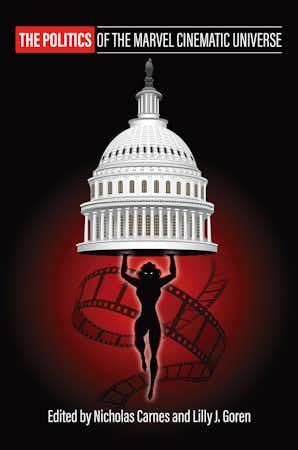
I saw the new Black Panther 2: Wakanda Forever last night, and it was ok.  There is so much bad IR in this--usually, the politics of MCU movies has some kind of logic to it, even if faulty.  By the way, check out the new Politics of the MCU for some analysis--it is being delivered to bookstores and maybe comic bookstores near you right now!! 

 Spoilers will dwell beneath the break along.

Monday, April 13, 2020

Everything I Know About Social Science I Learned By Watching Reruns in the 1970s

I basically got challenged and trapped by Seva:

What did these old shows teach me that is relevant for contemporary social science and especially the stuff that I do.

Sunday, April 5, 2020

With Whom Would You Want to Self-Isolate, Fiction Edition?

Thanks to Binge-Mode (a Ringer podcast that has gone through Star Wars, Game of Thrones, and Harry Potter stuff and is now looking for more stuff to do), we have a fun game to play in our time of endless ... time.  Who would you want to hang with if you could choose three fictional characters?  Of course, besides the lovely, wise, and funny Mrs. Spew.

My answers:
  • Hermione from Harry Potter: as Mallory argued, she is smart, has heaps of magical ability that would be most helpful during a quarantine, is a good book club partner, and more. 
  • Spenser from the Robert B. Parker novels: he is an excellent cook, he is a delightful smartass, an excellent detective, chock full of integrity, and if things get physical, he can slug his way out of trouble (well, that he probably helped cause). 
  • Mork from Ork: he has advanced technology and abilities that would be handy in a crisis, he has a big heart, but mostly I am choosing Mork because he would be endlessly entertaining.  After all, he is Robin Williams.  
Rejected choices:
  • Jedi make too many big mistakes to include.  
  • Leia makes a great deal of sense, of course, as a leader.  But I am pretty sure she would get pretty restless being stuck in one spot for too long.  
  • Jack Reacher is too damned big, making the entire house seem small.  
  • The Dread Pirate Roberts (Wesley version) would be super handy as he is a person of many talents, but I am not sure fencing or naval strategy would be of much help.  
  • Marty McFly?  Oh, I could use a Dolorean right about now, but he seems kind of hyper to be stuck with in self-isolation.  
  • Hawkeye Pierce would be a great companion--he made a 11 series/3 year war seem to fly by, but he would want to treat patients, and so he would not be around much and he would drink everything when he was.  He is good at building a still to make more booze, however.
  • Mary Richards would be great--she could take a nothing date and make it seem worthwhile.  But not sure she brings a skill set that would be handy.  
  • Speaking of Mary's, Mary Poppins would be an excellent choice.  She too has magical capabilities, is very entertaining, would keep things tidy, and is, well, supercalifragilisticexpialidocious.  However, her perfect-ness might get old quickly.  Notice, she never hangs around for very long.  She knows quite well her own abilities, so she leaves before she gets too annoying.  Smart lady.  
  • Indiana Jones?  No way.  He would be crawling out the window at first chance as there would not be sufficient adventure in the quarantined house.  
  • Most of the Avengers would not be terribly useful, and they seem to rub each other the wrong way when they hang out. 
What are the three people from fiction that you would want to spend the quarantine with?

Sunday, December 8, 2019

NATO High School: Closer to Reality Than You'd Think

Saturday Night Live finally got there--capturing a bit of International Relations far better than, well, how the US president understands it.  This sketch portrays NATO as if it were high school, with a cool kids table featuring Trudeau/Canada, Macron/France, and BoJo/UK.  Eventually, Merkel/Germany is invited to join and she is super excited to do so, while Trump is left to hang with Latvia. 

With a few quibbles, this is how NATO used to operate with, of course, the US at the cool kids table.  How so?  NATO has always operated with mini-lateralism pushing the multilateralism.  That to push major initiatives forward, a small group of allies work together to develop the agenda and then once they get agreement, they present it to the rest of the alliance.  Oh, and while these mini-groups were led by the US, in my experience, there was a well-coordinated British effort to get the US to do its bidding.  Both the US leadership and clever British manipulation  were lacking from the SNL sketch .... perhaps because the sketch kept up with current events really well, perhaps accidentally capturing Macron's brain death comment.

Let me explain both the past and the present.  In 2001-2002, NATO members became concerned that three separate operations in the Balkans--SFOR in Bosnia, KFOR in Kosovo, and Operation Essential Harvest (really!) in Macedonia--was more expensive and had a variety of seams than if there were a single NATO effort.  So, there were many meetings to "regionalize" the NATO effort in the Balkans, with the idea of centralizing things at NATO's HQ in Naples and developing a better division of labor.  Much of the impetus of this was led by the QUINT: five countries providing the biggest contingents--US, UK, France, Germany, and Italy (not Canada, but I will get to that).  Once these five countries agreed to a plan, they shared it with others.  This is not that controversial or new. 

What was less well known was that much of this was driven not by the US but by the UK--that the British had troops in both Bosnia and Kosovo and desperately wanted to reduce costs by being in one rather than both.  So, the Brits developed a well-coordinated effort to push their agenda, disguised by this larger argument about efficiencies, to get out of Kosovo.  This was most problematic to the French because it meant that they could be alone in the most difficult part of Kosovo--Mitrovica where the Serbs and Albanians bordered each other.  This British effort to work the system, coordinating their personnel in Naples and the various HQ's in the Balkans, with diplomats in Brussels and in DC was best symbolized by something that happened in the Joint Staff in DC.  One day, an early draft of the plan was found on one of the chairs in the Central and Eastern European Division of the Strategic Planning and Policy Directorate of the Joint Staff... where I was working.  We wondered where it came from, but then we realized that the British Defense Attaché had been in the office earlier that day.  So, this is how NATO worked--small groups of the "cool kids" working together with their coolness defined by how much they brought to the mission and then imposing their will gently or not on the rest of the high school alliance.

Now?  How are things different?  Well, in Afghanistan, the group of cool kids was a bit different as it was not just the size of the contingent that determined membership but what they were doing.  So, the US and UK were still the central players because they had large contingents  AND they were relatively unrestricted by domestically imposed caveats (where they could operate, whether they could engage in offensive operations, etc).  The Canadians, while they were in Kandahar, largely got to be in this club as well, because they were willing to move around RC S to help out whoever needed it.  The Germans and Italians?  They had the third and fourth largest contingents, but they got moved to the semi-cool kids table (where Merkel started in the SNL skit?) because they didn't have as much freedom to operate and could not contribute as much to the fight.  The French?  Off in a corner since Chirac was so pissed off at Bush.  Sarkozy got France back into the cool kids table as he removed the restrictions, making France a more valuable player.

Today, NATO is brain dead in Macron's words, as neither the US nor the UK are cool.  Trump hates the club and those in it, British is too busy destroying its relationship with the world to scheme how to get the cool kids to do its bidding.  By default essentially, Trudeau/Canada becomes one of the cool kids, one of the voices of NATO cooperation, as I saw in person at the NATO summit in Brussels in 2018.   And, yes, the audience there ooo-ed and aah-ed when Trudeau appeared, so yeah, definitely a cool kid.  BoJo these days?  Not so much, but I think he was portrayed well by James Corden as being out of synch with the others. 

Anyhow, I never thought I would see the day that a satire on SNL would get NATO better than the President of the US (who thinks of it either as a country club or protection racket).  Did you?


Friday, August 2, 2019

Teaching with Pop Culture: Footloose FTW!


I love this tweet as it puts the usual dynamics on their head:
Each summer, profs are reminded how much younger the students are and then the onus is on them to update their references.  This tweet nicely makes fun of profs by suggesting the reverse.

As always, I have two reactions to this:
a)  I use Harry Potter, which is timeless.  Or at least, not yet obsolete.  I long ago gave up references to Monty Python.
b)  When a pop culture reference is super-handy, I show it.  I have used Star Trek and Babylon 5 to show the different notions of ethnic identity--ancient hatreds vs. infinitely elastic, for example.  But the go-to reference for me is Footloose.  It shows the power of a fully armed and operational cultural reference.  And, yes, I have discussed this before, but not everybody is going to dig through my old posts where I explain how to make a good pop culture reference for IR.

Let me explain, show, and then explain some more:
One of the key concepts for the discussion of international security is the use of threats.  Thomas Schelling did great work to explain the complexities of using threats in competitive situations.  The game of Chicken where two players have the choice of heading directly at each other or swering to avoid disaster.  This can be expressed in a 2x2 of payoffs that help to illustrate the use of threats and their limitss.  Boomer profs might refer to James Dean, but this one scene from Footloose shows lots of the dynamics that Schelling sought to explain and which do play out in many situations in International Relations.  Indeed, Schelling and Kevin Bacon go together like the music in this video with the action:


So, Ren (Kevin Bacon) is driving one tractor, and Rusty is driving another.  The stakes essentially are the girl (Lori Singer), and I will let those using a feminist lens problematize that.  When I show this to the students, they notice the most obvious and important thing: Kevin Bacon is tied to the tractor so he can't swerve.  That one of the ways to win Chicken to surrender one's ability to swerve.  This puts the onus on avoiding disaster on the other player.  Schelling talks about burning bridges beyond oneself, for example.  In IR, tripwires serve the same kind of purpose--that the deaths of many of one's soldiers ties one's hands and create the sense of automaticity.  The idea of a dead man's switch fits in here.

Ah, but this example allows me to point out to the students that Ren did not communicate being tied to the tractor to Rusty, so things get closer than they should have.  That communicating threats and how firmly one is locked in is key.  To be fair to Ren, his mishandling of the tractor itself is useful signalling--that he can't control it as well as Rusty can control his tractor, so, again, the onus for avoiding disaster is on Rusty.

But that is not all.  I point out that both teens (who both look like they are in their mid 20's) have their friends with them.  This is not at night, they are not alone.  In the IR literature, the parallel is audience costs.  That threats are more credibly if there are domestic audiences who might punish a leader for not following through on their threats.  One could even suggest that Ren has more audience costs than Rusty since Ren is more of a consensus seeking (democratic) kind of guy, and Rusty is a bit of a dick (an autocrat) who cares less about his friends' admiration, etc. I never did play this regime type stuff up before, but that is the joy of this short video--each time I watch it, I see another IR dynamic playing out (not sure how making fun of a young Sara Jessica Parker fits, but whatever).

I always ask what did Rusty do wrong, and the students say that he smoked pot (yes, these Canadian kids!)  My response is that the mistake was not smoking pot, but not telling Ren that he is high.  Pot slows reaction times, reduces (perhaps) sensitivity to costs, and makes it more likely he will not swerve (or at least swerve at the last minute).  My point is that Rusty needs to inform Ren so that the latter is more nervous and swerves. This is the equivalent of Schelling's "toss the steering wheel out the window" to signal a loss of control.

Finally, Ren is new to town, his reputation is not clear.  Which makes it harder for Rusty to figure out what Ren would do.

I just realized something I need to ask the next batch of students (yes, I am teaching undergrads IR theory again--woot!): what happens if they play this game a second time.  A third?  Hmmmm.

Nice to be excited about teaching again with, gulp, just one month left before the students come back.


Monday, December 24, 2018

Into the Spider-verse? Yes, Please

I just came back from seeing the new Spidey movie for the second time, first time in 3D and second time in 2D.  The funny thing is that I stopped collecting comic books because Marvel decided that each story had to be told in multiple comic books, so one would have to buy five different series to follow one character.  This spider-verse thing was part of that disease--how do you follow Spidey?  Buy 3-7 books a month.  Yuck. 

But now? Here's the spoiler-free review: it may be the best Spidey movie yet.  Yeah, I liked the original 2 movies by Sam Raimi with Tobey Maguire, and I loved Tom Holland's Homecoming, but, well, damn.

Monday, December 3, 2018

Few Fantastic Beasts

This weekend, Mrs. Spew and I saw the latest in the Harry Potter universe: Fantastic Beasts 2: The Crime that is Focusing on Grindelwald.  And I am not a fan.  See below the spoiler break if you care

Friday, November 3, 2017

If This is the Upside Down ...

Thanks to a tweet by Michael Cohen (speechboy columnist, not the lawyer for Trump), I started to think about what it would mean if this were the Upside Down.  But to discuss that, I need to invoke the Spoilers break since I have seen Stranger Things 2 and you might not have:

Saturday, July 15, 2017

Game of Thrones Returns: Place Your Bets

The joy of blogging about proposition bets is I know get regular emails from a guy who represents sportsbettingexperts.com on various possible wagers.  Mostly, I have noticed stuff on who may last or not in the Trump administration, but the most recent one was regarding Game of Thrones: who wins, who dies, etc.  They took a fan survey to develop the basic expectations and then set the odds.

So, of course, on the eve of the penultimate season, I have thoughts.  So, below are the odds with my comments (with spoilers for those who have not watched the sixth season):

Thursday, July 13, 2017

D&D and the GOP

I have often posted here and on twitter about how that keen insight from Dungeons and Dragons character attributes applies so well: that intelligence and wisdom are two distinct characteristics.*  One can very smart but not every wise or can be wise but not very smart.  Given Jeff Sessions saying on his SF-86 form (the form one fills out to get/keep a security clearance) that he had not met any representatives of any foreign government over the previous seven years, I had to conclude that he is not very wise.  I am not sure he is all that smart either, but he certainty is not wise as defined by D&D:
Wisdom describes a character’s willpower, common sense, perception, and intuition. Intelligence determines how well your character learns and reasons
The scores range from 3-18 for humans (other species in the D&D universe can go above 18 if I remember correctly.  Anyhow, I thought it would be fun to imagine the character sheets for key political players these days, and, please correct me if I am wrong or come up with better takes than this.

Donald Trump
Race: Half-orc.  (Like Voldemort, this case of mixed parentage has bred xenophobia) Dwarf (Peter Trumbore convinced me this fits better: "Avarice, boorishness, and xenophobia are all classic traits of the dwarves. As is clannish behavior."
Alignment: Chaotic Evil (Chaos vs Law reflects freedom/adaptability/flexibility vs. honor/authority/reliability/trustworthiness; Good/Neutral/Evil reflects altruism/respect for life/respect for dignity vs harming/oppressing/etc)
Class: Thief (Duh)
Strength: 15       Donald has crushed some hands in his day.
Dexterity: 18      He can act quickly and spin quite a bit.
Constitution: 6   He tires easily.
Intelligence:  7   He really does not like to learn.
Wisdom: 12        He has some sense and intuition--he can figure out a crowd.
Charisma: 18      (orce of personality, persuasiveness, personal magnetism, ability to lead, and physical attractiveness)  I don't get it, but he does have a powerful personality, he persuades people despite being utterly full of bs, and so on.

Jeff Sessions, who inspired this post.
Race: Elf (Duh)
Alignment: Lawful? Evil.  That he has very fixed principles about who should be ruling and who should be serving.
Class:  Cleric, pretty sure he might be able to control the undead.  Instead of healing, he causes pain and suffering.
Strength:  11
Dexterity: 15
Constitution: 18  He seems to have much stamina as he works really hard to destroy the Justice system
Intelligence: 14  He has learned how to be better at being a racist
Wisdom:  9        That SF-86 is just unwise.
Charisma:   6      He is definitely not likable.

Jared KushnerRace: Human child
Alignment: Chaotic Evil.  He is just an opportunist, who is imitating his father by selling out his brother-in-law.
Class: Wizard but level 1. He has little magic and is less effective in combat.
Strength:  7
Dexterity: 6       He seems have lousy reflexes, does not really act quickly.  Does he act at all?
Constitution: 7  Seems sickly
Intelligence:  5  Needed father's help to get into Harvard.  Any evidence thus far of learning?
Wisdom: 10      He is not very wise, but his efforts to deflect responsibility seem to be working so he may be craftier than he seems.
Charisma:  14   While unlikable from a distance, it is hard to understand his ability to float through life thus far.  People around him keep giving me more chances, so I guess he has some magnetism.

Don Jr.
Race: Human (I apologize on behalf of all humans for what he does).
Alignment: Chaotic Evil. He wants to be his dad.
Class: Thief (but of low skill)
Strength: 8
Dexterity: 5     He can't help but trip all over himself
Intelligence:  4
Wisdom:  3  Did you see him tweet?
Charisma:  5  Ewwwwwww!

Ivanka 

Race: Half-Elf
Alignment: Neutral evil
Class: Wizard   She can cast spells, no doubt about that.
Strength:  13
Dexterity: 16    She can move so swiftly and dance so well that none of the shit her family creates seems to stick to her.
Constitution:  17   She seems to have all of the family's stamina.  She keeps at it, when one would expect her to run or hide.
Intelligence: 16  Among this group, she is a genius.
Wisdom: 12  She is wise relative to her family but just to them.
Charism:  17  She is pretty and seems to get folks to do her bidding again and again (see Drezner's post)

This has taken more time than it should (I had to research the atttributes, classes and such), so I will just summarize a few Dems:
Bill Clinton:  INT 17, WIS  5, CHR 18, Chaotic Neutral
Hillary Clinton: INT 16, WIS 8, CHR 10 (good in small groups, bad in crowds), Neutral Good (persuaded by JTL)
Barak Obama: INT 18, WIS 14, CHR 18, Lawful Good
Bernie Sanders: INT 14, WIS 15, CHR 16, Chaotic Good/Neutral (not sure)
Joe Biden:   INT  14, WIS 9, CHR 17, Chaotic Good


* I have not played D&D in many decades so I am probably not the best person to be doing this.  However, I called this place "Semi-Spew" which could be interpreted as half-assed.

Saturday, July 8, 2017

Spider-Man, Spider-Man, I Can Rank Any Series Any Time

Of all the comic book characters, Spider-man was always my favorite.  X-Men was my favorite team, but Spidey was the one I most enjoyed.  So, yeah, we saw the new Spider-Man movie--Homecoming--the night it came out.  It is no spoiler to say that it was terrific.  The most thoroughly fun of all the Spideys, but is it the best?  Swing to the spoiler-filled rankings below:

Monday, June 26, 2017

Pet Professor in Film Peeve

I saw a tweet about a movie about a prof, and, of course, it is about his relationship with a student.  FFS.  So, I tweeted thusly:
I got lots of agreement and some pushback, with some saying that there is still plenty of profs pursuing all kinds of relationships with students.  I get that, as that has been a source of much Spewing here.  Indeed, predatory sexual relationships with grad students have been a central plot line in two of the four places I worked.  still, the norms have changed--this stuff is not seen as ok as it used to be, even as some profs can end up marrying their students even in the present day and so forth.

But, damn it, isn't there another story to be told about professor life besides this one?  I guess the fundamental problem is that our professor lives are just not that interesting.  Sure, the story of a bumbling chair and the divide between junior and senior faculty would have made for a better TV show than movie--Hogan's Heroes in Lubbock!?  There has been a movie or two about department politics and tenure that have not focused on sleeping with students, but these are rare.  Oh, and tenure politics are so obscure for mainstream audiences that such movies have to do heaps of explaining or do stupid stuff like making tenure seem like a zero sum game between two profs.

When is it ok to focus on prof-student relationships?  Obviously, when it is done creatively, intelligently and entertainingly is the right answer.... but since that does not happen much, I'd say I don't mind it so much when:
  • When the movie is set in an earlier time, when the norms had not yet changed.  Also, when the butt you see is Donald Sutherland's.
  • The target of the romantic attraction is a student of roughly similar age as the prof, so it is not so skeevy.  Indeed, when the woman is played by Marisa Tomei, I can't really get upset.
  • Perhaps when the skeevy prof faces serious consequences?  Nah, that would be too unrealistic.
One of the problems with having so many prof movies focus on this dynamic is that it may reverse the taboo--that it makes normal that which should not be normal. 

Anyhow, perhaps Hollywood should learn that the most successful professor movies of all time did not involve any sex/romance between professor and student:

Ok, some profs were incompetent, corrupt,
or murderous, but no sexual stuff here.
Sure, students crushed on Prof. Jones,
but that is as afar as it went.
Sure, he puts his students in harm's way


To be fair, a bit of this is confirmation bias as various lists of best movie profs have plenty that don't sleep with their students (Good Will Hunting, etc). So, it can be done, but, lazy writers can rely on this trope... I just don't have to watch.

Monday, May 29, 2017

Caveats Go Hollywood

A few years ago, I got contacted out of the blue by the people who produce Brad Pitt movies.  They were working on a movie about the US effort in Afghanistan, had found an article David Auerswald and I had written. They were looking for interesting material to supplement the stuff they were using from Michael Hasting's work on General McChrystal, and so I ended up having a phone conversation with a producer while he was driving around Los Angeles.


So, I had been eager to see War Machine, the Netflix movie that just dropped this weekend.  Lo and behold, within five minutes, there's a junior officer talking about alliance politics, using a line I had said in many talked (see the slide) about countries not being willing to fight at night or in the snow.


The way the officer sound it sounded exactly the way I talked about it in numerous presentations.  So, I think I conveyed it that way while on the phone.  They could have gotten the line from the book (see to the right), but not the article that they originally mentioned.

Anyhow, I was mighty pleased to see our work appear in a movie.  Not sure it counts as either a citation or policy relevance, but I will take it.

Regarding the movie itself, it tries to have it both ways: tell the McChrystal story and be a fictional take.  So, there is some confusion about what really happened.  For instance, in the movie, Obama blows off McMahon (Brad Pitt as McChyrstal) in Copenhagen.  From what I remember, they did meet and chat there.  For my interests, I was more annoyed by a line later in the movie as McMahon was trying to get more contributions from Europeans (force generation is begging!)--that the Germans would contribute but that their contribution would be restricted to base.  Alas, as Dave and I found and wrote about, this ain't true--the Germans actually made their troops more flexible--able to engage in offensive operations--in 2009 (around the time McChyrstal was doing this stuff) because their parliamentarians had realized that the restrictions had made the German troops targets.

So, I am pleased to see our stuff in a film and that force generation be depicted pretty well, but, of course, the movie took liberties, which is to be expected.  Anyhow, that is my brush with Hollywood until my daughter graduates and starts making movies there.


Saturday, May 27, 2017

Thinking About Teen Groot

If you have not seen Guardians of the Galaxy 2, then, well, too bad.  But as I was chatting with Mrs. Spew about how HR McMaster may be the Rocket Racoon to Trump as Baby Groot in the bomb training scene (it was in the trailers).  I seem to remember a political cartoon illustrating this. This is all I could find:


Anyhow, this led to thinking about the next movie and the idea of Teen Groot really hit us.  I have already imagined the conversation:

Teen Groot:  "I am Groot!"
Rocket: "Yes, you have to come with us."
Teen Groot:  "I am Groot!"
Rocket: "No, you can't just stay at home and play videogames!"
Teen Groot:  "I am Groot!"
Rocket: "Yes, it is embarrassing for you to be seen with us."
Teen Groot:  "I am Groot!"
Rocket: "No, we are not going to let you drive."
Teen Groot:  "I am Groot!"
Rocket: "No, you can't just hang out with your friends tonight."
Teen Groot:  "I am Groot!"
 ......
and on and on.  

Monday, March 13, 2017

Logan: One Hot Take

Just saw Logan, enjoyed it muchly.  I have just one nit to pick beyond the spoiler break.


Thursday, March 2, 2017

The Basics of Comparative Methods: Ask the Folks on Sesame Street

Today, I had an epiphany: Sesame Street taught me some of the basics of methodology.  I know I have done far more most similar comparisons (what Mill called Method of Difference) than most different comparisons.  And where did I get my first inkling?


And if you want to be picky and say that they are talking about causality, then you are a party pooper.

Sunday, December 18, 2016

Going Rogue: Too Soon to Rank?

I saw Rogue One last night, so I have many thoughts below the break (spoilers, including there is this thing called the Death Star, oops):


Wednesday, November 16, 2016

The Silliest Distraction and the Enduring Power of Harry Potter

Lots of crossfire on the internet about whether it is right or not to invoke the fiction of Harry Potter as we grapple with the reality of Trump as President-Elect of the United States. People are saying that the reality is so serious that we should not rely on children's stories to inspire us or to provide insights into the present day.

Readings of the Semi-Spew know my answer to that is to reject that argument.  Why?

First, do not diminish the coping mechanisms that people rely on.  The immediate future is so dark that if fiction provides comfort, fine.  If some booze provides comfort, drink.  If chocolate chip cookies or cinnamon buns provide comfort, then eat.  We are now living in a very difficult situation, so let's not fight about coping mechanisms.

Second, fiction of all kinds has been useful to inspire people who seek to resist racism, xenophobia, misogyny, and all forms of creeping and not so creeping authoritarianism.  Stories about successful resistance, fictional or real, can help people as they grapple with the harsh realities.

Third, Harry Potter, in particular, is a widely shared piece of pop culture. In an age of "too much TV" and with fragmentation of popular culture, there are very few pieces of fiction that resonate widely.  Harry Potter is enormously popular both as books and as movies, with an entire generation (dare I call them millennials) exposed to the characters and themes.  What themes?  How about resisting intolerance?  How about fighting against repressive governments?  How about working with others to support those who are alienated and excluded? The reason why people are referring to Harry Potter right now is that the stories resonate.  Trump is not Voldemort, but they and their movements share many traits--the demonizing of others whether they are Muslims or Mudbloods, the need to conform with the majority, the use of disinformation, efforts to divide those who resist, and on and on.  Oh, and the fact that those who have read the HP books are more tolerant might be more than just a bit significant.

One can go into greater depth and specificity about how various elements of the HP world help folks make sense of contemporary politics in the US (and UK!).  My point here is that it is wrong to dismiss Harry Potter and other pieces of pop culture that might actually do some good.  If folks don't want to use HP, they can rely on Star Wars, which is also about rebelling against racist autocracts.  "Save the rebellion, save the dream" is not a bad call to battle.  And for the Trump fans who read me, when I say battle, I mean political, non-violent resistance.

Anyhow, much work to do, so fighting over this stuff is, indeed, distraction sauce.