Wednesday, June 11, 2014
Micro-Management Pondering
I posted this at Political Violence at a Glance after having heaps of US SecDef input over the past couple of weeks. I will write a review of Robert Gate's memoir later this week or early next.


Tuesday, June 10, 2014
Alt WashPo
The Washington Post is really doing incredible things to inform the public about rape culture -- by exemplifying it. Yesterday, George Will argued women in universities wear their rapes as badges, something they covet. Today, a post using data on violence against women to argue that women should get hitched since the most targeted category are single mothers.* Oy.
How about a little experiment--take the same chart and think about it some more? Here we go:
*WashPo changed the title of the piece but you can see the original one if you mouse over the link above.
How about a little experiment--take the same chart and think about it some more? Here we go:
 |
| WashPo |
Wow, single mothers get attacked more than other women! However, there is good news: the trend is heading down. This raises two questions: why are single mothers attacked? And why is this going down?
Perhaps single mothers are being attacked because they are ex-wives, and we know that violence against women tends to increase as they try to separate from their abuser. Perhaps this might have something to do with poverty since single mothers tend to be poor. Single mothers are clearly vulnerable for a variety of reasons, so we should not be surprised at all that single mothers face more violence than other women.
How about the trend downwards? Is this because society is increasingly intolerant of those that abuse women? That would have the biggest impact on single mothers since they are the ones at greatest risk. Perhaps laws have changed so that penalties are harsher? Perhaps the courts are better at ruling in favor of the beaten rather than the beaters, serving as both deterrent (folks may not beat as much) and prevention of repetition (the beaters are in prison). Perhaps being a single mom is less taboo and thus violence against them is more taboo?
We sure could use more social science to figure out why single mothers are so vulnerable and what has reduced the frequency of violence against especially these women.
Here's hoping a national newspaper does some serious investigation.
Rethinking my Fandom
I grew up as a fan of the Washington football team as I became aware of football when my family lived in the DC area. I lost my love of the team when Dan Snyder took over and proved to be a lousy owner. Around the same time, I started to feel squishy about the name of the team. Only recently has the movement to change the team name caught fire. And it really has.
This ad will be playing during the NBA finals. It is a shorter version than that which aired near the Super Bowl. Powerful stuff. And very clear. Time to change the name. Until it happens, I will not be a fan of the Washington football team.
This ad will be playing during the NBA finals. It is a shorter version than that which aired near the Super Bowl. Powerful stuff. And very clear. Time to change the name. Until it happens, I will not be a fan of the Washington football team.
Monday, June 9, 2014
Illustrated Concept Day Continues: Tail Wagging Dog
This cartoon does a wonderful job of illustrating how the football tail wags the university dog:

Illustrating Basic Concepts Day, Part Deux: Tooth to Tail
When we discuss the size of militaries and the costs of modern warfare, a key concept is tooth to tail--how much of one's allocation of personnel/money is to the actual fighting versus the support necessary to keep the personnel and weapons systems in the fight.
Today, the Canadian Forces tweeted a picture that unintentionally demonstrated this to a T:
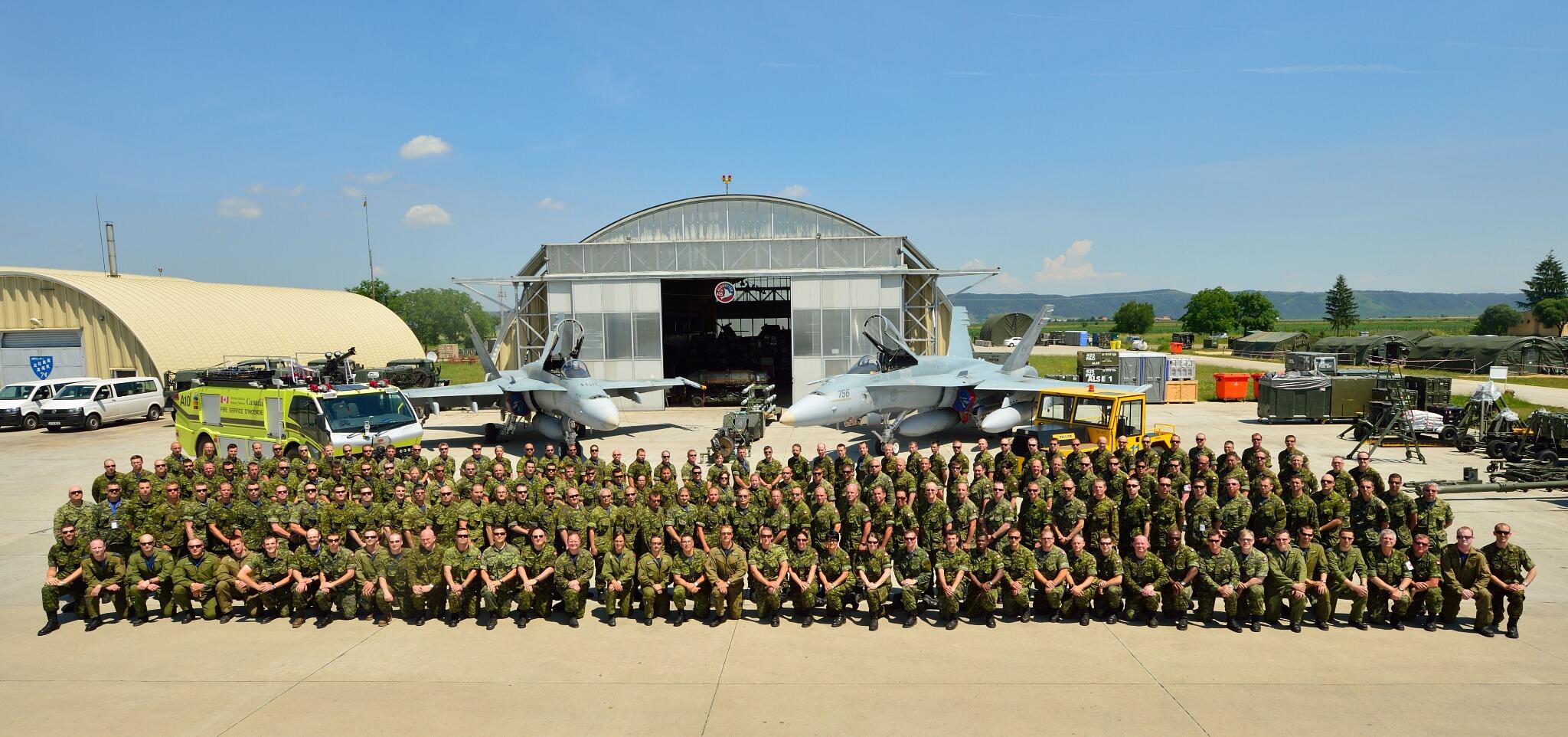
Canada has sent six CF-18s (Canadian versions of F-18s). There are way more than six pilots in this picture, eh? So, this picture is a mighty good demonstration of modern-day tooth to tail--where most of the resources support the folks in combat rather than actually go into combat.
I do not post this as a critque of the RCAF but to merely illustrate a basic reality for most (all?) modern militaries.
Today, the Canadian Forces tweeted a picture that unintentionally demonstrated this to a T:
Canada has sent six CF-18s (Canadian versions of F-18s). There are way more than six pilots in this picture, eh? So, this picture is a mighty good demonstration of modern-day tooth to tail--where most of the resources support the folks in combat rather than actually go into combat.
I do not post this as a critque of the RCAF but to merely illustrate a basic reality for most (all?) modern militaries.

Sunday, June 8, 2014

Saturday, June 7, 2014
Rum and Rummy
I got a band of snarky Canadians to watch the Errol Morris documentary about Donald Rumsfeld while we tried out rum-based drinks: Rum and Rummy! The rum drinks were far better than the doc, if I do say myself as the bartender. Oy, Rumsfeld is unreflective, completely lacking in sympathy, largely devoid of insight.
Here is my storify of the occasion.
Check it out... or not. We had fun, but that was mostly due to the company, the rum and the rum cake (yes, I baked before being baked).
One might find this doc to be particularly vulnerable to confirmation bias--that fans of Rummy would find his pedantic take on everything to be perfectly useful and insightful. His non-fans (a club in which I have long been a member) would see mostly justification for their previous beliefs. But we did have some folks in the room that were on the fence before watching and found themselves pushed over to the non-fan side as a result of the documentary.
Should I have expected any reflection from Rumsfeld? Perhaps not. But maybe, just maybe he could have acknowledged the many contradictions he fudged along the way. Nope. I still think he is the worst SecDef in history. Perhaps that jaded my views, but it is a good thing we did not set this up as a drinking game. Otherwise, unknown unknowns and other efforts to elide and deny would have gotten all of seriously hammered.
Here is my storify of the occasion.
Check it out... or not. We had fun, but that was mostly due to the company, the rum and the rum cake (yes, I baked before being baked).
One might find this doc to be particularly vulnerable to confirmation bias--that fans of Rummy would find his pedantic take on everything to be perfectly useful and insightful. His non-fans (a club in which I have long been a member) would see mostly justification for their previous beliefs. But we did have some folks in the room that were on the fence before watching and found themselves pushed over to the non-fan side as a result of the documentary.
Should I have expected any reflection from Rumsfeld? Perhaps not. But maybe, just maybe he could have acknowledged the many contradictions he fudged along the way. Nope. I still think he is the worst SecDef in history. Perhaps that jaded my views, but it is a good thing we did not set this up as a drinking game. Otherwise, unknown unknowns and other efforts to elide and deny would have gotten all of seriously hammered.
Friday, June 6, 2014
It Has Gotten Better
D-Day + 70 years means much time for reflection. The vets who risked it all way back when are apparently wondering about the present and the future. The quick answer is, in part thanks to them, the world is a better place. Yes, even post 9-11 and post financial crisis. In most objective measures, it is better now: less war, less intra-state war, less poverty, more empowered women, less tyranny, less disease (despite Jenny McCarthy's best efforts), and on and on.
We may perceive things to be worse since we have so much media and so much internet to remind us of all that is awful in the world. But the aggregate statistics show that things are better. Sure, it is trouble dealing with Iraq, Iran, and Syria these days. But I prefer those threats to the bipolar, hair trigger cold war, where we came pretty close a few times to nuclear war. Yes, there are more countries with nuclear weapons than before, but the hair trigger is not quite there. Yes, Russia is obnoxious these days, but there is no threat of Russian armies marching across Europe, unlike the 1980s.
The big threat to the future is not the tyranny of the past nor the xenophobia of the present. It is climate change. So, we have much to worry about, but we always did have much to worry about.
So, thanks to the folks who sacrificed so much to make victory over the Nazis possible (especially the Russians who lost so much [they were led so poorly]). You made the world a better place. And it is still a better place. Even with some regression here and there.
We may perceive things to be worse since we have so much media and so much internet to remind us of all that is awful in the world. But the aggregate statistics show that things are better. Sure, it is trouble dealing with Iraq, Iran, and Syria these days. But I prefer those threats to the bipolar, hair trigger cold war, where we came pretty close a few times to nuclear war. Yes, there are more countries with nuclear weapons than before, but the hair trigger is not quite there. Yes, Russia is obnoxious these days, but there is no threat of Russian armies marching across Europe, unlike the 1980s.
The big threat to the future is not the tyranny of the past nor the xenophobia of the present. It is climate change. So, we have much to worry about, but we always did have much to worry about.
So, thanks to the folks who sacrificed so much to make victory over the Nazis possible (especially the Russians who lost so much [they were led so poorly]). You made the world a better place. And it is still a better place. Even with some regression here and there.
Thursday, June 5, 2014
The Right's Hostility to Political Science
A Slate piece poses the question but does not really answer why the Conservatives in the US Congress are so motivated to end federal funding of political science. The obvious answer is: ignorance is bliss. The job of political science is to develop a better understanding of politics. Who is against that? Well, those who do not want voters, the media and others to understand politics. Why would the Right Wing want an ignorant public? Perhaps because they tend to support stuff that runs counter to what is best for the country? That they support stuff based on myths, such as the supposed threat of voter fraud?
Here is a study that is sure to be most upsetting to the Right: that those representatives who support voter id laws--what I call voterfraudfraud--tend to be ... racist. Yep, political scientists experimented on representatives, sending emails to them using vanilla names like Jacob Smith and Latino ones like Santiago Rodriquez. Sure enough, the response rates were different for those who supported voter id laws.
There is an interesting irony here. There was a recent study that showed that professors tend to respond to emails out of the blue better if they are from males and from males with less ethnic names. So, my kind, professors, may be just as racist as the purveyors of voterfraudfraud. The difference? Professors as a class are not trying to squelch research, but the right wing representatives certainly are.
I do think the ignorance is bliss approach is a rosetta stone for understanding the GOP's approach these days. Too much understanding is bad for their party. It probably explains why so many sales of my distraction sauces are to folks living in Red states.
Here is a study that is sure to be most upsetting to the Right: that those representatives who support voter id laws--what I call voterfraudfraud--tend to be ... racist. Yep, political scientists experimented on representatives, sending emails to them using vanilla names like Jacob Smith and Latino ones like Santiago Rodriquez. Sure enough, the response rates were different for those who supported voter id laws.
There is an interesting irony here. There was a recent study that showed that professors tend to respond to emails out of the blue better if they are from males and from males with less ethnic names. So, my kind, professors, may be just as racist as the purveyors of voterfraudfraud. The difference? Professors as a class are not trying to squelch research, but the right wing representatives certainly are.
I do think the ignorance is bliss approach is a rosetta stone for understanding the GOP's approach these days. Too much understanding is bad for their party. It probably explains why so many sales of my distraction sauces are to folks living in Red states.
Wednesday, June 4, 2014
Pondering the Pacific
Anniversaries relating to the Pacific War tends to get less attention in the American media than those of the European War. Today is the anniversary of Midway, which turned the tide in the Pacific. Before that battle, besides the Doolittle mission (whose success was almost entirely symbolic), there were no victories.
The US subs were fighting hard but the torpedoes were iffy at best. The Battle of the Coral Sea was seen, as far as I can remember, a draw. Midway's outcome was much, much clearer--four Japanese carriers lost to one American, and the end of any Japanese naval effort to extend its control. Because the Americans could and did make many new carriers, and the Japanese could not, these losses were huge, along with Japan's loss of experienced pilots.
Guadalcanal came later, as did the landings in Africa. So, it is pretty clear Midway was the turning point, but it does not get much recognition because it happened in early June, and is, thus, in the shadows of the D-Day anniversaries.
Thanks to Steven Speilberg and Tom Hanks, when we think of D-Day these days, we think of Band of Brothers, which documented quite well how one company played a role in that Day of Days. The show is eminently re-watchable, and I have done that more than a few times.
How about their "The Pacific"? I am now watching it for the second time. It really is terrific. Alan Sepinwall, the TV critic, responded to my tweet thusly:
The US subs were fighting hard but the torpedoes were iffy at best. The Battle of the Coral Sea was seen, as far as I can remember, a draw. Midway's outcome was much, much clearer--four Japanese carriers lost to one American, and the end of any Japanese naval effort to extend its control. Because the Americans could and did make many new carriers, and the Japanese could not, these losses were huge, along with Japan's loss of experienced pilots.
Guadalcanal came later, as did the landings in Africa. So, it is pretty clear Midway was the turning point, but it does not get much recognition because it happened in early June, and is, thus, in the shadows of the D-Day anniversaries.
Thanks to Steven Speilberg and Tom Hanks, when we think of D-Day these days, we think of Band of Brothers, which documented quite well how one company played a role in that Day of Days. The show is eminently re-watchable, and I have done that more than a few times.
How about their "The Pacific"? I am now watching it for the second time. It really is terrific. Alan Sepinwall, the TV critic, responded to my tweet thusly:
@smsaideman It’s probably the better show, but definitely one I’m less eager to watch again.Why? Because as violent and horrible as the European War was (D-Day and the Battle of the Bulge in particular demonstrate that), the Marines fought in an especially brutal campaign. Fighting the jungle, fighting the rain, and fighting the Japanese made for a very tough watching... and I have not yet gotten to Pelelieu or Iwo Jima yet. Watching The Pacific is like watching the BoB episode "The Breaking Point" about five or six or seven times. Oh my. Still, as we remember the soldiers, sailors and airmen who fought on D-Day, we need to remember the Marines, the sailors and airmen who fought in the Pacific.
— Alan Sepinwall (@sepinwall) June 4, 2014
A Fruitful Epiphany
I am engaged today in a conversation on twitter about the swap of Bowe Bergdahl for five Taliban fighters/leaders/whatever who were in Guantanamo, and I got much reaction to the idea that a 29% recidivism rate seemed lower than expected. Lots of push back on the idea that whatever we calculate for recidivism in Afghanistan is not comparable to recidivism in the US.
So, someone, of course, said: you cannot compare apples and oranges.
Well, you guys know me: I scoff repeatedly at that carnard here, here and here. And now I realize why this upsets me so: if you say you cannot compare, you are essentially saying that we cannot think. That comparison is a fundamental part of thinking about an issue: how is this situation like AND unlike previous/similar situations? If you do not compare, what are you left with? Logic, certainly. But no real recourse to facts. Even the invoking of data means you are comparing--just comparing with heaps and heaps of observations.
From now on, when someone says to me: you cannot compare apples and oranges, I will do one old thing and one new thing. The old is to refer to the blog posts linked above. The new: ask the person if they mind if I think. Because without comparison, my thinking is quite limited. And, of course, so is that of the person asking me not to compare.
So, someone, of course, said: you cannot compare apples and oranges.
Well, you guys know me: I scoff repeatedly at that carnard here, here and here. And now I realize why this upsets me so: if you say you cannot compare, you are essentially saying that we cannot think. That comparison is a fundamental part of thinking about an issue: how is this situation like AND unlike previous/similar situations? If you do not compare, what are you left with? Logic, certainly. But no real recourse to facts. Even the invoking of data means you are comparing--just comparing with heaps and heaps of observations.
From now on, when someone says to me: you cannot compare apples and oranges, I will do one old thing and one new thing. The old is to refer to the blog posts linked above. The new: ask the person if they mind if I think. Because without comparison, my thinking is quite limited. And, of course, so is that of the person asking me not to compare.
Pouring Perspective Sauce on Taliban POW Swap
Of course, much of the criticism of the Obama Administration for making this deal is by people who would (or did--John McCain) criticize Obama for not making the swap if he hadn't. That is, much of this noise is by folks who would lambaste the government no matter what it did.
Still, lots of confusion abounds. For instance, the reports indicate that 29% of the people released from Guantanamo join the Taliban again and engage the US and its allies in combat.
The second confusion is about whether the US in this case negotiated with terrorists. Well, sort of. That is, the Taliban are not coded as terrorists by the US since they are not attacking US interests outside of the civil war in Afghanistan (and it is a civil war--outside actors involved just makes it a normal civil war). The more important thing is this: the US and its friends have often bargained with terrorists. Jimmy Carter bargained with the people holding American hostages in Iran, who agreed to let them go as soon as Carter was no longer president. Ronald Reagan bargained with those holding hostages in Lebanon in exchange for arms being sent to Iran. Israel swaps prisoners all the time, often hundreds of Palestinians for a handful of Israelis. If the bad guys have something you want, either you take it or you bargain for it.
Third, will this encourage more kidnapping of American prisoners? Probably not since the US has already shown a great interest in getting its folks back. And also, the Taliban and its ilk already have plenty of incentives to take American soldiers hostage for the propaganda gains.
Fourth, Bergdahl is especially controversial since he seems to have wondered off his post. Maybe. But in the past, we did not investigate the worthiness of who we sought back in a trade of prisoners, such as during the swaps during the end stages of Vietnam (McCain), so it is not clear we should be doing so now.
Finally, Obama may have exceeded his authority since Congress has passed restrictions on Gitmo prisoner releases. This is the one issue that is really legitimate in terms of qualms. Of course, the fact that Congress is micro-managing Gitmo is bad, but bad laws need to be obeyed until the courts rule or Congress changes its collective mind. Obama says he issued a signing statement for just such a possibility. This made him a hypocrite since he opposed such weaseling efforts before he was President, but also makes the GOP in Congress hypocrites for not minding Bush's abuse of this.
The reality is this: the actual swap is quite normal business as usual in the end stages of a war/intervention. The rest is mostly just politics/blame-casting. So, of course, my effort to pour some perspective sauce on this actually leads me to noticing that there is a heap of distraction sauce being tossed in as well.
Still, lots of confusion abounds. For instance, the reports indicate that 29% of the people released from Guantanamo join the Taliban again and engage the US and its allies in combat.
.@WSJ: Director of National Intelligence estimates in Jan 2014, 29% of 614 released GITMO detainees returned to violenceMy response: damn, that is a mighty low number (see here as well). How so? Well, in the US, roughly two-thirds of the people released from prison are picked up for crimes within three years. So, I do not want to say that there is much rehabilitation going on in Gitmo, but that we need to be clear it is unrealistic to expect a recidivism rate of zero percent. If we understand that, then 29% does not look so bad.
— Norah O'Donnell (@NorahODonnell) June 4, 2014
The second confusion is about whether the US in this case negotiated with terrorists. Well, sort of. That is, the Taliban are not coded as terrorists by the US since they are not attacking US interests outside of the civil war in Afghanistan (and it is a civil war--outside actors involved just makes it a normal civil war). The more important thing is this: the US and its friends have often bargained with terrorists. Jimmy Carter bargained with the people holding American hostages in Iran, who agreed to let them go as soon as Carter was no longer president. Ronald Reagan bargained with those holding hostages in Lebanon in exchange for arms being sent to Iran. Israel swaps prisoners all the time, often hundreds of Palestinians for a handful of Israelis. If the bad guys have something you want, either you take it or you bargain for it.
Third, will this encourage more kidnapping of American prisoners? Probably not since the US has already shown a great interest in getting its folks back. And also, the Taliban and its ilk already have plenty of incentives to take American soldiers hostage for the propaganda gains.
Fourth, Bergdahl is especially controversial since he seems to have wondered off his post. Maybe. But in the past, we did not investigate the worthiness of who we sought back in a trade of prisoners, such as during the swaps during the end stages of Vietnam (McCain), so it is not clear we should be doing so now.
Finally, Obama may have exceeded his authority since Congress has passed restrictions on Gitmo prisoner releases. This is the one issue that is really legitimate in terms of qualms. Of course, the fact that Congress is micro-managing Gitmo is bad, but bad laws need to be obeyed until the courts rule or Congress changes its collective mind. Obama says he issued a signing statement for just such a possibility. This made him a hypocrite since he opposed such weaseling efforts before he was President, but also makes the GOP in Congress hypocrites for not minding Bush's abuse of this.
The reality is this: the actual swap is quite normal business as usual in the end stages of a war/intervention. The rest is mostly just politics/blame-casting. So, of course, my effort to pour some perspective sauce on this actually leads me to noticing that there is a heap of distraction sauce being tossed in as well.
Tuesday, June 3, 2014
Irredentist Amnesia
“For the first time since the Second World War, one European country has taken a province by force from another European country,” Radoslaw Sikorski, the Polish foreign ministerOh really? I guess it depends on what counts as European, what counts as province, and what counts as by force.... I wonder what the Azeris would say to the Poles, given that Armenia fought a largely successful irredentist war to take Nagorno-Karabakh from Azerbaijan, not to mention a "land bridge" hunk of Azeribaijan so that Armenia would have access to NK.
What about hunks of Croatia and Bosnia? Serbia occupied a hunk of Croatia for several years, and both Serbia and Croatia tried to hold onto pieces of Bosnia. Sure, those gains did not last, but they surely lasted longer than the current occupation of Crimea.
Oh yeah, how about Cyprus? It is divided these days with Turkish Cyprus created by the deployment of the Turkish army.
I do not mean to suggest that Russia should not be shamed, shunned and punished. It is just that this irredentism is not unprecedented.
Oh, and a related observation: it is damned hard to reassure an ally. We can do lots of stuff to try to make the Poles and Baltics feel more secure, but nervousness about neighbors and allies' assurances are really, really hard to diminish. Remember how much the US had to do in the 1980s to assure the Europeans that the US would really sacrifice Chicago for Bonn or Paris.
Anyhow, that's my Irredentism and Alliances lecture for this morning.
Monday, June 2, 2014
Ultimate's Future
Ultimate's future is mighty bright. Check out this video of highlights from the high school championships in British Columbia:
Just amazing. Great dives on offense and defense by girls and boys. So glad I am too old to play against such folks.
Just amazing. Great dives on offense and defense by girls and boys. So glad I am too old to play against such folks.
Sunday, June 1, 2014
When is an Organization's Culture Broken?
Last week, the Canadian Chief of Defence Staff Tom Lawson insisted that the sexual assaults by and against members of the Canadian Forces are not part of the CF's culture. This raises many questions. Perhaps the military is just reflective of the society at large, but the statement seemed to ring hollow in part because the military did not have a good grasp of the problem itself. One might think that having a Colonel/base commander who engaged in multiple assaults and murder might have been a wakeup call. It is always easy to suggest that the crimes of one person are just that.
However, when the most senior legal official within the Canadian Forces does not seem to follow the rules, not sending reports to the Minister of Defence, then perhaps the culture is broken. Major General Blaise Cathcart, the Judge Advocate General, apparently has not been meeting the requirements to file reports to the defence minister for three years running. Given that most senior officers only serve in a particular job for about three years max, this means that the JAG has been shirking a key part of his job for most, if not all, of his time in office. And this is the guy whose job it is at the top of the military justice system! If anyone should be following the rules, it is this guy. And if this guy is not following the rules, think about what this means for the culture.
What is a culture? A system of shared understandings of what is appropriate behavior, of conventions, values, and such. Well, having the JAG violate the rules, especially rules for reporting to the civilians--the Defence Minister and ultimately Parliament and the public--then that speaks quite loudly. And it is not just this guy being an exception. Two colonels--one heading military prosecutions and the other heading defence council services--also are not filing their annual reports. Not since 2010! I guess it is ok since the violations are on both sides--prosecution and defence?
The JAG's excuse:
In other words, too busy to follow the rules. I wonder if he would ever accept that excuse from a private, a non-commissioned officer, or a junior officer. "Sir, I didn't do what you ordered me to do because I had a bunch of stuff to do, and I felt your orders to me were not as important."
My next project is on the role of legislatures in monitoring militaries. It turns out that we will need to focus on this part of the process--do the senior military officers file the reports that are required of them? Seemed like a non-issue, but I guess not.
However, when the most senior legal official within the Canadian Forces does not seem to follow the rules, not sending reports to the Minister of Defence, then perhaps the culture is broken. Major General Blaise Cathcart, the Judge Advocate General, apparently has not been meeting the requirements to file reports to the defence minister for three years running. Given that most senior officers only serve in a particular job for about three years max, this means that the JAG has been shirking a key part of his job for most, if not all, of his time in office. And this is the guy whose job it is at the top of the military justice system! If anyone should be following the rules, it is this guy. And if this guy is not following the rules, think about what this means for the culture.
What is a culture? A system of shared understandings of what is appropriate behavior, of conventions, values, and such. Well, having the JAG violate the rules, especially rules for reporting to the civilians--the Defence Minister and ultimately Parliament and the public--then that speaks quite loudly. And it is not just this guy being an exception. Two colonels--one heading military prosecutions and the other heading defence council services--also are not filing their annual reports. Not since 2010! I guess it is ok since the violations are on both sides--prosecution and defence?
The JAG's excuse:
"So with the resources and the priorities that I have at my disposal, I made those decisions and I made them knowing full well the gravity of those decisions," he said.
In other words, too busy to follow the rules. I wonder if he would ever accept that excuse from a private, a non-commissioned officer, or a junior officer. "Sir, I didn't do what you ordered me to do because I had a bunch of stuff to do, and I felt your orders to me were not as important."
"The most senior legal official in the military is now flagrantly in breach of the National Defence Act, that’s very troubling. I'm stunned.”Indeed, but I am sure there is nothing wrong with the CF's culture. I mean, it is just a few senior officers for several years running....
My next project is on the role of legislatures in monitoring militaries. It turns out that we will need to focus on this part of the process--do the senior military officers file the reports that are required of them? Seemed like a non-issue, but I guess not.
Sunday Silliness: Entitlement in the 21st Century
Brian MacFadden brings the heat in a big way this week, taking on the Men's Rights and Open Carry entitlement folks:

I hadn't thought of putting the two together, but it works so very, very well. I must admit that when I heard about the frustration that the SB killer had with pickup artists, I was shocked. My first thought was that only 14 year olds believe in pickup artists and their magic ways to score with the ladies. Apparently not. I guess somebody does indeed buy the books and the other merch of the avowed artists. I could understand the resentment against these hucksters except the onus is on the fools who believe them. I mean, if you send money off to Nigerian princes, shame on you.
The Open Carry folks have a similar sense of entitlement via a bad reading of the 2nd Amendment. I do wonder how male that movement is. My guess: very. I would have some sympathy for the argument that folks need guns for self-protection if it were not for the years and years of statistics showing that owning a gun is far more likely to lead to someone in the house getting killed by it than it being used for protection.
The combination of ignorance and entitlement in both of these groups is breathtaking. Anyhow, the next time anyone complains about how entitled the Millennials are, I will point them to two real groups of people that are super-entitled rather than the imaginary characteristics of folks who were all born in the same big time frame.
I hadn't thought of putting the two together, but it works so very, very well. I must admit that when I heard about the frustration that the SB killer had with pickup artists, I was shocked. My first thought was that only 14 year olds believe in pickup artists and their magic ways to score with the ladies. Apparently not. I guess somebody does indeed buy the books and the other merch of the avowed artists. I could understand the resentment against these hucksters except the onus is on the fools who believe them. I mean, if you send money off to Nigerian princes, shame on you.
The Open Carry folks have a similar sense of entitlement via a bad reading of the 2nd Amendment. I do wonder how male that movement is. My guess: very. I would have some sympathy for the argument that folks need guns for self-protection if it were not for the years and years of statistics showing that owning a gun is far more likely to lead to someone in the house getting killed by it than it being used for protection.
The combination of ignorance and entitlement in both of these groups is breathtaking. Anyhow, the next time anyone complains about how entitled the Millennials are, I will point them to two real groups of people that are super-entitled rather than the imaginary characteristics of folks who were all born in the same big time frame.
Friday, May 30, 2014
Women and Security
Last night, today and tomorrow, I will be the outlier for a change. Women in International Security-Canada is holding a conference in Ottawa, and I am serving as a discussant. Which means that there are a whole bunch of women doing interesting work in various areas of international security and a few random males.
It was kind of funky to look around last night at the reception at the US Embassy (my first time in the Ottawa embassy), which is co-sponsoring the event, and notice how much of a minority I was. Even more so then when I taught classes at McGill.
Given the sexism that had been rampant in the Security studies community and that some still long for the days of the old boys network, I do think that facilitating networking among the women in this area makes sense. I have also been a huge fan of the work women have been doing in this area.
Anyhow, I look forward to today's and tomorrow's conversations. I will try to report in my blog tomorrow what I have learned.
It was kind of funky to look around last night at the reception at the US Embassy (my first time in the Ottawa embassy), which is co-sponsoring the event, and notice how much of a minority I was. Even more so then when I taught classes at McGill.
Given the sexism that had been rampant in the Security studies community and that some still long for the days of the old boys network, I do think that facilitating networking among the women in this area makes sense. I have also been a huge fan of the work women have been doing in this area.
Anyhow, I look forward to today's and tomorrow's conversations. I will try to report in my blog tomorrow what I have learned.
Thursday, May 29, 2014
Missing the Target
Lots of smart people worked on a report at McGill on the Future of the Humanities PhD. I don't have the time to read the whole thing, but I find it incredibly frustrating that they rule out what seems to be most obvious:
The recommendations in the rest of the document make sense but could have tradeoffs. Replacing book-like dissertations with an assemblage of related scholarly effort is not that different from what economists do and what political scientists are increasingly doing--writing three related papers. Of course, that works if we change tenure standards from books to articles. Otherwise, we are setting people up for failure down the road. Still, this is not a bad idea. Nor is more reporting, better mentoring and the rest.
But as I said at the top, this is dodging the big question and the hard choices. If departments and universities to do not adjust their production of PhDs, someone else will, whether that is states/provinces cutting funding for PhD programs (kind of happening already) or students will learn that the PhD is a bad bet (see what has happened to law school applications). Better to reform via decisions over which one can have some influence than imposed by outside, right?
we do not recommend cutting numbers of PhD students or cutting programs.Of course not. That would mean making hard decisions, setting priorities, and figuring out how to teach classes with fewer teaching assistants.*
* Some might point to the thirst for research assistants, but one can do what people at Liberal Arts Colleges do--hire undergrads. May or may not be quite the same, but substitution is possible.The job market for humanities Phd's has been far bleaker than that for social science. So, cutting supply when demand has dropped would seem to make sense. Nope. Not here.
The recommendations in the rest of the document make sense but could have tradeoffs. Replacing book-like dissertations with an assemblage of related scholarly effort is not that different from what economists do and what political scientists are increasingly doing--writing three related papers. Of course, that works if we change tenure standards from books to articles. Otherwise, we are setting people up for failure down the road. Still, this is not a bad idea. Nor is more reporting, better mentoring and the rest.
But as I said at the top, this is dodging the big question and the hard choices. If departments and universities to do not adjust their production of PhDs, someone else will, whether that is states/provinces cutting funding for PhD programs (kind of happening already) or students will learn that the PhD is a bad bet (see what has happened to law school applications). Better to reform via decisions over which one can have some influence than imposed by outside, right?
Comparing Apples and Oranges Figures
Given what I used to do in Intro to IR, biting into an unpeeled orange, I have to love this set of figures that is circulating on twitter:

Subscribe to:
Comments (Atom)