Showing posts with label racism. Show all posts

Wednesday, October 23, 2024

Mass Deportation: What Does It Mean?

 It is awful that mass deportation is supported by lots of Americans.  Perhaps because they have no idea what it means.  Let me listicle my way through why it would be the single most destructive public policy since Reagan's supply side economics?  Nope.  Smoot-Hawley?  Maybe?  Damn, I can't think of a single policy worse than this in the past 125 years, as Jim Crow was a bunch of stuff, not one single policy.

  1. Lots of places to start, but let's go with concentration camps.  That any effort to take 10-20 million people out of society and then try to deport will mean putting them someplace first.  The US does not have the prison space for this, so the second Trump admin will have to hastily set up places to jam people.  Will these places be overcrowded?  Yes.  Will they have proper health/sanitation?  No (see the DHS chapter of Project 2025 for a call to lower standards below what states might set).  Will disease, such as tuberculosis become rampant?  Yes.  I have been to concentration camps in Germany, I have seen how residential schools in Canada were implemented.  The cruelty is, indeed, the point. Overstaying one's visa or trying to get asylum or seeking a better life for your kids is not justification for a high risk of death. 
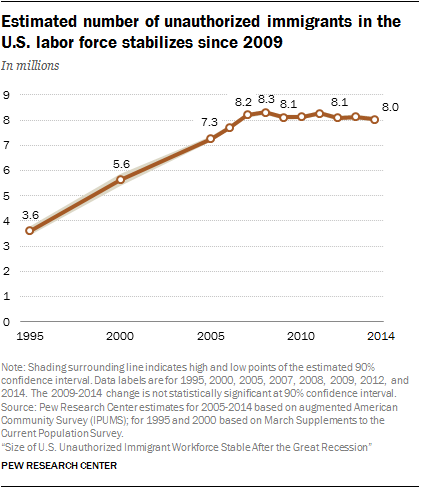
  2. It will be very destructive to the economy--it will rip out of key sectors much labor that citizens aren't lining up to do.  Construction? Don't we have a housing crisis?  Agriculture?  Day care and elder care? 
  3. They are not a drain on the government coffers, as undocumented workers tend to pay into social security and medicare but aren't eligible for these benefits.  Indeed, the best way to keep social security and medicare solvent is to have more immigrants, who tend to be younger than citizens, not fewer.
  4. It would not reduce the, yes, rather low crime rate because undocumented immigrants and immigrants of all kinds actually commit less crime than citizens.  The anecdata of this or that bad immigrant committing crime is atypical--the numbers consistently tell the tale.  
  5. Who will be swept up in the mass deportation?  Undocumented people?  Sure.  How about legal immigrants?  Yes, given the rhetoric about the Haitian immigrants who are in the US legally.  How about the children of immigrants who were born in the US?  Yes, as the Republicans want to get rid of birthright citizenship.  How about Brown and Black citizens who aren't carrying documents the day they meet up with the various deportation squads (I would call them brute squads, but the giant in Princess Bride is much kinder than ICE/Customs/militias/sheriffs/etc)?  
  6. The fundamental authoritarianism of it all--that we would all have to carry passports or birth certificates every day as the forces of the state demand "papers, please," whenever they want.  This is American democracy?  No, it is not.
  7. The huge amount of money that will have to be spent on it to expand law enforcement at all levels.
  8. The likelihood of violence between states that don't want this to happen and the Trump administration--civil war?  Something like that.
  9. And, yes, use of the military against protestors who want to stop such an abhorrent policy.
  10. The racism of it all.  Pretty sure ICE and the rest will be chasing people of color and not white Canadians or Norwegians who have overstayed their visas.
  11. It is completely unnecessary.  There is no real immigration crisis.  The system is overburdened, but that does not mean that there are challenges to law and order, that the economy is being harmed, that people (other than the migrants themselves) are facing much harm or threat.
  12. It is also immoral--ethnically cleansing the US to appease Great Replacement theory types who worry that people of color will govern them as harshly as the white supremacists governed the people of color.   Also, the US agreed to the international laws on asylum--we are obligated to help people who can't go back home without facing significant risks.  The US has always applied that inconsistently, letting in Cubans but not Haitians.  But one of the lessons of World War II was to provide asylum to those facing great dangers in their homelands.  That was the right lesson to learn and it should not be unlearned now to appease white supremacists.
  13. update: I forgot to mention that this will distort US foreign policy as Trump's team will have to expend a great deal of effort and leverage to find homes for 10-20 million people outside the US.

This is not the way to address the housing crisis. The way to deal with a housing crisis  ... to build more housing.  Unemployment is very low, so this is not a matter of immigrants, legal or otherwise, stealing jobs from American citizens.  Again, undocumented workers tend to do jobs citizens don't want to do.  I am sure I could go on, that I didn't include everything that one can.  

Friday, August 2, 2024

Strategy, Nature, or Trap? Trump, Vance, and the Party of Racism

 Of course, the answer is:

I have written about ethnic outbidding here--that politicians competing for the same ethnic group will outbid each other to be the best supporter of that group (it was also a key dynamic for my dissertation and first two books)--and how that explains why Trump was successful in 2015/6 to get the nomination.  

The recents shambolic appearance at the conference of Black Journalists may not have been peak Trump racism but was probably pretty close and was definitely a condensed form, questioning Kamala's Black identity, ranting about Black jobs, and the rest.  Was he playing to his base by being racist to a room full of Black people or could he just not help himself because he is racist through and through?  The answer is almost certainly yes.

Why did he go to a hostile crowd? An irony given his Indian or Black take is that these people at this conference have two identities simultaneously: Black and journalist.  Trump has always had contempt for both Black people and journalists, so the move to show up there was strategy--it was a deliberate effort to do something.  What?  Damned if I know.  To put out a white supremacist message to his base?  Maybe.  To try to persuade some Blacks that Kamala Harris is not a real Black person?  That might have been strategy informed by racism--that he and his team are so racist they thought that might work a bit?  I am not so sure.  

It is hard to tell because, of course, one can be a poor strategist, and racism can make one a poor strategist.  But in the moment, it is clear that Trump is a racist to his bones.  The idea that he can say who is and who is not Black?  Jeez.  

Something that can be a bit more enlightening or educational: that JD Vance had to go along with this even though he is married to an Indian woman.  So, are his kids white or Indian?  Getting back to ethnic outbidding, it is a dynamic that becomes a trap.  That appealing on the basis of a particular identity to a specific homogeneous group becomes hard to escape, even if one wanted to, as it mobilizes and incites the extremists who then criticize almost every moderating move as a betrayal.  So, JD Vance is now trapped--that he must betray his family, whether they understand that or not.

Of course, I expect JD Vance or Trump to express as much remorse as Voldemort or JK Rowling might.  They are exemplars of the party of resentment, the party that lacks empathy.  But the siren song of resentment as strategy can lead to much damage, not just to the targets of resentment but those who embrace it. Trump's support has a hard ceiling--he only wins if the Dems don't turn out--and his latest burst of racism is probably going to lower that ceiling somewhat as there are a whole lot of people who identify with more than one race, and some of them are "independents" who always vote Republican and some are Republicans.  

Maybe that is wishful thinking on my part.  All I am sure of is this race is going to get uglier.  


Wednesday, February 1, 2023

Hateful Policies Work, Bill 21 Edition

It is actually pretty basic: if you pass a law that addresses a non-problem but harms a vulnerable minority, then you have no grounds to complain when other criticize you.  So, passing Bill 21 in Quebec, an Islamophobic and anti-semitic law, that didn't address an issue where there was a real problem makes those parties supporting it Islamophobic.  What was true when the proposed law was being discussed is even more true today as we see the seeds of hate producing the predicted fruit--violence and harassment of the vulnerable minorities.  When political parties and ultimately the government target groups, they are sending signals to the public to, yes, treat such groups worse.  Quebec's parties, by supporting this law, incited violence against its Muslim and Jewish communities (and probably Sikhs as well).  Intolerant laws don't breed tolerance.

This all, of course, is a product of ethnic outbidding where the various parties tried to compete with each other to rid the public square of religious symbols ... of minority groups.  These parties have agency as do those who vote for them.  Bill 21 basically said that religious minorities could not wear signifiers of their religion while working in provincial jobs--not just law enforcement officers and judges, but doctors, nurses, bus drivers, etc.  The public sector in Quebec is quite large, in part because most health care is delivered by the province.  So, this law affected a great number of people.  

Was there a study done to show how these folks wearing religious stuff was actually harmful?  Was the law designed to cover Catholics?  Not really.  Did it single out Muslims, Jews, and Sikhs?  Of course.  "We saw severe social stigmatization of Muslim women, marginalization of Muslim women and very disturbing declines in their sense of well-being, their ability to fulfil their aspirations, sense of safety, but also hope for the future."  Some folks claiming to be feminists said that the aim was to free Muslim women from having to wear hijabs.... how do they feel now that women have faced abuse and have their security threatened?  To be fair, men supported this legislation more than women, because, hey, why not another tool to dominate women, but many women supported this as well.

To be clear, it is not just that the folks who worked in the public sector were affected by this, which is bad enough.  It is also that the province sent a signal to the public that it was ok to discriminate against these groups, and the public heard this message.  So, all Muslims, Sikhs, and Jews are worse off now than a few years ago, whether they worked in the public sector or not. 

From the Association for Canadian Studies study

And, now, of course, Quebeckers are outraged.  Their parties and their politicians hate being called out for their racism, their xenophobia, their Islamophobia, and their anti-semitism.  The ire right now is aimed at Amira Elghawaby who was named Canada's first special representative on combating Islamophobia.  Why?  Because in 2019, she co-wrote a piece criticizing this awful law.  How dare a person appointed to combat hate against Muslims previously take a stand against a hateful law?

While the law is the most awful part about this, the grandstanding by Quebec politicians who claims to be victims is also pretty terrible.  It again goes to something very basic and now ritualized: those who engage in hateful behavior (Islamophobia, racism, anti-semitism, misogyny) find it more problematic to be called hateful than to be hateful.  It is worse to be called a racist than to do racism, for example.  

While this law was passed by a populist xenophobic party, other parties were part of the outbidding process, and now they are piling on Elghawaby to prove their nationalist credentials.

I left Quebec for a variety of reasons, but the awful discourse of the place was one of them.  That a people who suffered much discrimination and harm at the ends of an often insensitive majority have turned around and used their domination of provincial power centres to treat their minorities this badly again and again because it plays well in elections.  That again speaks not just to parties of Quebec, but to Quebec media who blow these stories up, and to the public that both these parties and the media pander.  To be clear, these dynamics exist elsewhere--Bill 21 was attractive to significant hunks of the Canadian public outside of Quebec--and the provincial leadership of many provinces suck mightily.  But the nationalist outbidding aimed at proving one's worth by targeting minorities is far more severe in Quebec.  And no one should call them out for it, of course.


Monday, November 14, 2022

Anti-Woke as Vice-Signaling

Last week's awful speech set me on edge immediately.  The first words about handouts were a signal, but the thing that confirmed that the talk would be awful was Maisonneuve invocation of "woke."  Whenever I hear anyone tossing around that word contemptuously, I immediately code that person as not worth listening to.  Why?

To be clear, woke refers to folks who have become aware of the historical legacies of discrimination and the present-day implications.  That's pretty much it, that woke people understand that there is and has been significant discrimination.   That's it.  

To be anti-woke, which many folks on the right are now so proud of, means denying that discrimination happened and/or it has made an impact on today.  Of course, it is more complicated than that--it can mean being opposed to the measures used to address the remedial efforts aimed at reducing discrimination and compensating for its impact.  The classic case of this maybe opposing affirmative action as it may be seen as unfair to white men, and the opponents usually say that such measures are unfair as it means that those who are more meritorious are being denied opportunities due to the sins of their fathers.  There is a lot built into that including the notion that today's procedures would be otherwise focused entirely on merit if not for considerations of race, ethnicity, gender, etc.

The reality of today's politics is that when one loudly proclaims that one is anti-woke, one is doing one of two things (or both):

a) one is signaling to one's white, male, "Christian" supporters that one is with them, an enthusiastic supporter of some past status quo (real or imagined) where the woke folks were kept in their place;  folks, including myself, refer to this as vice-signaling. 

b) one is actually one of these folks who are actually an enthusiastic supporter of some past reality (fake or real) where the uppity folks knew better and that one could discriminate, harass and do more without being called out for it.

I tend to think Ted Cruz, for instance, is in the first category--that he does not really believe anything but wants power and signals being anti-woke to appeal to his racist, homophobic, xenophobic, misogynist supporters.  That does not make these folks better even if they don't believe in the hate they are inciting--it makes them just as bad as the genuine article as they are inciting and providing comfort for them.  Vice signaling is dangerous and awful and should be called out.

Is this cancellation?  No, free speech means one has the right to engage in vice-signaling, but it also means that others have the right to call it out for what it is. 

Maisonneuve got more than just a right to speak last week--he got to have a platform to do it.  And he abused it.  And I have the right to call him out as does everyone else who considers his speech to be awful, intolerant, and retrograde. 


Saturday, May 15, 2021

Quarantine, Week 61: The Hits Keep Coming

 Grading is done, the weather is warming, we keep on zooming with much anticipation for a better summer and fall and yet oy.

Today's oy is in reference to yet another senior officer in the Canadian Armed Forces being investigated for sexual misconduct.  MG Dany Fortin, who was the face of the CAF's involvement in Canada's vaccination rollout, was suspended yesterday.  We have now had the previous Chief of Defence Staff, the current (alas) Chief of Defence Staff, the Chief of Personnel (until yesterday), and the former commander of Canadian Joint Operations Command all facing investigations, suspensions, and more for sexual misconduct and/or abuse of power.  Fortin was the great hope for the CAF to help its image as he was seen as being very competent in both the doing and messaging of the vax rollout.  We don't know what the accusation is, and it is possible that his brilliant career may be salvageable.  Unlike, say, the Chief of Personnel.  I wrote this week that the Minister of Defence and the Prime Minister should move on from Admiral McDonald as the Chief of Defence Staff, as there is no real coming back.  The latest news just strengthens my argument.

On the bright side, Acting CDS Eyre did fire the Chief of Personnel yesterday, moving on from him.  Maybe Eyre will have set an example for those above him?  Stef vH and I had a great interview that we will be posting on the next Battle Rhythm on Wednesday, which energized us for the week.  More details to come probably on Monday.  I also had the chance to speak to a reservist unit in Toronto via zoom.  I talked about Canadian civ-mil in comparative perspective.  They asked lots of good questions.  I did get pushed on one of my comments about how we need to move beyond "warrior" as the key identity for the CAF, as one of the participants noted that it is an organization that trains to kill people.  My point is that while we have plenty of examples of women as warriors, the current social construction of that term has heaps of baggage, and we can call that baggage toxic masculinity.  That the way warrior is defined and expressed not only legitimates various behavior (hazing, for instance) but tends to exclude those who don't fit the image of a warrior--short people, immigrants, women, LGBTQ2S, etc.  

 Another bright spot was the forum my colleague Yanling Wang organized on Anti-Asian Racism.  I hate that she felt compelled by the rise of this racism to organize such an event, but it was moving and illuminating.  

In plague news, we have heaps of confusion as health authorities message poorly.  This week, it was the CDC's turn, saying that the fully vaxxed can go without masks ... but we don't know who is fully vaxxed, so what to do about mask mandates?  It seems like requiring vaccination in order work or go to school would be the thing to do, that vaccine passports would be provided by government so that stadia, theaters, restaurants, and others could sort.  But the Biden administration is opposed to vaccine passports.  Why?  Something, something, equity.  If there are equity concerns about the vaccines, get the vaccines to those who are on the margins and then give them a damn vax passport.  I got a yellow fever vax certificate for a trip I took a couple of years ago--the idea of vax passports are nothing new at all.  Making them work domestically is a bit of a move, but schools have long required measles and other vaccinations.  Perhaps the clever move is to empower private actors to be able to sort clients so that the imperative to get vaccinated seems less like it is coming from a government that the vax hesitant distrust and more from private firms.  All I know is that CDC's sudden announcement was not that well thought out.  

Meanwhile, in Canada, AstraZeneca, despite its amazing record of crushing the plague in the UK, is now no longer available for first shots due to fears about clotting.  I get it--that there is a potentially dangerous side effect, but the way this has been handled only creates more uncertainty and more vax hesitancy.  The good news is that the other vaccines are now arriving in big numbers here.  So, the question is, given how the rollout played out, will gen x get AZ for its second shots (please, give me) or will they wait to figure out the mixing of vaccines findings.  And of course, this means 100,000's of AZ vaccines sitting around while India burns.

Speaking of burning, the past week of violence in Israel and Palestine has reminded me of the despair I felt, along with most of the rest of academics that were with me, when I toured Israel and Palestine two summers ago.  It was clear then that the incentives were all wrong--that the Israeli politicians had no interest in really negotiating, that the Palestinians between Hamas and the folks in the West Bank had no interest in negotiating, that both sides were mostly satisfied with recurrent bouts of violence with no resolution in sight.  The peace camp in Israel was broken by the 2nd intifada so that Israelis could vote for different flavors of right wing politicians with varying levels of, well, irredentist claims.  We realized that the two state solution was dead, killed by the aggressive settling efforts on the one side and the threat of Hamas to to gain power in the WestBank on the other.  

What does one state where Israel incorporates much, if not all, of the West Bank look like?  And the answer is: Democratic or Jewish.  The demographics are pretty clear--if you give the people living in these territories voting rights, it is going to be hard to maintain an ethnocentric state.  But if you deny such a large group voting rights (and if you level buildings where journalists are based), are you really a democracy?  I tend not to write much about this conflict.  All I can say is that I was really struck by a discussion I had with one of the folks we met two summers ago.  An Israeli retired general exclaimed frustration and contempt with the Obama Administration for failing to escalate each time the US was attacked.  That this is the way Israel handles things--when they get hit, they hit back much harder.  And my point was--how has that worked out thus far, besides fostering a cycle of ever increasing violence?  His response was: what is the alternative?

And that is where we are now.  In another round of violence with no prospect of an alternative approach.  Hence my despair.

Be well and perhaps focus on the positive--that we are past the peak of the third wave and the average adult is at least vaxxed a bit. 


Friday, May 14, 2021

Anti-Asian Racism

 Last night, my school, the Norman Paterson School of International Affairs organized an anti-Asian racism event:  We Rise Together: Stopping Anti-Asian Racism. Professor Yanling Wang, my colleague, organized and hosted the event.  She had the Assistant Vice President and director of Carleton's Equity, Diversity, and Inclusion office, Michael Charles, introduce the panel, and then four Asian-Canadians spoke: Daniel Quan-Watson, Deputy Minister at Government of Canada Crown-Indigenous Relations and Northern Affairs; Xiabei Chen, Professor of Sociology at Carleton; Senator Yuen Pau Woo; and Falice Chin, Executive Producer at CBC Ottawa.  The discussion was moving, disturbing, and enlightening.  The audience, of course, knew of the burst of anti-Asian racism that has accelerated as the pandemic hit Canada, but that is just part of other dynamics and processes that are making life in Canada increasingly difficult for Asian-Canadians. 

It, of course, goes back to when Asians first immigrated to Canada and were treated awfully.  I hadn't realized that Asian Canadians are roughly 18% of the country, so I hadn't really processed how underrepresented they are in the media and in politics--I had basically been extending the American proportion of 5-6% to Canada.  I also hadn't realized that Asian Canadians get unfairly blamed in Canada for skyrocketing housing prices. 

For me, the discussion that really resonated was how the rise of China and the development of bad relations with China has caused Asian-Canadians to face more hostility.  Because, well, I have been part of that process.  A friend of mine called me out after I tweeted a couple of months ago about meeting with our financial adviser who was recommending investing in Chinese companies and my scoffing at the idea.  My thought at the time is that I am not going to invest in a country at a time where that country's leadership has taken Canadians hostage.  Other awful policies were also in my head--the genocide against Uighurs and other Muslims in Xiajiang at the top of the list.  At a time of increasing violence against Asian-Canadians, my words were thoughtless and irresponsible.  

We can and should be critical of the government of China, but we need to do so in ways that make the criticisms distinct from Chinese people, whether they are here in Canada or there in China.  I have written and talked about China's increased belligerence in reference to the two Michaels, to the way the Chinese armed forces are behaving in the South China Sea, and more.  I need to do better so that I don't feed hate.

We certainly should not treat Chinese Canadians and others of Asian descent as if they are not Canadian.  There is a tendency to refer to diasporas as having two homes and divided loyalties.  Jews get this all the time (right now, with regards to the latest round of violence).  The reality is that Chinese Canadians are Canadians.  Canada is their home.  They are loyal to Canada.  What the Chinese government does is distinct from what Chinese Canadians are doing and supporting.  And as my own work on diasporas reminds me, no diaspora is just of one mind anyway.  Chinese Canadians vary in how they view China, so to generalize about all of them is very problematic.  

Anti-Asian racism is not just about China and Chinese Canadians, but because racists are ignorant, they will direct their anti-Chinese hate towards anyone who looks Asian, just as Sikhs get beaten by those looking to beat Muslims.  To be sure, there are other dynamics in play.  In this post, I just wanted to reflect a bit about the event and some stuff I have been thinking about lately.

 Last night reminded me that we can do much better.  I will try to do so. 


Thursday, December 3, 2020

COVID and Pre-existing Conditions

 One thing has been quite clear since March: if you have pre-existing conditions that you did not know about, COVID revealed them.  This is not just true for the human body but for people and political systems.  Today's exemplar:

The Premier (Governor) of Manitoba Brian Pallister said: ""This puts Manitobans at the back of the line. This hurts Manitobans, to put it mildly." Apparently, First Nations folks residing in Manitoba aren't Manitobans.  Hello, white supremacy!  I don't know much about Pallister, but what I have observed for the past several months is that many of the Premiers of Canada have been utter failures as leaders.  They didn't use the summer to improve the testing/tracing system, they didn't set up their schools for success, and they mandated masks mostly too damned late.  The US is not alone in having weak leadership in this crisis.  The epidemic revealed how weak these leaders are.

Likewise, Canadian federalism has not performed great.  While folks want to blame Trudeau for a lot, and they should for much stuff, many of the big decisions and big failures are out of his reach unless he invokes the Emergency Act.  Given the usually dire state of federal-provincial relations, that has been a non-starter.  Trudeau can't force the provinces to shut down or mandate masks apparently.  

COVID 19 also revealed the weaknesses in the international health system, with WHO pandering to one of its key funders (China), and with US desertion of its leadership role greatly undermining the international response.  

I could go on and on, but this pandemic has revealed that I have an attention deficit problems.


Saturday, May 30, 2020

Quarantine, Week 11: The Worst Week

Sure, there were worse weeks in China, in Italy, in Spain, and elsewhere, but, for me, for Canada, and for the United States, this was probably the worst week.  I found out that a friend from grad school died.  The Canadian Armed Forces troops sent to elder care facilities in Ontario and Quebec paid a significant price--the number of them testing positive for COVID jumped, and we learned that the witnessed such abuse and neglect that PTSD is going to be a significant problem.  The US started the week by going over 100,000 deaths (most assuredly an undercount) and ended with week by giving yet more of its global leadership to China by pulling out of the WHO, which may be quickly forgotten since so many cities burned last night. 

The murder of Black Americans by the state is nothing new, of course.  The 1619 project made abundantly clear that arbitrary killing of African-Americans in the United States is older than the country.  I don't remember 1968 nor any of the civil rights movement as I war a toddler, but I do remember the Philadelphia police dropping a bomb on the city, burning an entire Black neighborhood.  The LA riots happened when I was in Southern California and was thinking a lot about ethnic politics--I was working on my dissertation. 

At that time, I thought about how a concept from international relations helped to explain what I was seeing--the Security Dilemma.  In International Relations, there is no government, so every actor has to be alert to the actions of the others, for any advantage they get can be used against that actor.  In domestic society, it is supposed to be different--that government protects people so they do not have to be constantly alert.  When that breaks down, well, things look like international relations--arms races, strange alliances, self-destructive violence. 

I thought about it in this way because the riots in LA broke out not after Rodney King was beaten by the LA cops but after the trial where the jury found the cops not guilty.  That is when it was clear the police were combatants and not impartial enforcers of the law.

Looking back, I realize that I was quite blind.  Because the cops have always been combatants.  The variation over time between peace and riots has not been due to when the cops and the prosecutors and the judges were seen as impartial or not, but rather how much anger, fear, and resentment had been built up and whether there was progress or regression going on.  1992 LA had a broader context that became clearer later--that corruption and abuse--the Rampart Division in particular--was rampant.  That the African-American community had felt under siege in large part because it was.

Over the past several years (decade?), we have had story after story of cops killing Black americans, that the cops are quick to fire on Black men they think are suspicious while treating White men differently.  So many spree killers, who are almost always white, seem to get captured alive, while some kid with a toy gun or a man with a cell phone get shot while surrounded by four or fourteen cops.  In the past few weeks, we have seen several examples with George Floyd's murder lighting the latest fuse. 

Trump, of course, pours gasoline on the fire, invoking segregationist rhetoric.  I guess the surprise is that the protests and riots are happening now, amid a pandemic, rather than a few years ago with the election of a nakedly white supremacist administration.  Remember that one of its first acts was to appoint as Attorney General a man who was seen in the mid-1980s to be too racist to be a federal judge by the Senate. 

Maybe the old ethnic security dilemma still applies, but just as war is not a constant in International Relations but its potential is always looming, in the United States (and in Canada and elsewhere), the state is always a threat, but whether it produces violence and whether it produces reactions by those that are threatened varies over time.  These dynamics can be more or less acute.  The very visibly and unambiguously egregious actions by the Minneapolis cop and the failure of the city to respond quickly set things off this time.  The structures of racism, of oppression, and fear were always there, with the death toll of African-Americans climbing both due to police misconduct and the very unevenly felt pandemic. But, yes, it took an event to spark the outrage. 

UPDATE: As I see more and more evidence that much of the looting and burning has been done by white people, who may be a mix of provocateurs and crappy allies, it reminds me that the ethnic security dilemmas of Yugoslavia were largely lit by criminals mobilized for the task by Serb nationalists.

None of this should be surprising because none of this is new.  I used to argue with my daughter about the state of progress--that it was happening but not fast enough for her taste.  And her arguments were more convincing than mine.  Really hard to be patient and work for change when people are dying every week.  Well, we no longer have those arguments for three reasons: a) she went to college and then to the other side of the continent; b) she won those arguments; and c) the election of Trump was pure regression, driven in large part by the resentment of whites who feared losing their position of supremacy. 

To be clear, there is still hope.  Things can improve, but it takes more than just the election of Democrats as Minneapolis is a Democratic city in a Democratic state.  It requires mayors and prosecutors and governors and attorney generals and, of course, publics to hold police accountable when they do wrong, to focus effort on kicking white supremacists out of police forces and the armed forces, and to do much more.  Being Democrat is not sufficient, they have to actually do their damned jobs for their constituents--that the job of the police is to protect and serve the public--all of the public--and not just to protect and serve themselves.  The training should not focus on having a hair trigger when faced with a threat, but to develop "courageous restraint" and be willing to fire second, not first.  The onus of risk in any encounter between citizen and cop should be on the cops--that their lives should be at risk, not the citizens.  The focus should be on bringing back alive the alleged perpetrators.  If the cops can bring in many spree killers alive, why can't they bring in alive Black men who "fit the description?"

And, yes, defeating Trump is a necessary but insufficient step for making progress.

Sunday, October 28, 2018

Arson and Anti-Semitism: The Uncertainty Engine Can Be Consistent

I was going to write about the liberal international order debate, but I got distracted after writing this tweet:


by the news of the day--yet more violence, more domestic terrorism by white guys against those who were different.  Earlier in the week it was African-Americans, then it was Democrats mostly, and now Jews.  So, I started thinking about what unifies this moment, this government.  I have long argued that Trump is an uncertainty engine--but that is on stuff that is not central to his core or to his core supporters.

The key consistencies are arson, ignorance, and hate.
  • Arson: the effort to burn down pretty much everything.  Trump has appointed a team of arsonists to his cabinet, and their role is to destroy the agencies that they "lead."  Deregulate, delegitimate, corrupt by directing the agencies towards the benefit of the inner circle.  Aside from Mattis, who is still a general protecting his Marines with some thought to the rest of the military and thus looks like a hero compared to the rest of the cabinet, the Secretaries and Attorney General are arsonists.  Trump is the chief arsonist, setting fire to the norms of the political system--no tax returns, no speaking on behalf of All Americans, joking on days where Americans are killed in terrorist attacks.  Of course, he never had any sense of appropriateness (he would lech after his own young daughter on television), but he delights in destroying the standards we took for granted.
  • Ignorance: Trump knows very little, and what he remembers from the 1980s is mostly wrong and/or out of date. On any given policy, he will simply not have much of a clue.  Every number he utters is wrong.  And he is singularly the most incurious person I have ever heard of.  His staff say it is ok that Trump talks on a tapped cell phone because he does not really care to know the details, that he can't leak intel because he ain't got none. 
  • Hate:  Trump reminds me of a character in a 1980s show--Wiseguy--where the Feds were trying to penetrate a white supremacist movement led by an insincere politician who whipped up hate but was only doing it to market himself--played by Fred Thompson who later went onto the Senate.  Before getting into what Trump believes and is, let's focus on what he has consistently done--whip up hate.  Trump was an original and most dedicated birther, questioning the history of the first African-American president.  His speech to open the campaign referred to Mexicans as rapists.  The whole wall thing was an appeal to xenophobia--that we need barriers between us and the others.  His Muslim ban, despite a fucked up court ruling, uses the state's power to discriminate on the basis of religion. He used anti-semitic imagery during the campaign.  Trump mocked those with disabilities--how soon we forget.  Trump definitely spends much time separating people into us and them in his mind and then has much dislike for the latter.  People say he can't be anti-semitic because he has Jewish grandchildren.  That is so dumb, it is laughable--is Trump capable of real love?  I do not think so.  I am pretty sure he would cast off Jared at the drop of a hat. 
    None of this is new, as his racism and his use of anti-semitic stereotypes goes way, way back.  
For a man who is wildly inconsistent, he is consistent about some things--that he does not know, he does not care about much, that he likes destroying things, and that he has much contempt for those who are different.  Sure, it is a convenient political strategy to play to his base--that it was useful in outbidding the GOP during the campaign--but he revels in it again and again.  His instincts go back to it again and again.

And because I am ranting, let me diverge and mention that this is not a solo act.  Trump has been enabled and empowered by white supremacists within the right-wing sphere--not just Laura Ingraham, Ann Coulter, and Rush Limbaugh, but Fox, which has aired anti-semitic, racist, xenophobic conspiracy theories and propaganda.  So, people ask where have these violent white men been radicalized, and the answer is: in the Fox/Breitbart/talk radio media space.

We live in dark times indeed, where the President of the United States is a white supremacist, surrounded by arsonists, enabled by cowards in the GOP and empowered by radical (not conservative) television and other media outlets.  I am not sure that voting will do the trick, but it is the least that we can do.  I have voted.  Please go out and vote against this awful tide of arson, ignorance, and hate.

Speaking of Fred Thompson:

Tuesday, October 23, 2018

Call Him A (White) Nationalist

Trump said some words, not the 14, but getting closer all the time--that he is a nationalist.  What does that mean?  Well, if he hadn't prefaced it by saying that he isn't supposed to calling himself this, then one could interpret this as Trump being an American nationalist--proud of being an American, whatever that means.  But since he prefaced it as something that he should not say, well, it is easy to suggest that he was really saying he is a white nationalist even if he denied it today.

Let's step back and think about nationalism.  It is generally referred to a belief or desire or a movement that seeks to have a particular nation have its own government.  That, by itself, may be neither good nor bad (although I am a fan of multi-national states), but the key is this: nationalism is also about defining who is a suitable member of the nation and who is not.  Much of it is not just the aspiration to have a country for the nation but who should be in that country as a citizen, who is not as suitable and how these "Others" should be treated. 

And that is where Trump and his statement come in.  Trump and his allies want to define the American nation very specifically--that brown folks, that those not born in the US, that transgender don't count as real/true Americans.  Sarah Palin's stuff on Real America also defined American cities as not being part of Real America, but Trump as a New Yorker does not quite go there.  To be clear, within the far right (and far left), there will be differences and fights over who really counts and who should be excluded, but they generally agree that the US is a white Christian (narrowly defined) nation, and those who do not fit that combination of categories are not really American. 

Seems strange for Trump to be on board with this given that he has a Jewish son-in-law and Jewish grandchildren, right?  Not really since Trump has long had anti-semitic views even if he thinks he can love specific ones--remember, he wanted Jewish accountants, not African-American ones, because Jews are good with money: "Black guys counting my money! I hate it. The only kind of people I want counting my money are short guys that wear yarmulkes every day..."  Trump may not be a Nazi, but he does not mind hanging around with such folks--"there are fine people on both sides." 

As Trump panics about the midterms, he needs to get his base to the polls.  Who are his base?  Who were the key folks who helped him win the primaries?  Yeah, he knows.  So, this "I am a nationalist" is an appeal to those folks.  Is he sincere?  Well, Trump isn't sincere about much, but he is consistent about a few things, and his white supremacy (and its frequent companion--misogyny) is one of them.

So, yeah, Trump is a white nationalist, although I prefer white supremacist. His focus on the folks caravaning to the US, his mostly outdated concern about crime in inner cities, his empowering Sessions, Miller and Kelly, his attempts at a Muslim ban, and all of that is a part of a larger pattern.  He is fomenting a nationalism in the US that excludes much of America, and we should find it deeply disturbing. 

I do think it was a mark of desperation that Trump said what he said, but I don't expect him to stop if his party wins  or if it loses the midterms. Either he will be empowered or deeply angry.  It is going to get worse before it gets better.  And, yes, it can get worse.

Saturday, August 18, 2018

Identity Politics: We All Got Them

Identities are like fruitcakes: we all got them, what are we going to do with them. When people say we shouldn't do identity politics or that identity politics is something we can avoid, I get a wee bit annoyed. Why? Because we all have identities, and they naturally and inevitably shape politics. Let me take a step back and then forward.

The first half of my career, I very much focused on ethnic politics and nationalism since I was interested in the international relations of ethnic conflict--secession and irredentism mostly.  So when I think about identity, I think of two things: groupness and implications for policy.  First, any identity sets up concepts of who is us and who is them and how tolerant one is of the them.  Much identity politics is about competing to define who the us is and how we should treat the others.  Are Jews white? Who is an American?  Who is Canadian? The political competition within the Canadian Conservative Party about immigration and multiculturalism is partly about figuring out who is a Canadian. The political programs of both Harper and Trudeau have been about defining what it means to be Canadian--why should anyone care about the War of 1812.  Anyhow, sorry for the Canadian tangent, but the key is this: much identity politics is about defining who are the relevant actors, whose interests matter most.  Note the post-election discussions of the working class and ... the white working class.  Also, note how Hindu Indian-Americans were fans of Islamophobic Trump until they started to realize that Trump is a white supremacist, and Indians are not white.  Intersectionality is a thing.

The second way to think about identities is that we all have multiple identities, and each one contains some kind of implications for various policies.  Religion influences attitudes about sexuality, the role of state in religion and vice version, gender, notions of justice, education, etc.  Language tends to affect policy preferences about jobs and education.  Race? If it were not freighted with history, maybe no clear implication for politics, but since race in the US is so much affected by the weight of past decisions, hells yeah, one's race affects one's political preferences.  So, much of politics is about making certain identities more salient than others, which then makes some issues more useful for creating coalitions and dividing the coalitions of the others. I lived through a Quebec election that was three-sided: one party was federal and tried to focus on goverance, a second was focused on Quebec independence (language and all that), and a third was focused on being intolerant of immigrants.  To be clear, no identity has a single political program.  Divisions between Martin Luther King and other African-Americans were partly about whether to change the system or separate.  Which is why Black Panther struck me--that it was people with the similar identities fighting about the implications for how one should engage the world.

Either way, much of politics is very much identity politics.  The only people who deny this reality are those whose identities already dominate politics.  I remember reading books about Race and US foreign policy--and it blew my mind to think that white folks and their race influenced US foreign policy.  Seems obvious now, but it was in a time and a context where folks were wondering about whether US foreign policy would remain rational and realist if other groups with other views of the
national interest, or their group's interests, would shape US foreign policy (Mrs. Spew considers anyone using the term identity politics dismissively is really anti-civil rights so she substitutes civil rights activism for identity politics). 

So, today, in the US, when I hear people dismiss identity politics, they tend to be white Christian folks who have always won and imposed their values on US politics (and projecting themselves, fear what the others would do if they are in power).  There was, of course, conflict among these folks about who and what counts as white (are Italians white? are Arabs?) and as Christian (in Lubbock, where I lived, the category of Christian is much narrower than I conceived).  But these folks tend to agree that when People of Color push issues favorable to their group or point out that Black Lives Matter, they get upset, because they are uncomfortable with being informed that their vision of "All Lives Mattering" might just still have some identity politics to it.

In sum, identities always matter, politics is often about defining the content of the identity, the boundaries of identities and how one should treat those of other identities.


Wednesday, June 6, 2018

The Immigration Problem

Recent polls in the US suggest that large majorities of not just Republicans but independents consider immigration to be a big problem.  It is not.  It is so not a problem, but, just like #voterfraudfraud has convinced significant numbers of Republicans that voter fraud is a threat, the GOP and its allies have convinced much of the American people that immigration, legal or not, is a threat.

How is immigration a threat?
  • Is it because larger and larger numbers of people are seeking to come to the US? Legal? Yes, although I would love to see these tables controlling for size of US population as there are more now but a smaller share of US population  Illegal?  Nope, the trends, especially from places like Mexico, are in the opposite direction.
  • Is it because immigrants are more likely to be criminals?  Nope.  That all MS 13 is mostly threat inflation by the way.  They are bad hombres, but mostly because the US sent criminals to Latin America where they helped to radicalize others.  Well done.
  • Is it because immigrants are resource black holes?  Actually, nope as they pay taxes but are not allowed to receive most benefits. Flows can hurt local governments, but that is a problem that could be easily fixed.
  • Are they a threat because they are mostly people of color?  Ding, ding, ding. 
Yes, the current wave of anti-immigration feelings in the US is based on myths and on racism and xenophobia.  This, of course, is not new.  It used to be that Irish and Italians and Jews were not considered white (ask the alt-right folks these days about whether Jews are white), but John Kelly seems to have forgotten that.

Anyhow, immigrants are not significant threats to employment.  Indeed, for social security, medicare and other programs to be funded down the road, the best solution is to bring in more immigrants to offset the fertility decline and aging of the American population.  This is not an option for more xenophobic places (yeah, Japan, talking about you ... and Russia).

So, I just want to push back against this whole idea of immigration being a problem.  But what do we call the myth-ing of this.  We have #voterfraudfraud for voter suppression.  What is a handy term for this?  #Immigrationfraud?  Nope.  #NoImmigrationProblemo?  #XenophobicFraud?  Please post in the comments if you have a better name for this.


Tuesday, January 16, 2018

Trump is a Racist ... And?

I have not blogged about Trump's shithole shitstorm.  Why not?  Because we have known for a long, long time that Trump is a racist.
  • We know that his father was a member of the KKK.  
  • We know that Trump was sued twice by the US government for discriminating against African-Americans in his rental properties.  
  • We know that he relied on racial stereotypes when it came to hiring practices for his casinos--Jews, not Blacks, should be accountants.
  • We know that he was so very focused on the kids of color who were accused of raping a white woman in central park.
  • We know that he was an obsessive birther.
  • We know that he started off his campaign by calling all Mexican immigrants rapists and criminals.
  • We know that he sought a ban against all Muslims (Islamophobia/xenophobia go along with racism damn near most of the time, sorry Indian Americans).
  • We know that he has repeatedly used slurs towards Native Americans.
  • We know that he thought a judge of Mexican descent could not be impartial.
  • We know that he retweeted stuff from a guy whose twitter handle is "white genocide."
  • We know that he said that both sides at Charlottesville include fine people.  Yeah, some Nazis are fine.
  • We know that he thinks that a woman of Korean descent who gave an intel brief on Pakistan should be working on North Korea.
  • We know that Trump has appointed and hired racists: Jeff Sessions (too racist to be a federal judge in the 1980s, just racist enough to be Attorney General now), Stephen Miller, Steve Bannon, and, oh yeah, John Kelly (retired generals can be xenophobes).  
So, what is new about Trump's statements?  They are slightly more offensive than previous statements, and, well, yes, the countries in question are seriously and rightfully upset.

I guess what matters here is that this happens to be the event that gives people in the media to say what we have always known--that Trump is a racist.  That the permission structure has changed--that it is no longer seen as taboo to say that the Emperor is wearing no clothes--that Trump is a racist.  Of course, Trump will deny being a racist, but the entire discourse now makes it clear that he is a racist and that this is not normal.  Yeah, we have had presidents who had racist attitudes, but what we say and do in 2018 is a bit different than what acceptable behind closed doors (Nixon) or what was legislated in the 1920s (I just learned that Harding and Coolidge were awful in ways I had not known or at least remembered).

My frustration is, of course, that it took this long and this many events for folks to start saying what was already quite clear--that Trump is a racist.  He is not consistent about many things--he often switches his stances based on the last person who talks to him (or gives him particular flavors of Starbust candies?)--but his racism has been perhaps his most consistent attribute, other than his greed.

So, yeah, woot for folks calling Trump out as the white supremacist that he has long been.  This is significant.  But let's not overrate the moment either as it is not clear that it will change people's behavior for very long. 

Saturday, September 23, 2017

Standing Up For the Flag By Kneeling

I have not commented much here on the whole Kaepernick kneeling story, but Trump's speech tonight compels me.

Which better honors the flag? Protesting the treatment of African-Americans in the US, and, in doing so, risking one's career?  Or grandstanding in front of flags and castigating a football player who has engaged in non-violent dissent? 

Yes, American history is complex, and so when one refers to American values, one can talk about freedom or one can talk about greed and xenophobia.  Pretty sure that the values that are valued are those that focus on the very basics of American democracy--free speech, free press and all that stuff we are proud of and not so much the awful stuff that provokes shame and embarrassment--slavery, internment, etc..  So, when I say that Trump is un-American, I am referring the former stuff and not the latter, but he is reminding me so very much about that ugly side.  He is of that ugly side, through and through.  He is racist, he is xenophobic, he is so very greedy.  He incites hate and violence.  He inspires his team to steal from taxpayers (Tom Price).  The kleptocracy is more than just family business.

So, when players raise their fist on Sunday or kneel or do whatever else, they are being far better Americans than Trump.  I certainly hope there are more protests this week, as Trump's targeting of Kaepernick is once again him using a bullhorn and not a dog whistle.  He dares to "defend the flag" via appeals to white supremacy and why not?  Impunity is his thing.  All we can do is call him on it and protest and rally and vote.

I have no doubt with whom I stand and with whom I'd like to kneel.