Saturday, November 20, 2021

An Agenda For Canada’s New Defence Minister

I wrote the following for an outlet that is now going through some editorial turnover, so I decided to put it here instead.  
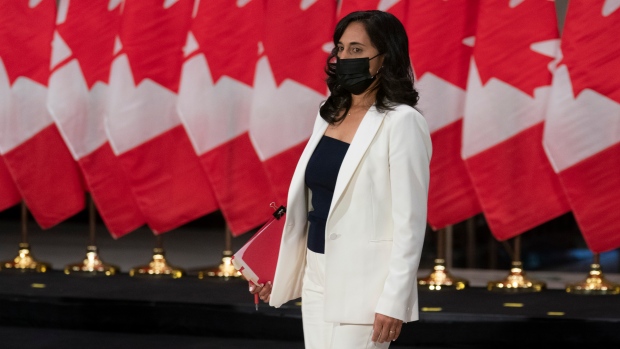
The Canadian Armed Forces and the Department of National Defence have always been a mostly thankless responsibility for ministers of national defence. While Anita Anand’s experiences as a law professor with expertise in corporate governance and as minister of procurement has prepared her better than perhaps any other potential candidate for the position, this doesn’t change the magnitude of her task. Anand is tackling the most challenging job in Justin Trudeau’s government. It is not just that a sexual misconduct problem has tainted more than a few senior officers. There is also an abuse of power crisis fed by the military’s belief that civilians should have little role in managing the Canadian Armed Forces.

General Jon Vance’s behavior, both personal and professional, revealed contempt for civilian control of the armed forces.  He engaged in a decades-long affair while hitting on even more junior subordinates.  Operation Honour, which was supposed to address the sexual misconduct crisis in the CAF, actually contradicted key recommendations of the Deschamps Report, which the civilian leadership had promised to implement.  Notably, Vance put into the Chief of Personnel position an office, Vice Admiral Hadyn Edmundson, who had been credibly accused of rape.  Deputy Minister Jody Thomas reported in a podcast last spring that Vance told her to stay out of the way when it came to dealing with the military’s sexual misconduct file.

Strengthening civilian control of the armed forces is job one for Anand.  While the crisis in the CAF can’t be solved by replacing a few people here and there, some important personnel decisions will not just set the tone but be an important first step in reinforcing civilian control of the military.  Admiral Art McDonald, on leave from his position as chief of the defence staff, needs to be gone yesterday. McDonald stepped aside in February when news of an investigation into his alleged sexual misconduct was made public. In August, the Canadian Forces Provost Marshal said the investigation “did not reveal evidence to support the laying of charges under either the Code of Service Discipline or the Criminal Code of Canada.” McDonald’s subsequent letter to top military officials claiming exoneration and arguing for his immediate return to duty was insubordinate to the government whose job it is to make such decisions. By forcing McDonald to retire, Anand would be reminding the Canadian Armed Forces that no one is entitled to a senior post and that civilians are supreme in the chain of command. 

The next decision is whether to make General Wayne Eyre chief of the defence staff, removing the “acting” from his title, or moving on from him. That decision depends on the relationship Anand is developing with Eyre and whether there is a better candidate ready to serve in this position. Again, this decision is not just about one person but setting the tone for Canadian civil-military dynamics.

Harder decisions await Anand. The Deschamps and Fish reports [Explain what these were, and link if possible] argued there need to be more independent processes to adjudicate accusations of sexual misconduct. The former was in response to stories about sexual misconduct in the CAF; the latter is part of a regular review of the military justice system. The problem is that no organization can be completely independent, as it must report to someone.  Should these “independent” actors report to Parliament? Probably not, since parliamentarians do not think their job is to oversee the armed forces.[1] We might have more faith in the minister of the national defence to monitor such agencies if the last one, Harjit Sajjan, now minister of international development, hadn’t made such a hash of managing the sexual misconduct scandal these past few years. Perhaps the answer is to build  review agencies like those responsible for the intelligence community: the National Security and Intelligence Review Agency [NSIRA] and National Security and Intelligence Committee of Parliamentarians [NSICOP].

Changing the culture of the Department of National Defence and the Canadian Armed Forces is going to be tougher than figuring out how to connect some independent agencies to accountability mechanisms. In most advanced democracies, military officials tend to believe they are the sole experts on the management of violence and should therefore enjoy significant autonomy. Civilian intervention is seen as micromanagement. This mindset must be challenged. Members of the Canadian Armed Forces cannot simply say they are the professionals who can get the job done after failing so badly to address their sexual misconduct/abuse of power crisis.

Changing this mindset will require changing military education at all of levels from cadets to the Royal Military College to the Canadian Forces College. Ultimately, the new Professional Conduct and Culture Command, set up by General Eyre to change the culture of the CAF, will need to reform what it means to be a professional military officer, reinforcing subordination to civilian control, increasing transparency, and reducing entitlement. 

On the bright side, the hardest component of the job for most ministers of national defence is usually procurement, and this is an area in which Anand is already quite experienced. Her previous job as minister of procurement puts her in a strong position to deal with this troublesome part of the portfolio. Her handling of the vaccinate procurement has gotten many raves with Canada leading most of its peers in first and second doses.  Because she has experience with high stakes, controversial procurement projects, she is in a better position than most ministers of national defence when it comes to making decisions like those about fighter jets.  The remaining part of the job — making big decisions about military deployments — will probably not be so difficult in the near future, as it is unlikely the armed forces will be asked to do another Kandahar. Instead, the focus will mostly be on maintaining the current set of missions — leading the NATO battlegroup in Latvia, training in Iraq and Ukraine, domestic emergency operations.

Minister of National Defence Anand has the most challenging portfolio of any minister today. That military leadership has thoroughly discredited itself should give her some room to maneuver but she will no doubt encounter tough headwinds all the same. She must push through them. The credibility of the Canadian military and the sanctity of civilian control over it depends on her success.


[1] I am finishing a research project where I have interviewed several members of parliament and senators, and they repeatedly say that their job is to hold the Minister of National Defence to account, not to oversee the CAF.

Monday, November 15, 2021

The Arbour Review: Consultations about CAF Reform

 Today, I had an opportunity to be part of a small group roundtable with retired Supreme Court Justice Louise Arbour.  She has been charged with reviewing the Canadian Armed Forces to figure out how the CAF (and others) can be reformed to do less harm to those who join it.  It was held with Chatham House rule so I can't say who said what, but I can say that the only person who really needed the protection of said rule was me.  I think I was the only person to say something that was not well thought out--how about a truth and reconciliation process so that those in the CAF who grew up in a toxic environment can come clean about past mistakes?  The answers given  to my half-baked idea--that any kind of restorative justice should be led by the survivors and not the perpetrators, that drawing lines between minor and major misconduct very problematic, and so on--quickly made me realize I should stick to what I know.

Well, what do I know and what did I recommend?  When it comes to culture, others were more focused on toxic masculinity, and right so.  I am more focused on a different although related aspect of CAF culture--entitlement and a distorted view of professionalism.  That Sam Huntington not only gave us Clash of Civilizations, but also a view about civil-military relations which tends to teach military officers that civilians have little expertise and should not be interfering in the military's stuff.  Since moving to Canada and teaching civ-mil here, I was always struck by how Canada was far closer to Huntington's model than the US as the SecDef and his team have long been more involved in military stuff than most Ministers of National Defence.  A colleague on today's call mentioned three times where that wall was breached by the MND--after WWII when the idea of having enlisted folks getting pathways to officers (a party foul for those of the upper class), during unification in the 1960s, and after the Somalia affair in the 1990s.  Oh my, no wonder the military is concerned--the latter two are seen as awful times.  

Well, sucks to be them--the current crisis is on the military.  The civilians did not make them act in awful ways, abusing their personnel and their power.  The standard military answer--that they are the professionals with exclusive expertise on all things military--fails here as abusing one's personnel and abusing power would seemingly be unprofessional, but seems actually to be embedded in the definition/culture of professionalism in the CAF.  What is desperately needed is for outsiders, especially those up the chain but not exclusive those folks, to play a greater role in setting standards, reforming military justice and complaint procedures, and to engage in oversight.  That is: making sure that what the CAF says it will do actually gets done and also playing a more active role--vetting the officers who reach the highest levels.  Promotion was been way too much an insiders game.  

I recommended against making either Parliament or the Privy Council Office as the key superior bodies above any independent agencies.  Why?  Because parliamentarians don't think there job is to do oversight (they have told me that).  In the Steve/Dave/Phil project, Canada ranks at the bottom of the seriousness scale when it comes to legislative oversight.  Much better to engage in mindless point-scoring.  PCO?  It might make sense except I think to the public this would seem to be a blackhole--we really don't know what goes on in PCO.  I suggested imitating the review bodies that oversee the Canadian intel community.  Another suggested a minister monitoring committee.  I definitely think the Minister's office needs to be active, engaged, and empowered.

Some of the stuff the others discussed: 

  • that the senior leadership of the CAF is out of touch--that bad news does not travel up and when it does, the senior leaders don't want to hear it.
  • we need to be wary of culture change being a buzzword that does not really matter much--that we need to take seriously that other organizations have spent much effort and time on culture change and the military is not as unique as it thinks it is--there is much to learn form others.
  • that resistance to culture change will be intense when the culture change might require changing who has power.
  • Perhaps have some spots, like head of mil personnel be a civilian.  Which top jobs need to have military folks?  Apparently, at various points in time, the idea of a civilian CDS was broached, perhaps mostly as a threat to get the military to reform itself or else.
  • that there should be fully funded legal representation for survivors whether they end up pursuing justice through military or civilian channels (I found this idea extremely compelling and far easier/more likely to implement, although not necessarily easy)

I am glad that the former Supreme Court justice is reading out to these sharp people.  I am lucky that I was included, as I learned a lot in that short 1.5 hour session. I am better equipped at offering criticisms than prescriptions--this stuff is really hard.  The good news is that the military can't resist as strongly as it usually can--it is thoroughly discredited.  Senior military leaders can't say--we've got this, just keep giving us autonomy, and everything will be fine.  Eyre was right to call this an existential crisis--recruitment is already hard enough.  Which means that the military will have to listen to the civilians and implement some of the reforms ... as long as the civilians keep paying lots of attention.  And by civilians, I mean not just the Minister of National Defence but also the media and the experts outside the military. 


Thursday, November 11, 2021

Remembrance Day 2021

 It has been a very tough year for the Canadian military.  The abuse of power crisis has been waiting for new leadership.  Other militaries are going through similar struggles.  As we look back at past wars, and especially the one that ended at 11am on the eleventh day of the eleventh month, I keep thinking of civilian control of the military.  
This was at the Canadian base in Dubai, marking
those lost in Afghanistan.  It is now at an HQ
near where I live in Ottawa

Aussie War Museum


A key quote from that time: "War is too important a matter to be left to the military."

Why did Georges Clemenceau say this?  Because the military had failed the civilians?  Partly but also the civilians had failed the military.  War is politics by other means as Clausewitz argued long ago.  While generals like to do deny it (as I was reminded last week in Denmark), most decisions are political, and, yes, the civilians should have much say.  World War I saw the militaries of all sides wasting the lives of a generation in battles that were seen as successful if the attacking side gained a few yards.  

With the fall of Afghanistan, we are asking anew about leadership and the costs of war.  Was Afghanistan worth it?  What were they fighting for?  While there is much blame to be had, as civilians control democratic armed forces, much of the blame is on the civilians.  When I read military history and I see soldiers getting the highest medals for their valor, I think two things: what amazing people we have who serve and who put them in a position where they needed to be so heroic.  I am reading Wesley Morgan's book on the battles in Pech Valley, and both the heroism and the bad leadership are there on pretty much every page.  

On this Remembrance Day, I not only remember the costs paid by the soldiers, sailors, aviators, and marines, past and present, but of the civilians who could have led better and of the situation today where the civilians must exert control with greater creativity, greater accountability, and greater responsibility.  


Wednesday, November 3, 2021

More Military Politics, More Palace, More Booze


 The second day of the two day conference involved more of everything including ... alas ... more jet lag.  I missed the first half of the first panel thanks to sleeping late after much interrupted sleep.  I don't think I have done that before.  Last time I slept thru during a travel situation was probably our househunting trip in 1995 when we tried to save money by flying out of Montreal rather than Burlington to check out Lubbock.  Oh my.  That was quite a while ago.

Anyhow, the day had a few more panels.  The jet lag limited my focus a bit so I took my best notes for Lindsay Cohn's and Chris Ankersen's presentations.  Lindsay talked about the competing loyalties (and identities) that challenge any officer.  What does it mean to be professional when the profession requires loyalties in different directions--to superiors, to subordinates, to civilians, to law, to democracy, to one's own moral code, etc. How to choose among bad choices?  She used the case of the captain of the USS Teddy Roosevelt--the aircraft carrier that faced an early covid crisis that ultimately sank his career and that of the Secretary of the Navy.

Chris's computer had broken so his slides were wonderful pictures of his notes.  His was most provocative as he invoked Weber and other interesting folks to argue that senior officers can become disenchanted with how things are going and rely either on cynicism or celebrity.  That they can use their personal popularity to pursue their agendas.  He cited a number of officers--mostly American but also Hillier of Canada--to show how many tried to influence the civilians and, yes, how many ultimately failed.  I could not help but invoke the line from the Dark Knight: either you die a hero (Patton) or live long enough to become a villain (Petraeus, McCrystal, McMaster, etc).  Powell was the only one I thought of who retired while still a hero.  His "villainy" mostly came as SecState, his post-military career.

Carsten Roennfeldt discussed the civ-mil of Norway's Libya mission which brought me back to the Steve and Dave NATO book as we covered the Libya effort.  It was very interesting to see the same case from a different angle.  He argued that the Norwegian officers were given very little in the way of instructions when they were sent.  

I am sorry that my note taking failed at that time.  I did have a great lunch with a junior scholar whose talk I missed.  She is working on the legal dynamics of some of the stuff in the aforementioned Steve and Dave book, so it was great to hear how the next generation of both scholars and work are doing. 

The evening was an amazing experience--we got a tour of the Fredriksberg Palace.  It is home ot army officer training and much conferencing and used to be home to the Danish royal family.  So, I took many pics.  Former NATO Deputy Secretary General Rose Gottemoeller gave a very interesting talk on the stuff facing NATO these days. Then we had dinner with many different forms of alcohol.  I got to chat with a Danish Major who was in charge of the institution than ran our event.  After that, we had after dinner drinks and a pipe/drum moment.  

I learned a great deal over the past few days despite my jet lag/sleep deprivation.  It was great to see the civ-mil folks and meet new people in the field.  I really missed this kind of stuff.  I am hoping we can do more of it as vax rates continue to increase.  Now, time to fly home and start trying to catch up as the semester accelerates away from me and I have to start to prep the new term and, yes, write another grant.  


Tuesday, November 2, 2021

There Is Politics In Military Stuff?

 The first day of our workshop on Military Politics provided quite an illustration and contrast: the civilian academics raised key questions about military officers as political actors and the military speakers, um, proving the academics right while mostly denying everything the academic said.  You can guess which side of this discussion your humble (or not so humble) blogger was on.  

Thomas Crosbie, our host, set the table by invoking and then complicating Peter Feaver's principal-agent approach to civil-military relations.  He made Feaver's various binary choices in the original game less binary, so the game tree had 64 outcomes rather than 8.  Oh my.  As I rely heavily on Feaver (and Avant) for my understanding of civil-military relations, I found this presentation quite interesting==that militaries have more options than work or shirk.  But the terms he used will still annoy military officers.  Of course, work or shirk is super annoying to them because they tend not to understand that shirk does not mean that they don't work--it means they operate differently than the civilians expect--doing sometimes more or sometimes differently than the civs expect.  Given the senior officers' frustration with civilians expressed in a later session, they intuitively agree with the notion that they don't act as the civilians expect.  But the shirk thing wrankles.  More on that below.

Risa Brooks was the keynote speaker, and her terrific presentation unpacked "professionalism" which is the key to so much stuff in civ-mil relations.  Professionalism, thanks to Sam Huntington, has played a major role in how modern democratic militaries see themselves (yes, much of this is about identity).  The shorthand is that militaries see themselves as the exclusive experts on the management of violence, that they see other military officers as part of the same profession, and that the best way to manage civil-military relations is to divide stuff into two spheres--the civilians make the larger strategic decisions and then grant the military to manage themselves as they follow the strategic orders.  Autonomy here is key, with the notion that since the military folks are the sole experts on violence, they are best situated to make the operational and tactical decisions.  

There are more than a few problems with this as Risa identified nicely in her recent article.  Partly there is the ghost of Clausewitz--that war is politics by other means so there is much need for thinking about politics all the time and that civilians might have something to contribute to that.  Risa talked about how the conceptualization of professionalism greatly shapes how militaries think about politics--that they are apolitical [no, they are not], that different militaries have different senses of professionalism (although there are common tendencies or traits).  Risa's discussion reminded me of how I think about nationalism and identity--that a military's sense of professionalism defines who counts as a professional, who does not, and how one engages the non-professionals.  Her presentation will greatly inform how I teach professionalism next semester and forever after.

The next panel included retired and active senior Danish leaders.  It was very interesting and very frustrating, as the officers didn't really engage the civilians.  They tended to argue that there was no politics--but then often said that officers have to pick their battles when dealing with civilians.  That is a very political thing.

I spoke about multilateral stuff, and started with defining politics as the making of choices for more than oneself.  Which means yes, damn near everything is political.  Most of my talk was about how military officers face two chains of command in pretty much any multilateral operation, which means they have to navigate the differences in what they are asked to do.  This makes much of what they do obviously political.  I pointed out some strategies that officers use.  

I'd summarize the rest of the day, but I am still addled by jet lag--I missed much of the second day's first session since I overslept after not sleeping well last night.  I do remember quite well a delightful diner with a bunch of folks last night--I so missed this kind of stuff.  The day was enlightening and the evening was entertaining. I am hoping we can do more and more of this stuff.