Showing posts with label Latvia. Show all posts

Saturday, June 10, 2023

The Big Lessons from A Week Near the Front

 Tis a dramatic title as we were nowhere near the battlefield, but the atmosphere here is very distinct from the US, Canada, and my last Germany trip.  War is not only nearby but is viewed as close to inevitable.  The perception of risk is quite high.  I kept asking: but the Russian military is weaker than we thought.  They kept responding that Russia can rebuild and can be stupid/risk acceptant again.  I am still a skeptic since that magical line separating NATO and non-NATO seems to be quite powerful.  But I don't pay much of a price if I am wrong--they do.

And then they mention Trump and I get it.  Nobody here wants Trump back, as they know he would be quick to sell them out.  Which, of course, raises the question why Putin didn't attack while Trump was still in power.  Even if he thought Trump would win the election, Putin could have launched the war in December of 2020.  

Anyhow, what else did I learn across the many meetings, the two days of conferences, and much arguing with my colleagues over a Baltic Sea of beer?

First, I have always been on the hill that 2% is a shitty metric.  That the NATO aspiration for each member to spend at least 2% of their GDP is a bad way think about things.  That input measures suck, that Greece is over 2% but a shitty ally.  Well, norms/expectations are mutually constituted--it is not up to me, nor is it up to any Canadian leader to say--this norm is lousy, let's move on.  It, alas, shapes the debates.  I don't think it would be so damaging if it were not for ...

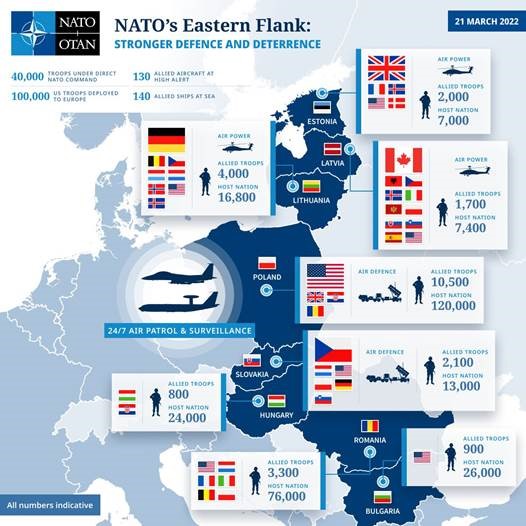
Second, follow up on your promises in a timely way.  Canada has burnt most of its political capital in the region not because of 2% but something that travels with it--not making timely decisions and not delivering in an expeditious manner.  When Trudeau was here over the winter of 2022 and promised to do more. At the last NATO summit, Canad agreed (reluctantly is my guess) to increase the size of the effort in all of the nearby countries including Latvia.  For Canada, that means leading not a Battle Group but a Brigade, which means increasing the Canadian force from 500 and then 800 to 1800.  That is going to stress the hell out of a military that is short of personnel.  It also requires $$$ to build infrastructure so those soldiers can have a place to live.  So, everyone in Latvia is holding their breath, hoping for a decision to be announced in the leadup to the next NATO summit in July.  Minister of National Defence Anita Anand will be at the next NATO Defence Ministerial meeting next week, and she will be asked to make serious commitments.  New money.  NEW MONEY.  I am guessing that this new money will appear in the Defence Policy Update that will be released just before the summit (no accident).  I just hope that the size of this does not disappoint.  I still don't think 2% should be the target, but I do think spending should reflect the commitments that are made, which means it needs to go up.

Third, yeah, I am an advocate.  This kind of trip, where the govt helps us meet people (but does not foot much of the bill--my grants do), raises questions about my independence and those of my colleagues.  Are we just a tool of CAF info ops aimed at the public?  Not really, but the public affairs people do hope that by sharing heaps of info and getting us to talk to the folks here, that we will say nice things about the mission.  They may not get that since some of my colleagues are more skeptical.  I am probably biased in this as I lived the NATO life when I was in the Joint Staff, and I did co-write a book about the organization, so I want it to succeed.  And I do think the Russian government is a force for evil and needs to be deterred.  Defense?  I am not so sure about, but deterred, absolutely.  And NATO is doing that quite well.  So, I am in favor of investing more here.  I don't think it is that problematic for Canada to make this the single major military commitment, although my pals were suggesting that as soon as the war in Ukraine ends, that will become the shiny mission that Canadian leaders will want to join.  Committing to the long run in Latvia does reduce discretion since the CAF can't be at 1800 here and then do much elsewhere.  Does Canada send troops Cold War-style to live here for three years and bring their family along?  Maybe the military would be happy to have only one commitment--that it could say no to peacekeeping ops due to the stress of this single effort?

Fourth, we did go to a Strategic Comms conference, and the group of us mostly, I think, view Canada as being lousy at Strategic Communications.  What is the story here?  What is a good story to tell the Canadian people?  It should not be a story that is the military's to sell.  It should be the government's, and it should be other agencies.  I am not a Strat Comm person or an expert in marketing.  I get that they have a hard time getting media coverage since good news does not make much news, and journalism is facing $ problems, so if they spend on expensive trips, they will go to Ukraine, not Latvia.  But it should not be that hard to create videos, graphics, and such and flood Canadian social media to raise awareness.  Arranging this trip may help, but they can't run lots of these kinds of trips because:

  • most Canadian academics don't have heaps of grant dollars or time to spend on a trip like this
  • so sending the same ones back again and again means having the same voices again and again
  • these trips are a huge time suck for those whose shared their expertise with us.  They were terrific, but they can't do this all the time.
  • they could, you know, pay for these trips, but then we would be seen as tools of the military-industrial-academic complex.  Oh wait, there are folks already making those claims. 
     

 I think the best strategic communications is when you have a good story to tell, which means doing the right stuff, the good stuff.  The contribution/leadership of this multinational force is big, but it needs to be supported.  They need $ and procurement projects that move along.  Trudeau needs to back his promises up with actions.  Sometimes he does that, and sometimes he doesn't.  Doing more here may not win him votes, but it won't lose him votes either.  Indeed, committing to big bucks puts the Conservatives in a pickle--do they want to cut defence spending to get to a balanced budget?

I will probably write more about this as I remember stuff and as we see decisions and announcements roll out.  So, this is what I have thus far.  Let me know what you think.

Third Day of Roundtables: MoDs, Pols, Dips, Oh My


 Enjoying the fresh cc cookies in the United lounge while I await my third leg to get back home, so tis time to catch up on my trip blogging.  This post focuses on yesterday (yesterday was Friday, right? where we meet with folks at Latvia's Ministry of Defence, at their parliament, and at the Canadian embassy, the next post will focus on the bigger lessons/implications.

The MoD briefing started with Ronald Reagan's evil empire speech, so that set the context.  The sense here is that war with Russia may be delayed by Ukraine's stand, but is likely down the road.  The Latvians monitor the Russian messaging at home, and it does not reassure at all. Latvia has shipped off quite a bit of what it had to the Ukrainians because they need for Russia to lose, to learn the lesson (which they doubt the Russians will learn).  Justin Massie asked again whether it might make more sense for Canada just to send its military equipment to Ukraine, and the Latvians said--why not both essentially.  That we need to build up Latvia for that day when the Russians invade and we need to delay that day by arming Ukraine.  Latvia is aiming to spend 3% of its GDP on defense, and I refrained from snarking about how having a tiny GDP makes that easy.  They are quite serious.  The Latvians also made good arguments for why Canada operating in Latvia is good for CAF readiness. 

I asked about how their MoD relates to the military as that is the next Steve and Phil and Ora project, and they said they have a British model (which sounds better than the Canadian model, but Phil will have to find that out fo rus). 

A recurring theme--waiting to hear whether Justin Trudeau will back up the promises made about spending more on the Latvian mission as it moves from battlegroup to brigade (from 1k to 3k).  Finns got mentioned for the first time as a potential new contributor to the multinational group Canada is herding.

The second meeting after a quick fast food lunch (I chose poorly) was at the Parliament where we spoke with an MP and a leader of a think tank (I think).  Lots of fun discussions of Latvian domestic politics--five parties, in govt and in opposition, mostly on the same page.  The Canadians were envious of the MP focus on good governance, not just point scoring.  JC asked about their parliamentary oversight--he is a pal. They are definitely closer to European/German standards--the MPs have security clearances, defense committee is chaired by former defense official, engaged in serious debate.  In other words, tis not Canada.

The big split on defense/foreign policy in the parliament is whether parties lean to US/NATO or lean towards EU.  Any change in government (coalition wrangling going on now) is not going to make much of a difference for the stuff we have been discussing.  

We had heard of Germans and Lithuanians fighting in the media--the Latvians said that won't happen here even if JT falls short.  Was fun to hear a reference to the BattleRhythm episode we recorded earlier in the week! 

We had an interesting conversation about the gender debate regarding their conscription.  Their draft starts soon, men can be drafted, women can volunteer.  They discussed challenges for absorbing heaps of people.  

We asked about their Russian population, and another recurring theme--the Russian speakers aren't all alike--diverse by age, by what they speak, by social groups.  The very interesting thing was the results of the recent election caused the usually leading party for the Russian-speaking minority to fall short of 5%, which means they don't get any seats.  And they were the one Russian-speaking party that was critical of Russian aggression, so oh my.

The conversation at the Canadian embassy was much different, as we asked tough questions and pushed our own views, rather than just being in receive mode.  Why are we here?  What is our interest?  Just NATO?  Doing this mission does reverse the view that Canada doesn't care about NATO (holy short memory, Batman, they forgot about Kandahar so quickly.  Well, Robin, we did leave combat years before everyone else so....). 

They folks at the embassy did a good job of articulating to us what Canada gets out of the mission, including a better understanding of fighting disinfo since the Latvians get heaps.  The irony, of course, is that Latvia does strategic comms well and Canada .... doesn't.  I mean, we, the group as a conduit for Canadian info ops (more in the next post)?  Not the best way to do strategic comms even if we academics are the most trusted (hey, our suveys say that, really!).

The meeting egan to end as we discussed the best metaphors and analogies.  Did Trudeau propose and ihs now delaying the wedding?  Or are we married, but not really keeping our vows?

Wednesday, June 7, 2023

Should We Stay or Should We Go?

 One of the big questions here in Latvia (and in the rest of Eastern Europe) is whether this is going to be a series of temporary things or is it a Cold War-esque, long term deployment.  Sure, Russia's military sucks and is broken, but Putin and perhaps his successors have proven to be risk acceptant and likely to do stupid things again and again.  Indeed, I asked folks about that--are you less worried because the Russian military is not so mighty or more worried because they aggress?  The answer is the latter for these folks.  So, Canada feels a real choice--invest in the long run ... or not.  I know what Canada will do (see below), but what should it do?

The pro's of investing in the long run

  • One could post more people in Latvia as opposed to temporary deployments--they could bring their families so there is less friction, people don't get in a spin cycle of every six months.
  • The development of the forces here could advance beyond a six month cycle where the first two months are about getting one's shit together and the last month is about leaving.
  • Everyone develops better relationships--with the locals, with the other countries operating here and nearby.
  • Cost savings of not having to ship over stuff and people every six months.
     

The cons's

  • The Canadian Army wouldn't be able to do much elsewhere.  No Haiti missions, no peacekeeping elsewhere (as if that is likely to happen).
  • For the politicians, no new places to go so you can't make a new shiny announcement (Justin Massie's point, if I remember correctly).
  • Folks may not want to leave Canada for 3 years.
     

Note, either way, Canada is committing to having 1800 troops here.  So, those questions of sustainability are not so relevant for staying for short term stints or longer term.  Once that choice was made (maybe unwittingly), those challenges will have to be confronted either way.

I have to run to the Strategic Communications conference, so I will provide a clue as to what Canada will do:


Monday, June 5, 2023

Moving from Deterrence to Defence: First Day of Briefings in Latvia

 I am in Riga this week for briefings with various NATO/Canadian/Latvian players in this area's defence scene and to attend a conference on Strategic Communications run by the NATO centre focused on this stuff (and based in Riga).  I was in Riga in 2017 to check out the new NATO battlegroup led by Canada and to go to the Riga Conference.  

At that time, the Enhanced Forward Presence was a relatively new mission--four countries led small contingents of NATO troops in Estonia, Latvia, Lithuania, and Poland (UK, CA, Germany, US respectively).  This force was, despite all the denials, a tripwire--that any Russian attack would kill Americans and Brits and Germans and Canadians and  many other NATO soldiers, which might then trip a serious response that could lead to things spiraling out of control.  Now, the contingents are all somewhat larger and are on their way to being brigade size--3000 per spot and four more spots (Hungary, Slovakia, Romania, and Bulgaria).  The claim/aim is now that these contingents will be more focused on defending these countries, thwarting Russian aggression rather than just deterring it. 

Today, we first met with a Latvian Major in their defense headquarters. He started off by showing a 2016 amendment to their national security law that had two key features: 1) in case of surprise attack, any/all Latvian commanders shall engage in defensive efforts without waiting for orders; 2) resistance cannot be forbidding. The former was a lesson from Crimea--that if Russia blocked the comms, the local forces would still react, rather than waiting for orders.  I had heard something a few years ago that suggested this was the case, and this was good deterrence signaling.  That an effort to establish a fait accompli wouldn't work here.  The second piece was a lesson from WWII where their leader surrendered to Stalin.  I also learned that they re-started conscription this month, but they may not need it if they get enough recruits.  

Things have gotten complicated as Canada is a Framework Nation, which means it leads a multinational unit within a Latvian brigade, while the Danes are leading a NATO Multinational Division-North, which includes the other Baltic countries.  

I asked how the Canadians in Latvia compared to the Brits in Estonia and Germans in Lithuania, and the response was quite favorable to the Canadians (although the major knew he was talking to Canadians so 🤷).

We had a great lunch at a gas station across the street from the base (the food situation at this base is pretty strange), and it was really quite tasty.  

We then met with Colonel Kirstein, who spent a lot of time chatting with us along with his command team.  Canada now has 10 partners in their battlegroup, and the problems are still focused on differing alky and leave policies as I had heard in 2017.  Force generation (which is begging countries to give troops to the multinational force, as Dave and I found out in our book on NATO) still is hard, as the move from Battlegroup to Brigade means more troops and more competition for these troops since every one needs more and a few of those in Canada's space are leading some of the missions.  One of the big differences between EFP and Afghanistan is that most of the force generation in the latter was done by top officials at NATO (SACEUR, Deputy SACEUR, Obama), and for the battlegroup in Latvia, Canada is doing the begging.

So, I asked, how can Canada do this with far less political capital/coercive capability than the US?  The answer in part was working with Canada is precisely attractive because of the absence of strings.  Also, since Canada is not Germany, it also does not present any EU strings or complications.  My own view of Canada's position here is accidental--by being chosen last to lead one of the first four, Canada got the less useful allies.  Tiny contingents from Montenegro and Albania and North Macedonia.  But this has become sold as a plus (and probably is plus-ish)--that Canada is good at managing the complexities of many countries operating in one spot.  I did ask about caveats, and they certainly exist, and the Colonel is tracking them.  Some countries need permission from home, for instance, if they want to train outside of the Latvia base.  

One of the challenges here is that there was resistance to permanent NATO basing in the Baltics as this would violate the NATO-Russia Founding Act.  What's that?  In my view a dead, dead, dead piece of paper.  I have been asking about this for years, and I did hear previously that the Germans recognizing its dead parrot-like state because they want to keep some institutions that they can build on some day.  Today, it was articulated that NATO does not be the one killing the agreement.  I retorted that NATO is the coroner, not the killer, declaring that the time of death was 2014, and the cause of its death was Russian aggression in Crimea.  Anyhow, the way it works with Canada is that it has a three year agreement with Latvia, and it got renewed last year.  This prevents long term planning, because you can't build a schedule out several years.  Which means, for instance, while there might be some major advantages to making the Canadian mission here like ye olde Cold Warre deployments--have troops come over for three years with their families, build schools for the kids, and just settle in for the long haul--it ain't gonna happen.

My colleagues asked a variety of sharp questions about tradeoffs between sending arms carried by Canadians to Latvia versus sending arms to Ukraine to be wielded by the folks there, whether the government understood what it committed to when it agreed to move to a brigade-sized force in Latvia, can Canada do strategic communications (no), and, of course, where we should drink beer.

We have a day at the battlegroup tomorrow, two days of Strategic Communications conference, and then a day meeting folks at the Latvian MoD (time to ask questions about my next project) and the Canadian embassy before hanging out with the cool kids at the NATO Field School, which is run by a CDSN Co-Director--Alex Moens.  

I have already learned a lot, and will continue to drink from the fire hose tomorrow.  This stuff touches on past research (my IR of ethnic conflict stuff way back when, my NATO stuff) and my current stuff (who is minding the store?).  And, no, I have not yet started a crisis among allies.  But I have several days left.


Monday, November 6, 2017

NATO, Latvia and The Joy That is Trump

This afternoon, I went to a lunch roundtable with a visiting Latvian dignatary, organized by the MacDonald-Laurier Institute.  It was held under Chatham House rule, so I can only report what I said and what I learned, not what individual folks said.  As I am a cheerleader for the NATO Enhanced Forward Presence effort in the Baltics (I would rather Putin have fewer opportunities for a fait accompli), I tend to get invites.  And I learn stuff, which is good because I am endlessly curious.

What did I learn today?
  • I hadn't realized that twenty of NATO's twenty-nine countries have sent contingents to the Baltics. Which raises the classic question: who isn't?  When I have some time, I will figure that out.
  • I heard something I had not heard before: Trump's uncertainty might be a good thing.  That is, Putin likes to play the madman game to intimidate folks, but Trump is more sincerely a madman (not put in those words).  In my one chance to ask a question, I pushed back on this--that what NATO needs is certainty.  Which then led to:
  • Yep, the folks in Europe still hang their hopes on the generals--Mattis, McMaster and Kelly.  Followers of the Semi-Spew would guess that I pushed back hard on this. Yes, I did, noting that McMaster has been a bit more optimistic about military options in Korea, which means he is less credible.  Oh and that Kelly is awful, awful, awful.  That Mattis might have be wiser and more constrained, but Trump doesn't always listen.  Anyhow, I think this is wishful thinking--that we can hope that the generals can contain Trump, but given the lack of real alternatives, it is one that folks are going to hold on to.
  • That Latvia is lucky to have gotten Canada as its framework partner.  The British?  Not so reliable after Brexit--who knows what military capabilities they are going to sacrifice as a declining pound bites them big-time.  Germany?  The Germans are infected by Schroeder disease--that the past Chancellor is now in bed with Putin, and there are concerns that there are others in the German political system with financial interests in Russia.  Canada?  A good transatlantic partner that has always done serious things when needed--Vimy, Dieppe, etc.
  • That a big NATO presence, one that RAND recommended, would be bad.  That the current NATO force is not a real threat to Russia, but if you put in 7 brigades, they will come up with offensive war plans.  That deterrence worked in West Berlin with a very light force. 
  • That if Russia were to engage in war, they would find themselves cut off from the European markets and from shipping lanes--the Baltic Sea and Black Sea would be blocked.  Interesting.
  • Estonia and Latvia do seem to have the rules of engagement that I thought--if they see "little green men" Russian provocateurs, they will shoot them.  The question I didn't ask is: is that authority pre-delegated to the local troops?
  • Smartest thing: EU is the greatest threat to Putin, not NATO.  Because countries seeking to join the west and be more successful economically, such as Belarus, raise more risks for Putin's domestic politics.
  • In terms of who to hang out with, the Latvians prefer to be among the Nordics than Central European countries.
Overall, a very interesting lunch.  Thanks, MacLI!

Thursday, September 28, 2017

Latvia? Yep

I trekked to Latvia today for the Riga Security Conference.  Why?  Because my interest for NATO didn't stop when the book got published.  This conference will hopefully help me get started on a spring project--interviewing folks about the deployments of NATO troops to the Baltics.  I already have one interview lined up.  Plus I want to get the perspectives of the folks from this region for my teaching, my research and my punditry.

What have I learned thus far?
  • Kristaps Porzingis, who plays for the Knicks, seems to be the only relevant sports hero around here.
  • Cobbletones are hard on the feet.
  • The old town is very pretty.  
  • Too many choices for restaurants.
  • Oh, and I was too tired to hang out until 7pm for the Oktoberbest stuff to start.  The big question is whether I can stay up till 10pm--jet lag is a thing.


This restaurant buys beef from someplace that plays music
for the cows!


View from my hotel's rooftop bar

Wednesday, June 21, 2017

CAF in Latvia? Woot!

Given that I have been advocating that Canada play a significant role in the "persistent presence" mission in the Balitcs for quite some time (happy anniversary!), those who follow the Semi-Spew may have been surprised that I have not written about the arrival of the Canadians in Latvia over the past week.

I have been kind of busy with research and presentation travel, but I am glad not just that the Canadians came through but also that there was plenty of coverage. See the various reports by Mercedes Stephenson, for example.  Of course, this mission will become boring and not-news pretty quickly, which is all to the good. That is, the best news from a deterrence effort is no news--that it is not being tested.

Anyhow, for me, my interest has shifted from if to when to how.  I yammered last spring that this is something Canada should do and then kept asking when it would start, to the point that Canada's top general considered my "why are we late?" question as "pejorative." 

For me, the researcher, the fun begins now--I hope to go to Latvia and maybe the other Baltic countries next spring to ask questions about how it is working.  Canada is now working with several countries with which it has almost no prior experience--Italy, Spain, Poland, Croatia, Slovenia and Albania.  Not to mention Latvia itself.  I am curious as to how the stuff we've studied before plays out in a deterrence mission.

Of course, the caveats are not going to matter as much here in Latvia as in Afghanistan as varied performance in combat will matter far less.  Why? Because, frankly, the troops in the Baltics are not expected to win but to die if the Russians invaded, providing a tripwire that more or less automatically brings in the entire alliance.  The point is to deter, not to fight.  Still, different rules and different organizational cultures may matter quite a bit for dealing with threats below the threshold of invasion/World War III. 

Oh, and the joy of NATO is this new mission will mean more acronyms, such as EFP!  And fudging: persistent presence not permanent.  Still, I am glad the mission is underway, that any window of opportunity/vulnerability has been closed (thanks Obama!).  It is good for European stability, it is good for Canadian foreign policy, and it is good for my research. Win-win-win.