Showing posts with label china. Show all posts

Friday, April 17, 2026

Manila Briefings: Defense in A Dangerous Time

 Today, we had a series of high level briefings, and we got a good idea of where the Philippines stands in this part of the world: on the edge of a World War.  Ooops, too dramatic?  The day was mostly based on two sessions--one with senior civilian folks and one with senior military officers.  We then met with some think tank folks, but I was pretty tired and left early.

In the first session with a senior civilian defense official, I asked about their view of the likelihood of China attacking Taiwan and what would the Philippines do.  Re the latter, if things get hot, they can't avoid being involved given how close the Philippines are to Taiwan.  Just as Japan had to attack the Philippines to get to Indonesia (Dutch East Indies at the time) at the start of the Pacific War, China would have to clear its flank when attacking Taiwan.  Plus there are a few hundred thousand Filipinos there which also increases the stakes.  However, this official argued that China will probably not attack--that the war would be very costly and that they can get their way via Taiwan's domestic politics.  But, yes, China is the only country where the legitimacy of the regime hangs on foreign policy.

The official indicated that there was still much convergence with the US--or as I would put it, Trump/Hegseth haven't messed up the relationship yet.  But the Philippines are not satisfied with just the one ally--they are working hard to get other partners (if not allies): Canada, Australia, France, Germany, Indonesia, etc.

One thing that was mentioned yesterday and came back: Carney's Davos speech resonated.  That the middle powers need to work together.  

We then went to the military's hq.  I was most struck by how the command staff was entirely army--the only Navy folks who spoke were captains, not admirals.  The assessment of the situation with China in the South China Sea/West Philippine Sea is pretty dire.  That China is steadily increasing the pace of its confronations.

How are the Philippines avoiding escalation?  "Maximum tolerance"--not responding to China's escalations with increased escalation, but documenting China's moves and relying on international law.  That the International Court sided with the Philippines over China's island building is a huge deal.

One of the things Canada brings to the Philippines is expertise in HADR--Humanitarian Assistance Disaster Relief.  While the Filiponos have a heap of experience in disaster relief as the most disaster prone country in the world, Canada's logistical expertise is super helpful.  I later pointed out to the Canadian mil folks that despite the CAF wanting to get out of the disaster relief business, it has positive impacts not just on Canadians but on Canada's international relations.

I asked about asymmetric war and lessons from Ukraine, as the Philippines are far weaker than China, so they need to figure out weapons/strategies of the weak (my implied question--what if the Americans don't show up or are late).* The answer was: the Ukrainians are already giving us help!  And they are also watching Iran for lessons on how to make things difficult for stronger navies in narrow waterways (they didn't put it quite like that).  Part of the answer is drone, counter-drone, anti-aircraft/missile.  

Overall, a very fascinating day, putting much of yesterday's stuff into context.  Tomorrow and Sunday are tourism before one more day of briefings with a focus on navy stuff--meeting Canadian sailors from a visiting ship and with Philippines Coast Guard folks.

Thursday, April 16, 2026

Manila Briefings: Maritime Insecurity

 Today was our first day of briefings in Manila.  Our small team of two DND Public Affairs people, me, and a think tanker joined a group of Colonels/Navy Captains from the Canadian and other armed forces as well as civilians.  That group is from the Canadian Forces College as they run an extensive end-of-the-term trip.  The group hit Japan first and will be going to other places out here after they leave us.

We met with Canadian embassy folks as well as some Filipino officials.  Since the events were under Chatham House Rule, I can't attribute anything, but I will say the ambassador here is super sharp and not just because he has some Philly experience.

First, some basic stuff that is politically important:

  • about 1 million Canadians are of Filipino descent, so there are significant ties.  Second largest source of foreign students for Canada
  • federal/presidential system based on the American model but with single 6 year terms for the President.  That the entire upper layers of the govt come and go with Presidents is very American.
  • Very much family dynastic politics.  President is Ferdinand Marcos Jr, VP is Sarah Duterte, daughter of previous president who was quote autocratic.  And these two dynasties do not like each other.  The next electionin 2028 will be .... interesting.
  • seven times more water territory than land mass, 60% live on the coast, 36km of coastline, 25% of world's martime workforce
  • most disaster prone country in the world--earthquakes, volcanoes, super typhoons. Oh my.  This has apparently led to some resiliency with whole of society responses when disaster strikes.
  • population is about 3x Canada's 

Second, it is a great/sad example of the third order consequences of the Iran war.  The Philippines gets 90% or more of its energy from outside the country, so the oil crisis induced by Trump's war has made a big impact.  Not just making it more expensive to travel, making food hard to grow (fertilizer), etc, but their Navy and Coast Guard can't operate as much.  Which means China has far more latitude to mess around in the region. And Russia is now selling oil here.  So, well done, Donnie. Always the master strategist.  Oh and 2.5 million Filipinos are in harm's way in the Gulf.

Third, the Philippines has become the focal point of Canada's Indo-Pacific Strategy.  It has Canada's second largest embassy, mostly because it is the regional hub for various diplomatic admin stuff, but still.  It is now visited 4x a year or so by Canadian naval vessels (given how much stress the navy is under with their very old ships, this is a big deal).  

Fourth, much was made of like-mindedness.  Former colony, speaks English, democracy, trade, open society, both live near unreliable behemoth.  

Fifth, apparently Filipinos consume social media more than any other country, spending 8 hours a day, mostly via facebook--2+ fb accounts per person.  Lots of misinformation/disinformation from China and from the competing parties.

Sixth, Canada is quite visible and appreciated here.  One reason: Canada handed over a system that helps detect "dark vessels."  This is a system for monitoring illegal fishing, but, well, the Filipinos are using it for much better situational awareness of lots of folks in their waters.  A very big deal that was low cost but huge impact.   

Additional observations:

Many senior policy positions are occupied by retired senior military officers (I have no idea what effect this has, but as a civ-mil person, I couldn't help but notice).   It was explained that the military is most meritocratic part of society

The general military stance has shifted from fighting rebellions/terrorist groups (Abu Sayef) to territorial defense--China.  But one person said the South China Sea or the West Philippine Sea as they call it here is already lost.


More after another day of briefings! 


Friday, November 4, 2022

The Rising Threats in the Indo-Pacific: Insights from Japan

Colonel Cathy Blue, our visiting defence
fellow, introduces the Vice-Admiral
 This week, the Centre for Security, Intelligence, and Defence Studies (NPSIA's research centre on such stuff) hosted Vice-Admiral (ret.) Toshiyuki Ito who was visiting Ottawa. 

Admiral Ito gave a comprehensive talk about the threats facing Japan and everyone else in the region from Russia to North Korea to China.  As a retired officer, he could be more direct about the threats perhaps than an active one, and he humorously invoked "academic freedom" anytime he said something that was a bit controversial.

Japan has to scramble aircraft twice a day to confront Chinese and Russian aircraft.  Ito spoke on a record-setting day as North Korea sent more missiles near and over Japan while it was also engaging in greater tensions with South Korea.  He did not address the difficulties with South Korea that would make a more coordinated response more complicated.  

Ito discussed Canada's exercises in the region including the monitoring of sanctions against North Korea and the freedom of navigation operations in the South China seas.

Perhaps most striking, Ito made it clear to the Canadian audience that a Taiwan scenario--the imminent attack by China (sometime between now and 2027)--is also a Japan scenario for a couple of reasons.  First, there are some Japanese islands mighty close to Taiwan, and it is hard to imagine these islands would not become part of China's invasion plans.  Second, the US has pivotal bases in Japan, which might be specifically targeted to prevent US intervention in a Sino-Taiwan war. 

Here, Vice-Admiral Ito illustrates the
evolution of Self-Defence and
how it fits into the constitution

Ito talked about the need for what he called counter-attack systems--which are essentially first strike systems designed to hit missiles aimed at Japan before they are launched.  This is part of a larger effort to squeeze today's realities into the constraints posed by Article 9 of the Japanese constitution.  That clause prohibits Japan from having a military, although Japan has one by another name: Self-Defense Force.  Its navy, Ito said, was the second largest or more powerful in the world after the US.  The dodge has always been that all sovereign countries are entitled to defend themselves, so the SDF is legitimate (not all Japanese parties agree).  But what counts as defense?  Knocking down incoming missiles is obvious.  Having the ability to pre-emptively strike those that have not yet launched?  Hmmm.  

Japan is doubling its defense spending, getting to 2% when the controversy used to be whether it would exceed 1% of GDP on defense.  What will it spend money on?  Perhaps F35s and missiles?  Unfortunately, we ran out of time so we could not get more specific answers to this and other questions.

It was very useful and interesting to see the Indo-Pacific from a different perspective.  I always this this map I saw all over Tokyo in government offices to illustrate:

This point of view best illustrates how China
is hemmed in by Korea/Japan/Taiwan/etc.


Friday, May 13, 2022

The New Bipolarity: Where Does Canada Fit Into US-China Rivalry

 Yesterday, one of our two Undergraduate Excellence Scholars, Safia Hafid, led a one-day conference on the changing realities in Asia-Pacific.  She applied for and received a Young MINDS grant which enabled her to bring together seven speakers from a variety of perspectives and backgrounds.  Our CDSN team helped her along the way, but this was her show and she performed wonderfully.  She not only found seven great speakers, but she did a great job of introducing the day, placing the larger question into context, managing the speakers, and moderating the question and answer sessions.  The day flowed smoothly, and I learned a great deal.  I live tweeted the afternoon so you can check out the thread here.  I will summarize some of the major points below (I will post Safia's report once she completes it).  You can watch it in English or French.


Panel 1.
Elizabeth Larus of U of Mary Washington led off by asserting that the US has not declined so much and China has probably peaked.  There was a far amount of consensus on the latter point.  I had heard the "China is going to get old before it gets rich" argument, but hadn't realized how bad their clean water problem is.
Rob Murray of McDonald-Laurier Institute discussed how Canada had spent much effort to develop a somewhat independent path from the US during the Cold War but largely stopped doing so in the US's unipolar moment.  He joined the chorus of folks seeking a strategic foreign policy review... which is not going to happen.
Thomas Christensen of Columbia University argued that the US is still far more powerful than China, but that the key flashpoints are far closer to China, mitigating some American advantages.  With the possibility of a blockade by China's navy and air force, Taiwan has to get what it needs before the fighting starts as resupply is going to be really hard.
In the Q&A, Larus explained why covid is such a threat to Xi: Xi has put much of his rep on zero covid. They vaccinated their young, not their elderly, their shots may not be as good, not as much health infrastructure, so risks of massive waves of deaths if covid breaks out. Christensen had one of the best lines of the day when talking about some far right American voices demanding MOAR: "you can't deter a war by starting one, \"referring to Pompeo's and Bolton's stances who would "love Taiwan to death."

Panel 2.
David Welch of U of Waterloo presented on China's tactics in its various territorial and maritime disputes (NPSIA has a PhD student working on this topic).  One of his most interesting findings is that China seems to be obeying the ruling about South China Seas non-islands.  We just can't say it aloud much.  He reinforced the consensus that Taiwan's term-limited president, Tsai Ing-wen, is handling this all very, very well.
Next was Lynette Ong of U of Toronto.  She argued that Xi Jinping's use of nationalism is now biting him as he is now constrained by ultranationalist forces.  She discussed the pattern of centralization and repression that is going to be challenging to ride.

Panel 3.
Stephanie Carvin, my colleague at NPSIA, discussed the absence of Canada in DC--a short flight but apparently not taken all that often, whereas the Aussies are everywhere.  We need a strategic foreign policy review (yep, she said it, too), more specifics and less vague statements, and a tech policy that is more than Huawei/notHuawei.
Last but not least was journalist Don Newman, who pointed out that the de facto ban on Huawei is less than clear to our allies.  He argued that AUKUS should not be Canada's focus but NORAD modernization. 
For the q&a, I asked whether Canada has ever been a rule maker and not a rule taker.  I was thinking in hard security, but Steph pushed peacekeeping (a long time ago), R2P (um, did that ever lead to anything), and land mine ban (which did).  In response to a question, Don argued that Canadian foreign policy got paralyzed by the two Michaels.  But I wonder if this government would have done anything on foreign policy anyhow--another consensus--this govt does not care about foreign policy.

I learned a lot, and I didn't have to do anything as Safia did all of the heavy lifting with some help from the CDSN staff.  We have another Young MINDS-sponsored event next week, organized by our other 2021-2022 Undergraduate Excellence Scholar--Alexander Rizkallah.  It will be a wildly ambitious hackathon with day one at NDHQ (Carling campus) and day two at Carleton.  

I hope y'all can join us on hackathon pitch day! 


Wednesday, March 3, 2021

The Ethnic Politics of Canada's Asia-Pacific Relations

 For a long time, I have criticized leaders for their efforts to develop better economic relations with China.  I always found China to be, at best, the Tony Soprano of international economic relations.  That is, if things are going well, China would be getting a large cut just for the privilege of operating.  That it made more sense to try to work with another billion person market that might be more compatible.  However, recent events have made it clear that this is not likely to work out so well, and it comes down to ethnic politics in India and how that interacts with Canada.  

This tweet captures some of the complexity but not all of it:

For Canada, it is not just that Modi's Hindu nationalist party is making India less democratic, which is very important and problematic, but that Modi and his party are not just exalting how wonderful it is to be Hindu.  This nationalism is aimed at a series of others--mostly Muslims in India (which is why Modi and Trump could get along so well--not just populism but shared Islamophobia) but also Sikhs.  So, when Trudeau goes to India with prominent Sikhs traveling with him or when he meets with Sikhs in India, it annoys the Hindu nationalists and gives Modi and his pals opportunities to demonstrate their sincerity about being Hindu nationalists.  Attacking Canada will be seen as a good thing since Canada is viewed as being Sikh-friendly.  After all, one of the most prominent members of Trudeau's cabinet is a Sikh--Minister of Defence Sajjan.  A core logic of ethnic politics is that the friend of my enemy is my enemy.

 To be clear, I am not asking for Trudeau or for any Canadian government to exclude Sikhs so as not to offend the Hindu nationalists of India.  Far from it, even as I am critical about Sajjan's handling the abuse of power within the Canadian Armed Forces.  Instead, I am just saying that we should not be naive or overly optimistic about Canadian relations with India at a time where India is run by a party that aims to exclude religious minorities at the expense of its democracy.  

There has been a lot of discussion of the Indo-Pacific, which has partly (mostly?) been an effort to get India to join the US and its allies to balance against China.  The good news is that India is going to do that anyway--because China poses a significant threat to India and their relationship has gotten more tense over the past year or two.  The bad news is that India is going to be a shaky partner in anything else because it is increasingly autocratic, increasingly focused on symbolic politics, and much less focused on the common good either in India or beyond.  

So, don't bet the farm on good relations with India.  There will be room for cooperation, but it will be highly circumscribed.  And, yes, embracing India will have the same kind of moral compromises as working with China, just at a slightly less intense level.


Wednesday, July 22, 2020

How Many Hostages Must China Take?

I hung out with some folks who work in the government today, and I learned something strange: there are folks who don't really see great power competition as a thing right now.  Which raises the question: how many hostages must China take before folks get serious about the coercive nature of the 2020's?  How many supply chains must China disrupt?  How many allies must be destabilized by Russia (two major ones thus far via Brexit and Trump)? 

In today's Battle Rhythm podcast (link to be added once it drops), I do argue that the liberal international order isn't gone and can be salvaged, but I want to be clear that there are significant threats out there.  Liberal IR folks (which is where I identify the closest) focus less on power (although it still matters) and more patterns of interests, and it is abundantly clear that the pattern of interests these days should not cause Canadians to be complacent and comfy.  The pattern is increasingly one of conflicting interests.  What China wants and what Russia wants and what North Korea wants are in conflict with what Canada wants.  We can debate how much of what the US is doing now is going to outlast Trump (I tend to think not so much, as the fundamental pattern of interests are overlapping), but the global distribution of interests is not quite aligned with Canada. 

Canada depends on the rules-based order because the rules, dare I say it, favor Canada.  Canada has done well with norms against revisions of boundaries, with relatively free trade, stable exchange rates, and the building of institutions to solve our collective problems.  Russia wants to break this stuff down because, well, they are in decline and chaos is a ladder for them.  Judo folks (players? fighters?) prefer their adversaries off balance, and that is what Putin is.  He is not thinking five steps ahead, he is just taking advantage of countries being distracted or divided.  China?  I used to think the Chinese leaders wanted to keep the current system with some modifications.  I don't think that any more, maybe because of nationalist pressures at home, maybe because they see American weakness and are trying to take advantage of it.  Whatever it is, they are supporting more belligerent policies and some of them are aimed at Canada.

So, I have to ask those in government (not just the politicians but the folks in various agencies): just what does China have to do to make them see China as a major threat that requires some creativity to deal with?  I have no solutions right now to the problem of China, but it is clear that is what we need to be thinking about.  Russia?  We need to thwart its trolling, but its demise is in the cards.  Well, I guess I am a Realist in part since my focus is on the rising power and not the declining power.  

Anyhow, I know now what I need to say in any conversation with folks about Canada's stance in the world: how much hostility does it take to re-think things?

Monday, October 14, 2019

Pander Train to China

I get it: China has a huge potential market, and it is already a place that has many people wanting to consume all kinds of stuff.  So, businesses want to have access to that market, so they are willing to sell their souls to get into it.  There is lots of news now, but this is not new.

The latest stories:
  • The NBA story where one general manager tweets out a pic that demonstrated support for the Hong Kong protestors, which now threatens to cost the NBA something like $8-10million a team in terms of reducing the salary cap (based on total income).
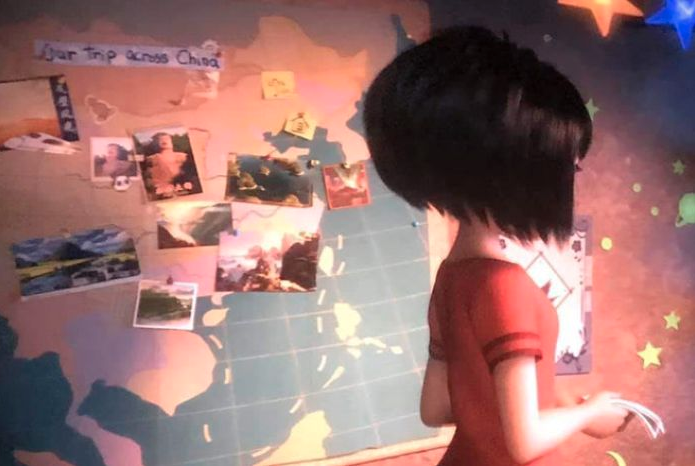
  • Dreamworks has got a movie with a map that recognizes China's very expansive idea of the territories that are supposed to be Chinese--the 9 dash line includes hunks of Philippines, Vietnam, Indonesia, Brunei, and maybe another country or to.  This has cost "Abominable" Vietnam's market.  Don't forget, the Red Dawn remake had the North Koreans as the enemy invading the US (much more ridiculous than China invading) to avoid offending China.
Sure, I understand that firms seek profits and don't want to lose markets. The NBA is a bit different--there is no competition with other firms or whatever since no one else can sell or buy NBA teams or products except NBA teams.  They don't have to worry about somebody else profiting more in China and then using those profits to beat the NBA.  Instead, this is just really about more money for the owners (mostly billionaires) and players (regular players make millions per year).  A decline of $10million in the salary cap might a bit less money, but greed is greed, and so be it.  It will be interesting to see if tossing out fans in the US (in Philadelphia, home of all that freedom stuff) will cost the NBA at all.

Because there will be times where firms will have to choose--that appealing to China might offend other markets.  Already, Dreamworks has lost Vietnam in one case.  What happens when it is a conflict between American or European consumers and China's?

I must say that China has been doing a great job of turning me into a hawk.  Arresting some random Canadians because of an extradition process?  Nope, not a fan.  I don't want war with China, but I am not a fan of pandering to China too much either.  If the Chinese government is likely to get pissed off and use its leverage, then maybe that should be built into people's risk calculations and maybe not sell one's soul to get into a very Sopranos-esque market (co-production means losing intellectual property and having to put people on one's payroll that mostly either sit around or don't show up). 

All I can say is that we should expect more and more of this.  China is far more sensitive to slights than a rising power should be.  Great powers get criticized a lot--retaliating against every negative stance is going to get tiresome and will cut into China's growth eventually.  A smarter way would be just to regulate its own market in ways that affect world markets, but that is not what China is doing.  I think China was better off when it had some velvet gloves on its iron fists.  Now?  Now it is clear that China is going to be pretty willing to use its increased leverage.  The way to avoid that is not to sell out.  It will be interesting to see who is seduced by the short term gains versus those who see the trouble in the long term.


Monday, January 21, 2019

The Rise of the Bullies and IR Theory

The past few years challenge much of the conventional understanding of international relations.  One of the big lessons from the IR scholarship of the 1970s is that the nature of international relations is that threats and bullying don't work.  As Robert Jervis discussed it, the world can be either a constant chicken game or a repeated prisoner's dilemma--aka deterrence vs. spiral model.  In short, is international relations an environment (a system!) where countries cave into threats or do they balance against them, that those who believe that pushing countries around are usually confronting with coalitions created by such bullying.  Kaiser Wilhelm, as IR scholars use as a example, threatened everyone, hoping that they would back down.  Instead, these countries solidified their alliances and showed up in Europe in August 1914.  Oops.

Over the past several years, we have seen a series of countries engage in bullying behavior--Russia, Saudi Arabia, Trump's US and China.  Russia has wielded nuclear threats to encourage Europeans to not deploy troops to the Baltics and to dissuade them from supporting Ukraine.  How has that worked so far?  Saudi Arabia has seemingly become unhinged as of late, overreacting to Canadian discussions of Saudi human rights and all but warring upon Qatar.  Trump, well, is a bully, so we ought not be surprised by his threats nor by his ignorance of IR scholarship. Threatening the allies has led them to ponder hedging and alternatives.  He might think the North Koreans have submitted after last year's threats, but I am pretty sure the North Koreans think they have the upper hand.

The big surprise, to me anyway, is China.  China has managed its rise so very well in large part because it has mostly wielded a velvet fist.  Yes, it has buzzed American planes and ships, had friction with Indonesia, and other stuff.  But generally, the China of the 2000s and early 2010s has been replaced by a more aggressive and obnoxious China.  The tiff with Canada is important since Canada was the western democracy least likely to object to the Huawei company getting inside Canada's 5G.  Well, not any more.  The current standoff is causing Canadian parties to rally against China--who is arguing now that Canada should submit?  Moreover, a conversation with a European diplomat today reminded me that Canada has more influence than folks think.  Not necessarily to push China back into the straight and narrow but to serve as bellwether.  If  a country has a problem with the US or EU, well, those are powerful entities that can antagonize.  But a country has a problem with Canada?  That suggests that the particular country is problematic... and, jeez, is China problematic these days.

I am not a China expert so I don't really know what is driving China to behave this way.  I would guess domestic politics and nationalism (populism?  Not quite).  But everything I have learned in my career tells me that China's choices now are self-destructive--that being aggressive does not pay in the long run.  That bullying is counter-productive.  Perhaps China is encouraged because the US led by Trump is so incompetent and unreliable, which means balancing will be late, inept and weak.  But it is still a dumb move--the Chinese have been gaining strength with little opposition because they were not overly aggressive.

The thing about IR theory stuff--it didn't say that bullying didn't happen. It just said it was not productive.  So, the question for future IR scholars, if we live so long, is whether China, Russia, Saudi Arabia and Trump's US are punished or not.  We shall see. 


Thursday, October 6, 2016

Offset This!

Military jargon can be handy or it can be confusing.  Today, I sat in on a conference of Air folks--run by the Air Staff College that is hosting me with Japan's Air Defence Force, Australian Air Force, French Air Force, Royal Air Force, and US Air Force folks.  The speakers included people from all of these--majors to colonels.  I missed yesterday's presentations that were mostly about the threat these folks are facing in Asia-Pacific.  Today was about what each air force was thinking about in terms of responding, including new doctrine.  The big US theme--the third offset.

Whuck?  Well, um, hmmmm.  The official definition on the slide (they gave me a briefing book with all of the slides, and yes, death by powerpoint):
"Offset strategies are about technologically enabled operational and organizational constructs that provide the joint force with an advantage, strengthening conventional deterrence."  Or so says the Secretary of the Air Force.
What does that mean?  No idea.  However, we can figure it out by looking at the first and second offsets:
  1. 1950's: Need to offset Soviet Conventional Superiority, which led to Eisenhower's New Look strategy--massive retaliation and all that.
  2.  1970's: Need to offset erosion of US nuclear advantage.  So precision guided munitions.
  3. Future/now Technological advantage is eroding.  Adversaries (China) are innovating faster so US/allies will not have big lead in latest technologies.  
Ah, so offset means that the US/allies are trying to offset or compensate for the strengths of the adversary (used to be Soviet, now China and maybe some others).

But offset by itself does not really sing.  It does not really clearly identify what the basic stuff is about.  I am not sure about a better name.

What I am sure about is that this ain't the third one.  What this count above ignores, among others, is the 1960s, when nuclear supremacy gave way.  The Kennedy administration came up with flexible response, so that the US would dominate every rung of the escalation ladder.  But the big "offset" was political: teaching the Soviets about Mutual Assured Destruction, about Schellling, and about why defenses (ABM) were bad.

Which leads to the challenge of the present day--much work needs to be done so that the US/allies and China share a common language about the relationship and perhaps focus effort on mutual security rather than supremacy.  The recent news about the USAF pursuing a next generation bomber designed to penetrate Chinese airspace bothers the fuck out of me.  Sorry, but I cannot say it more strongly, but the idea of developing capabilities that undermine China's second strike capability is dumb and then some.  China may not accept mutual assured destruction, but it sure as hell will not accept being vulnerable to a disarming US first strike.  Haven't we learned the lessons of the past?  The USAF bomber plans suggests not so much.

While I do admire the folks I heard today, and I think the recognition that the US will not be out-innovating the Chinese, that the technological edge is not going to be as wide (although is China close to having rail guns and frickin laser beams?) is very important, it comes back to politics.  We need to get straight the relationships and what the US needs to do and to avoid before trying to build a plane that might undermine a stable equilibrium that fosters peace.

Friday, September 2, 2016

The Wrong Billion

I have been at the APSA this week, so blogging has been light and I have not really read much on Trudeau's China trip.  I have seen some tweets wondering if Canada is bending too much towards China and away from US. 

My first reaction is that trying to do some deals with China does not mean Canada is dumping the US or moving away from US.  The US will always come first and foremost.  Other allies have engaged China in ways that do not fall 100% in line with the US, and it has been fine. 

My second reaction, however, is that this Prime Minister will learn what previous PM's have learned: China is a crappy partner.  The Chinese don't like the rules of the international order that have long benefited Canada, and tend to do stuff that cuts at that international order.  At the more micro-level, firms are seduced by attraction of large market to do business in China and then find out it can be very Soprano's like--having to share profits, having to spend money on employees that don't work, etc. 

So, my third reaction is this: if you want to improve access to a market with a billion people, how about focusing on the one where the shared values/interests are much higher (even if the country has flaws like an ethnonationalist leader, not perfectly handling a secessionist region, etc).  That is, why focus on China and not India?  India is more likely to pay benefits down the road, and working with India is less likely to help perpetuate an authoritarian regime that is actively engaged in challenging the international order. 

Canada can try to improve relations with China, but there are real reasons why Canada and others have a hard time doing business in and with China.  And those real reasons aren't going away.  So, manage the China relationship, but build a better India relationship.*

* No, these are not entirely mutually exclusive options, but they kind of are.  More on that some other time.  Back to APSA.

Sunday, January 31, 2016

Comparative Provocation

One of the issues that kept coming up in the weeklong visit to Japan is the Senkaku islands dispute.  Japan has them, China wants them.  What puzzles me is Japan's military stance.  One of the questions I have been asking lately for pretty much everyone is that China and Russia are not the only actors that can play the anti-access/area denial game of developing weapons (anti-air and anti-ship missiles, subs, etc). 

If China is threatening these islands, why not put some defenses in place that would raise the costs of an attack--to create some deterrence? The answer? This would be too provocative.

So, what is Japan doing?  It is building up its capacity to take back the islands if the Chinese take them. This means aircraft carriers that are not called such things and amphibious ships to land troops.  There are two problems with this:
  1. Folks in the neighborhood might just be provoked bigtime but Japan developing these capabilities.  
  2. Trying to take back lost territory is far likelier to cause a dispute to escalate than placing some weapons.  The scenario would play out thusly: China takes some islands and then tells Japan if you try to take them back, we will escalate.  Um and then what?

So, I am confused.  Perhaps Japan has only lousy choices from which to choose, but the choice of developing the ability to project power via helicopter carriers and amphib stuff seems the most problematic.  What say you?

Wednesday, January 27, 2016

Tokyo Briefings, Day 3

The firehose keeps on on keeping on as we are being given a heap of info to assess.  I am starting to think the Japanese style of providing handouts of powerpoint is an interesting way to go, despite the dead trees.  Anyhow, today's stuff bounced around quite a bit, with the key consistent theme of "really good food."  Indeed, lunch was at the same place that President George HW Bush threw up long ago (see pic -->)
The only downside to lunch was that it was in an interesting area and we had a chance to walk around, but we got driven to a slightly different area to explore--heaps of upscale shops that were far less interesting.

Thursday, February 13, 2014

Why I Don't Study Arms Races

Time to unpack a tweet just a bit:
The article focuses on the efforts of countries in the Indo-Pacific region pursuing submarines.  My immediate reaction was to invoke the security dilemma.  This basic IR concept goes as follows:
because there is no higher authority to protect/secure countries, each country must look out for themselves (allies make promises that may not be kept).  So, when one country adds some kind of military capability to improve its ability to secure itself, others (especially neighbors) will worry about how that new capability might be used, so they react to develop new capabilities.  This reaction may leave the initiator less secure as it now faces neighbors with greater military capabilities.  The dilemma is that the effort to create more security ultimately leads to less security.

In this particular case, the Chinese are building up their navy to thwart the U.S., and much of it is to deny the Americans the ability to sail about the seas near China via submarines and missiles.  The neighbors see this larger navy and invest in submarines.  This might leave China more threatened as its strategic picture becomes complicated by many more countries with diverse capabilities.

When I applied to grad school, my essay for the applications focused on my curiosity about arms races yet I have never published anything on arms races.  Why not?  Because once I got to grad school and learned about the security dilemma, my curiosity was largely satisfied.  Sure, there are other dynamics at work (military-industrial complex type stuff), but I found that the security dilemma made sense of much of what I had been curious about.  So, I moved on.

Of course, the big question is why do countries not arms race.  How does one improve security without upsetting the neighbors?  Fun stuff to think about.  To be clear, there is plenty of room for scholars to study arms races.  I just found that my intellectual curiosity was satisfied, but I am sure there are puzzles that still keep folks engaged on this issue just as many folks probably did not have much curiosity about NATO and Afghanistan.


Tuesday, November 26, 2013

Consistencies in US Foreign Policy and Confusing Chinese Behavior

What do Russia, China, and Canada have in common? Unwelcome visits by American ships and planes.  During the Cold War and after, the US Navy made it a habit of driving their ships relatively close to Russian shores, always seeking to underline the law of the sea (even when not ratified by the US) that allows ships to pass through straits and close to land.  The American conflict with Canada over the Arctic has two dimensions--where to draw the line under the water so that we can figure out where American and Canadian property rights exist and the American insistence that its ships can sail between various Canadian islands in the Northwest Passage as it unfreezes.  The latter conflict is much harder to resolve than the former since it is about a basic principle and not haggling over lines.

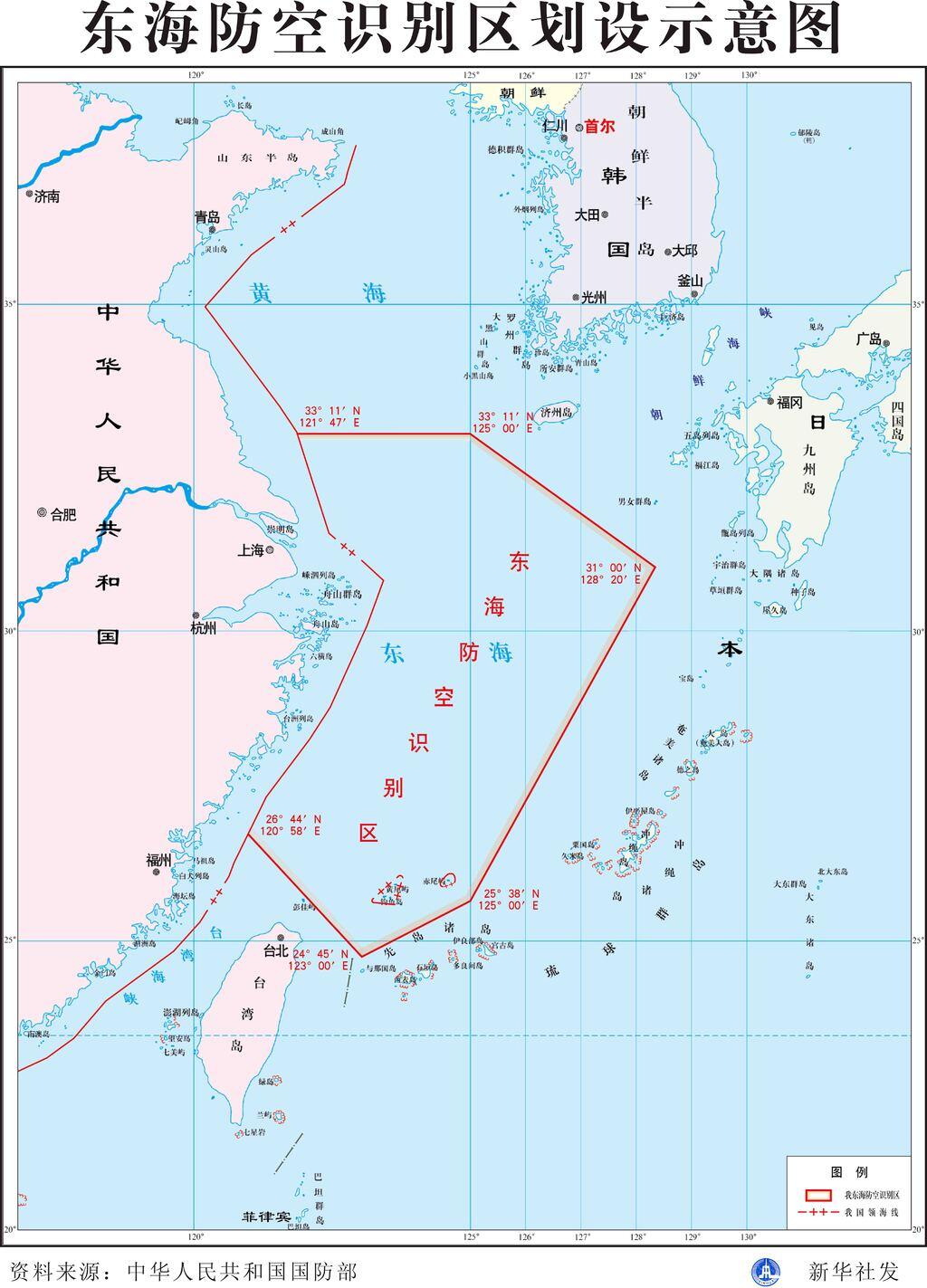
Why is this relevant today?  Because China announced a zone of airspace beyond its territory that would be part of China's defense zone--whatever that means.  So, as quick as you can gas up some B-52's (or not so quickly as it took a few days), the US is flying planes through this space to demonstrate its scoffing and to emphasize how much the US likes this particular form of international law.


So, the US is pretty inconsistent in many ways over the decades, but tell it to shove off and not send its military through a space and you can pretty much count on a visit by the US Navy or Air Force.  This just reinforces the strangeness of the Chinese decision.  As others have remarked on twitter and elsewhere, with Japan and South Korea having various disputes, why would you want to give them common cause?

I am not a China expert, despite eating in Chinese restaurants with celebrities.  But this does seem to be very un-Sun Tzu of them. 

Best illustrated by this?

and the US here would be Lancelot....

Wednesday, January 11, 2012

Speaking of Coups

This semester of Civil-Military Relations is getting off to a hot start with .... news about a potential crisis in Chinese civil-military relations.  I don't know anything about China or China's military except one thing: officers in the military have gotten deeply involved in the economy.  That is, the military owns businesses that are major actors in the economy, enriching the officers and giving them increased power and stakes.  Does that sound like any place else?  Well, Egypt for one.
There have been too many reminders in the Chinese state media that “the Party controls the gun”—that the PLA reports to civilians—to think that this has not become an issue.
I was just saying in lecture today that it is often hard to see if a genuine crisis exists, as disagreements between military officers and civilians are often part of an exchange of ideas.  Again, I don't know much about China, but I do think that we live in interesting times, as they say.

Thursday, January 5, 2012

Basics in Grand Strategy

The twitter-verse, or at least, one of the corners I follow, had heaps of tweets dedicated to the rollout of the US defense review, with Obama playing a starring role.  Apparently, Obama briefing at the Pentagon is a new thing.  Anyhow, it raised all kinds of questions, so I thought I would answer them all here.  Yes, all of them.  Ok, some of them.
  • Q: Is the review really a review of what the US wants to do, or is it a gloss over the requirements imposed by the fiscal crisis (which, by the way, is mostly caused by the refusal to raise taxes)?
  • A: Yes, it is a gloss, but it is more significant than that.  In the good old days, Grand Strategy meant the overall approach a country took to pursue its interests and match commitments and capabilities.  So, having less money than planned (note, less money than planned, not significantly less money than before these wars of the Aughts) means adjusting commitments.  Which leads to the next question:
  • Q: All this talk of the Gulf and East Asia, and cuts to the Army, focusing on the Navy and Air Force means that Europe is taking a back seat in US grand strategy, right?
  • A: Yes.
  • A: Oh, you want more than that.  Well, to be honest, that change happened the second week of my time on the Joint Staff, when the daily/weekly urgency about the Balkans dissipated as a war in Central Asia and then a second war took the focus and the resources of the US.  The Balkans became an afterthought.  Other than providing a handy set of bases for the Libyan enterprise, Europe has not been a place that American defence planners have spent much time thinking about.  
  • Q: But what about Russia?
  • A: Good question.  Well, my guess is that Russia is not seen as a conventional military threat to Europe right now or the near future.  That European forces could potential deter the Russians.  Ok, that makes us both laugh.  With Europeans cutting their defense budgets in ways that do far more harm to readiness (as in: no more fighter planes or no more armor), Europe is not going to be that fit to take care of itself.  But it has as much economic capability (once the Euro crisis settles down) to provide defense for itself, or at least supplement an American effort to "spoil" an attack.  Plus the reality is that any Russian invasion of Europe would require invading countries we do not care about unless we are stupid enough to let Ukraine into NATO.  Oh, never mind.
  • Q:  Back to the core of the new strategy, what is this one war and one other thing?

Wednesday, February 16, 2011

If You Build It, They Will?

Stunning pictures of Chinese cities with no people.   Apparently massive investments have not lured people to these new developments.  How can a country with over a billion people have cities that are largely uninhabited?  China may be booming, but I would not be so confident in its ability to sustain either its political or economic strategies.

Wednesday, January 12, 2011

Half Right on China

Max Boot is half right on China--he argues that the test of their stealth plane as Gates was visiting demonstrates perhaps that China's leadership does not have full command over its military.  That is, indeed, troubling.  However, he continues to beat the drum for more and more military spending.  Again, to win an arms race with China is not about more and more, but smarter and perhaps even cheaper.   Finding weapons systems that get at China's vulnerabilities rather than investing in our own stuff that is vulnerable is the way to go. 

And speaking of such, since the US has had stealth planes for more than twenty years, perhaps we might be good at defeating the Chinese first generation of stealth planes?  We might not be broadcasting that because we want them to waste money on such stuff?  Just a guess or two here.  It is highly unlikely that the first generation of Chinese stealth aircraft will be something we haven't, ahem, seen.

As Gates has put it, the US no longer just buy and buy without restraint (actually it should not have been doing so anyway).  It needs to be smart about it, and over-reacting is not smart.

Saturday, December 25, 2010

I'd Like an Aircraft Carrier for Christmas

Today's Washington Post seemed to be focused on arms sales.  And that brings me back to what could have been.  My first dissertation topic (yes, kids, topics change) was on arms sales, so it was a nice blast from the past to see not one but two articles on arms sales in the Christmas day edition.
  1. Front page story that China's military technological development is a bit uneven.  So much so that they have to buy planes of various kinds from Russia.
  2. Russia, in turn, is buying warships from France.  Amphibious ships, that is.  Which raises the question of where does Russia need to send troops across water?  Georgia, of course, says: us! 
What a strange world we live in now!?   Russia is now a NATO partner so France can sell warships to Russia (although not fighter planes that no one wants).  France can sell ships to Russia since it is unlikely that Russia would use the new amphibious ships to invade Normandy, but it does raise a few questions given Russia's relatively recent behavior towards Georgia.  Of course, selling off a smaller country to appease a bigger one would not be a first for France.  This is part of a larger process of trying to direct Russia towards better relations with the West, but I am not sure if this is going to work if NATO continues to extend membership processes to Ukraine and Georgia (which I am against, not because of Russian opposition, but because such a move weakens the essential meaning of NATO--an attack upon one is an attack upon all, caveats or not).  Anyhow, so the West is now selling significant military equipment to Russia, but only such stuff that really does not threaten the seller.

Meanwhile, Russia's export business seems to be pretty dependent on China, and China is pretty dependent on the Russian aerospace industry.  This is the case despite the reality that China and Russia ought to be rivals, given the usual theories of IR (proximity, changing power, etc. should make each the greatest threat of the other).  Yet commerce seems to triumph over security concerns.  Some might see Russia and China allying against the US which is a bigger threat to both.  I guess it depends on US diplomacy to convince these countries that the US is not that big of a threat so that the divides between them become more obvious and important.  Another way to look at this is as a test of IR theory--do countries balance against threats or power?  The US has more power, but it is limited from being a big threat in Asia (even if we have abridge the classic line from "never fight a land war in Asia" to "never fight more than two land wars in Asia").  And now that the US is less threatening in a post-Bush age of overcommitted militaries and budget deficits, I would think that Russia and China would see each other as the big threats.  Yet Russia sells all kinds of planes that extend China's power (fighters, airlift, inflight refueling).

Interesting times indeed.

Sunday, October 10, 2010

Sometimes the Realists are Right

SecDef Gates is in Vietnam, holding talks that partially (mainly?) focus on how to respond to the rising Chinese challenge.  The US and Vietnam have some differences, although much fewer than a decade or two ago, but their relationship is now quite normalized.  Some tiffs over human rights perhaps, but there is much in common--specifically that China is not only getting more powerful but it is exercising that power in threatening ways.
The defense secretary’s expected arguments to China are clear: Beijing’s dash to become a global economic power requires it to honor accepted standards for sharing oceans and airspace, and harassment of ships and airplanes in international lanes off its shores benefits none and will only harm Beijing’s long-term interests.
The shared threat is not the only reason that the US and Vietnam can put behind the past--that has been in process for quite some time.  But it does make the past even more irrelevant and more in the background.