Saturday, July 30, 2022

Covid Fest?

Not quite max Saideman but close.
 I spent many Saturdays over the course of the pandemic charting my descent into quarantine madness, yet when I got COVID, I didn't feel any urgency to post about my experience.  Maybe COVID sucked out my blogging enthusiasm?  It was both good and bad timing--bad because I had some fun stuff lined up but good because I got it out of the way before Beulah-fest and Steve-fest but bad because boosters just became available as my covid case ended and now I have to wait three months to get a booster, but good perhaps because the next boosters might be better?

So, how did I get COVID?  By conferencing.  I went to the European Initiative on Security Studies conference in Berlin at the end of June/beginning of July.  It was both a good networking opportunity to build more bridges between the EISS and the CDSN and a chance to learn what the sharp folks are studying these days.  I wasn't presenting--I served as an overly talkative discussant for a civil-military relations pane.  Was this conference worth getting COVID?  Since Mrs. Spew and I both had very mild cases--sore threats, headaches--for about a week, I would have to say it probably was.  Why?

  • any chance to hear Carrie Lee, Lindsay Cohn, and Chiara Ruffa present their stuff is a valuable learning experience.
  • it is a small conference so I couldn't just go to panels dedicated to my specific niche, so I got to learn more about more things and from mostly a sharp next generation
  • the aforementioned networking.  EISS and CDSN can do much together, and doing stuff in person just makes this much easier.
  • German beer.

I had symptoms the day after I returned, and after three days of negative tests, I got a positive antigen test.  So, we hid out and progressively ran out of stuff.  The dechero of May had depleted our frozen food stock, so my freezer was not as full as usual.  I had planned on going shopping right after the Berlin trip to fill our cupboards and frig and freezer and, well, covid happened.  Still, we were able to hide out after canceling plans and got through it ok.  I managed to get some work done, but also felt far less guilty about taking a day off and then not getting much done on other days. 

We recovered after about ten days.  I kept in mind that (a) while the health authorities said 5 days after symptoms, one could start doing stuff, that probably was built on earlier variants--the more recent variants seem to last longer and (b) any notion of the average case being contagious for x days needs to keep in mind that "average" means half before and half after.  So, we stayed at home for the full ten days and then only went out masked for the necessary stuff--shopping.  

We recovered and were no longer contagious by the time we drove to Philly to celebrate my mother's 90th birthday (which was earlier in the year, but this was the best time for max Saideman turnout).  I got to see Hollywood Production Assistant Spew for the first time since winterfest as well as my nieces, nephew, mother, brother, and sisters and brother-in-law, cousins and even a cousin's sweet dog.  We had a very nice dinner with/for my mother.  She wore a tiara and everything!  

It ain't a real Steve fest without
a flight of wheat and Belgian beers
and a stout to round it off.

We have been hitting Philly hard the past few years as it is hard for my mother to travel--the summer vacation has been there since my father died.  We had one day at the shore--Asbury Park for the first time, no Bruce sightings.  A couple of good steak sandwichs, great bagels (I recoil in disgust when I pass by a Montreal bagel place on South Street) and lox, and a very good brew pub for my own Steve-fest.  

Oh and I impressed by making Dutch babies with caramel apple sauce for the first breakfast of the week:


My sister made birthday cake for me, and, yes, I asked for funfetti!


 A day at the shore, with Asbury Park having a pretty sweet boardwalk. The water was cold, but that didn't stop me from jumping in/over/under the waves.  I missed the next generation as it was always fun to dunk them, toss them, and hang with them in the water.

I embraced my inner Rocky as I did grew up in Philly at the time of the first three or so movies:


Save the clock tower!  Ok, my annual Mrs. Spew and I in front of Independence Hall.  I found it quite appropriate that the building is askew at a time where the institutions (SCOTUS) are broken.


We went to the Camden Aquarium as my daughter has a friend getting married there sometime in the next year or two.  We got to pet sharks and rays, saw two hippos, and got to see Philly from the other side.


With the heat and with us having done so much tourism in the city before, we did a lot of hanging out. 


Despite the COVID kickoff, Stevefest has been a good one.  Tomorrow, I play ultimate for the first time in more than a month, and, yeah, one of the last times...  but more on that later.


Thursday, July 28, 2022

Some Self-Imposed Reviewing Rules

 Tis that time of year: to write tenure/promotion letters.  Usually, sometime in the late spring or early summer, chairs/associate deans/etc reach out and ask academics of the right rank (tenured for tenure decisions, full profs for promotion to full) to write letters evaluating candidates for promotion.*  This is a big ask because one is expected to review someone's entire research output (outsiders are in a lousy position to evaluate teaching/service), and, no, we don't get paid to do it.

We feel obligated to do it because others wrote letters about us and because there is an understanding that saying no might be interpreted as saying that person should not be promoted.  I have written about this before, but I am writing now to provide some rules I use to get through this.  I had whined about this on facebook, and someone asked where my rules came from, which inspires this post.

But before proceeding, a few caveats:

  • these are my rules--they are not the norms of the profession.  I don't know how they impact candidates since I have not been on a tenure/promotion process in some time (Carleton does this stuff by subcommittee)
  • I don't get hit as hard as women and people from historically excluded groups as deans/chairs/whoever seek representation and thus pile on more work on these folks.
  • I don't get hit as hard as people with bigger names or people at more prestigious places.  Moving to Carleton from McG helped me in this regard.
  • I also don't get as many requests as those who have work that is quite broad.  Working on ethnic conflict then and civil-military relations now means getting requests to review people in both areas but not in an area such as "Congress" or "IR Theory."

Ok, so what are my rules/procedures?

  1. I try to do only three letters a year.  Each review takes multiple days to the reading and then drafting the letter.  As a way to manage all of the stuff I have to do, containing this unpaid and unrewarded stuff to just three is necessary.  I have told my friends who get hit hard that three is enough for them too.  Given that we do this every year after tenure and we don't need that many letters ourselves (one per promotion and then maybe for a move or two), we are definitely paying far more forward.  
  2. Comparison is the thief of joy.  I actually love to compare, and it is essential to my research.  But I HATE being asked to compare a candidate to other people.  In my view, academia is not a competitive bloodsport but an effort to make contributions to knowledge.  Did someone do interesting research that informed debates and moved the discussion forward?  Not did person x do more research than person y.  Some places will give a specific set of names and say: did the candidate do better than these people?   I have decided not to play this game, as I don't know the conditions at each university of each potential competitor that might facilitate or inhibit the research of the various folks involved--variations in course loads and course releases, help or lack thereof for grading, service requirements, internal funding, etc.  Some people will write letters that evaluate the work but don't recommend promotion because they don't feel they have a good understanding of the rest of the record--they stick with what they can know and say.
  3. When I get the package, I try to figure out which five pieces to focus on.  I have finite time and I am easily distracted.  So, I am not willing to read the entire package.  And I don't think I need to. If I can't figure out if a person has made a contribution from reading either their five most well placed publications or five publications in my area of expertise, I am not going to find it in publication 7 or 10.  I have no idea how this plays with promotion committees, but I am explicit about it.  For promotion to full, I only read the stuff since they got tenure.  I don't need to re-hash the tenure decision--the question is whether they continued to contribute.
  4. I will not dodge a negative review.  If I am asked to review someone who falls short of the tenure standards at my school (the letter requests often ask whether person x could get tenure or promotion at my place), I will still agree to write the letter.  I don't want universities to think that no letter means a negative review, and my limited capacity to influence that perception is to write negative reviews when the situations arise.  And, yes, I have done it a few times.  It was not fun, but I try to fairly assess each file--does the person make a contribution, does their trajectory look good, would I promote them at my place?  If the answers are no, no, and no, then I write the letter that way.  

What are my general standards, subject to instruction from the place requesting the letter?  Completion of an original research project--that can be a book, a series of articles, or a mix; the start of a second project.  I do check the citation record, but don't focus on it since the committee can do that.  My job is to assess the intellectual contribution of the work--have they asked relevant questions, have they developed persuasive arguments to answer those questions, have their methods been appropriate for testing their arguments, how has their work advanced the debate?  Not every aspect has to be original.  It can be a classic question with a new answer, or a new method or dataset to test existing arguments, but something has to be different than that which has been done before.  While replication is something we should do more, one's tenure should not be based on replicating previous work.

Finally, I have no idea how my tenure letters are received.  All I know is that almost everyone who I have written a positive letter for has received tenure/promotion.  The exceptions?  The places that deny most/all people--the Harvards and their ilk.  Of those who I have written a negative letter?  I think most or all of this handful have been denied.  And this is one reason why I impose limits on my work in this area--I am not sure I am making a difference (not that I want to--to be the one person standing in the way of someone's tenure).  Since much of this is pro forma one way or the other, it does not make sense that I spend my entire summer reviewing five or six tenure cases and reading every single piece of written work.  

Or at least, that is my rationalization.  I am not sure what other people use as their rules, but I wish we had more transparency on this so that we could all have reasonable expectations and so that committees and deans and provosts would understand the collective action problem they are generating.


*  I just got two requests and said no to both since I am full up.  Asking for letters in late July is not a good strategy in my humble opinion.

Thursday, July 21, 2022

Uniform Professionalism

I have been watching the discussion about the CAF's new uniform regulations play out, and I was going to stay out of it.  But then I saw a post that provoked me just a bit.  A retired military dude wrote an op-ed that was incredibly bad for a number of reasons, which Charlotte Duval-Lantoine addresses a bit on twitter.  The part that got me was the guy's constant invoking of "professionalism"--that having any deviation from the old way of doing things, where everyone had to look exactly the same, would threaten the professionalism of the CAF.  There is much to unpack in this.

Thanks to Sam Huntington and generations of misreading his stuff, the term "professionalism" or "professional" have become quite loaded in Canada (and the US and elsewhere).  It is seen as the ideal and as the solution. The ideal is to be part of a group of experts in the management of violence (with the implicit and sometimes explicit notion that professionals have exclusive expertise), that one's identity is bound up in striving to be "professional."  Calling someone or something unprofessional has become one of the worst things you can say in a military context (note that is what US/Canadian pilots call Chinese pilots who buzz them, when, well, the latter might be following orders).  Central to the identity of military folks these days is being a professional.  

This then leads to a problem--any changes in the definition of professional become a threat to the identity of those who consider themselves to be professionals.  Uniforms, regulations about hair and tattoos, etc are all part of what being professional looks like.  So, changing the look changes what is professional.  

And this is precisely the reason why the military is changing the uniform and regs--so that more and more folks in the CAF and in Canada can be included in the profession of arms.  Regulating/restricting inhibited or restrained women, Indigenous people, Sikhs, and others from being their true selves and being professionals at the same time.  Making the military more inclusive is a deliberate and belated effort, with uniforms and hair and such only one part of that effort.  

It is fundamental and existential given the changing demographics of the recruiting pool in Canada, and it is also fundamental that the Canadian military reflect Canada.  Having a minority dominate the coercive apparatus is not great for civil-military relations, and, yes, white dudes are a minority.  They always have been since women have always been roughly 50% of the population.  

There has been a lot of talk about culture change in the CAF, which means changing what is meant by professionalism.  What is professional conduct?  Given the behavior of the senior officers of late--Vance, McDonald, Edmundson, Whelan, and others--it seems like preying upon junior personnel and having separate rules for the leadership were part of the profession of arms in Canada.  That may sound strange, but how else do you have abuse of power and much sexual assault and harassment in a professional military if a professional does not do those things?  Is that so many folks are unprofessional? Or is it that the conception of the profession and its norms allowed such stuff to happen?  Even perhaps encouraged it by creating a sense of the true professionals versus others?  

So, these changes are definitely threatening the old conception of professionalism and, through that, the identities of many folks.  That might cause some "professionally conservative" or "conservatively professional" to leave the CAF.  So be it, as the CAF may have to get smaller before it gets attractive to the majority of Canadians: women, immigrants, people of color, LGBTQ2S+, etc.  The best way to improve recruiting is to deepen and widen the pool of recruits--then you can be selective.  By telling women that they will have to wear men's boxers, not to mention armor that does not fit people with breasts and hips, they were telling women they didn't belong.  By telling religious minorities that they can't respect their faith and serve, the CAF was telling them they didn't belong.  

The funny thing is this: by telling white, straight, Christian men that they can have more flexibility about their uniform and tattoos, just like everyone else, the CAF is NOT telling they don't belong.  The CAF is just telling them that they are not as special, not as elite, not as deserving of domination and impunity.  And, yeah, that probably sucks just a bit for some of them.  But making the CAF more inclusive does not make it less professional.  It makes the concept of professional and of the profession more fit for purpose for the 21st century (and would have been handy in the last century).  

Another funny thing: militaries are constantly told they must adapt or they will lose the next battle/war.  Well, guess what, the CAF needs to adapt to changing demographics--it is both the smart thing to do and the right thing to do.  Those seeking to keep things like they always were are neither smart nor right.


Wednesday, July 13, 2022

The New Season on Battle Rhythm

 With Stéfanie von Hlatky moving on to Associate Deaning, we have had to figure out a new plan for Battle Rhythm, a podcast of the Canadian Defence and Security Network.  We auditioned several sharp folks, and rather than repeating the Jeopardy mistake of giving the job to the producer, we, instead, gave the role to the four amazing folks who guested for us the past couple of months.  Our new band of podcast rebels are:

  • Anessa Kimball, Professor of Political Science at Université Laval.  She is a Co-Director of the CDSN, leading the Security Theme from ye olde SSHRC grant and the Climate Security Theme of the new MINDS grant.  She works on international security cooperation, such as NATO, and is a quantitative evangelist.  @ProfKimball
  • Erin Gibbs Van Brunschot, Professor of Sociology and Director of the Center for Military, Security, and Strategic Studies at the University of Calgary.  She is a Co-Director of the CDSN, working in the Security realm as well as a Co-Director of the Canadian Network on Information and Security [CANIS]. @ErinGVB
  • Linna Tam-Seto is Assistant Professor of Psychiatry and Behavioural Neurosciences at McMaster University and the CDSN's first Post-Doctoral Scholar. @linnaseto
  • Artur Wilczynski is a retired Canadian national security expert and diplomat, having served as Ambassador to Norway, Assistant Deputy Minister, Director-General, and similar positions within Global Affairs Canada, Public Safety, and the Communications Security Establishment. He serves on the CDSN Advisory Board. @Arturmaks

These four individuals greatly expand our perspectives as they come from a variety of disciplines, work experiences, regions, networks, levels of seniority, and more.  We rely heavily on our networks to find guests for our interview segments, so we should be reaching out more broadly in the future.  It is no accident that most of these individuals focus a bit more on the S in our name, as the CDSN did start out pretty heavy on Defence.  We are now looking at a variety of ways to think and talk about Security.  These four individuals have very different perspectives on what security means, who it involves, and how Canada is doing in providing or threatening the security of Canadians and folks elsewhere.  

This will mean a bit less NATO tourism although Anessa's interests overlap a bit with mine there.  The new co-hosts will be working with Melissa Jennings, our podcast producer, Carelove Doreus, our new communciations officer, and myself on how we will proceed in the years ahead.  We may change the format as we include more chefs in the kitchen.  

While I will miss my bi-weekly conversations with Stef, I am excited about the dynamic future that awaits us.  And, yes, time to invoke the Lego movie:

Saturday, July 2, 2022

Burning Down A Place But Not The Memories

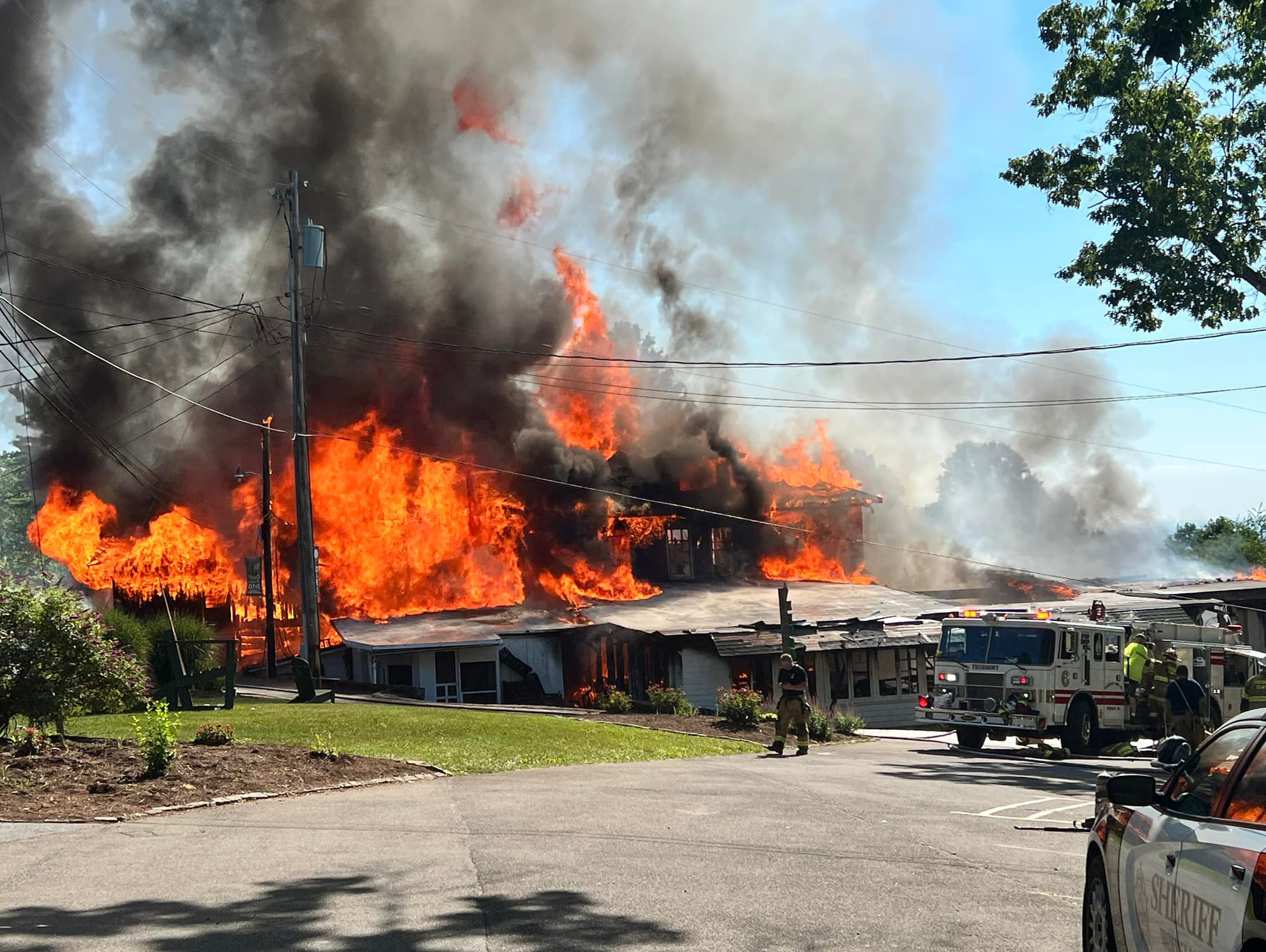
This past week, the main building at Camp Airy burned down
The good news: no one was hurt, it was the only building that was harmed, and the camp season is continuing.  Every start of every summer, the camp director would tell everyone not to let any of the faucets keep dripping after they are done with the sinks because it would empty the water tower.  Well, it turns out that was not mere rhetoric, as they had to bring up water from the pool and the pond.  There are temp facilities being set up, and a variety of entities have lent a hand so that the kids, counselors, and staff can eat. So, the summer and the camp will go on.

I spent the best ten summers of my life there, first as a camper and then as a counselor.  Every year, I spent 44 weeks looking forward to the eight.  I felt far more alive and myself at that place than at my middle school or high school.  The White House--the building that burned down--was mainly the dining hall, but also held offices and the counselor's evening clubhouse.  

What do I remember about that dining hall?  

  • every breakfast, the counselors would have to employ different systems to distribute the small boxes of sweet cereals fairly.  
  • the summer of turbot.  I don't know the details, but we ended up having a lot of fried fish one summer, I guess due to a contract gone awry or something.
  • the summers where the entire camp would chant a particular counselor's name anytime a serving tray of dishes fell.  He always turned bright red, which made it so much more fun.  
  • the time, Ed, the Director for my entire time there, a terrific man but also could be scary, went to the mic to yell at the campers for being too loud, saying that the volume was reaching the roof.  I was a smartass (yeah, it goes way back) and looked at the ceiling, and in his omniscience, Ed said, yeah, go ahead, look at the ceiling.... That scared me so much. 
  • my girlfriend, who is now Mrs. Spew, visited me when I was a counselor and ate at the table with my bunk of 12-13 11-12 year olds.  I showed her and them a fave trick of putting a spoon on my nose and keeping it there sans hands.  The  kids wanted to do it, so I told them to dip their spoons in the tomato sauce (must have been a spaghetti night) and then put the spoon along their noses so that the bowl of the spoon rests between one's eyes.  As a result, they all quickly had red circles on their foreheads.  I am sure counselors played other tricks on me at the White House's tables, but I don't remember them.  
  • the steps of the place were used for orientation pics for first year counselors.  As a rare camper who had spent entire summers rather than four week sessions, I knew about a particular tradition--that at the end of the photo session, more experienced counselors on the roof would upend garbage cans full of water onto the rookies.  As this picture shows, I was strategically positioned to be under the overhand and in the front.  Jon, my best camp pal, was ready to sprint. 
    I wonder where they will stage this picture next year... I am hoping that the replacement is built quickly as Airy's 100th anniversary is two years away.  

 The news of the fire has brought together much of the old gang, telling stories.  It breaks my heart that the building burned, but I find solace in those stories and in the news of the help that is being sent up the mountain.  I am glad that these boys (and the girls down the road at Camp Louise) will keep doing this special camp thing.

How Long Will American Autocracy Endure?

 With the news that the radicals on the Supreme Court will decide next term whether states can toss out the popular vote, along with the rest of the rulings that have already made the US less free, I started wondering how long will the United States be ruled by an authoritarian regime.  Yes, tis a dark place, essentially giving up on American democracy.  Sure, we are not quite there yet, and the folks who have been warning us haven't coded the US as autocracy yet (I await the next update of Brightline Watch).  But I have seven hours to spend at Newark airport in between flights so why not think this through a bit.   And no, conditions here are ok--the new United Lounge has a great taco bar and pretty terrific cccookies.  

Part of this is talking with folks during the EISS conference, getting some fresh perspectives.  That 27% of Republicans think Biden was elected legitimately which means folks may just say that we need an unpeaceful transition (Mike Flynn taking the 5th on that question is disturbing for so many reasons) helped get me thinking. 

Anyhow, assuming that the 2024 election may be tossed out by GOP types or Trump might win and and then return to his mission of destroying democracy, how long might it last?  For me, the starting point is: what type of autocracy?  Sure, we could think about the possible civil war of blue vs red states, but I will skip that for now as I am already sufficiently depressed.  So, I did read Barbara Geddes's book a while back where she codes different types of authoritarian regimes and assesses which ones last longer.  I found a pdf of a paper that took that dataset and went further with it, so that folks can get an open-access taste (but do get her book--it is pretty great)

There are four types of regimes (or more or less, depending on the scholar) but the archetypes are: monarchies, single-party regimes, military regimes, and personalist dictatorship.  Things can get fuzzy, but here's what the basic pattern is:


 We don't have to worry about monarchy, and I don't think a military regime is a likely form for the US.  Maybe down the road, but not in the near future.  That is a post for a different day.  First, the bad news: the average autocracy lasts more than .... ten years.  But most don't last forever.  The big question is whether it will be a personalist dictatorship or single party regime as the latter lasts twice as long as the former.  Personalist regimes do tend to have succession problems.  

Will the oncoming autocracy really be the rule of one man or will it be one party?  This is hard to say because the GOP is doing a lot on its own, the stacking of the court preceded Trump, the state parties around the country are running amok, and so it could just become a single party government.  Previous and existing ones had a coherent ideology to bring folks together (again, this is what I remember from a book I read a while ago)--Communism, Nazism, fascism.  What is the binding ideology of the GOP?  If the last several years has taught us anything, it is a party entirely devoid of values, just a power seeking machine, as the party let itself be taken over by a guy who was very much the antithesis of the stated values of the party (well, besides the racism and misogyny that was baked into the GOP).  

This is important because an utterly craven, power-seeking party with no values will have a hard time building or sustaining institutions that could keep the party together.   Can the GOP stick together after Trump leaves the scene?  Or will it be torn apart by those who seek to succeed him?  While there are those who think they could control the party, such as a Mitch McConnell, how much power will he have when the Senate becomes just an empty symbol that could be disbanded if it gets too quarrelsome for Trump/Trump 2.0.  Trump might get so annoyed and jealous of whatever power McConnell has, that he might disband the Senate.  No Senate, no McConnell. Once you break institutions, those who were empowered by institutions may become less relevant.  

Alternatively how would a GOP politburo work?  Who would be on it?  Would they get along?  Would they sublimate their egos so that their rule could be perpetuated?  I just don't see the GOP managing one party rule well.  On the other hand, I also have a hard time imagining what the rebellion would look like (too much Star Wars in my head).

Of course, in the short term, the US will have an electoral autocracy, so it will look a lot like Hungary (no accident that today's GOP are fans of Orban and what he has done to Hungary) or Russia. So, the institutions will stick around for a while, despite reduced legitimacy, and they might constrain Trump/whoever somewhat.  And that gives us a bit of hope as one thing that does bring autocracies to an end is their screwing up their fake elections.

 All of this is gross and disturbing.  I haven't given up hope yet, but damn, we face dark days ahead.


Sunday, June 26, 2022

Ten Years In An Unexpected National Capital

Ten years ago today, I arrived in Ottawa, a place I had never expected to live and work.  I had been working to move on from my previous job and got several interviews in the DC area.  Instead, I was told about a job interview process at Carleton that I knew I would not get (long story), but I had hoped to practice my stuff and maybe make a few connections.  Instead, I got offered a different job--the Paterson Chair in International Affairs.  And I will forever be grateful for the accidents and luck that got me here.  So much so that I resurrected one of my oldest Spew gags: how I am surprised, troubled, enchanted, and humbled

  • Besides being surprised at how ten years flew by, soon making Ottawa the place I have lived the longest, I guess I am surprised by how I feel like I belong here and how quickly that seemed to have developed.  True, it was the first place I ever moved where I knew people.  I quickly developed friendships with other folks at the other university in town, my friends at Carleton introduced me to folks in the media with several now being friends.  Creating a network, the Canadian Defence and Security Network, was not easy but it was eased by how many people I met at the various events around town over the years, by the contacts I developed at a number of institutions inside and outside of government.  It really is a small city, and it is chock full of people engaged in the stuff that interests me--International Relations, Foreign Policy, Civil-Military Relations, ultimate frisbee, and Defence Policy.
  • I am troubled by the politics of the place--that the city council seems to be dominated by the contractors and can't buy a train system in any competent kind of way, that the provincial leaders don't care about the city since the provincial capital is in Toronto (and we saw this play out during the far right occupation of the city), and the media and perhaps Canadians think that money spent on normal federal stuff is a waste, like the Prime Minister is supposed to live in a dump and fly on an obsolete plane.  Ottawa is a pretty special place, but it has been under-served by politicians at all levels.  
  • I am enchanted by so much of this place, whether it is the sweet ultimate fields near me, the canal that makes for good biking routes (and the ice cream place that makes my exercise bice-creaming), the relatively short distances to get to anywhere in town, so that it is easy to agree to meet folks wherever and to enjoy pretty much all of the place.  I guess the most enchanting aspect of the place are, to repeat myself, the folks I have met--ambassadors, military folks, officials in the department of whatever foreign affairs is called now, the sharp folks at the enemy university, the sweet folks at the Dean's office (I have had great relationships with two Deans here, which is a streak unparalleled in my career), the frisbee folks (of course), and on and on.  
  • I am humbled by the expertise that so many have.  I am a generalist, so I know some about a lot, but not a lot about that much.  This town has so many people who are so sharp in their specialty that I am constantly being corrected.  But that is a good thing, as I keep on learning.  I can't trot out the whole "unfrozen caveman" thing as much as I could before.  Ten years in Ottawa also means twenty years in Canada.  I still don't know about Canadian history, and there are plenty of friendly Canadians who correct me about the present that I don't understand.  

While there are somethings I miss about my previous job and about Montreal, I know that I made the right decision ten years ago for me and for my family.  That we will not be leaving Ottawa when I retire, as we like this place and we really like the people we have met along the way.  This place very much feels like home, and I have much gratitude to all those who made us welcome.  My ultimate career is nearing its end, so I will have to find some other activity to keep me busy in the summer.  I may really become Canadian if I end up paddling up and down the canal.  

Anyhow, thanks to everyone for making us welcome. 


Wednesday, June 15, 2022

The Arbour Review, Part 2: Reviewing the Recommendations

 Yesterday, I wrote about the entire report and some themes and questions that arise from it.  Today, I want to address the  recommendations, suggesting what patterns exist, and what might be missing.  A big question is which ones will get implemented, with Minister Anand already agreeing to implement 17 of the recommendations and make progress on several others (green for accepted, yellow for more study according to the link in this sentence).  I put all of the recommendations into a table and coded them by the kind of recommendation and the target of the recommendation.  The table is here (let me know how I should revise it).

The report's recommendations fall into the following categories:

  • Definition--defining or redefining key terms
  • Review--recommending that the Minister or another actor review somethign
  • Jurisdiction--moving a responsibility from one agency to another
  • Legal--changing the legal responsibilities of CAF/DND members and/or agencies
  • Structural--altering key CAF/DND structures
  • Training--recommending changes in training/education
  • Promotion--changing promotion procedures.

This is not a perfect coding scheme, and I am not a great coder.  But these different categories highlight key dimensions of the challenge, suggest which ones will be easier and which ones will be harder.  Right now, I am having a hard time imagining categories that are entirely excluded except for funding--that is, there are no specific recommendations about moving money around even as many recommendations have $ mplications. 

A quick look at the categories shows that some stuff is easier to agree to readily than others.  Almost all of the transparency recommendations were accepted immediately with the one exception of reducing the obstacles placed on external researchers.  Few of the definitions, except for the SMRC's name change, have been accepted, despite how easy that seemed to me.  Suggests that words are complicated and have big effects, which would, of course, be the perspective of the lawyer heading DND.  Most of the jurisdiction changes are not yet agreed to, and that is not a surprise as changing jurisdictions is always complicated.  Some of the recommendations to do additional reviews were accepted with the most controversial, what to do with the military colleges, getting some thought but not a commitment yet (yellow, not green).  The promotion recommendations were mostly accepted, which is not that surprising given that General Eyre and Minister Anand had already made significant changes in the promotion processes of senior leadership.

I coded the recommendations by the target of the reform as well.  Some recs were broad, not targeting a specific agency but many were.  The SMRC was the big, um, winner, getting more specific recommendations than any other agency, and, as I said yesterday, I am happy to see not become the dumping ground for all responsibility for this stuff.  ADM RS, which I discussed in my post yesterday, got several recommendations, and like the SMRC's recs, most of these were immediately accepted.  Most of the training recommendations were not immediately picked up.  Those recs specifically targeting the Minister were immediately accepted--they were easy since they didn't impinge on any other actor and they are the very least she could do--recommendations for informing parliament and setting up an external monitor to keep her on track.

What other patterns emerge?  Well, legal changes were not immediately accepted as that requires either much work by lawyers or legislation.  Changes that require outside actors to play a different role will be more difficult to accept and implement--hanging over responsibility for intra-CAF sexual offenses, Canadian Human Rights Commission playing a greater role, etc.  We have already learned this from the refusal of a number of police agencies to take on CAF sexual assault cases. While it is one thing to change how GOFO's are promoted and much work has been done there, it will require much more thought/planning/reallocation/effort to change recruitment, to change the incentives for being an excellent trainer, to develop probationary periods for new recruits, etc.  One of the big challenges in all of this will be privacy/confidentiality concerns as Arbour recommended in a number of places that those making decisions on promotion and succession should have information about the past misdeeds and current investigations of those under review.  I am all for this, but I can imagine that this is complicated.  Good thing there is no military union or else much of this stuff would be impossible.

Besides my previously mentioned frustration with the lack of stuff on civilian control of the military, what else is missing?  Given Arbour's mandate, we can't expect every reform we might want--just those related to sexual misconduct.  I recommend a couple of things (I believe I told Arbour the first two):

  • Shift emphasis away from Special Operations as the height of military excellence, as that is the whitest, most male part of the armed forces.  The CANSOF folks may actually be among the most open-minded and progressive groups in the CAF, but the idolization of Special Ops creates bad expectations and tendencies for everyone else (including police forces).  More emphasis on domestic operations would highlight a more diverse force, one that is more relevant for the public, and one that is less likely to encourage/deepen toxic masculinity (more on that below)
  • Make service in the CAF a pathway to citizenship.  This is not going to happen, but I like pushing it anyway.  We want more recruits, we want more diverse recruits.  Well, if you give potential immigrants the chance to come to Canada and become Canadians in exchange for some time in the military, that might achieve multiple objectives.  Yes, there are moral challenges (hey, we want to exploit the Global South) and security clearance complexities.  But the US managed to do this, so I am not sure why Canada can't.  Otherwise, I would recommend finding ways to make it easier for those who have already come to Canada to join the CAF.
  • Reduce the percentage of former and active CAF folks in DND.  Arbour raises the issue, but does not include anything related to this in her list of recommendations.  I would also amend the National Defence Act to ban the appointment to the position of Minister of National Defence anyone who has served a significant amount of time (more than six years?) in the Canadian Armed Forces.  I would also shift the attitude that DND's job is to support the CAF (see Arbour's own words in the document) to DND's job is to support the Minister in ensuring civilian control and fostering effectiveness of the CAF.

One of the missing recommendations: how does one reduce toxic masculinity?  None, absolutely none, of the recommendations targets this directly.  But then again, I have no answer to this.  I am guessing others do.  Which leads to a big question for those who have read this far:

What would you recommend the Minister/DND/CAF do to reduce abuse of power, entitlement, and sexual assault/harassment in the military and in DND?