Sunday, September 5, 2021

Professional Ultimate: Damn, They Are Good

Elliot and anticipated a fun game,
woman behind us?  Not so much    
Last night, a friend and I went to see the semi-final game of the Canadian part of the American Ultimate Disk League playoffs.  The pandemic has meant that the three Canadian teams played each other all summer long--no trips across the border.

I have been to a few games, and I have been watching lots of clips of professional ultimate via the AULD's instagram account, so I knew what to expect.  Most of the rules are the same, with the exceptions of having referees, violations or fouls producing changes in yards on the field or possession, and double-teaming.  Only that last one really would be a major change, as one can only be single-teamed in all other levels of ultimate.  To be surrounded by two adversaries cutting off almost all throwing lanes would be a challenge to any ultimate player.  I imagine they have to practice this.  The opponents--the Toronto Rush--set up sideline plays on purpose to double-team a thrower.  It did put much pressure, but the turnovers the Ottawa Outlaws committed were mostly their own mistakes.

And, yes, that is a hint--the good guys lost 24-22, and that score is a bit deceptive as they were behind by four points for most of the game.  For the entire first half, the Rush didn't turnover the disk, which made it impossible to catch up after a few Outlaw turnovers.  The Outlaws mostly turned it over with bad throwing decisions plus a couple of contested catches that, well, weren't caught.  

As the highlights on instagram indicated, there are plenty of layouts on defense with some very successful bids.  There were probably not as many long throws (hucks) as expected.  There were more scoobers (backhand upside down throws) than in any game I have ever played in.  Speed still kills, as TO had one or two guys who consistently could go deep and get not just open but wide open.  

 The referreeing had some interesting impacts.  On one play, the referees blew the whistle while the disk was in the air, and it would have been a score, except the throwing team, the Rush, had called timeout apparently.  So, they negated their own score.  Plus what was incidental contact was often called, leading to the offense getting the disk on the endzone line, akin to a football receiver getting pass interference.  The picture to the right is a foul that was not so incidental as the Outlaw player tripped and then tripped up the Rush offensive player while the disk was just about to reach them.

The crowd was quite lively.  We were near a group of young women who knew the players quite well, it seems.  Kind of like sitting next to the wives/girlfriends section of a baseball game.  The age range of the crowd was quite good from kids to teens to younger adults to old grandmasters like ourselves.  Some even brought big faces of some of the players as you can almost see here.  The announcer was pretty good and amusing, although he never used the word "huck" to describe a long pass.  Instead, he said "bomb" which is not the way ultimate players refer to such plays.  Maybe too easy for the kids to hear something else instead of huck?

Unlike all other sports, I can imagine myself playing.  I was never good enough as these guys, but in the old days, I used to occasionally play with and against folks who ended up on the Montreal professional team.  As I watch, I can see what throws I would want to make (fewer upside ones) and hopefully make good choices.  But I would never get open as all of these guys could shut me down, and, of course, I would be a tremendous liability on defense.  The game is similar enough to what I am used to.  The big difference, besides the athleticism, is that they do much of the time (but surprisingly not all the time) get spaced out really well so that the cutting lanes are open and that their are almost always good cuts.  

It was a great way to spend an evening, watching what this sport I have loved for so long is becoming even as I start to have serious doubts about how much longer I can keep playing.  This summer of injuries was most frustrating.  The question for the winter is whether I can make it through most or all of the season without needing serious physical therapy.  If I can't, that will be the end of my ultimate career.   If I can, I will keep playing.  To be continued.


Saturday, August 28, 2021

Mission Accomplished: First CDSN Summer Institute Rocked!

 Yesterday concluded the first Canadian Defence and Security Network's Summer Institute.  The idea was to bring together people from across the defence/security community for a week's worth of professional development and networking.  This was one of the key ideas in our grant efforts, and it was great to see it realized after having to cancel last year's.  

We spent much time working on translating the event to being online for this summer's edition, and we are pretty pleased with how it turned out.  Instead of being in a conference room for many hours a day punctuated by meals and receptions and a tour or two, we met online for a few sessions a day.  The sessions ranged from traditional roundtables to breakout sessions to small group exercises to happy hours.  

The roundtables and breakout sessions focused on some of the threats facing Canada (climate change, extremism, and pandemics); public affairs and civil-military relations; personnel issues; a strategic foresight exercise; alliance politics; operations in Canada, north and not so north; figuring out what security means for different actors; thinking about data; and bridging the gap.  

Our presenters ranged from CDSN co-directors to academics elsewhere to government officials/practioners.  We had some media folks involved, but they could not attend due to the election.  We also had to shuffle things around a bit as some of the people who were supposed to speak were government officials with responsibilities including ...  Afghanistan.  The replacements were fantastic, providing very valuable perspectives.  The whole week was a Chatham House Rule event--no attribution of whatever was said--so the speakers felt comfortable being pretty open about stuff.  

The participants were mostly emerging scholars (PhD students, assistant professors), relatively junior military officers, and relatively junior policy officers with some folks who were less easy to categorize.  We had some folks from outside of Canada--US, UK, and Morocco.  Not sure that would have happened if we were doing things in person.  They were all very engaged and provided perspectives that taught me and other presenters a few things--when done right, learning is in two directions.

To facilitate networking, we had the participants split into the same small groups all week long and had them work on some creative thinking projects:

  • assigned a party, what would they write as that party's platform.  We had five groups, so five platforms.  And they were far more realistic than a certain one or two I have seen from the actual parties.
  • develop a DND/CAF media strategy.  This was pretty wide open, and they took it in very interesting directions
  • Three research agendas
    assigned a historically excluded community, each group was to develop strategies to make DND/CAF include that group better.
  • what should the Social Sciences and Humanities Research Council of Canada and/or DND's Mobilizing Insights in Security Defence programs set as their next funding priorities.

The small group exercises worked far better than we had hoped, as they did foster some connections within the groups AND generate some really sharp thinking.  

We had two happy hours.  We did a speed dating kind of thing where each person would meet several others and exchange a bit of info--their favorite defence/security issue, their favorite hobby, a pandemic survival strategy.  We didn't set up the zoom breakout rooms quite right so it didn't work as smoothly as we liked, but it generally allowed folks to meet others and get a better sense of the other folks in the community.  The second happy hour involved geoguessr (h/t to Lama for the suggestion), a game that plops a group somewhere in the world in googlestreetview, and you have to figure out what country you are in.  It was silly, serving as a good icebreaker.  I met a few people in my zoom room that I hadn't had a chance to speak with, so I chalk that up as a win.  

This event was very inspired by stuff I had seen at Bridging the Gap's weeklong summer seminars where I was a presenter a couple of times and also by stuff I had heard about SWAMOS and other similar enterprises.  I am very grateful to the CDSN HQ team who did so much of the work this summer to get this ready, to the presenters who did great with my vague instructions and were willing to stick around after the designated time (pretty much every session went long, which I took as a good sign), and to the participants for bringing it every day.  

One of the goals of the CDSN in general and this event in particular is to foster a sense of community for those who are in this defence/security enterprise.  I am pretty sure it worked, but only time will tell.  We will try to do things down the road to bring these people back together and to reinforce the bonds that were created.  And if we can do this in person, we will add more topics, including more speakers from beyond DND/CAF.

And now I can go back to preparing to teach the next batch of classes as, alas, summer is ending. 

Thursday, August 19, 2021

Why Talk About Afghanistan

 Someone asked me today why I am talking to the media about Afghanistan: aren't there better people to talk about this stuff, especially Afghan women?  The answer is: essentially, yes, there are other voices that need to be heard.  So, I have started asking the media to ask those folks, and a TV thing I am doing tomorrow already has someone else on the panel who is covering that perspective.  For all of these other hits?  Why do I say yes?

I have been feeling uncomfortable for a few reasons:

  1. I wrote a lot about Afghanistan, but not recently.  I have not been studying the country closely as my work shifted to other topics.
  2. What I did write was on the outsiders--on NATO and on Canada--not domestic dynamics.  
  3. Many of the questions focus on what is going on right now at the airport in Kabul, and, well, damned if anyone in Canada can speak to that except the intel and ops folks in the CAF, and they aren't going to be doing any media anytime soon.

So, why do I talk anyway?  Primarily because many of the questions are about the big context--why are we there, what did we try to do, why did it fail, what does it mean for now and the future?  Those are questions I can try to answer.   This podcast for one of my better outings.  

Baseball advanced analytics came up with a measure to value players--VORP--value over replacement player.  The idea is how much more valuable is a player than the average one that could fill that spot.  The question when it comes to speaking to the media is whether I have a positive or negative VORP--value over replacement pundit. 

When the sexual misconduct/abuse of power crisis became a media story this winter, I sent the media to the women I know who study this stuff--Megan McKenzie, Maya Eichler, Charlotte Duval-Lantoine, Stéfanie von Hlatky, CDSN Post-doc Linna Tam-Seto, and others.  When the story shifted to focusing more on the civil-military relations aspects--what is parliament doing, why isn't the Minister of Defence doing his job (what is his job), I agreed to do the media hits because that is what I have been studying lately.  My VORP when it comes to sexual misconduct is negative--there are plenty of folks who can talk about that stuff far better than I.  My VORP when it comes to civ-mil is positive, in my not so humble opinion.  I can provide a comparative perspective, informed by research around the world including in Canada, for Canadian civilian-military dynamics.  

For Afghanistan, it really depends on the questions that are asked and how well I can dance towards once I can answer.  The challenge is that the questions I am told they will ask (if they tell me) are often not ones that the anchor/host actually ask.  I have gotten better as the week has gone along to asking them what they want to talk about and declining if it is out of my range.  Should they be talking about the situation facing the women of Afghanistan?  Yes.  Should I be the one answering that?  No.  Should they be talking about the other stuff?  Yes, and I can speak to some of it.  

I also feel obligated--that the grants I have applied for usually include "knowledge dissemination plans" of some kind.  So, if I get public money to study stuff, I should engage the public on that stuff.  The media's attention to these issues is episodic at best, so when the media finds an issue I have spent much public money studying, I tend to agree to talk.  Because the media will focus somewhere else soon enough.  So, in one sense, I am trying to make the governments' (and other grant agencies) money worthwhile beyond the academic enterprise.

But yeah, none of this feels good, mostly because we are talking about defeat and the consequences of losing. 


Monday, August 16, 2021

The Fall of the Afghan Government: The Big Questions

 There already has been and already will be much discussion of what all of this means.  Since I rode my bike yesterday and the podcast ran out, I have thoughts.  It is, of course, premature, but this is the place for half-baked ideas--the semi in the spew.  

The first question is: did social science waste its time and money?  Stathis Kalyvas asked this question today

I responded to him by noting several things

  • Failure was overdetermined so even if there was good social science that caused someone (the US govt?) to do stuff better, it might not have made a difference
  • that what we learn here could work better elsewhere
  • that folks may have learned stuff, developed policy implications, but that those implications did not produce policies that politicians wanted to follow.  When some economists said austerity was good for economic growth, that hit a group of pols in the sweet spot--hey, let's spend less on the poors.  But academics often recommend policies that are costly in the short run and the benefits only accrue in the long run (climate change!), and politicians live in the short term.

There is an irony here--that Kalyvas led a movement in the comparative politics of civil war, arguing that the local dynamics and the national dynamics were different, that the master narrative was often deceptive.  Well, the social science stuff done on the war may have been good at grasping elements of the local dynamics, but it turned out the master narrative mattered, too.  That the Taliban was able to take the local stuff--fights over property, groups being left out of the spoils, etc--and use that to undermine a weakly institutionalized and very divided Afghan govt and society.  A recurring theme--easier to break than to build

The next question is: was it worth it?  Depends on the it one is referring to.  The goal was a self-sustaining Afghan government, and, that effort clearly failed.  If the it was more about meeting alliance obligations, which is why most of the non-American countries showed up and which is how I define the "it" in my book on Canada's experience, then it is a matter of what were the benefits of meeting an alliance obligation versus the costs of opting out.  Opting out of Afghanistan would have been costlier than opting out of Iraq, but were those costs worth over 160 Canadian lives lost and many more wounded?  

A different way to think about "worth it" is did the effort make either a significant difference in the 20 years that it was worth it or if there is stuff that will endure beyond the Taliban's victory today?  There is no doubt that life got better for Afghans after the Taliban was ejected--the measures in terms of infant mortality and women surviving childbirth are clear.  The folks who were immunized due to a polio vaccination campaign will not get polio, so that is perhaps the most enduring contribution by the outsiders.  So, there is a generation of Afghans who live now thanks to the intervention.  But is that worth the 3500 lives lost by the allies and the tens of thousands of lives lost by Afghans who got caught in the middle?  How many would the Taliban have capriciously killed in the past 20 years if they still governed?

Is Afghanistan better off today than Libya or Syria?  Those are places where the US intervention was more modest.  I am not sure--part of this depends on what happens next.  But, ultimately, given that Afghanistan in 2022 is probably going to look a lot like Afghanistan 2000, it is really hard to say it was worth it. Maybe Rumsfeld was right in his original intention--that breaking the Taliban and then running would have been better, although, again, Libya suggests maybe not.  

So I don't really have a good answer.

What can we learn? 

  •  Much humility about the use of force.  We could not kill our way to victory.  Despite 20 years and a lot of resources, the effort failed.  It is simply much harder to build governance than it is to break a regime.  Obama learned that lesson and thus was reluctant to intervene in Libya, but was pushed into it by France and UK.  He tried to stay out of Syria, and well, that showed doing little or nothing is problematic, too.
  • I read a pretty persuasive thread about the US military maybe not preparing for the end because they wanted to force Biden's hand.  Obama was very concerned about the military boxing him in, and, I think Biden learned that lesson.  The end here was very, very fast, but there seems to have been no plan.  Isn't the military supposed to be planning contingencies all the time?  The two wars revealed that civilian control of the US military is not what it should be.  Part of this is that militaries are trained to be can-do outfits, and they are often relentlessly optimistic, which then creates credibility gaps. 
  • To stop using the graveyard of empires.  Afghanistan will not sink the American empire.  The greatest threats to American power are domestic.  Some will argue that the forever wars led to Trump and that may be true to a degree, but the polarization of American politics and the rise of the bad faith crowd in the GOP preceded 9/11.  But that is an argument for a different day. 
  • Our allies will learn ... what they want to learn.  No, our allies will not think the US is unreliable for leaving after 20 years.  After all, most of them were there and left before the US (hey, Canada!).  Just like our allies didn't give up on NATO and other allies after Vietnam, they won't after this.  Partly because there is no other game in town and partly because they all know that they are not Afghanistan.  Indeed, the lesson from Vietnam was: hey, if the US is willing fight for more than a decade, lose thousands of soldiers, and spend billions of dollars for a place it does not really care about, then we are ok. And that same less applies here since the US stuck around in a place that it really didn't care about for 20 years, trillion dollars, a couple thousand lives, and so on.

Who is responsible?  Everyone.  The US made big mistakes at the outset---relying on warlords, having too small of a footprint, sponsoring a constitution that was a very bad fit, distracted by Iraq--and other mistakes along the way--cycling generals and strategies, for example.  Obama made mistakes, Trump didn't help.  Biden's team has handled this endgame poorly. The allies could have done better (see our book for some reasons why they didn't).  Pakistan did so much to undermine the effort, and Iran and eventually Russia did some damage. The Afghans were served poorly by their own politicians.  

It is a land of bad policy alternatives, so I have a hard time articulating what should have been done in 2001-2002.  It is easy to note what should not have been done.  I think the key thing to remember is that the enemy has a vote, as they say, that the Taliban had agency.  So, one cannot read into the current dynamics too much about US mistakes without considering how the Taliban would have changed its behavior.  Again, it is easier to destroy than to create--we demonstrated that in 2001, the Taliban has demonstrated that ever since.  I don't know if the Taliban will manage to control the entire country, but they did succeed in denying control by the Afghan government and its allies.  What's next?  More heartbreak.

I am very sad for the Afghan people, who were poorly governed by their own, and let down by the international community.  I also feel bad for those in the various militaries and governments who sacrificed much and who continue to pay a price for what they tried to do, as they watch twenty years of effort reversed in a few weeks.  


Saturday, August 14, 2021

Thinking and Talking About Afghanistan

 It feels strange for me to be doing so much media this week on Afghanistan, as I haven't been following the conflict or the country closely since I finished the two books on NATO's experience and Canada's.  The caveat I usually offer is that I studied the outsiders and their politics, not the politics of Afghanistan itself.  Yet, I have spent this week far more focused, in part because of the media's questions and in part because of the dynamics of this year, on Afghanistan's politics.  

The big questions involve why the Afghan National Army [ANA] has broken and what would have happened if Biden had broken the deal that Trump had signed and kept a magical 2,500 troops in country.

  • I think the breaking of the ANA says less about the training and more about politics.  Yes, the US and its allies built the ANA so that it was perhaps not best suited for situations where logistics would be difficult and transport would be hard.  The departure of outside enablers made a difference.  BUT the ANA fought hard for years, paying a huge price over time.  What made it not sustainable was ... politics and governance.  That any army can't fight forever if it is not getting the political support it requires.  The stories this week of units running out of food, water, ammo are telling.  Plus we must remember, wars like these are not just about who can kill but who can either govern or undermine governance.  The enduring lesson of the past 20 years is that it is easy to break shit but not so easy to build stuff.  I wonder how well the Taliban, good at breaking stuff, will be at building a functional government.
  • Did Biden cause this to happen by pulling out the last remaining troops?  Yes and no.  Yes, in that it confirmed what people had long knew and expected--that the US was leaving--and there was not so much clarity about the US providing air support.  But the idea Biden reneging on Trump's deal to get out in 2021 would have stopped this suggests that the Taliban would have just gone along with it.  The Taliban had been working on this for quite some time, they have managed to upset efforts to build governance, and they may have made side deals with key actors (I am wondering about Karzai's clan....).  So, I don't think keeping 2,500 trainers in Kabul would have stopped the semi- or un-governed provincial districts from falling or Herat and Kandahar from falling.  I do think it is in part about expectations and anticipation--why keep fighting if you know you are going to lose?  The US moves may have altered expectations somewhat, but people have been raising questions for years about how sustainable the pace of operations was for the ANA.

Since no one in the US and its allies has the desire to send another 100,000 troops to re-fight the war, the focus must be on helping as many people get out and find a home as possible.  

Will a Taliban-ruled (not so much governed) Afghanistan be a threat?  I am not so sure.  ISIS proved you can inspire terrorism with or without a territorial base.  The Taliban may have also learned that hosting international terrorist organizations may be more trouble than its worth.  Sure, they may be coming back into power, but spending 20 years on the run may not have been so much fun for them.  Of course, folks often don't learn, which means the US may end up using air strikes and special ops to disrupt terrorist organizations if they start making Afghanistan a home.  We have learned a lot about what can be done from a distance, and I think there will be more willingness now than in 1998 to use force against potential terrorist groups.  

None of this is good, but much of it was inevitable.  I am reading a book about Afghanistan right now called Unwinnable by Theo Farrell, and it is pretty convincing.  At the end of the day, the key thing is this: counter-insurgency is really hard and third party counter-insurgency is harder still.  It tends to be easier to disrupt governance efforts than to govern (as the anti-maskers in the US are proving).  If a government needs help to fight an insurgency, well, it is going to be very, very hard.  And when those governing have competing interests, like grabbing every dollar they can find for themselves, the effort may just be doomed to fail.

So, the keys now are to do whatever we can to help those who helped us, to help the rest of the refugees, and to learn as much as we can, including developing greater skepticism about the utility of force and about the ability of outsiders to defeat insurgencies.  


Monday, August 9, 2021

Prof-ing For the First Time: Some Semi-Solicited Suggestions

 Yesterday, I saw a new prof ask for any tips or resources about how to start teaching graduate classes, so, of course, I have a variety of ideas on that topic and also other getting started stuff.

To start with, the aim for the first year of teaching at any level is just to be clear and organized.  Set the expectations low for yourself--don't try to flip a classroom if you have never done it, don't build in elaborate simulations unless you have done it before or can borrow from those for whom you have TA'ed, don't aim to be wildly funny or entertaining.  The first year means lots of new course preparations, which involve a lot of work.  Get them right and you have the foundation for teaching for, um, much of the rest of your career.  Sure, you will teach new classes and teach the old ones in different ways, but the frameworks you set up will be useful far down the road.  

A fundamental rule, unless one has TA's and one does not usually have a teaching assistant for a grad class, is that whatever you assign, you have to do--read or grade or whatever.  

Borrow what you can--use the syllabi of classes you took as inspiration--either to do or to avoid depending on what you thought of the class.  I was lucky to TA for the same class three times in my second year in grad school--it was taught well, it was taught poorly, and it was taught ... experimentally (the Cold War was ending).  So, I borrowed heavily from the former, a bit from the latter, and avoided what the less good prof did.  

Figure out what the norms are of your department--what are normal office hours, how much reading is generally assigned, what is the normal kind of assignment load.  You want to be somewhere near the department norms as much for student expectations as for fitting in.  Over time, you can deviate, but best not to shake things up at the start.  

Why such a conservative start?  Because the first year is really hard as you will be doing not one new job but several--teaching new classes to new students, researching beyond the dissertation, doing much service to the department/university/profession, public engagement, mentoring, etc.  It is a lot, and it can be very stressful when combined to living in a new place, figuring out who you can trust in your new situation, and all the rest.  

Some other random bits of advice for the person starting out:

  • Be kind to staff--many faculty are not.  But they work harder and don't have the freedom that profs have to control what they do.  
  • Figure out your rhythm--when you write better, when you read better--and build your office hours and other obligations around your rhythm so that you can try to be productive.  It is really hard to work on one's research during one's first year of teaching, so don't expect too much, but build your schedule as best as you can to facilitate it.  That might mean carving out mornings or carving out one or two days a week.  Whatever works for you.
  • Get a sense of the culture--does everybody come in every day or do folks stay home on non-teaching days (this is mostly a post-pandemic question)?  Do people eat lunch together?
  • Ask your chair about service expectations and see if there is a culture for protecting junior faculty from doing too much service (there should be).  Beware that if you are not a straight white guy, you may be asked to do more service to represent those who have been historically excluded, and that is a real problem since the few get hit with a lot of work, making it hard to progress.  

Which leads to the big bit of advice.  It is ok to say no.  Not to everything, not all the time, but be strategic and say no to the things that are huge time sucks that don't advance your career.  Few folks get new jobs or tenure due to great service.  You should contribute to the greater good, but do so in ways that inform you about your new place and don't involve too much work.  This means identifying some people in the department who can be straight with you about what is and is not onerous.  

It has been a long, long time since I started prof-ing.  I have forgotten much, so any suggestions by others would be most welcome.  The good news is that my big day one mistake is one you are unlikely to make: I forgot to bring the copies of the syllabus to the first class on my first day .. and then to my second class on my first day ... and then to my third class on my first day.  These days, that stuff is all online.  So, enjoy whatever your first mistake is--you will remember it, but damn few others will unless you blog about it repeatedly.

Sunday, August 8, 2021

Ten Years Off the Market And I Feel Fine

I saw a tweet yesterday about how wrong it is for academics to accept that they can't choose where they live.  For me, I never had more than a binary choice, starting with move for a temp job or ?  and then move to Texas or leave the profession and then move to a foreign country or stay in Lubbock and then move to Ottawa or stay in Montreal.  Not quite a wide range of choices at any stage.  And that was after managing to get a job offer, and it all reminded me that sometime this week will be the tenth anniversary of a strange email that put me on the path of ... chill?  

In the spring of 2011, I applied for a job for which I had no real shot and I knew that going in.  But I was looking for practice and networking, and then something strange happened: I got a different job.  In August of 2011, I contacted a friend I had at NPSIA and I asked whether they could tell me what I had done well and what I had done poorly so that I could improve for the next round of job applications.  That friend said, no, wait, we have a new Dean who will call you soon.  The next week, I got the call and the offer.  Which meant many things including that I was not going on the job market in the fall of 2011.  I had been looking to move on for about four or five years, and that was pretty much my normal state for most of my career--my last year of grad school, my two years as a temp at UVM, pretty much my entire time at TTU, and then the second half of my time at McG--about 3/4s of my career until I got the Carleton job.

Over the course of my career, I applied to hundreds of jobs, got about 20 interviews, and got three offers--TTU, McG, Carleton--and had to explain the job market to those outside academia again and again.  This thread puts some of this into perspective for the current day.  In my experience, being on the market was a constant source of stress, a significant hunk of time, very distracting, and, yes, a significant source of stress (deserves mentioning at least twice).  I did meet some great people along the way, even at job talks where I failed and flailed.  Looking back, I see how each step helped me get to the next step.

And now, what is the next step?  Keeping on keeping on, as I am quite happy where I am at, and I am through running competing for a new job.  I forget how stressed I was for much of my career, but junior folks sharing their experiences on twitter remind me of the bumps along the way.  Losing to none of the above, forgetting a key hunk of my argument, invoking a really bad example that served to distract rather than inform, being delayed so that I arrive unfed just before the plane leaves only to have that plane diverted and then miss my connection home so that I had to sleep at the gate at DFW, ....

I am really grateful for all of the help I received along the way and for all of the solace I received from my family including the dog that accompanied us from grad school through to the first three jobs.  And I am really grateful I don't have to compete for another job ever again.  Now the questions are not about when and where I will move to next but when I will retire.  The answer: not soon.  I really like what I do, who I do it with, and where I do it.  Each step was an improvement along the way, and I am, COVID aside, happier than I have ever been.  

Much sympathy to those on the market in this most difficult time.  Good luck!

Saturday, August 7, 2021

The Real End to the Quarantine: Seeing a Heap of Family and Eating Way Too Much

 For the eighteen months or so, my monthly email from google maps told me that my furthest trips were to the edges of Ottawa and not much beyond.  And for that same period, I had not seen any family, other than Mrs. Spew, in person at all.  Both of those trends ended this past week, as we drove to Philly to spend a week with almost all of the family on my side (we still haven't seen my wife's family since December 2019).  Facebook memories has been reminding me all week long about all the other trips over the years as this time of year has been Saideman-fest--on the beaches of the east coast, Lake George, a cruise to Alaska (the last trip with my father for his 90th birthday), and Disney/San Diego way back when.  The last few have been in Philly--because my mother can't travel.  

So, what did I do and learn while hanging out in my hometown?  I learned that my favorite place for a steak sandwich, milkshake, and fries is still on top of its game as I met up with friends from high school.

The giant's skeleton
was featured inside where
we were not allowed
to take pics

I learned that there is a museum I had never heard of--the Mütter--which is a medical museum featuring heaps of really gross specimens of body parts and skeletons.  It also had a 1918 flu exhibition that was planned before the current pandemic with notes tying the two together--the name of this exhibition was "Spit Spreads Death" using the slogan and visuals of the time.  And, yes, Philly handed the 1918 flu worse than damn near every place else.  This time?  They handed the vaccinations over at first to some 23 year old with no experience.  Oy.  Now, the city is pretty well vaccinated and doing ok.  Mask wearing was mixed although better than what we observed in upper state NY on the way down and back.  Rural vs. urban remains the most salient divide on pretty much everything these days.


Some of us went to the Philly Art Museum, which remains as huge as ever.  I walked around a bit before folks got there, and a guy took a few pics of me with Rocky.  We spent most of our time in the American art section--1700s and 1800s--and the modern art sections.  And the cafeteria there had great food.  The last time I was here, I hung out with Brooke Shields.... ok, I was a valet and parked cars for a big event where she walked near me.


Speaking of great food, we aimed to eat outdoors as much as we could--my mother loves to make reservations--but we also had more meals at my mom's place than usual to minimize our exposure to folks.  


My brother demonstrated his prowess as a professionally trained chef.


I had to rely on my year of skill development to compete. Which meant I got to cook one night, focusing on Nigella and King Arthur--chicken shawarma, pitas, chocolate chip cookie dough pots (in a muffin pan), and veggies.  The oven had a glitch halfway through the pita making process, which scared me--I didn't think we would end up with everything getting cooked.  But it worked out.  My sister's curse (she has had repeated crises on Thanksgiving--broken oven, power failure, plumbing issues) hit me, I guess.  Anyhow, the folks liked it and ate it up, so my job was done. 

Heaps of pita, Chicken Shawarma, two sauces,
some falafel from the Market for those who don't
eat chicken, two veggie dishes, red onions and also
sauteed onions and peppers to top the pitas.


Our last breakfast together with everyone was a bagel picnic.   

Perhaps the second biggest highlight of the trip was meeting up with my cousin and his family at the Jersey shore.  His kids are young and cute and full of energy, so they dragged me repeatedly in to the cold water, and chased their own bad throws as we played frisbee in the sand.  The only downside is that the combo of not stretching, running in the sand, and plunging into the cold water did not help rehab my calf strain.  I may be able to play next week, but it will be a risk. 

The highlight?  Seeing my daughter in person for the first time in a long, long time.  She is now an amazing adult with a cool new job. I can't wait to go to the west coast to meet her cat and see new apartment and meet roommates and all that.  Some day... as travel across the border is easier but not easy.

We had to spend $ to get a fast set of tests, we had to download and fill out the ArriveCan app (should be CanArrive), sweep our own nostrils at the border, and so on.  All good, but lots of uncertainty remain about flying.  

It was definitely strange to move from seeing no one and traveling nowhere to a few small meetups to a massive gathering and heaps of travel and much going out.  We were careful most of the time with our indoors eating in large but uncrowded places like the Reading Terminal Market.  It was very much worth it.  And I sure as hell hope it won't be so long until I see these folks again.  Indeed, our Thanksgiving planning has already started.


Thursday, July 29, 2021

A Very Different Trip Around the Sun

A b-day gift from Mrs. Spew

 This week is another Stevefest as I hit another milestone age--half way through my 50s.  The funny thing is that my body is definitely feeling it with reflux and strained calf (which has kept me out of ultimate for a couple of weeks) and other ailments, but mentally/emotionally, I don't feel like 55 or even a grownup on most days.  This has been the saddest year of my life but not the hardest.

Staying at home has not been hard, nor has been baking up a storm.  Taking care of a newborn that didn't like eating and then within two years needed surgery--that was hard. Sleep deprivation that accompanied that was hard as was the intra-marital friction that came along with that.  But it was not a sad period.  This past year h


as been easy on us in so many ways--that none of my immediate family has been harmed by COVID and we have not lost money in the process.  But we have lost a towering family friend, a friend from grad school, a friend from the IR world, and a cat.  And I have been so sad and frustrated for my friends who have suffered far more and for my friends whose kids have had their lives put on ice for more than a year.  We were lucky in that our kid was out of school, that the temporary furlough didn't cost her money, and, that her deferred search for a new job finally paid off this week.  

It has been a year of anger--of failures to lock down and to mask and then of failures to roll out the vaccine and now failures to distribute the vaccine to the rest of the world and the refusals of way too many to take the vaccine.  Similarly, the election should not have been so close, and the Dems' hold on power should not be so fragile--the tie in the Senate, a seat or two in the House.  And Jan 6th.   

But it has also been a year of appreciation--for the friends I have, for the tech that has allowed me to connect regularly with folks from across the profession and from the distant past, for family that have drawn closer together in this crisis, and for the cool place I live.  

Last year's Stevefest post referred to a meeting I had that caused me to dress up (the only time I wore a complete suit in the past year--zoom means never having to wear suitpants) and to thinking about CDS Vance's legacy.  Oh my, the past year has sure put all of that in a different light. I am proud of the year the CDSN had in providing insights and advice on the abuse of power/sexual misconduct scandal in the Canadian Armed Forces.  We had ample opportunity to demonstrate our independence from DND/CAF this past year as we have been quite critical--for example my posts here and my op-eds.

Anyhow, this Stevefest has been different for a couple of reasons.  No comedy shows, only one movie where I went solo.  We did eat out three times and once was even indoors (because I messed up the reservation).  And I embraced the amazon moment, getting my own gifts from sports socks to an oculus.  I am reaching the age when my friends are discussing retirement at our online poker games and when I think about how much longer I will work past 65--at least one year since I won't hit 20 years at Carleton until 66 and there is a pension here (really!).  

Dinner beside the Rideau River was delightful.


Overall, I am very grateful as I mark this birthday.  I know that I am lucky personally and professionally.  I have a great job in a good place, my family is mostly doing well, and the facebookization of birthdays reminds me of all the friendships I have built over the years in all of the places I have lived and studied and worked and played.  And, yes, I get to see my daughter and the rest of my family very soon, and I am guessing the hugs will last much longer this time around.  It has been way too long.

The dessert of the year makes
another appearance! CCC doughpots!


Wednesday, July 21, 2021

Digging Out of the DND/CAF Hole

 I had a coffee with a really smart person yesterday that got me thinking and then the news that former CANSOF commander MG Pete Dawe was being reinstated got me thinking even more.  What can we do to make real change in DND/CAF?  Last week's roundtable was a progress report, but it reminded me of what isn't being done as much as what is being done.  Again, my expertise is not on personnel stuff or organizational or cultural change but on civil-military relations, so this is a half-baked set of guesses more than a well-worked out plan.  

Monday, July 19, 2021

Understanding the CAF Crisis: Principals and Agents All The Way Down

One of the central ironies of contemporary civil-military relations is that most modern militaries think one theoretical approach should be applied to them while they apply another to those below them.  Huh?  

The Huntingtonian approach to civ-mil says that professional militaries should be autonomous, that professional soldiers/sailors/aviators/etc can be trusted to do the right thing if trained right.  Militaries love this because it tells themselves that they are the sole experts on military stuff, that civilians should tell them where to fight and then leave it at that.

But military folks don't give that kind of autonomy to those below them.  No, they spend incredible amounts of effort thinking about leadership and management.  Consciously or not, they live principal-agency theory--the idea that any delegation will lead to the agent being given discretion/responsibility knowing more about what they are doing than the principal giving them that responsibility.  So, you need to be careful about which agents you select, how much discretion you give them, how you oversee them, and the incentives to reward good behavior and punish bad.

Why are the Canadian Armed Forces so messed up these days?  Let's take a look via those four pieces of the delegation process:

  • Agent selection: who chooses the command staff of the CAF?  The Chief of the Defence Staff is chosen by the Prime Minister and Defence Minister, and then the CDS chooses the rest--the head of the army, navy, etc. This can be good--that a CDS can come in and eventually shape the leadership of the force so that they all push in the same direction.  However, it can also be that the CDS chooses his pals, those who have done him favors over the years, etc.  In this crisis, General Jon Vance picked a guy with a checkered record to be Chief of Personnel.   The unanswered question in all of this is why the hell did he do that?  And where was the Minister when the CDS did that?  It raises questions about old boy networks and the importance of connections.
    • So, step one: fix agent selection.  This is more than just doing 360 reviews, which are helpful at getting junior folks who might be abused to report those leaders who kiss up and kick down.  Will such evals and other testing weigh at all compared to operational performance?  
    • Also, of course, don't put folks who recently served in the military in the position to oversee the military.  That is, select the right Minister/Secretary of Defence.
  • Discretion: how much discretion does the CDS get in picking the command staff?  How much discretion does the CDS get in reforming the CAF?  When Deputy Minister Jody Thomas appeared on our Battle Rhythm podcast last month, she indicated that Vance told her to stay out of the reform effort.  It seems to be the case that Vance had complete freedom to do what he wanted, and, yes, he chose mostly not to implement the Deschamps recommendations.  
    • Step two: dump the Huntingtonian approach of giving the CDS so much discretion.  Tell him what he should be doing, whom he should be doing it with, and what is to be expected.  To be clear, this is not micromanagement as it is not a matter of some civilian in Ottawa using a 7000km screwdriver to operate something happening in Kandahar at seven levels lower in the chain of command but it is management--telling the person immediately below you what their job is and then making sure they do it. 
    • When researching the Canadian mission in Afghanistan, when I interviewed each commander (including Vance), they all referred to the letter of intent they received from the CDS--that defined their "left and right arcs of fire"--what they could and could not do and what they should aim for.  These letters defined their discretion.  
    • Discretion should be related to trust--the more you trust an agent, the more discretion you can give.  The less you trust an agent, the less discretion they should have.  The delegation contract is not fixed--it can change as one learns via oversight how things are going.
  • Oversight: how do you know that the underling is doing what they are supposed to be doing?  Who is responsible for overseeing the agent?  The Minister is the person responsible for overseeing the CDS--there is no one above the CDS besides the Minister and the Prime Minister.  The Minister can use all kinds of other agents to help oversee the CDS--the ombudsman, the Deputy Minister, etc--but the responsibility for keeping informed of what the CDS is doing--whether they are staying within the intent of the Minister--is the Minister's.  
    • Step three: stop saying that looking into what the CDS is doing is politicizing anything.  When the ombudsman wants to give you info, take it.  Have your various agents report back about what the other agents are doing so that one has good situational awareness. In my question to the Minister last week, I basically asked--are you going to change how you oversee this to process.  He still seemed to be taking a very passive approach.
    • The stylized metaphor for oversight is contrasting fire alarms versus police patrols (h/t to the recently departed Mat McCubbins)--do you set up a passive system where you respond only when the alarm gets pulled?  Oh, and in most fire alarm systems, the media is the one pulling the alarm--is that a desirable way to oversee the CDS?  To respond only when things hit the fan?  Or do you set up a police patrol system where you or your other agents regularly look around for trouble and via their presence--the likelihood of getting caught--discourages unwanted behavior?  So, step three is really about setting up a system of oversight that does not rely on Mercedes Stephenson, Amanda Connolly, and the rest of the media but either uses the agents one has or develop new oversight agents--an Inspector-General?
  • Incentives: Oversight is not enough--it must be known that good behavior will be rewarded and bad behavior will be punished.  What gets one promoted? What gets one's discretion reduced?  What gets one's career ended early or shunted off to someplace less desirable?  What were the conditions that the Minister told the CDS would get him additional years?  Or that would end his term?  Given the prominence of the personnel file (again, it was moved to the front of the Defence review document even though such a review really should start with threats), you would think that not implementing the Deschamps report would be punished.  That the CDS would be sent off to retirement since he did not fulfill a key part of his mandate.
    • Step four: make clear that there will be consequences for not doing what is expected.  This is really important for sending signals to the rest of the force--that the highest in the chain of command will be help accountable--that they will pay a price when they screw up.  
    • Incentives are not all or nothing--it is not just about firing, although in this case...  One can also visibly reduce an agent's portfolio or discretion.  Increased oversight is seen as punishment, so do that to send a signal and to impose a cost.

There is obviously much more going on.  This framework only addresses a piece of the puzzle, but it is a key piece.  I can't help but think of Bill Belicheck's mantra right now--do your job.  What is your job?  Well, if you are Minister of National Defence, it is managing the CDS--choosing the right person, shaping their discretion, overseeing what they do with their discretion, and providing sticks and carrots.  If you are the CDS, it means managing the generals and admirals under you who then manage those colonels and captains below them and on and on. 

Sunday, July 18, 2021

Congrats, Canada But Let's Not Get Too Smug

 This weekend, Canada surpassed the US in vaccinating the public!

This is good news for Canada, bad news for the US, and I want to explain why Canada shouldn't get too cocky.  Sure, Canadians like to define themselves by how they are better than the US, but that often blinds them to how they can could be better.

First, how did Canada do this after being so far behind the US?  Well, it takes two to play so first what Canada did right, then the US's problems.

  • Canada invested in a wide portfolio of vaccines.  Trying to work with the Chinese didn't work out, but they had contracts with Pfizer, Moderna, AZ, India's AZ, J&J, and who knows what else.  
  • Conservative politicians in Canada supported vaccination, including publicly getting vaccinated.
  • Less public distrust of government in Canada because government had been doing national health care for a while.  Tis deceptive since it is really a series provincial health care programs but more on that below.
  • Canadian vax hesitancy dropped as the rollout gained momentum and as delta scared everyone.
  • The American problems start with Fox and the GOP.  In the same spirit as fighting Obama and to deny him successes in 2009 in the midst of a severe financial crisis, these actors seem compelled to undermine the vax effort so that Biden and the Dems don't look good for 2022 and 2024.  There is no equivalent to Fox in Canada despite the efforts of Rebel and other far right platforms.  The biggest anti-vax voices in Canada are Americans--Rand Paul, Naomi Wolf, Alex Berenson, etc.  And while they penetrate, they are not as loud in Canada as they are in the US.
  • Americans also have greater skepticism about the government and about public health, so Fox and its ilk had something to play with.  

So, Canada is getting vaccinated..  But it could have gone better and there is more left to do.

  • Canada is more federal than the US so the feds don't really have good data on who has been vaxxed, making the development of vax passports much harder.
  • The communications was mostly awful as conflicting messages about Astra Zeneca and the branding of Pfizer meant some expiration of shots and lots more anxiety.
  • A more targeted rollout at first may have prevented more deaths by vaccinating those most likely to spread rather than those most likely to die: young and working rather than old and retired.  We have a forthcoming podcast at BattleRhythm with a modeler who has good math to prove this.
  • The kids still aren't vaccinated and approval is now likely to be in the winter?  So, how prepared are the schools?   Why aren't teachers and faculty and medical personnel required to get vaccines?  Why aren't students above 12 years old?  The provinces could do far more to give schools cover.  Indeed, the feds should ask the Supreme Court for advice on this--can there be requirements to be vaxxed?  Let's clarify what is required and move on.  

Anyhow, things are going better in Canada. But much of the world needs far more help.  So, as always:


Saturday, July 17, 2021

Reform is Hard, Abuse of Power edition

 Yesterday, I was a participant in a roundtable organized by the Department of National Defence to consult/report on the sexual misconduct and abuse of power crisis.  I went in with very low expectations as it was very, very large for a roundtable: 90 people split between "stakeholders" [academics, activists, advocates, survivors] and folks in DND and the CAF and other government agencies (Veterans Affairs, Minister for Women and Gender Equality) and very little time allotted for Q&A.  Also, it was announced with short notice and scheduled on a Friday afternoon in the summer, which was not too family friendly.  The event surpassed my expectations but not wildly so as some sessions were informative, and we did get to ask some questions.  In terms of message management/PR effort, it was better than the set up suggested it would be, but I think the reactions of folks depending in part on their priors.

Before addressing the meeting itself, I want to note how much I was reminded of the classic quote by Machiavelli:

"It ought to be remembered that there is nothing more difficult to take in hand, more perilous to conduct, or more uncertain in its success, than to take the lead in the introduction of a new order of things. Because the innovator has for enemies all those who have done well under the old conditions, and lukewarm defenders in those who may do well under the new. This coolness arises partly from fear of the opponents, who have the laws on their side, and partly from the incredulity of men, who do not readily believe in new things until they have had a long experience of them."  The Prince from here*

Tuesday, July 13, 2021

Fighting and Losing: Thinking About Afghanistan

 20 years after the US and then its allies got into Afghanistan, they are getting out, and it may be that the Taliban will return to power.  Maybe the government of Afghanistan will hold on, but much of the terrain over which NATO and its partners fought is falling into Taliban hands.  This week, some of the places where Canadians died have fallen.  What to make of it?  

Lt. General Eyre, the Acting Chief of Defence Staff had a very good statement:

My perspective, of course, is very different as I only spent a week in Afghanistan, and I didn't lose friends in battle.  The starting point, I guess, is thinking about what the troops and civilians were doing there.  In my book, I argue that the primary objective was to support an ally that had been attacked, that Canadians had no intrinsic interests in Afghanistan, but joined the effort to support the US and to support NATO.  And in that effort, Canadians, in and out of uniform, were mostly successful for the time they were there.  Canada left Kandahar before its allies left other combat zones, but while it was there, the CAF was more flexible and more helpful to the allied cause than almost any other ally.  And Canadians paid a higher price as a result.  

While the Canadians were in Kandahar, conditions improved, but there was a limit to what kind of sustainable impact they could make.  As Eyre says in his note, the job of the foreign militaries was to create the space for the political stuff.  No matter the Kandahar Action Plan or the Helmand Plan or the Uruzguan Plan and on and on, the outsiders simply could not change the politics of the place.  Ok, they could affect it, and did so often quite badly as the constitution was a poor fit for the place and as the outside forces often got played by the Afghans, with our "allies" providing tips that often were aimed at hurting their rivals for land, drugs, and power.  As I keep saying, third party counter-insurgencies are third-party for a reason--that the government of the place is not up to the task and that becomes pretty hard to fix.  

Was defeat inevitable?  I am still not sure as there were so many big mistakes early--the US going too light, becoming too quickly distracted by Iraq, putting into place a crappy constitution, and on and on.  But wars get lost--as far as I can tell, no country is undefeated.  How one grapples with that reveals as much or more character than the winning or losing.   The old saying is that victory has many parents but defeat is an orphan.  Everyone will try to disown this war, but we can look at the conflict and figure out what are the limits of power, what are the mistakes that we ought to avoid in the future, and what we do really well.  Trying to forget about this war and moving on, back to Great Power Competition, will only ensure that we are poorly prepared the next time.  The lessons of Vietnam came late to the battlefields of the Mideast, the lessons of Afghanistan may come too late down the road.

The focus now should be on helping those who helped us--the interpreters, the drivers, and the others who are at greatest risk of retaliation.  Of course, this will be one last bit of damage we do as we will be taking from Afghanistan some of the folks who might best contribute.  But our responsibility is to those individuals who we made promises to, more so than the long-term prospects of the place.  With all things in Afghanistan and in counter-insurgency, the choices are between bad and worse.   

It is natural to be angry and sad. The days ahead are going to be full of bad news.  In terms of the big Biden decision, I am not sure how this would be much different if it happened next year or the year after.  Sticking around would have made much more sense if there was evidence that there was progress being made, that the outcome would be different with a bit more time and investment.  I don't think Trump was wrong about wanting to get out of all of these wars--just about how to do it.  Nobody wants to lose a war on their watch, but deferring so that someone else can lose it on theirs is quite problematic.

There is much more to stay about all of this, so I will probably come back to it eventually.  Right now, I am just sad for the Afghans who were let down by their own leadership and by the outsiders. 


Saturday, July 10, 2021

Quarantine Report, Week 69: The End of the Quarantine for Some of Us

"Filthy Belgian" courtesy of NeXT
 My elder sister asked this week what will happen to the quarantine report now that I am double vaxxed plus two weeks.  The answer is that I will try to keep writing at least weekly, but that it will no longer be a regular status report on being cooped up.  Mrs. Spew and I reached two doses plus two weeks a couple of days ago and marked it by eating out for the first time since last summer.  Last summer, we did take out in various small towns in the Ottawa region, but we did not patio.  So, this week was our first patio/eating at a restaurant since March of 2020.  Even though it rained, we went out to a restaurant we like quite a bit.  A very nice change of pace.

The second major normalization was the start of the summer ultimate season, about six weeks later than usual.  My Monday team is the same I have been playing with since I moved here.  My Wednesday team is almost completely new to me with one teammate someone I have played against regularly in the Grandmaster League (40 and over).  Tomorrow, I play in a Sunday Master/Grandmaster pickup game--we didn't get enough players for several teams, so we will just be switching things up from week to week.   So far, I am not too sore, my throws have mostly been on, I have actually made a decent defensive play or two, laid out for a few disks, and even outsky-ed a, um, shorter person (watching instagram stories of the professional ultimate league may have inspired me to jump up more rather than the usually jumping sideways/down).  So, it has been a heap of fun, great to finally be in groups larger than two as well.  

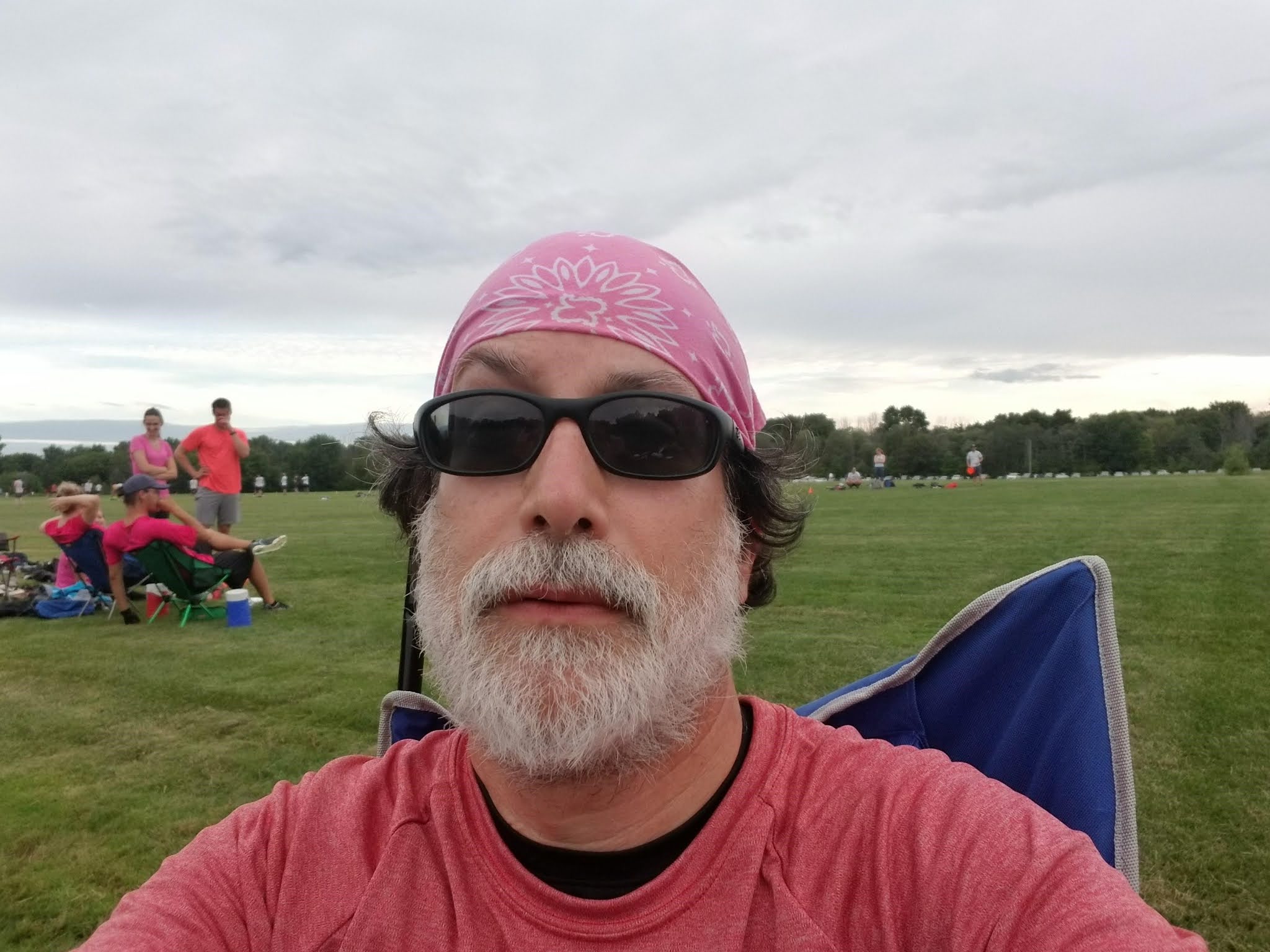
The third bit of returning semi-normalcy is that I finally got a haircut.  I developed much sympathy for women with long hair as my glasses and mask combo got harder and harder to keep on my face with more and more hair on the sides of my head.  The final straw was that it was getting harder to tie my bandana with all of the hair in the back.  

I have written before about the lessons of the lockdown, but as the quarantine winds down for me (at least for now, and, yes, just for us lucky North American folks), I am wondering what else to take away from all of this.  Again, I found the desperate need to connect.  I also found it hard not to have changes of pace--just the same stuff day and day out for 18 months or so.  I know I got on Mrs. Spew's nerves--she is used to getting breaks from me as I gallivant around the world.  But I also found that we can persist and endure and even thrive a bit.  Hollywood Exec Assistant Spew has been looking for a new position on the creative side of Hollywood, and she has persevered, making it past the first round at a number of places.  The CDSN has managed to keep going, with the transition to online opening up a variety of possibilities for the future, even as we move back to in-person events.

 It has been a very stressful year although not as stressful as the first year or two of baby Spew's life.  I didn't sleep great this year, but I got far more sleep this year than I did 25 years ago.  My job was pretty stable although moving online for classes created more work.  Staying at home day after day got monotonous but not very stressful.  I lost some friends and that hurt--definitely the worst year of my life for losing people.  Plus we lost our cat who spent the last part his life being far more cuddly than the previous 17 years.  So, it was definitely the saddest year of my life, but, again, being a new parent was far more stressful.

Anyhow, when I started doing these Q reports, I did suggest that the pandemic and quarantine could cause me to lose it. 


Well, did I descend into madness?  You be the judge:


Saturday, July 3, 2021

Quarantine Report, Week 68: Compartmentalizing The Disasters

 Man, even as we get towards the downslope of the pandemic in North America, the hits keep on coming.  The brutal heat out west sparked a fire thunderstorm, something that I did not know could happen.  No rain, just lightning sparking fire.  It wiped out a town that had just set the Canadian record for high temperature.  And climate change is only going to get worse--with droughts out west, a real water crisis is emerging, there will be more fires, and people are dying just due to the heat.  At the same time, the bill has come due for GOP domination of court selection.  This week's decision to further gut the Voting Rights Act will let stand all kinds of shenanigans by the GOP to suppress the vote AND change who decides elections--Republican legislators, not voters.  Yet, the Dems still can't get their act together--Sinema and Manchin (along with Feinstein and some others) are entirely too willing to let this happen.  It drives me crazy that the crisis alarm is blaring, and these politicians are letting this all happen.  Of course, even if they were to pass a new Voting Rights Act, Alito and pals are likely to gut it.  Up here, in Canada, it was a very sad Canada Day, as what Canadians should have known has become obvious to all--that the Residential Schools were concentration camps for Indigenous kids, complete with disease-ridden housing and abusive guards priests.

And yet more death.  Mat McCubbins was a prof at UCSD when I was there.  I didn't take any classes from him as I was avoiding all American Politics stuff.  Too bad as the approach he helped to develop and promote--principal-agency theory--has become one that I have been leaning on quite a bit the past decade or so.  Mat was a powerful force in the department.  He helped shape it, and he definitely made a huge impact on his students.  I remember him doing a great deal of pitching to get his students jobs.  My only real experience with him was the football games we played a couple of years around the Super Bowl--grad students versus Mat and his bigger, more physical friends.  But I got a lot through osmosis at the time as his students gave me much feedback on my work, and I learned from what Mat had to say at job talks and the like.  He moved from UCSD, but he made a lasting impression.  My condolence to his family and to his students.

The Canadian civ-mil story got messier.  The Acting Chief of Defence Staff announced he was going to keep the head of the navy on despite the latter's poor judgment in playing golf with the disgraced and currently being investigated former CDS.  The A/CDS, General Eyre, explained that we can't fire everyone and that we need to have some proportionality.  I see the challenge here--that there needs to be consequences but also there needs to be an environment where people who make mistakes can learn and improve.  Zero tolerance, no discretion is a dumb, cowardly way to go that often causes much more harm.  When asked, both Deputy Minister Freeland and Prime Minister Trudeau criticized the decision as if Eyre was off on his own, making shit up.  I can guarantee that Eyre consulted widely including with the Minister of National Defence.  So, if Freeland and Trudeau have a problem with this, they should talk to MND Sajjan.  Sajjan hasn't said he was consulted but that he stands by Eyre.  Which is pretty weak.  He should make clear he owns this decision, but perhaps Sajjan still does not understand what his job entails.

So, how do we manage to get through this?  Focusing on the positive, I guess.  Thinking about the things one can control.  Taking some solace in the silly stuff.  The best news on the home front is that on Thursday Mrs. Spew and I will be "fully vaxxed" meaning that we had two doses (AZ and Moderna) and two weeks.  Which will then mean arranging long-deferred dentistry, a haircut, movies for me (my wife will wait on that a bit longer), and more outings including some patio dining.  The number of new cases in Ottawa has been in the single digits this week.  So, I look forward to some drinks with friends soon.

Also, ultimate!  With Ontario moving to stage 2, we can now return to the fields.  I may have overextended myself by signing up for three leagues--playing three games a week--but I was not sure whether any of the three were going to work out.  The Sunday late morning league will be a small affair with two dozen or so players, all "Master" or "Grandmaster".  To be qualified for the former, men have to be over 33 and women over 30 and for the latter, men over 40 and women over 37 (the idea is not that women age faster than men but they tend to be fewer of them, I am guessing).  Yes, there is such a thing as Great Grandmaster--for guys over 50 and women over 47--but we had a hard enough time getting 26 people together this summer with the lower age cutoff.  I know more of the older players so that makes it more fun.  Many are still quite fast, but not quite as many rabbits.  And generally a high skill level.  The two other leagues are open, so I will be playing against men and women of all ages.  My wife is wondering if I will make it through the summer with my hamstrings and achilles still attached.  We shall see, but it will be a short summer session as we are starting late.  Expect more frisbee talk and pics in the weeks ahead.

The other bit of good news was that it was a good writing week. One co-author finished off our revisions of a paper, so that is now in the hands of the reviewers.  I met with Dave and Phil for the big project, and we figured out our July division of labor.  This meant me revising our paper with the two of them working on the first two chapters of the book.  I made a lot of progress swapping out the case studies that had been in the paper and putting in two others.  The advantage of having 15 or so case studies with most nearly or fully written up is that is not hard to plug and play.  The aim is to get the article out this month and to have a draft of the book by the end of the summer.  Alas, summer is now about half over (for those of us who stop teaching in early April).

Time to write a promotion to full letter, so enjoy your weekend.  May the Fourth be fire-free.


Thursday, July 1, 2021

The Saddest Canada Day

I borrowed this piece of art from a tweet:
Simone McLeod, 2014, Healing All Nations
 This year marks my 19th Canada Day, as we moved here in August 2002.  It is clearly the saddest one because of the accumulation of sorrows.  Canada did not handle the pandemic well with the elder care facilities being decimated last year, and bad governance exacerbating the third wave this winter.  The past week was so hot in the west that not only heat-related deaths exceeded covid deaths but that a fire started, generated a fire thunderstorm (no water, just clouds and lightning) which then started more fires.  And a third residential school's tragic legacy was revealed this week.  The toll of the three schools is over 1,000, and these efforts are just the start.  My wife and I are happy to be Canadians, but are sad that this country has treated its Indigenous people so very badly.

The past is not that far away--the last school closed in 1996.  Welfare policies today do what the old residential schools did--take kids away from their families.  Indigenous women and girls go missing at a far higher rate than anyone else.  Many reserves lack clean drinking water.  The government talks a good game about reconciliation, but continues to resist a variety of changes.  There has been some progress--there seem to be fewer places that are lacking in drinking water although still too many.  One of the most positive parts of the pandemic is that Indigenous communities and peoples were towards the front of the line, a big contrast from the residential schools that were allowed to be breeding grounds for tuberculosis and other diseases.  Of course, there was a great need for the Canadian Armed Forces to provide help to Indigenous communities and for these people to get vaccinated early precisely because they lack the health care infrastructure that could have gotten them through this crisis. 

So, as the vaccination effort and other relief efforts showed, we can do better.  We must do better. We must put pressure on local, provincial, and federal governments to back up their words with real actions.  We must put pressure on the Catholic Church to apologize for how they ran the residential schools and to release the documents.  We must figure out ways to listen to and include Indigenous people.  And we must stop taking Indigenous kids away from their families.