In the classic civil-military relations literature, the focus is on coups and how to prevent them. Later generations of literature focused more on how democracies control their militaries and then how to get the civilians to work with the military on the ground in places like Afghanistan--whole of government.
Anyhow, this vox piece suggests that Iraqi Prime Minister Maliki replaced Sunni commanders of Iraqi army units with Shia commanders precisely because he was concerned about the potential of coups. That makes complete sense--using ethnic ties to build loyalties is a normal strategy for preventing coups. However, it also may make the military less effective. Indeed, recent work has demonstrated that coup prevention efforts can be decent to good at preventing coups, but raise the risk of civil war.
The question, then, for leaders of regimes of somewhat dubious stability is which poison to pick--the risk of a coup or a risk of a civil war? For the country, it is almost always better to risk a coup than a civil war since coups are often not so violent (it depends on who is willing to shoot, and faits accompli often mean no shooting at all) AND civil wars are often accompanied not just by collateral damage but mass killings.
However, since we almost always assume self-centered leaders who worry mostly/entirely about their own political positions, the question is: should the leader worry about coup or civil war? In many cases, coups should be the biggest concern, but in a country that has already faced a civil war (that never really stopped), perhaps the civil war concern should have occupied more of Maliki's attention/decision calculus.
Events are proving that
International Relations, Ethnic Conflict, Civil-Military Relations, Academia, Politics in General, Selected Silliness
Friday, June 20, 2014
Necessary Unnecessary Infographic Du Jour
We really should need to be educating people about vaccines these days, but I guess we do. So, here is today's infographic that should not be necessary but is (thanks, Jenny McCarthy).
For 2014, these numbers may not work so well, as we have measles outbreaks, whooping cough outbreaks, and other otherwise avoidable diseases spreading. This is sad on so many levels, but one is that the US health care system does prevention so very badly except when it comes to vaccines. Now, thanks to the no-nothings, that one success is now being eroded.
One other note--600 people falling out of bed each year? That makes that old claim that more people die falling out of bed than via terrorism in the US still valid. If we take not 2001 but the entire 2000's, then we can suggest that we need a Patriot Act for beds more than we do for terrorism. Of course, 9/11 had big economic costs and we should not diminish the actual suffering of the families. But some comparative context is not a bad thing.
Anyhow, this is really about the anti-vaxxers and the idiots who follow them.
US Invasion of Canada: Arrogance or Irrelevant
Fun news this week: the US Chairman of the Joint Chiefs of Staff Martin Dempsey said that the US had no war plans for invading Canada. The context was that the military has plans for pretty much any possibility... except that one.
This raises a question:
I am not sure Canadians who fear the behemoth to the south are assured by the lack of a plan. The US has invaded other countries without a decent plan (Iraq), so that is not so much of a deterrent. On the other hand, I doubt that the US has enough cold weather gear to supply an entire occupation force (for some reason, the white camouflage uniforms also seem pretty neat).
My neighbor cited the location of Fort Drum as an indicator of American readiness to launch an attack. Fort Lewis is kind of north, too. So, the US could move towards Vancouver, Toronto, Ottawa and Montreal pretty easily. To be clear, Montreal's broken bridges may keep any invasion force on the other side of the river--I would not chance it sending over armored vehicles--which may explain why Quebec and Canada under-invest in maintenance of these bridges.
The lack of major army bases across the middle of the US suggests that the US would have a harder time with a surprise attack taking the middle of Canada. There can be no lightning strike to seize the tar sands. This would have to be done by airborne forces. Given how thinly populated northern Alberta is, one airborne division (which is all the US has now, apparently) is probably sufficient.
So, the US military does not really need a plan. We can just spitball it. On the other hand, as we learned elsewhere, the plan for the occupation would have to be worked out since sticking around is far harder than invading. Quelling a restive Canadian population might be difficult unless we can find some way to lose the next few USA-Canada hockey matches (men's and women's) as well as soccer (women's) and perhaps relocate a few NHL franchises back to where the belong.
Does a blog post count as a plan?
This raises a question:
"Let's be honest, do you really think we would need a 'plan'?" General Dempsey said, while making air quote gestures. http://t.co/uEFfQgfQpjIs the plan-lessness due to good relations with Canada with no foreseeable desire to invade it despite its plentiful oil (tar sands), fresh water, and moose? Or there is no need for a plan since the Americans are cocky about how easy it would be to invade?
— James Skylar Gerrond (@JimmySky) June 20, 2014
I am not sure Canadians who fear the behemoth to the south are assured by the lack of a plan. The US has invaded other countries without a decent plan (Iraq), so that is not so much of a deterrent. On the other hand, I doubt that the US has enough cold weather gear to supply an entire occupation force (for some reason, the white camouflage uniforms also seem pretty neat).
My neighbor cited the location of Fort Drum as an indicator of American readiness to launch an attack. Fort Lewis is kind of north, too. So, the US could move towards Vancouver, Toronto, Ottawa and Montreal pretty easily. To be clear, Montreal's broken bridges may keep any invasion force on the other side of the river--I would not chance it sending over armored vehicles--which may explain why Quebec and Canada under-invest in maintenance of these bridges.
The lack of major army bases across the middle of the US suggests that the US would have a harder time with a surprise attack taking the middle of Canada. There can be no lightning strike to seize the tar sands. This would have to be done by airborne forces. Given how thinly populated northern Alberta is, one airborne division (which is all the US has now, apparently) is probably sufficient.
So, the US military does not really need a plan. We can just spitball it. On the other hand, as we learned elsewhere, the plan for the occupation would have to be worked out since sticking around is far harder than invading. Quelling a restive Canadian population might be difficult unless we can find some way to lose the next few USA-Canada hockey matches (men's and women's) as well as soccer (women's) and perhaps relocate a few NHL franchises back to where the belong.
Does a blog post count as a plan?
Thursday, June 19, 2014
Fast Chatting Away
On Monday, I participated in a Fast Chat at the Department of Foreign Affairs, Trade and Development. The talk was on NATO and the implications of the crisis in Ukraine. I wrote up my thought on it here at CIC.
The Fast Chat experience was quite educational for me—the
experts from elsewhere were quite sharp and it was most interesting to get hear
some European voices about these matters.
The questions by the Canadian folks at DFATD also were suggestive about the
debates taking place in the Pearson building.
That they reach out for other perspectives speaks well of DFATD. As always, when I meet with Canadians working
for the government, I am most impressed.
If only the Prime Minister actually listened more to the public service,
but that is a discussion for another day.
Peaceful Boundary Changing: Europe is Spiffy?
Dan Drezner's post du jour focuses on the absence of international processes for changing boundaries peaceful and asserts that Europe seems to do this pretty well. As he poaches on my old territory--the IR of Secession, I cannot but wonder where my citations are poke at some of this. Overall, the main point is a solid one--that we don't have a mechanism that really facilitates boundary changes peacefully in large part because there is a shared interest in not making secession too easy.
Dan argues that Europe does this pretty well, pointing at the Czech/Slovak divorce, Montenegro's peaceful referendum/secession, and now Scotland's referendum process. To be clear, Europe had nothing to do with the first one, as the Czechs and Slovaks agreed to disagree and go their separate ways precisely at the same time that Europe was not being all that helpful/sucessful managing the secessionist/irredentist/boundary changing crises of Yugoslavia.
People forget but the EU in its first few days of EU-ness (having recently transitioned from EEC) tried to manage the Yugoslav crisis. They sent "ice cream men"--observers in white uniforms--to serve as monitors, and they were utterly irrelevant. They thought that recognizing the more fit units as states might reduce the violence. Not only did this hope lack much logic, but the EU violated their own rules. The Badinter Commission was given the job of recommending which parts of Yugoslavia should be recognized, based on a variety of criteria, and the commission chose Slovenia and Macedonia. The EU chose then to recognize Slovenia and Croatia--because Croatia had Germany as a friend and Macedonia had Greece as an un-friend.
To be fair, the secession of Montenegro reflected much lessons learned, with the EU serving as a key player pushing for a reasonable process including a 55% majority required qualify for independence. Note that the Scottish referendum is not being managed by the EU, and as far as I can tell, is still going by 50% plus one (which I cannot stand--a very narrow and potentially temporary basis of support).
Dan ignores the other violent cases that have petered out--Northern Ireland and the Basques. Which is fine, since they are less violent now. But again, Europe has little to do with it. What does? That magic sauce of democracy and economic development. Canada's own secessionist movement--Quebec--has been similarly non-violent except for a quite token murder in 1970.
How does this work? Jason Sorens has written much on this, but the basic idea is that if you give people a chance to leave peacefully, via democratic means, they do not need to choose violence, and they then often do not choose to leave. The benefits of leaving an advanced democracy with a good economy are not so great. The costs are always downplayed but are quite real.
Both violence and secession are far more popular where people do not have the means to address their grievances through the political system--so they opt out. What makes Europe different is not the EU but the prevalence of strong democracies and decent economies (even now, when compared to elsewhere).
So, I would focus less on Europe and more on the stuff that has spread--democracy--and on the economics that create incentives/disincentives.
Still, Dan is right that we can think about Europe as a model for peaceful boundary change--but it is less about EUROPE and more about the characteristics of European countries. And, yes, blaming Europe for messing up the boundaries of the rest of the world is fair game.*
* Although to be fair, the Europeans drew many, many boundaries and irredentism is rather rare.
Tuesday, June 17, 2014
Quick Partition Anti-Pitch
With the success of the Kurds in taking control of their hunk of Iraq, partition has started to become hip to discuss again. The idea is that if ethnic groups are in conflict, why not just divide them and give each a hunk of territory whether it is called a country or not. When folks remind the partition advocates that things have not worked out that well for Kashmir or for Israel/Palestine, the response is usually: partition works great if done right.
And my take on that is that there are reasons why partition is not done right, and those reasons are inherent in any partition process. That ethnic cleaning and forced migration tend to brew more problems rather than leave everyone tranquil, that the lines that are drawn are especially messy, and that the process of partition is just a wee bit political.
That is, the process of partition tends not to be drawn by technocrats but by politicians with stakes in the game. So, things tend to be violent and leave hard issues unresolved.
If you advocate partition, just be a bit mindful of the realities of past partitions and that those are not so much accidents of history but the products of dynamics built into the process.
[There is much scholarly literature on it, but I am kind of lazy this late afternoon, so scholar google partition and if that does not work throw in Sambanis or Kaufmann to get started]
Expert-itis
Lots of criticism flying around the net today about people suddenly being experts on the events in Iraq:
and
I am feeling a wee bit guilty on this because I did to a CTV News Channel hit this morning about this stuff. I was asked in the semi-pre-interview if I could speak about particular individuals and I said nay.
What I did say was:
Of course, my key qualification for talking about Iraq is that I did work in Rumsfeld's Pentagon, just like Wolfowitz, Feith and others. Just joking!
@will_mccants Enough said. pic.twitter.com/SFhRSWBq4N
— Sulome Anderson (@SulomeAnderson) June 17, 2014
and
I am feeling a wee bit guilty on this because I did to a CTV News Channel hit this morning about this stuff. I was asked in the semi-pre-interview if I could speak about particular individuals and I said nay.
What I did say was:
In response to a question about whether Maliki would be able to reach out to the non-ISIS Sunnis, I said unlikely because of previous broken promises, the Sunnis were unlikely to support him. Also, Maliki seemed uninterested in reaching out.
In response to a question about US/Iran cooperation, I said don't expect too much, given that the Iranians shed a heap of US blood when the US were in Iraq.
In response to a question on threats elsewhere, I indicated that ISIS was doing well in places that had weak/non-existent governments. Other neighbors are not so civil war-ish, so don't expect dominoes to fall.I accepted in the invite since I thought the questions would be about US foreign policy (which I have taught and experienced). I don't feel bad about the answers to these questions because I have written on contagion, and I have worked in the area of ethnic conflict and accommodation (most of my CV). Still, I was on shaky territory but perhaps not quite the danger zone.
Of course, my key qualification for talking about Iraq is that I did work in Rumsfeld's Pentagon, just like Wolfowitz, Feith and others. Just joking!
Monday, June 16, 2014
Reverse Jinx
Today, the Wall Street Journal has published a piece by Paul "Jerry" Bremer on the situation in Iraq. Apparently, Bremer is advocating a deeper US involvement including boots on the ground. I did not read it nor will I link to it because Bremer is utterly discredited by his service as head of the Coalition Provisional Authority (its CPS acronym was commonly known as Can't Produce Anything). This is the guy that knew so little about Iraq that he just used post WWII models and recklessly disbanded the Iraq military, and fired most of the knowledgeable folks in government.
Bremer apparently has no self-awareness to understand that any position he takes loses 50% legitimacy from his association.
So, I can only guess that the WSJ dos not want US troops on the ground, and is strategically publishing Bremer's piece to discredit that policy alternative.
Bremer apparently has no self-awareness to understand that any position he takes loses 50% legitimacy from his association.
So, I can only guess that the WSJ dos not want US troops on the ground, and is strategically publishing Bremer's piece to discredit that policy alternative.
Sunday, June 15, 2014
Father's Day Doonesbury
Not Quite the Last Father's Day But ...
My daughter goes off to college (or university as they say in Canada) this fall, so this day marks the last father's day with her at home. She may be in the house for future father's days, but this is the last one where she is around all the time. So, I am a bit more nostalgic than usual. Baby Spew (geez, did she spew!)* became Kid Spew and then Teen Spew so very quickly. I tried to tease her recently by singing Sunrise, Sunset but I forgot the words from the Oberlin community theater production long ago (I played many small roles, including an unsuccessful bottle dancer).
To be honest, I did not enjoy the first few years of Fatherhood--not enough sleep, lots of stress, five ER visits over the first five years, keeping the peace between her and the dogs, lots of effort to keep the kid entertained in a town that was pretty bereft of fun places to go and was too hot for four months or so to hang out in day time. And it started really, really hard with the "pin the IV on the dehydrated baby" game. That white thing on her head is the IV. Good times. Mary Poppins got us through Toddler Spew's surgery at age 2, which aided me later on when I taught Intro to IR and wrote about pie crust promises. After the each year was better than the one before it.
Kid Spew was heaps of fun, as she explored a variety of interests and not quite settling for awhile: danced a bit, a season of softball in Virginia, one season of soccer, a couple of years of ultimate (which may come back in college). She eventually, thanks to her mother mostly, found a strong interest in stories especially those on TV and in film as well as comic books. Teen Spew made a few short movies with the greatest challenges arising not from her skills but from her casts. Friends and acquaintances turned out to be quite flaky when it came to keeping commitments.
Teen Spew also developed strong opinions about the world and educated herself well via the internet and elsewhere. As a result, she has low tolerance of mansplaining (which makes some dinners more, um, interesting than others), discrimination, inequality and the like. She has educated me on more than one occasion.
The good news is that we have a pretty good relationship if I do say so myself. When people heard of our trips to check out colleges, they said "Great, you guys can bond." Our confused response was: pretty sure we are bonded. But the trips were still fun, we got to hang out with celebrities (sort of), do heaps of tourism, and eat lots of really good food.
Somehow, we managed to have a kid who works really hard (far harder than I did in middle school and high school) and is ambitious (film career? wow), creative, sweet, empathetic, passionate, compassionate, impatient (that's my contribution), bright, feisty, engaged, curious, and fun.
Father's day is supposed to be aboutselling cards and cheesy gifts celebrating the dad. However, I cannot help on this particular one but to celebrate my daughter. I will always be her father, but we will probably never be as close as we are right now. Sure, I will be able post on (and embarrass) her facebook page and nag her through the internet, but it will not be the same. So, despite no breakfast in bed (really, no thanks), I am embracing this Father's Day like none other.
* Actually, the most spewage was a tremendous nose bleed produced by bouncing from a bed to a table while we were traveling in New Mexico for a frisbee tournament.
To be honest, I did not enjoy the first few years of Fatherhood--not enough sleep, lots of stress, five ER visits over the first five years, keeping the peace between her and the dogs, lots of effort to keep the kid entertained in a town that was pretty bereft of fun places to go and was too hot for four months or so to hang out in day time. And it started really, really hard with the "pin the IV on the dehydrated baby" game. That white thing on her head is the IV. Good times. Mary Poppins got us through Toddler Spew's surgery at age 2, which aided me later on when I taught Intro to IR and wrote about pie crust promises. After the each year was better than the one before it. Teen Spew also developed strong opinions about the world and educated herself well via the internet and elsewhere. As a result, she has low tolerance of mansplaining (which makes some dinners more, um, interesting than others), discrimination, inequality and the like. She has educated me on more than one occasion.
The good news is that we have a pretty good relationship if I do say so myself. When people heard of our trips to check out colleges, they said "Great, you guys can bond." Our confused response was: pretty sure we are bonded. But the trips were still fun, we got to hang out with celebrities (sort of), do heaps of tourism, and eat lots of really good food.Somehow, we managed to have a kid who works really hard (far harder than I did in middle school and high school) and is ambitious (film career? wow), creative, sweet, empathetic, passionate, compassionate, impatient (that's my contribution), bright, feisty, engaged, curious, and fun.
Father's day is supposed to be about
Saturday, June 14, 2014
The World Cup of Social Identity Theory
Nothing like a major sporting event to remind one of a powerful hunk of social science. Social identity theory--from social psychology*--helps to explain much these days. The basic idea of SIT is that one's self-esteem rides on how well one's group is doing especially in comparison to other groups. Horowitz called this the logic of invidious comparison. I used to use the example of someone walking into a Montreal bar wearing a Mapleleafs sweater. And, of course, my favorite example is green vs. purple. Sports and nationalism are inextricably linked because of the logic of social identity. I wrote about Olympic nationalism last summer, but here it is not just about different countries but different sports preferences.
* I received most of this indirectly through Donald Horowitz's deployment of it to explain ethnic conflict.So, we get a series of identity rivalries/dynamics this month:
- Most obvious/expected: that people's happiness ride on whether the teams with which they identify do well and teams that they see as the natural "other" do poorly.
- Immigration countries have more complexity: many people may not have a team they like in either a particular match or in the entire tourney (Canada), so they then have a rooting interest in the team associated with their ethnic identities (Italian-Canadians root for Italy, for instance) or against those with which they have ethnic enmities. (Yes, I am biased to see ethnic ties/enmities everywhere). And, when soccer is played in the US, the US National Team is often facing a hostile crowd since more folks with ties to Mexico or country x show up than those who root for the USA team.
- Pedants in competition: That some people really care about whether the game is called soccer or football. Their passion on this is perhaps beyond comprehension unless we factor in that people's identification and their self-esteem ride on whether their preferred group is popular/accepted or not.
- Sports rivalry: Last night's rivalry on twitter between the hockey fans scoffing at the World Cup and the soccer/football fans scoffing at hockey. Why can't these people just enjoy their sport without taking shots at the other? Because they feel better about themselves if their group (soccer/football lovers or hockey lovers) are seen as better.
Friday, June 13, 2014
Comparative Civ-Mil
My latest post at CIC compares Rummy and Gates to understand the SecDef's role in managing American civil-military relations. Check it out and let me know what you think. I do plan on a longer review of Gates's memoir next week here.
Thursday, June 12, 2014
Confirmation Bias: The Musical
I was chatting with my friend and occasional co-author Bill Ayres (no, not Bill Ayers) about what to do about our 2008 book and the surge of irredentism of late (mostly Russia but now also ISIS's desire to remake the maps of the Mideast), and, of course, I got distracted by popular culture via this question:
Is "Let It Go" a theme song for irredentists or those fighting irredentism? Let's look at the tape:
The answer is: it could be used by either side.
On the other hand,
What this obviously shows is that people see what they want to see--confirmation bias essentially. I wanted to see this song speak to both sides of an irredentist conflict, and viola!
It also indicates that I miss teaching large undergrad classes, as I could have had some fun with Frozen.
Finally, this is a recognition that we (Bill and I) need to figure out why some of the irredentist conflicts remain frozen (Armenia, Serbia, Croatia) while others (Russia, Hungary) have gotten warmer and even quite hot. Good thing we now have a new assignment--writing an intro to the paperback version of For Kin or Country.
Is "Let It Go" a theme song for irredentists or those fighting irredentism? Let's look at the tape:
The answer is: it could be used by either side.
I don't careThat sounds like an irredentist saying: to heck with the costs, let's unite our lost territory with our homeland!
What they're going to say
Let the storm rage on,
The cold never bothered me anyway!
It's time to see what I can doSounds like Putin, yes? To heck with the Helsinki Accords and the Budapest Agreement.
To test the limits and break through
No right, no wrong, no rules for me I'm free!
On the other hand,
It's funny how some distanceWhich makes the concerns about the kin abroad to be almost inconsequential. Most importantly,
Makes everything seem small
And the fears that once controlled me
Can't get to me at all!
I'm never going back,If the past is in the past, then claims to lost territory are to be left behind as well, eh?
The past is in the past!
What this obviously shows is that people see what they want to see--confirmation bias essentially. I wanted to see this song speak to both sides of an irredentist conflict, and viola!
It also indicates that I miss teaching large undergrad classes, as I could have had some fun with Frozen.
Finally, this is a recognition that we (Bill and I) need to figure out why some of the irredentist conflicts remain frozen (Armenia, Serbia, Croatia) while others (Russia, Hungary) have gotten warmer and even quite hot. Good thing we now have a new assignment--writing an intro to the paperback version of For Kin or Country.
Path Dependence, Iraq Edition
With the fall of Mosul to the jihadists of Syria and Iraq, there is much blame-casting to be had. Some are blaming Obama for not keeping a residual force in Iraq although it is not clear that a small US force would have kept the Iraqi military from breaking.
Anyhow, this always, always frustrates me because it ignores what the US faced in 2009--the accumulation of dynamics produced by the bad decisions of the past. In this case, if people remember, there were many stories where Iraqi elites said two things: yes, we want the U.S. to stay, but no, we cannot say that in public. Why?
Pretty simple: occupation -> nationalism -> domestic politics -> no Status of Forces Agreement.
What does this mean? It might be easy to forget, but the US invaded Iraq and then occupied it for several years. That, by itself, would be enough to earn a heap of resentment and an anti-American nationalism. But then the occupation was so very badly implemented. The Coalition Provisional Authority was known as Can't Produce Anything. The US failed to prevent the looting that emerged after Hussein fell, it fired the entire Iraqi military, denied widows and orphans of their funding, fired most of the people associated with the Ba'athist party and thus deprived the government of pretty much everyone who needs to govern. Don't forget how Abu Ghraib presented endless pictures of the US humiliating Iraqis. I have not read many Iraq books since Fiasco, Cobra II, Assassin's Gate, and Imperial Life in an Emerald City, but the news stories since were not chockfull of happy stories about an improved US effort. Indeed, most refer to half-finished projects and heaps of collateral damage. I didn't even mention the private military contractors that used excessive force.
Anyway, the point is: the occupation did nothing but stir up resentment towards the U.S. While Iraqi nationalism is probably more complex than that, this one thread of Iraqi nationalism developed some saliency. So, then Iraq has a serious of elections and formal democracy, even if the system is flawed. Given the occupation, how can elected Iraqi leaders say in public: hey, those Americans that utterly humiliated us, but let's invite them to stick around? No, they obviously could not.
How can you expect Iraqi leaders be so brave and resist the public's desire to see the last of the Americans when American and other politicians are generally reluctant to buck the opinions of their base? Anyhow, so one could blame Obama for messing up the diplomacy of the negotiations of the SOFA if you want, but it is hard for me to imagine Iraqi politicians of that time frame signing off in public for more years of American soldiers in Iraq.
This is one of the ways that distinguishes Afghanistan from Iraq. Karzai has his own agenda and resists the demands of the rest of Afghan society. I guess he understands his base better than I do. But in Iraq, given how the occupation played it, the blame-casting today cannot start with Obama but with Bush, Cheney, Rumsfeld, Wolfowitz, Feith, Rice, and the rest. This is not my partisan animus showing here, but a basic understanding of path dependence (how early choices ultimately constrain decisions down the road) and of nationalism. As Bill Ayres and I argued in our book, nationalism frequently causes politicians to do stuff that is in the best interests of themselves but not in the best interests of the country--for kin, not country.
There are other questions now, like whether the US should launch air strikes to help the Iraq government and what it should/could get in exchange. But that is a post for another time.
Wednesday, June 11, 2014
Micro-Management Pondering
I posted this at Political Violence at a Glance after having heaps of US SecDef input over the past couple of weeks. I will write a review of Robert Gate's memoir later this week or early next.
Tuesday, June 10, 2014
Alt WashPo
The Washington Post is really doing incredible things to inform the public about rape culture -- by exemplifying it. Yesterday, George Will argued women in universities wear their rapes as badges, something they covet. Today, a post using data on violence against women to argue that women should get hitched since the most targeted category are single mothers.* Oy.
How about a little experiment--take the same chart and think about it some more? Here we go:
*WashPo changed the title of the piece but you can see the original one if you mouse over the link above.
How about a little experiment--take the same chart and think about it some more? Here we go:
| WashPo |
Wow, single mothers get attacked more than other women! However, there is good news: the trend is heading down. This raises two questions: why are single mothers attacked? And why is this going down?
Perhaps single mothers are being attacked because they are ex-wives, and we know that violence against women tends to increase as they try to separate from their abuser. Perhaps this might have something to do with poverty since single mothers tend to be poor. Single mothers are clearly vulnerable for a variety of reasons, so we should not be surprised at all that single mothers face more violence than other women.
How about the trend downwards? Is this because society is increasingly intolerant of those that abuse women? That would have the biggest impact on single mothers since they are the ones at greatest risk. Perhaps laws have changed so that penalties are harsher? Perhaps the courts are better at ruling in favor of the beaten rather than the beaters, serving as both deterrent (folks may not beat as much) and prevention of repetition (the beaters are in prison). Perhaps being a single mom is less taboo and thus violence against them is more taboo?
We sure could use more social science to figure out why single mothers are so vulnerable and what has reduced the frequency of violence against especially these women.
Here's hoping a national newspaper does some serious investigation.
Rethinking my Fandom
I grew up as a fan of the Washington football team as I became aware of football when my family lived in the DC area. I lost my love of the team when Dan Snyder took over and proved to be a lousy owner. Around the same time, I started to feel squishy about the name of the team. Only recently has the movement to change the team name caught fire. And it really has.
This ad will be playing during the NBA finals. It is a shorter version than that which aired near the Super Bowl. Powerful stuff. And very clear. Time to change the name. Until it happens, I will not be a fan of the Washington football team.
Monday, June 9, 2014
Illustrating Basic Concepts Day, Part Deux: Tooth to Tail
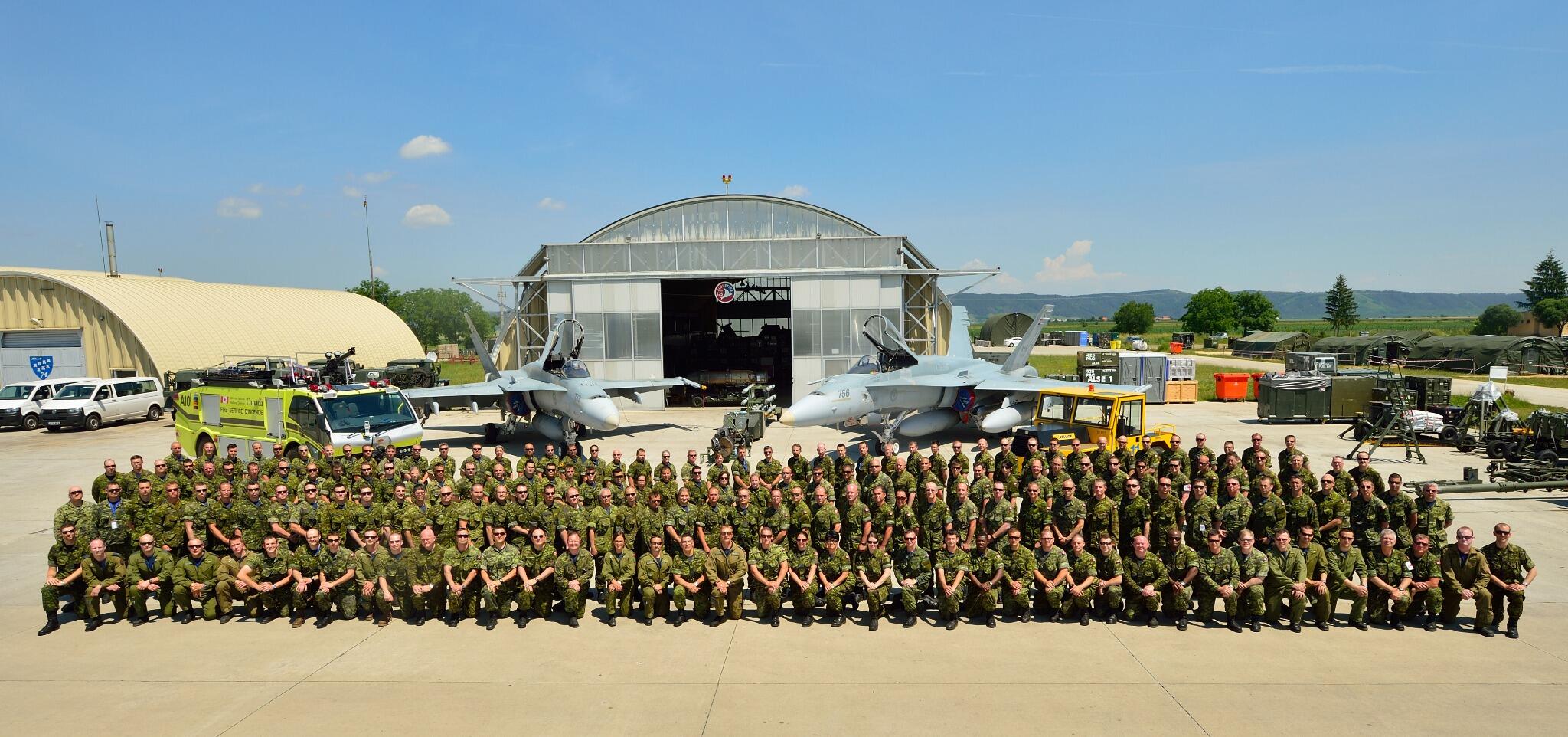
When we discuss the size of militaries and the costs of modern warfare, a key concept is tooth to tail--how much of one's allocation of personnel/money is to the actual fighting versus the support necessary to keep the personnel and weapons systems in the fight.
Today, the Canadian Forces tweeted a picture that unintentionally demonstrated this to a T:
Canada has sent six CF-18s (Canadian versions of F-18s). There are way more than six pilots in this picture, eh? So, this picture is a mighty good demonstration of modern-day tooth to tail--where most of the resources support the folks in combat rather than actually go into combat.
I do not post this as a critque of the RCAF but to merely illustrate a basic reality for most (all?) modern militaries.
Sunday, June 8, 2014
Saturday, June 7, 2014
Rum and Rummy
I got a band of snarky Canadians to watch the Errol Morris documentary about Donald Rumsfeld while we tried out rum-based drinks: Rum and Rummy! The rum drinks were far better than the doc, if I do say myself as the bartender. Oy, Rumsfeld is unreflective, completely lacking in sympathy, largely devoid of insight.
Here is my storify of the occasion.
Check it out... or not. We had fun, but that was mostly due to the company, the rum and the rum cake (yes, I baked before being baked).
One might find this doc to be particularly vulnerable to confirmation bias--that fans of Rummy would find his pedantic take on everything to be perfectly useful and insightful. His non-fans (a club in which I have long been a member) would see mostly justification for their previous beliefs. But we did have some folks in the room that were on the fence before watching and found themselves pushed over to the non-fan side as a result of the documentary.
Should I have expected any reflection from Rumsfeld? Perhaps not. But maybe, just maybe he could have acknowledged the many contradictions he fudged along the way. Nope. I still think he is the worst SecDef in history. Perhaps that jaded my views, but it is a good thing we did not set this up as a drinking game. Otherwise, unknown unknowns and other efforts to elide and deny would have gotten all of seriously hammered.
Friday, June 6, 2014
It Has Gotten Better
D-Day + 70 years means much time for reflection. The vets who risked it all way back when are apparently wondering about the present and the future. The quick answer is, in part thanks to them, the world is a better place. Yes, even post 9-11 and post financial crisis. In most objective measures, it is better now: less war, less intra-state war, less poverty, more empowered women, less tyranny, less disease (despite Jenny McCarthy's best efforts), and on and on.
We may perceive things to be worse since we have so much media and so much internet to remind us of all that is awful in the world. But the aggregate statistics show that things are better. Sure, it is trouble dealing with Iraq, Iran, and Syria these days. But I prefer those threats to the bipolar, hair trigger cold war, where we came pretty close a few times to nuclear war. Yes, there are more countries with nuclear weapons than before, but the hair trigger is not quite there. Yes, Russia is obnoxious these days, but there is no threat of Russian armies marching across Europe, unlike the 1980s.
The big threat to the future is not the tyranny of the past nor the xenophobia of the present. It is climate change. So, we have much to worry about, but we always did have much to worry about.
So, thanks to the folks who sacrificed so much to make victory over the Nazis possible (especially the Russians who lost so much [they were led so poorly]). You made the world a better place. And it is still a better place. Even with some regression here and there.
Thursday, June 5, 2014
The Right's Hostility to Political Science
A Slate piece poses the question but does not really answer why the Conservatives in the US Congress are so motivated to end federal funding of political science. The obvious answer is: ignorance is bliss. The job of political science is to develop a better understanding of politics. Who is against that? Well, those who do not want voters, the media and others to understand politics. Why would the Right Wing want an ignorant public? Perhaps because they tend to support stuff that runs counter to what is best for the country? That they support stuff based on myths, such as the supposed threat of voter fraud?
Here is a study that is sure to be most upsetting to the Right: that those representatives who support voter id laws--what I call voterfraudfraud--tend to be ... racist. Yep, political scientists experimented on representatives, sending emails to them using vanilla names like Jacob Smith and Latino ones like Santiago Rodriquez. Sure enough, the response rates were different for those who supported voter id laws.
There is an interesting irony here. There was a recent study that showed that professors tend to respond to emails out of the blue better if they are from males and from males with less ethnic names. So, my kind, professors, may be just as racist as the purveyors of voterfraudfraud. The difference? Professors as a class are not trying to squelch research, but the right wing representatives certainly are.
I do think the ignorance is bliss approach is a rosetta stone for understanding the GOP's approach these days. Too much understanding is bad for their party. It probably explains why so many sales of my distraction sauces are to folks living in Red states.
Wednesday, June 4, 2014
Pondering the Pacific
Anniversaries relating to the Pacific War tends to get less attention in the American media than those of the European War. Today is the anniversary of Midway, which turned the tide in the Pacific. Before that battle, besides the Doolittle mission (whose success was almost entirely symbolic), there were no victories.
The US subs were fighting hard but the torpedoes were iffy at best. The Battle of the Coral Sea was seen, as far as I can remember, a draw. Midway's outcome was much, much clearer--four Japanese carriers lost to one American, and the end of any Japanese naval effort to extend its control. Because the Americans could and did make many new carriers, and the Japanese could not, these losses were huge, along with Japan's loss of experienced pilots.
Guadalcanal came later, as did the landings in Africa. So, it is pretty clear Midway was the turning point, but it does not get much recognition because it happened in early June, and is, thus, in the shadows of the D-Day anniversaries.
Thanks to Steven Speilberg and Tom Hanks, when we think of D-Day these days, we think of Band of Brothers, which documented quite well how one company played a role in that Day of Days. The show is eminently re-watchable, and I have done that more than a few times.
How about their "The Pacific"? I am now watching it for the second time. It really is terrific. Alan Sepinwall, the TV critic, responded to my tweet thusly:
@smsaideman It’s probably the better show, but definitely one I’m less eager to watch again.Why? Because as violent and horrible as the European War was (D-Day and the Battle of the Bulge in particular demonstrate that), the Marines fought in an especially brutal campaign. Fighting the jungle, fighting the rain, and fighting the Japanese made for a very tough watching... and I have not yet gotten to Pelelieu or Iwo Jima yet. Watching The Pacific is like watching the BoB episode "The Breaking Point" about five or six or seven times. Oh my. Still, as we remember the soldiers, sailors and airmen who fought on D-Day, we need to remember the Marines, the sailors and airmen who fought in the Pacific.
— Alan Sepinwall (@sepinwall) June 4, 2014
A Fruitful Epiphany
I am engaged today in a conversation on twitter about the swap of Bowe Bergdahl for five Taliban fighters/leaders/whatever who were in Guantanamo, and I got much reaction to the idea that a 29% recidivism rate seemed lower than expected. Lots of push back on the idea that whatever we calculate for recidivism in Afghanistan is not comparable to recidivism in the US.
So, someone, of course, said: you cannot compare apples and oranges.
Well, you guys know me: I scoff repeatedly at that carnard here, here and here. And now I realize why this upsets me so: if you say you cannot compare, you are essentially saying that we cannot think. That comparison is a fundamental part of thinking about an issue: how is this situation like AND unlike previous/similar situations? If you do not compare, what are you left with? Logic, certainly. But no real recourse to facts. Even the invoking of data means you are comparing--just comparing with heaps and heaps of observations.
From now on, when someone says to me: you cannot compare apples and oranges, I will do one old thing and one new thing. The old is to refer to the blog posts linked above. The new: ask the person if they mind if I think. Because without comparison, my thinking is quite limited. And, of course, so is that of the person asking me not to compare.
Pouring Perspective Sauce on Taliban POW Swap
Of course, much of the criticism of the Obama Administration for making this deal is by people who would (or did--John McCain) criticize Obama for not making the swap if he hadn't. That is, much of this noise is by folks who would lambaste the government no matter what it did.
Still, lots of confusion abounds. For instance, the reports indicate that 29% of the people released from Guantanamo join the Taliban again and engage the US and its allies in combat.
The second confusion is about whether the US in this case negotiated with terrorists. Well, sort of. That is, the Taliban are not coded as terrorists by the US since they are not attacking US interests outside of the civil war in Afghanistan (and it is a civil war--outside actors involved just makes it a normal civil war). The more important thing is this: the US and its friends have often bargained with terrorists. Jimmy Carter bargained with the people holding American hostages in Iran, who agreed to let them go as soon as Carter was no longer president. Ronald Reagan bargained with those holding hostages in Lebanon in exchange for arms being sent to Iran. Israel swaps prisoners all the time, often hundreds of Palestinians for a handful of Israelis. If the bad guys have something you want, either you take it or you bargain for it.
Third, will this encourage more kidnapping of American prisoners? Probably not since the US has already shown a great interest in getting its folks back. And also, the Taliban and its ilk already have plenty of incentives to take American soldiers hostage for the propaganda gains.
Fourth, Bergdahl is especially controversial since he seems to have wondered off his post. Maybe. But in the past, we did not investigate the worthiness of who we sought back in a trade of prisoners, such as during the swaps during the end stages of Vietnam (McCain), so it is not clear we should be doing so now.
Finally, Obama may have exceeded his authority since Congress has passed restrictions on Gitmo prisoner releases. This is the one issue that is really legitimate in terms of qualms. Of course, the fact that Congress is micro-managing Gitmo is bad, but bad laws need to be obeyed until the courts rule or Congress changes its collective mind. Obama says he issued a signing statement for just such a possibility. This made him a hypocrite since he opposed such weaseling efforts before he was President, but also makes the GOP in Congress hypocrites for not minding Bush's abuse of this.
The reality is this: the actual swap is quite normal business as usual in the end stages of a war/intervention. The rest is mostly just politics/blame-casting. So, of course, my effort to pour some perspective sauce on this actually leads me to noticing that there is a heap of distraction sauce being tossed in as well.
Still, lots of confusion abounds. For instance, the reports indicate that 29% of the people released from Guantanamo join the Taliban again and engage the US and its allies in combat.
.@WSJ: Director of National Intelligence estimates in Jan 2014, 29% of 614 released GITMO detainees returned to violenceMy response: damn, that is a mighty low number (see here as well). How so? Well, in the US, roughly two-thirds of the people released from prison are picked up for crimes within three years. So, I do not want to say that there is much rehabilitation going on in Gitmo, but that we need to be clear it is unrealistic to expect a recidivism rate of zero percent. If we understand that, then 29% does not look so bad.
— Norah O'Donnell (@NorahODonnell) June 4, 2014
The second confusion is about whether the US in this case negotiated with terrorists. Well, sort of. That is, the Taliban are not coded as terrorists by the US since they are not attacking US interests outside of the civil war in Afghanistan (and it is a civil war--outside actors involved just makes it a normal civil war). The more important thing is this: the US and its friends have often bargained with terrorists. Jimmy Carter bargained with the people holding American hostages in Iran, who agreed to let them go as soon as Carter was no longer president. Ronald Reagan bargained with those holding hostages in Lebanon in exchange for arms being sent to Iran. Israel swaps prisoners all the time, often hundreds of Palestinians for a handful of Israelis. If the bad guys have something you want, either you take it or you bargain for it.
Third, will this encourage more kidnapping of American prisoners? Probably not since the US has already shown a great interest in getting its folks back. And also, the Taliban and its ilk already have plenty of incentives to take American soldiers hostage for the propaganda gains.
Fourth, Bergdahl is especially controversial since he seems to have wondered off his post. Maybe. But in the past, we did not investigate the worthiness of who we sought back in a trade of prisoners, such as during the swaps during the end stages of Vietnam (McCain), so it is not clear we should be doing so now.
Finally, Obama may have exceeded his authority since Congress has passed restrictions on Gitmo prisoner releases. This is the one issue that is really legitimate in terms of qualms. Of course, the fact that Congress is micro-managing Gitmo is bad, but bad laws need to be obeyed until the courts rule or Congress changes its collective mind. Obama says he issued a signing statement for just such a possibility. This made him a hypocrite since he opposed such weaseling efforts before he was President, but also makes the GOP in Congress hypocrites for not minding Bush's abuse of this.
The reality is this: the actual swap is quite normal business as usual in the end stages of a war/intervention. The rest is mostly just politics/blame-casting. So, of course, my effort to pour some perspective sauce on this actually leads me to noticing that there is a heap of distraction sauce being tossed in as well.
Tuesday, June 3, 2014
Irredentist Amnesia
“For the first time since the Second World War, one European country has taken a province by force from another European country,” Radoslaw Sikorski, the Polish foreign ministerOh really? I guess it depends on what counts as European, what counts as province, and what counts as by force.... I wonder what the Azeris would say to the Poles, given that Armenia fought a largely successful irredentist war to take Nagorno-Karabakh from Azerbaijan, not to mention a "land bridge" hunk of Azeribaijan so that Armenia would have access to NK.
What about hunks of Croatia and Bosnia? Serbia occupied a hunk of Croatia for several years, and both Serbia and Croatia tried to hold onto pieces of Bosnia. Sure, those gains did not last, but they surely lasted longer than the current occupation of Crimea.
Oh yeah, how about Cyprus? It is divided these days with Turkish Cyprus created by the deployment of the Turkish army.
I do not mean to suggest that Russia should not be shamed, shunned and punished. It is just that this irredentism is not unprecedented.
Oh, and a related observation: it is damned hard to reassure an ally. We can do lots of stuff to try to make the Poles and Baltics feel more secure, but nervousness about neighbors and allies' assurances are really, really hard to diminish. Remember how much the US had to do in the 1980s to assure the Europeans that the US would really sacrifice Chicago for Bonn or Paris.
Anyhow, that's my Irredentism and Alliances lecture for this morning.
Monday, June 2, 2014
Ultimate's Future
Ultimate's future is mighty bright. Check out this video of highlights from the high school championships in British Columbia:
Just amazing. Great dives on offense and defense by girls and boys. So glad I am too old to play against such folks.
Sunday, June 1, 2014
When is an Organization's Culture Broken?
Last week, the Canadian Chief of Defence Staff Tom Lawson insisted that the sexual assaults by and against members of the Canadian Forces are not part of the CF's culture. This raises many questions. Perhaps the military is just reflective of the society at large, but the statement seemed to ring hollow in part because the military did not have a good grasp of the problem itself. One might think that having a Colonel/base commander who engaged in multiple assaults and murder might have been a wakeup call. It is always easy to suggest that the crimes of one person are just that.
However, when the most senior legal official within the Canadian Forces does not seem to follow the rules, not sending reports to the Minister of Defence, then perhaps the culture is broken. Major General Blaise Cathcart, the Judge Advocate General, apparently has not been meeting the requirements to file reports to the defence minister for three years running. Given that most senior officers only serve in a particular job for about three years max, this means that the JAG has been shirking a key part of his job for most, if not all, of his time in office. And this is the guy whose job it is at the top of the military justice system! If anyone should be following the rules, it is this guy. And if this guy is not following the rules, think about what this means for the culture.
What is a culture? A system of shared understandings of what is appropriate behavior, of conventions, values, and such. Well, having the JAG violate the rules, especially rules for reporting to the civilians--the Defence Minister and ultimately Parliament and the public--then that speaks quite loudly. And it is not just this guy being an exception. Two colonels--one heading military prosecutions and the other heading defence council services--also are not filing their annual reports. Not since 2010! I guess it is ok since the violations are on both sides--prosecution and defence?
The JAG's excuse:
In other words, too busy to follow the rules. I wonder if he would ever accept that excuse from a private, a non-commissioned officer, or a junior officer. "Sir, I didn't do what you ordered me to do because I had a bunch of stuff to do, and I felt your orders to me were not as important."
My next project is on the role of legislatures in monitoring militaries. It turns out that we will need to focus on this part of the process--do the senior military officers file the reports that are required of them? Seemed like a non-issue, but I guess not.
However, when the most senior legal official within the Canadian Forces does not seem to follow the rules, not sending reports to the Minister of Defence, then perhaps the culture is broken. Major General Blaise Cathcart, the Judge Advocate General, apparently has not been meeting the requirements to file reports to the defence minister for three years running. Given that most senior officers only serve in a particular job for about three years max, this means that the JAG has been shirking a key part of his job for most, if not all, of his time in office. And this is the guy whose job it is at the top of the military justice system! If anyone should be following the rules, it is this guy. And if this guy is not following the rules, think about what this means for the culture.
What is a culture? A system of shared understandings of what is appropriate behavior, of conventions, values, and such. Well, having the JAG violate the rules, especially rules for reporting to the civilians--the Defence Minister and ultimately Parliament and the public--then that speaks quite loudly. And it is not just this guy being an exception. Two colonels--one heading military prosecutions and the other heading defence council services--also are not filing their annual reports. Not since 2010! I guess it is ok since the violations are on both sides--prosecution and defence?
The JAG's excuse:
"So with the resources and the priorities that I have at my disposal, I made those decisions and I made them knowing full well the gravity of those decisions," he said.
In other words, too busy to follow the rules. I wonder if he would ever accept that excuse from a private, a non-commissioned officer, or a junior officer. "Sir, I didn't do what you ordered me to do because I had a bunch of stuff to do, and I felt your orders to me were not as important."
"The most senior legal official in the military is now flagrantly in breach of the National Defence Act, that’s very troubling. I'm stunned.”Indeed, but I am sure there is nothing wrong with the CF's culture. I mean, it is just a few senior officers for several years running....
My next project is on the role of legislatures in monitoring militaries. It turns out that we will need to focus on this part of the process--do the senior military officers file the reports that are required of them? Seemed like a non-issue, but I guess not.
Sunday Silliness: Entitlement in the 21st Century
Brian MacFadden brings the heat in a big way this week, taking on the Men's Rights and Open Carry entitlement folks:
I hadn't thought of putting the two together, but it works so very, very well. I must admit that when I heard about the frustration that the SB killer had with pickup artists, I was shocked. My first thought was that only 14 year olds believe in pickup artists and their magic ways to score with the ladies. Apparently not. I guess somebody does indeed buy the books and the other merch of the avowed artists. I could understand the resentment against these hucksters except the onus is on the fools who believe them. I mean, if you send money off to Nigerian princes, shame on you.
The Open Carry folks have a similar sense of entitlement via a bad reading of the 2nd Amendment. I do wonder how male that movement is. My guess: very. I would have some sympathy for the argument that folks need guns for self-protection if it were not for the years and years of statistics showing that owning a gun is far more likely to lead to someone in the house getting killed by it than it being used for protection.
The combination of ignorance and entitlement in both of these groups is breathtaking. Anyhow, the next time anyone complains about how entitled the Millennials are, I will point them to two real groups of people that are super-entitled rather than the imaginary characteristics of folks who were all born in the same big time frame.
Subscribe to:
Posts (Atom)