Of course, we now see people saying that taking the Confederate flag down is starting us down a slippery slope. My response: slippery slope is a dumb argument. How so?
First, while there are waves and momentum in politics, there are plenty of discrete decisions to be had. That making one decision does not make anything else automatic. Even precedent-setting Supreme Court decisions do not necessarily knock down all dominoes, as there can (and always is) resistance to implementation, varied interpretations, the possibility of new legislation, and, of course, new SC decisions that modify or reverse the precedent.
So, anyone saying that taking down the confederate flag will lead to its banishment is simply wrong. The 1st amendment will stand in the way, big time. And rightly so. People can say what they want, even if it is stuff we find offensive. We can ban the confederate flag from public spaces in a limited way--that governments should not hoist a symbol of slavery. But people will still be able to carry their personal flags, their confederate fanny packs and belt buckles and whatever wherever they go (the Nazis can march in Skokie, etc). Oh, and people can point at them and say "traitors" as that is there right, too. Oh, and the Fox stuff of the next step being the American flag is just so silly. Just count how many candidates for President do not wear a flag pin. Exactly.
Second, sometimes sliding down a slippery slope can be fun. I mean, have you seen my skiing pictures? If this week's events lead to the renaming of military bases away from Confederate generals and towards Medal of Honor winners or other American heroes, that is a win. If we take down busts of KKK leaders from State Houses (Tennessee seems to be in the act of doing that), that is a win. If we stop venerating those who led the fight to uphold slavery, that is a win.
None of this solves or fixes racism either in the South or the North, but one aspect of institutional racism has been the whitewashing of history, making heroes out of those who engaged in treason in support of one of the most awful "technologies" or "strategies" or economic processes or whatever you want to call slavery. Slavery has been and always will be America's original sin.
When folks like Lincoln and Obama say that we need to keep striving to perfect the union, it means both that the country will never be perfect but that the effort to improve it must always continue. I have gotten into arguments with Mrs. Spew and College Spew about "progress"--that things are better. To be clear, they have also gotten worse--mass incarceration to name the most egregious regression. But I harp on progress because things have gotten better, not to say that the effort needs to stop but that the fight can and should go on since it is not hopeless. That improvements can be made. No single decision, vote, or law will be the one that means the fight is over, that the war is won. But those individual wins not only can improve the conditions of those who have been oppressed and discriminated against but also might just give some momentum for the next battle.
For instance, I hope this week's progress can provide some energy as we need to fight #voterfraudfraud both because it is evil and because it gets in the way of making yet more progress. Better representation is fundamental as politicians do respond to voters and not just big interest groups and big lobbies, as we have seen this past week.
We shall see how much of what has changed this week will stick. But if we can put the Confederate stuff where it belongs, in a museum, and revise the revised histories, then this momentum (a.k.a. slippery slope) will be not only a fun ride but an important dynamic in the longer struggle. You can call it a slippery slope, but I will call it progress.
Thursday, June 25, 2015


Wednesday, June 24, 2015
Frisking Trends
Lately, it seems like every time I fly, I get that extra special attention--the very hands on frisking of, um, everything. I have always looked vaguely semitic, and so I am used to patterns like getting my bag checked more during some periods of my time at the Pentagon than others--certain MP units seemed to give me more attention than other units.
But why get frisked more now? I have not become more clearly mideastern. Indeed, I am aging out of the group of likely terrorists. But the news of the day gave me an aha! moment:

Or it may just be that the security folks found this old photo (sorry for the lousy scan but the frame is hard to open up):

But why get frisked more now? I have not become more clearly mideastern. Indeed, I am aging out of the group of likely terrorists. But the news of the day gave me an aha! moment:
Or it may just be that the security folks found this old photo (sorry for the lousy scan but the frame is hard to open up):

Everything in Moderation Including Anger
There is a lot of discussion in the aftermath of Charleston about forgiveness. The relatives of the victims immediately forgave the perpetrator, which was most impressive. My friend, Bill Ayres, wrote a sharp piece on forgiveness. Much of the arguments here tend to that anger is destructive to those who have been victimized, and that it is better to let go then let anger poison oneself. Indeed, the classic saying (by Buddha or not):
But I want to push back just a bit. Alcohol can be a poison if too much is imbibed, but is not so bad in moderation. How about the same for anger? Might anger be useful? Might it be a potentially positive force? I am thinking of political mobilization (not that I have read much of that literature)--that being outraged and offended gets people off of their couches and out in the streets.
I have not seen Inside Out yet, but I think I am comfortable with the idea that emotions can co-exist. That Anger might co-exist with Love, so that one can be motivated to engage in peaceful dissent, maybe? There are other ways to motivate action, and anger can, of course, lead to the dark side, but passion can be directed towards turning out the vote, for getting folks to ignore the costs of collective action and ignore the logic of free-riding.
Maybe this is all rationalization since I suck at letting go. I am trying to let go of a key long held resent since the subject has reflected and admitted much remorse even if the behavior has not entirely changed. I am reaching the point of being able to forgive and let go the anger towards this person. On the other hand, I still feel anger and will refuse to forgive former colleagues who continue to act in the same old ways. For me, I guess, forgiveness requires that there is learning and remorse... (and I am not alone) which means I am not able to forgive the murderer of nine people last week. So, perhaps I can only think of focusing my anger in positive ways since I cannot let go.
Just like the U.S. is a work in progress, so am I...
There is much to that. I am a big fan of this particular view:“Holding onto anger is like drinking poison and expecting the other person to die.
But I want to push back just a bit. Alcohol can be a poison if too much is imbibed, but is not so bad in moderation. How about the same for anger? Might anger be useful? Might it be a potentially positive force? I am thinking of political mobilization (not that I have read much of that literature)--that being outraged and offended gets people off of their couches and out in the streets.
I have not seen Inside Out yet, but I think I am comfortable with the idea that emotions can co-exist. That Anger might co-exist with Love, so that one can be motivated to engage in peaceful dissent, maybe? There are other ways to motivate action, and anger can, of course, lead to the dark side, but passion can be directed towards turning out the vote, for getting folks to ignore the costs of collective action and ignore the logic of free-riding.
Maybe this is all rationalization since I suck at letting go. I am trying to let go of a key long held resent since the subject has reflected and admitted much remorse even if the behavior has not entirely changed. I am reaching the point of being able to forgive and let go the anger towards this person. On the other hand, I still feel anger and will refuse to forgive former colleagues who continue to act in the same old ways. For me, I guess, forgiveness requires that there is learning and remorse... (and I am not alone) which means I am not able to forgive the murderer of nine people last week. So, perhaps I can only think of focusing my anger in positive ways since I cannot let go.
Just like the U.S. is a work in progress, so am I...
Tuesday, June 23, 2015
Symbol Change is More Than Symbolic Change
Now that we see some real momentum in people pulling down the confederate flag (and yes, pedants, it has another name, but if this annoys one racists, woot!) we have people pooh-poohing this sea change.
It is just a symbol, they say. This is not real change. Well, if it is so trivial why do people think it is so important? Politics is just like symbols--intersubjective. That is, we as a society give meaning to stuff, and that meaning resonates. It shapes perceptions of what is permissible, what is impermissible. Tomorrow, African Americans will still be overrepresented in our prisons, and more African American men will be killed by cops in the days and months ahead. Taking down the flag does not remove guns from any racist, nor is Walmart ceasing to sell guns.
BUT this really is a learning moment--that norms of society are shifting, recognizing that racism still exists in a big way, that a key symbol of racism is not to be tolerated, that the myths about the Civil War are to be busted again and again until people get it. This will not eliminate racism nor the racists, but it is creating political mobilization and not just among the haters who have been mobilized since a multiracial man with a foreign name became President.
While we can debate how much progress has or has not been made and what needs to be done next, removing the symbols of hate helps remove the signal sent that it is ok to discriminate, that it is ok to exclude, that it is ok to hate openly. The metaphor I am struggling with is one of insurgency--that the insurgents need a sea in which to swim. That they need support from the populace. Changing attitudes and providing a clearer view of what is acceptable may make more transparent the sea in which white supremacists swim, making it harder to hide. Maybe the next time a friend obsesses about race, his friends might say--you know, he might hurt someone, I should tell someone, instead of saying, well, we all make racist jokes. Maybe not.
This gets to something I have been thinking about. This murderer's friends knew he was a flaming racist, but thought that making jokes and threats was no big deal. My hope is that the sea change in attitudes (not of everyone but of opinion leaders, corporations, and media coverage) makes it just a bit harder for white supremacists to be comfortable. Because I do believe the US is fighting a counter-insurgency against white supremacists who have killed far more Americans since 1995 than Muslim Americans have. UPDATE: See NYT piece that makes this last point.
Winning a counter-insurgency requires identifying the enemy and discriminating in the use of coercion against those who are aiming to do violence. The reactions to the events of last week have been real and substantial even if they seem symbolic. There is far more to be done, but far more has happened in the last few days than I expected. South Carolina may fail to move the confederate flag, but Sears, Walmart and others have changed policies that will be very hard to change back. Yes, white supremacists can find confederate flag suppliers elsewhere, but the message is being sent. That the South needs to figure out how to celebrate its heritage, whatever that is, without the hate that is inherent in the confederate flag. It is awful that it took the loss of nine lives to make a dent in the complacency. No doubt about it, but it would be worse if the complacency continued after the nine murders.
I am not sure this post is all that coherent, but I am pretty stirred up these days.
It is just a symbol, they say. This is not real change. Well, if it is so trivial why do people think it is so important? Politics is just like symbols--intersubjective. That is, we as a society give meaning to stuff, and that meaning resonates. It shapes perceptions of what is permissible, what is impermissible. Tomorrow, African Americans will still be overrepresented in our prisons, and more African American men will be killed by cops in the days and months ahead. Taking down the flag does not remove guns from any racist, nor is Walmart ceasing to sell guns.
BUT this really is a learning moment--that norms of society are shifting, recognizing that racism still exists in a big way, that a key symbol of racism is not to be tolerated, that the myths about the Civil War are to be busted again and again until people get it. This will not eliminate racism nor the racists, but it is creating political mobilization and not just among the haters who have been mobilized since a multiracial man with a foreign name became President.
While we can debate how much progress has or has not been made and what needs to be done next, removing the symbols of hate helps remove the signal sent that it is ok to discriminate, that it is ok to exclude, that it is ok to hate openly. The metaphor I am struggling with is one of insurgency--that the insurgents need a sea in which to swim. That they need support from the populace. Changing attitudes and providing a clearer view of what is acceptable may make more transparent the sea in which white supremacists swim, making it harder to hide. Maybe the next time a friend obsesses about race, his friends might say--you know, he might hurt someone, I should tell someone, instead of saying, well, we all make racist jokes. Maybe not.
This gets to something I have been thinking about. This murderer's friends knew he was a flaming racist, but thought that making jokes and threats was no big deal. My hope is that the sea change in attitudes (not of everyone but of opinion leaders, corporations, and media coverage) makes it just a bit harder for white supremacists to be comfortable. Because I do believe the US is fighting a counter-insurgency against white supremacists who have killed far more Americans since 1995 than Muslim Americans have. UPDATE: See NYT piece that makes this last point.
Winning a counter-insurgency requires identifying the enemy and discriminating in the use of coercion against those who are aiming to do violence. The reactions to the events of last week have been real and substantial even if they seem symbolic. There is far more to be done, but far more has happened in the last few days than I expected. South Carolina may fail to move the confederate flag, but Sears, Walmart and others have changed policies that will be very hard to change back. Yes, white supremacists can find confederate flag suppliers elsewhere, but the message is being sent. That the South needs to figure out how to celebrate its heritage, whatever that is, without the hate that is inherent in the confederate flag. It is awful that it took the loss of nine lives to make a dent in the complacency. No doubt about it, but it would be worse if the complacency continued after the nine murders.
I am not sure this post is all that coherent, but I am pretty stirred up these days.
Monday, June 22, 2015
Jazzed About Footie!
I always root for USA in World Cup games, and have watched probably more USWNT (the women) than the men ... because I am a sucker for a winning team, I guess. Anyhow, I am mighty jazzed as my gamble has played out.
This year's Women's World Cup is in Canada with games in Montreal, Moncton, Winnipeg, Edmonton, Vancouver and ... Ottawa. The semis and finals are elsewhere, but one of the quarterfinals would be in Ottawa, so when I was choosing to buy tickets, I went with the quarters rather than the round that is playing today/yesterday/tomorrow. I figured with four games, the chances of getting US or Canada would be pretty good.
And thanks to tonight's effort, I get to go the game with a relative and friends to see USA vs China: to determine whether the declining hegemon or the rising power have what it takes to go further.
The rest of the games also have fun IR implications:
Lose Win!
USA! USA!! USA!!!
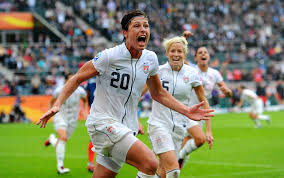
This year's Women's World Cup is in Canada with games in Montreal, Moncton, Winnipeg, Edmonton, Vancouver and ... Ottawa. The semis and finals are elsewhere, but one of the quarterfinals would be in Ottawa, so when I was choosing to buy tickets, I went with the quarters rather than the round that is playing today/yesterday/tomorrow. I figured with four games, the chances of getting US or Canada would be pretty good.
And thanks to tonight's effort, I get to go the game with a relative and friends to see USA vs China: to determine whether the declining hegemon or the rising power have what it takes to go further.
The rest of the games also have fun IR implications:
- England vs Canada: see who gets to wear the Crown and gets to keep the corgis for four years!
- German vs. France: obviously, WWI, WWII and a bunch of other conflicts. I only wish that they could join together to play Greece.
- Australia vs. Netherlands: partners in Uruzgan, combatants in Canada OR
- Australia vs. Japan: WWII Redux.
USA! USA!! USA!!!
Partition Rant-A-Thon
Apparently, people are advocating partition of Iraq. Maybe. But before we do that, we need to consider some stuff, like the logic of partition:
I have said much of this before, so here are the key links: the quick partition anti-pitch; my take on it being bad for Iraq; and Kelsey's storify.
orPartition argument ~ underwear gnome logic: step 1 separate people (steal underwear); step 3 Peace (profit). Step 2: insert shoulder shrug— Steve Saideman (@smsaideman) June 22, 2015
Partition's real logic: why have one failed state when you can have two (or three)?— Steve Saideman (@smsaideman) June 22, 2015
I have said much of this before, so here are the key links: the quick partition anti-pitch; my take on it being bad for Iraq; and Kelsey's storify.
Great Moments in the US Supreme Court
I don't study the US Supreme Court, but so tempted now:
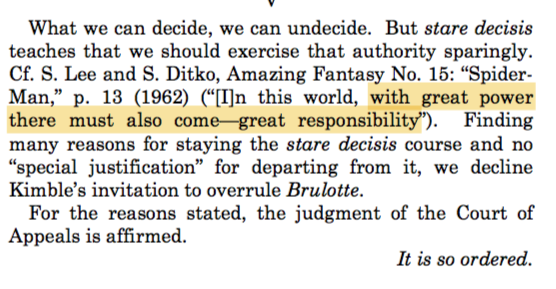
Indeed.
Indeed.
Sunday, June 21, 2015
Calling It What It Is
The NYT addresses the GOP's problems with the Confederate Flag*:
How about appealing to minorities? Well, that risks losing one's base. Who are some of these people in this base that might flee a more open GOP? Those who are "uneasy about what they see as bowing to political correctness." Those who are comfortable with symbols drenched in racism and violence. The safer (gut-less) strategy is to demure and to focus on the "religious" nature of the crime rather than the roles played by racism, misogyny, and guns.
The Democrats have long been guilty of taking the votes of African-Americans for granted, as they should have done more again and again. But as long as the GOP continues to be more concerned with "white conservatives who are uneasy," African-Americans know where they must vote. As do other minorities. Florida has been up for grabs precisely because the GOP has lost its grip on Cuban-Americans.
The political science I know tells me that it is easier to be the homogeneous party that uses ethnic appeals to outbid the multi-ethnic party. But it also tells me that numbers matter, and the numbers are not in the GOP's favor. Their grip on local and state-level governments is a problem, but they are going to have significant problems at the national level until they face the reality that the math is against them and also that their own values (if they are as "Christian" as they say they are) are against them.
So, until the GOP stops pandering to the racists, I am going to be comfortable considering them to be the party of racists, just as I consider them the party of misogyny.... even if the Democrats do not cover themselves in glory on this stuff. There are differences between the parties, real ones, on these issues.
Bowing to political correctness? Hmmmm. How about wanting to have its cake and eat it too? That is, the GOP has long relied on racists to gain and stay in office. The problem the party faces is the demographic decline of white people in the country. I have said since 2008 that I am happy with Sarah Palin's desire to represent Real America since that means appealing to declining group. So, how does the GOP deal with losing the demographic battle? Obvious, #voterfraudfraud is a key strategy--try to make sure that the folks who are less likely to vote Republican are not allowed to vote.The carefully calibrated answers were a vivid illustration of the challenge Republicans face in attempting, simultaneously, to broaden their party’s appeal to minorities while also energizing those white conservatives who are uneasy about what they see as bowing to political correctness.
How about appealing to minorities? Well, that risks losing one's base. Who are some of these people in this base that might flee a more open GOP? Those who are "uneasy about what they see as bowing to political correctness." Those who are comfortable with symbols drenched in racism and violence. The safer (gut-less) strategy is to demure and to focus on the "religious" nature of the crime rather than the roles played by racism, misogyny, and guns.
The Democrats have long been guilty of taking the votes of African-Americans for granted, as they should have done more again and again. But as long as the GOP continues to be more concerned with "white conservatives who are uneasy," African-Americans know where they must vote. As do other minorities. Florida has been up for grabs precisely because the GOP has lost its grip on Cuban-Americans.
The political science I know tells me that it is easier to be the homogeneous party that uses ethnic appeals to outbid the multi-ethnic party. But it also tells me that numbers matter, and the numbers are not in the GOP's favor. Their grip on local and state-level governments is a problem, but they are going to have significant problems at the national level until they face the reality that the math is against them and also that their own values (if they are as "Christian" as they say they are) are against them.
So, until the GOP stops pandering to the racists, I am going to be comfortable considering them to be the party of racists, just as I consider them the party of misogyny.... even if the Democrats do not cover themselves in glory on this stuff. There are differences between the parties, real ones, on these issues.
* Pedants like to say that the flag in question is not the Confederate Flag but the Battle Flag of the Army of Virginia or whatever. Sorry, but we live in an intersubjective world--and this flag has become to be known as the Confederate Flag by both its fans and its haters. Otherwise, why would it be THE flag to fly over Confederate Memorials and Cemeteries? So, don't bother correcting me on this.
Saturday, June 20, 2015
Echo Chamber or Just Unified Disgust?
While I have largely failed to develop a distinct twitter voice from my blogging voice from my facebook voice, I have tried to avoid creating an echo chamber on twitter. I follow people who often/always see things differently. On facebook, I have muted or unfollowed people as it is a space where I don't mind having an echo chamber--I don't want to get into emotional and potentially angry debates there.
In the past few days, I have to say I am pretty pleased with the echo chambers in both spots. I have seen no critical updates/comments on facebook and no negative reactions to my various comments/tweets about Charleston and all that. Indeed, my tweets have gotten far more retweeted/favorited on this stuff than on anything since the week Canada's parliament was attacked last October.
I am not surprised that my friends and family on facebook are fairly unified in their disgust of what happened and the view that we need to challenge the symbols and actions of racism. I am a bit surprised at my twitter followers since I don't curate/block to create homogeneity. I do block some people and do mute others, but it is not aimed at creating an homogenous feed/audience, but to keep things respectful.
Maybe it is just that acts these are so far beyond the pale of what can be debated that the only people on the other side are so far away that I don't hear them or see them. During days like this, I am ok with the echo chamber, as I have nothing to say to those who might excuse the actions of racist murderers or who suggest that there is nothing we can do.
In the past few days, I have to say I am pretty pleased with the echo chambers in both spots. I have seen no critical updates/comments on facebook and no negative reactions to my various comments/tweets about Charleston and all that. Indeed, my tweets have gotten far more retweeted/favorited on this stuff than on anything since the week Canada's parliament was attacked last October.
I am not surprised that my friends and family on facebook are fairly unified in their disgust of what happened and the view that we need to challenge the symbols and actions of racism. I am a bit surprised at my twitter followers since I don't curate/block to create homogeneity. I do block some people and do mute others, but it is not aimed at creating an homogenous feed/audience, but to keep things respectful.
Maybe it is just that acts these are so far beyond the pale of what can be debated that the only people on the other side are so far away that I don't hear them or see them. During days like this, I am ok with the echo chamber, as I have nothing to say to those who might excuse the actions of racist murderers or who suggest that there is nothing we can do.
Friday, June 19, 2015
History of Hate
I am not a scholar of American racial politics, but when there is something obvious to point out, I point it out. Today it was a lesson about hate:

The additional flag flying over the capital of South Carolina--known as the Confederate flag despite the best efforts of pedants--was not always there. I pointed out that this flag had gone away but came back in the 1950s and 1960s, that it was put on the flags of many southern states and was popularized deliberately as a symbol of opposition to the civil rights movement (my tweet of this has gone viral... well, viral for me: more than 160 RTs, 100 favorites so far).
Of course, then this leads to the question of: why would one oppose equal rights for African-Americans? Hmmmm. Why should those of a different color be denied the front of the bus, to be denied to eat at restaurants and stay at hotels of their choosing? To be denied the right to vote? The only answer, of course, is racism. Sure, it is easy to look back from 2015 to 1955 or 1965 and call those who opposed civil rights racists, but other than hate/fear of African Americans, what can motivate the denial of equal rights?
So, yes, it is pretty easy to see how the Confederate flag is a symbol of racism. Not just because it was a symbol of a government founded on the defense of slavery, but because its return was part of a process of attempting to fight the civil rights movement.
Whenever anyone contests this and argues that the Confederate flag is a part of southern heritage, I was wonder why they would want to venerate that part of the South's heritage that is defined by hate and racism. The answer, of course, is that they are racists denying that they are racists. Otherwise, they would pick other symbols of the South as defining their heritage.
The additional flag flying over the capital of South Carolina--known as the Confederate flag despite the best efforts of pedants--was not always there. I pointed out that this flag had gone away but came back in the 1950s and 1960s, that it was put on the flags of many southern states and was popularized deliberately as a symbol of opposition to the civil rights movement (my tweet of this has gone viral... well, viral for me: more than 160 RTs, 100 favorites so far).
Of course, then this leads to the question of: why would one oppose equal rights for African-Americans? Hmmmm. Why should those of a different color be denied the front of the bus, to be denied to eat at restaurants and stay at hotels of their choosing? To be denied the right to vote? The only answer, of course, is racism. Sure, it is easy to look back from 2015 to 1955 or 1965 and call those who opposed civil rights racists, but other than hate/fear of African Americans, what can motivate the denial of equal rights?
So, yes, it is pretty easy to see how the Confederate flag is a symbol of racism. Not just because it was a symbol of a government founded on the defense of slavery, but because its return was part of a process of attempting to fight the civil rights movement.
Whenever anyone contests this and argues that the Confederate flag is a part of southern heritage, I was wonder why they would want to venerate that part of the South's heritage that is defined by hate and racism. The answer, of course, is that they are racists denying that they are racists. Otherwise, they would pick other symbols of the South as defining their heritage.
Putin and White Supremacists
What do Putin and white supremacists have in common? A shared belief that using threats and force will cause others to be bullied, to flee, to go away. I was struck by this as I was reading this piece on the Charleston murders. Apparently, white supremacists have always attacked black churches in part because they were/are centers of mobilization/organization of African-Americans as they sought civil rights and justice. The belief is that if you attack these churches, it would dispel or diminish the energy mobilizing the protests.
History, of course, proved this to be wrong and dramatically so. That attacks on the African-American community mobilized the community as well as whites and pressured white politicians to support the civil rights legislation.
As Waltz and Walt have argued, it is a balancing world and not a bandwagoning one. People respond to threats by mobilizing against them more than by caving in. NATO is demonstrating a fair bit of unity (perhaps less than desired) as Russia attempts to break the alliance. But the threats made by Russia to Sweden and Finland about their potential effort to join the alliance are likely to increase support and encourage greater coordination between these partners of NATO and the alliance.
So, today, we see threats and violence made by the bullies who are on the losing side of history precisely because their strategies are self-defeating. Well, that and their ideologies are awful.
History, of course, proved this to be wrong and dramatically so. That attacks on the African-American community mobilized the community as well as whites and pressured white politicians to support the civil rights legislation.
As Waltz and Walt have argued, it is a balancing world and not a bandwagoning one. People respond to threats by mobilizing against them more than by caving in. NATO is demonstrating a fair bit of unity (perhaps less than desired) as Russia attempts to break the alliance. But the threats made by Russia to Sweden and Finland about their potential effort to join the alliance are likely to increase support and encourage greater coordination between these partners of NATO and the alliance.
So, today, we see threats and violence made by the bullies who are on the losing side of history precisely because their strategies are self-defeating. Well, that and their ideologies are awful.
Thursday, June 18, 2015
Meanings of America
Last weekend, I got to see Ellis Island and Liberty Island. I had been to the latter before but not to the former. What struck me most of all? How incredibly diverse the people visiting these places were. I am not a huge fan of ELF--ethnolinguistic fractionalization score as a variable in quantitative work on ethnic conflict and civil war--but I cannot imagine any place getting a higher value than those two places. ELF--essentially measures the odds of whether you bump into someone in your ethnic group--was close to one, indicating that nearly everyone there seemed to be from a distinct ethnic group/nationality.
And I felt real good about that--that these two locations represent a key part of what it means to be an American--that being American is not about where one comes from or the color of one's skin or the language they speak but something else. What that else is may change over time. It is freighted with the tragic mistakes and problems of the past (slavery, what was done to the native Americans) and of the present.
Others see America as a place for white people, maybe white Christians (narrowly defined). That seems to be the story of today (again) as a white guy shot up a Black church. This crime is not one thing--it is not a hate crime or terrorism or spree shooting--it is all of these things. And apparently the guy said that he viewed Blacks as taking over and they "need to go." This hate is deeply ingrained in American history, but it is not the America that I saw at Ellis Island and at Liberty Island.
So, we have dueling conceptions of America, and this conflict is not going to go away. We will see stuff like this happen again and again as it has happened many times before. I'd like to focus on the positive side, but that is easy for me since I never had to worry much about the personal consequences of Driving While Black, Walking While Black, Hanging Out in My House While Black....
All I know is that what happened is awful and that we will probably not learn that much from it because it is really not anything new. What a depressing thought after an uplifting weekend a week ago.
And I felt real good about that--that these two locations represent a key part of what it means to be an American--that being American is not about where one comes from or the color of one's skin or the language they speak but something else. What that else is may change over time. It is freighted with the tragic mistakes and problems of the past (slavery, what was done to the native Americans) and of the present.
Others see America as a place for white people, maybe white Christians (narrowly defined). That seems to be the story of today (again) as a white guy shot up a Black church. This crime is not one thing--it is not a hate crime or terrorism or spree shooting--it is all of these things. And apparently the guy said that he viewed Blacks as taking over and they "need to go." This hate is deeply ingrained in American history, but it is not the America that I saw at Ellis Island and at Liberty Island.
So, we have dueling conceptions of America, and this conflict is not going to go away. We will see stuff like this happen again and again as it has happened many times before. I'd like to focus on the positive side, but that is easy for me since I never had to worry much about the personal consequences of Driving While Black, Walking While Black, Hanging Out in My House While Black....
All I know is that what happened is awful and that we will probably not learn that much from it because it is really not anything new. What a depressing thought after an uplifting weekend a week ago.
Wednesday, June 17, 2015
A Mediocre Day for Women and Their Allies
Three events occurred yesterday that do not advance the cause of women at least in the short run:
- Donald Trump announced his presidential campaign
- Chief of Defence Staff Tom Lawson said that the sex assault problem in the Canadian Forces was due in part to biology
- I saw Jurassic World.
Working with Neo-Nazis? Nyet
Congresspeople have imposed restrictions on training Ukrainian soldiers--that those associated with a Neo-Nazi unit would be prohibited from engaging in mil to mil efforts. This raises questions in Canada where members of parliament have limited means to slap amendments onto bills that would impose such restrictions.
This is causing some deja vu for me, as this kind of legislation is old news in the US. In my year on the Joint Staff, whenever we worked on the possibility of engaging the local militaries in Bosnia, which we did as a major effort to try to build a single Bosnian military from three militaries (Bosniak, Serb, Croatian) we had to consider whether our efforts met the requirements set forth by the Leahy Amendment. Senator Leahy of Vermont added an amendment that required any US funding for training to be conditional on vetting--that those who engaged in human rights abuses would be excluded.
Since most of the Ukrainian army is not in the unit that is getting heaps of attention, it is unlikely that the small Canadian training effort will end up working with the Neo-Nazis. Moreover, if the Canadians train at the same place as the Americans and train mostly the same people, it is likely that the American attention to this challenge will do the work for the Canadians--that the relevant unit will be left out of all of thereindeer games Western training.
One could call the US restriction a caveat, which goes to show that not all caveats are really so problematic. Some are actually lined up well with the intent of policies and might actually foster the national interest. Something to think about.
This is causing some deja vu for me, as this kind of legislation is old news in the US. In my year on the Joint Staff, whenever we worked on the possibility of engaging the local militaries in Bosnia, which we did as a major effort to try to build a single Bosnian military from three militaries (Bosniak, Serb, Croatian) we had to consider whether our efforts met the requirements set forth by the Leahy Amendment. Senator Leahy of Vermont added an amendment that required any US funding for training to be conditional on vetting--that those who engaged in human rights abuses would be excluded.
Since most of the Ukrainian army is not in the unit that is getting heaps of attention, it is unlikely that the small Canadian training effort will end up working with the Neo-Nazis. Moreover, if the Canadians train at the same place as the Americans and train mostly the same people, it is likely that the American attention to this challenge will do the work for the Canadians--that the relevant unit will be left out of all of the
One could call the US restriction a caveat, which goes to show that not all caveats are really so problematic. Some are actually lined up well with the intent of policies and might actually foster the national interest. Something to think about.
A Liberal in Canada? A Self-Centered Voter's Evaluation
Ever since I moved to Canada, I wondered how I would vote. I still don't have a vote, as my citizenship application is probably two years from being fully processed (and assuming I pass the test), but yesterday provided a bit of clarity.
Let's quickly summarize some of the Liberal promises made yesterday:
So, yeah, I guess I would vote Liberal and not even hold my nose or anything, even if Justin Trudeau always says one thing too much when talking about Canadian defence stuff.
Let's quickly summarize some of the Liberal promises made yesterday:
- More accessible information by improving the Access to Information Act. That would be wonderful given that my current ATIP request appeal is more than two years old (which, I believe, means that the actual request is more than three years old).
- Open data
- Stronger parliamentary committees. This would be good for the Steve/Dave/Phil project as we could then have variation on our independent variables, so this is good for our project!
- More free votes. I am not a fan of superstrict party discipline. Canada's parties are about as strict as they get.
- Improving question period. Anything that makes this less of a joke would be a good thing.
- More clarity on budget stuff. The budget might actually have real numbers? Real independence to Parliamentary Budget Officer!
- Stronger national security oversight by creating an all-party national security committee to monitor and oversee operations of every department and agency with national security responsibilities? Oh my, yet more variation for our project. Woot!
- First past the post goes away? Only if they cite my stuff to justify it! I am, of course, not sure this is that important for ameliorating ethnic conflict in Canada since federalism does a handy job of providing the key minority with political access. It would depend on the alternative chosen, but more discussion of electoral rules is good for poli sci business.
- Ban partisan government ads. This does truly annoy me.
- Unmuzzle scientists. I have been a harsh critic of the message management efforts of the current government. So, this would be a big improvement.
- Bring back the long form census and make Statscan independent. Much love for social science here.
- Data-driven decision making? Oh, this sounds good, but I am not that naive.
So, yeah, I guess I would vote Liberal and not even hold my nose or anything, even if Justin Trudeau always says one thing too much when talking about Canadian defence stuff.
Tuesday, June 16, 2015
Recognize The Tainted Legitimacy
A list caught my eye this morning: those countries that recognized Crimea's union with Russia:
How about irredentists? We have a few: Afghanistan (Pashtuns do not like the Durand line), Armenia, Russia, North Korea (both as supporting irredentism and potential target of irredentism, depending on who rules a united Korea), and Sudan (if it ever tries to bring back the secessionist hunks).
My quick snark was basically suggesting that with friends like these, this particular annexation is not legitimate. Not only is the list small, but they include mostly countries that are hostile to self-determination if one includes the ability to select one's government in that concept.
I got some pushback from folks who said this is really about power relations--that Kosovo's recognizers are allies of the US.... And, of course, Kosovo ain't Crimea, but the point is almost valid. Who has recognized Kosovo other than Facebook? Over a hundred countries, including many who are not seen as neatly in the American camp. This list includes many non-democratic states, but includes many democracies, so it does not read quite like a list of countries hostile to democracy, minority rights and the like.
The Crimean Referendum was a sham and remains so. The list of recognizers, mostly experts on the art of fake elections, underlines the fraud that Russia has been perpetuating. The implausible denials still work well enough, I guess, but if something quacks like a fraud, walks like a fraud, well, it is a fraud.

Reminder of the 14 nations who recognize the Crimean "annexation": pic.twitter.com/UUX7n4jyxV— Casey Michel (@cjcmichel) June 16, 2015
What do these folks have in common? Democracy? Not so much. Friends of the U.S.? Definitely not so much. Indeed, hostility to US is a great unifier except there are some folks who might be hostile to the US who are not on this list including Iran.Hmm, what unifies most of these folks? ah, yes, deep love of self-determination. https://t.co/jYd9EiSSdH— Steve Saideman (@smsaideman) June 16, 2015
How about irredentists? We have a few: Afghanistan (Pashtuns do not like the Durand line), Armenia, Russia, North Korea (both as supporting irredentism and potential target of irredentism, depending on who rules a united Korea), and Sudan (if it ever tries to bring back the secessionist hunks).
My quick snark was basically suggesting that with friends like these, this particular annexation is not legitimate. Not only is the list small, but they include mostly countries that are hostile to self-determination if one includes the ability to select one's government in that concept.
I got some pushback from folks who said this is really about power relations--that Kosovo's recognizers are allies of the US.... And, of course, Kosovo ain't Crimea, but the point is almost valid. Who has recognized Kosovo other than Facebook? Over a hundred countries, including many who are not seen as neatly in the American camp. This list includes many non-democratic states, but includes many democracies, so it does not read quite like a list of countries hostile to democracy, minority rights and the like.
The Crimean Referendum was a sham and remains so. The list of recognizers, mostly experts on the art of fake elections, underlines the fraud that Russia has been perpetuating. The implausible denials still work well enough, I guess, but if something quacks like a fraud, walks like a fraud, well, it is a fraud.
Monday, June 15, 2015
It Was In Front of Us All Along, GoT Edition
Thanks to a commenter on Gawker, the Barratheon destiny was obvious all the time:
Surveys and Realities of NATO's Past and Future: Fun with Numbers
I got into a fun conversation with Roland Paris (@rolandparis) on twitter today about the survey that came out last week that raised questions about the commitment of much of NATO to the heart of NATO: an attack upon one is equal to an attack upon all.
What really got me going was Roland's assertion that public opinion and willingness to fight in Afghanistan were correlated. Really? Because I have been saying otherwise for years. I invoked both Sarah Krep's work and the Dave and Steve project plus this handy slide:
 Sarah Kreps argued in her article that elite consensus kept the alliance together despite public opinion--that the elites of the various parties shared an interest in supporting NATO and were mutually implicated in the mission so that it could not be a campaign issue. My take (with Dave) is that institutions mediate this stuff, so that public opinion only matters indirectly. I also mentioned that countries actually became more willing to fight as time went on and as public support fell.
What does "more willing to fight" mean? In my view, it refers mostly to the restrictions/discretion granted to the troops. If troops could fight in the south or east, which were far more "kinetic" than north or west of Afghanistan, then their country is "more willing to fight." The other potential caveat we focus on in the article and book is offensive operations--some countries would not do such stuff, some did. Together, "loose" caveats, coded by willingness to fight in dangerous areas and by willingness to engage in offensive ops, is my quick and dirty way to code willingness to fight. Medium is a mix--Norway was based in the north but was more willing to engage in offensive operations and fudged the lines of its area of operations. Germany was always in the less violent north, but changed its rules to engage in offensive ops in 2009.
The basic pattern of the slide above is that there is no correlation between public support of the mission and what the troops were doing.
Roland pushed back with a few slides of his own:
France is hinky in the chart, but let's focus on a few key things here. First, what drives this is mostly the denominator as most countries had roughly similar numbers of troops (500-3000) with Italy, Germany, and the UK being above that and the US way above that. Canada, the Dutch, the Danes, etc all have smaller militaries. So, any effort they commit will be a larger % of their capabilities. This speaks more to population size and % of GDP spent on defense. Public opinion is not correlated much with this as UK had roughly the same percentage of support as Italy and Germany. Moreover, the idea that size of contingent measures willingness to fight is strange in this case. For most countries, each sent as small a continent as possible (to save money) and then reinforced once they found that their zones were hotter than expected, especially those in the south and east. So, size of force is actually not just a function of will but of the risks chosen (that which shaped caveats also shapes size, more or less).
His next slide was of fatalities per population:
 And, yes, the Danes led (well, once you discount the small Estonians) in how much they bled, with Canada second, UK third, US fourth. What do they share in common? Willingness to serve in south/east. To repeat, casualties were a function of where one was willing to serve and how they served--caveat variance is what shaped the fatalities outcomes.
After I said that I had done some correlation tests and found none for caveats and public opinion, Roland's big move is to follow my instructions and build a two by two:
 He chose to add the percentages of fatalities/population and Afghan commitment/size of military to get high or low on one dimension and public support on the other. And it looks good for his argument--that UK and Poland were outliers with low/low and high/high serving as the primary axis of the relationship. So, should I submit to Roland's argument? Nah, that would make for a boring post. I think there are a few key things to say about this two by two:
— Roland Paris (@rolandparis) June 15, 2015Despite my post last week where I concurred with the survey that NATO has a weenie problem, I pushed back a bit. Why? Partly because of Dan Nexon's excellent post raising doubts about the survey--that if people were asked more directly whether they would want to help an ally if attacked by Russia, they might have answered differently. And partly because I have been thinking of the lessons of Afghanistan--that every NATO ally (and then some) showed up even though no one cared about the place and nearly all stuck around until 2013-14 (Canada and the Netherlands as notable exceptions).
What really got me going was Roland's assertion that public opinion and willingness to fight in Afghanistan were correlated. Really? Because I have been saying otherwise for years. I invoked both Sarah Krep's work and the Dave and Steve project plus this handy slide:

What does "more willing to fight" mean? In my view, it refers mostly to the restrictions/discretion granted to the troops. If troops could fight in the south or east, which were far more "kinetic" than north or west of Afghanistan, then their country is "more willing to fight." The other potential caveat we focus on in the article and book is offensive operations--some countries would not do such stuff, some did. Together, "loose" caveats, coded by willingness to fight in dangerous areas and by willingness to engage in offensive ops, is my quick and dirty way to code willingness to fight. Medium is a mix--Norway was based in the north but was more willing to engage in offensive operations and fudged the lines of its area of operations. Germany was always in the less violent north, but changed its rules to engage in offensive ops in 2009.
The basic pattern of the slide above is that there is no correlation between public support of the mission and what the troops were doing.
Roland pushed back with a few slides of his own:
 |
| Troops as % of Active Military |
France is hinky in the chart, but let's focus on a few key things here. First, what drives this is mostly the denominator as most countries had roughly similar numbers of troops (500-3000) with Italy, Germany, and the UK being above that and the US way above that. Canada, the Dutch, the Danes, etc all have smaller militaries. So, any effort they commit will be a larger % of their capabilities. This speaks more to population size and % of GDP spent on defense. Public opinion is not correlated much with this as UK had roughly the same percentage of support as Italy and Germany. Moreover, the idea that size of contingent measures willingness to fight is strange in this case. For most countries, each sent as small a continent as possible (to save money) and then reinforced once they found that their zones were hotter than expected, especially those in the south and east. So, size of force is actually not just a function of will but of the risks chosen (that which shaped caveats also shapes size, more or less).
His next slide was of fatalities per population:
After I said that I had done some correlation tests and found none for caveats and public opinion, Roland's big move is to follow my instructions and build a two by two:
- I still have no idea what size of contingent/size of military says about willingness to fight.. Again, Italy and Germany and Spain did not need to reinforce and send more troops since they were not as pressured as other places. The first two still had the third and fourth largest contingents and agreed to lead 1/4 of the country each (RC-W and RC-N). They committed a whole lot despite weak support at home. The denominator may also be deceptive because size of military and what is actually deployable are two different things. Every country had to sustain their force, and a larger force would be harder to sustain. Italy and Germany stayed the entire time unlike the Canadians and Dutch who look good in these figures but left combat before everyone else. Finally, I am also not sure adding the two %'s make sense (reviewer #3 would hate it).
- Again, the basic reality was that most countries reduced their restrictions and became more willing to fight as the conflict continued and as public opinion went down. It is hard to square that dynamic reality with the idea that public opinion served as a major brake. France's willingness to fight changed dramatically in 2007 when a bitter Chirac (still miffed due to the US invasion of Iraq) was replaced by the NATO fan Sarkozy. So, I would code France differently depending on the time frame.
- Roland set high and low of public opinion at 40% which is a mighty low threshold for "high public support." Set it five points lower and nearly everyone is high. Set it five points higher, and Canada is in the wrong box. More importantly, what Roland considers to be high is actually mostly lower than the public opinion on the Pew survey that started this conversation. That is, using Roland's standards, the "weenies" include only one country below 40%: Germany. Which is a bit of a problem. Still, Germany's attitude about using force to defend an ally that is attacked (however it is worded) is actually pretty damn close to what its attitude was during the Afghanistan war--where the Germans remained even after nearly everyone has left.
Sunday, June 14, 2015
Is Setting a Summer Goal Late Cheating?
For most folks, summer starts either with Memorial Day Weekend or with the end of the kids' classes. My summer is about 1/3 over, as classes end in early April, and grading is done before May. Which means that my summer is four to four and a half months long. Yes, I am boasting. But the reason I raise this is that I had a realization today that this is my first summer really between books in a while.
The Steve and Dave and Phil book project is only getting underway, with much of the work to take place in the years ahead. I have cleared my schedule of travel with one family vacation ahead and my Euro trips behind me. Yes, I have a couple of grant/fellowship applications to work on, but I also have an R&R, a contribution to a special issue, another contribution to a different special issue, AND an APSA paper that is going to be submittable by the APSA. I might even be able to finish a TRIP paper I have been sitting on for more than a year.
So, I am posting this to taunt the reviewer gods:
My goal is to have four articles under review by the end of the summer. Some folks manage to do that in most years. I don't think I have had that many pieces in circulation since .... hmmm .... maybe in the year or two before tenure and maybe not even then.
Of course, this may all collapse, and the stuff may all end up burning in the fiery pit known as reviewer #2. But I am setting my goal today, a bit late, which might be cheating. But what the heck, there is no rule book as far as I can tell. And any excuse to post a Queen song works.
The Steve and Dave and Phil book project is only getting underway, with much of the work to take place in the years ahead. I have cleared my schedule of travel with one family vacation ahead and my Euro trips behind me. Yes, I have a couple of grant/fellowship applications to work on, but I also have an R&R, a contribution to a special issue, another contribution to a different special issue, AND an APSA paper that is going to be submittable by the APSA. I might even be able to finish a TRIP paper I have been sitting on for more than a year.
So, I am posting this to taunt the reviewer gods:
My goal is to have four articles under review by the end of the summer. Some folks manage to do that in most years. I don't think I have had that many pieces in circulation since .... hmmm .... maybe in the year or two before tenure and maybe not even then.
Of course, this may all collapse, and the stuff may all end up burning in the fiery pit known as reviewer #2. But I am setting my goal today, a bit late, which might be cheating. But what the heck, there is no rule book as far as I can tell. And any excuse to post a Queen song works.
New Thinking or Old Thinking: US Miltary Demures
This piece suggests that the US generals are now less optimistic about the use of force than the Obama administration. That they are not as willing to push for escalating in Iraq. The piece cites McChrystal's desire for more troops in Afghanistan, which paints much of this as a shift. But more of this is actually continuity. People forget but most of the American military was not all that enthused about many of the past conflicts, and wanted heaps more troops either to mitigate risk or to prevent the use of force in the first place (see Deborah Avant's piece on this).
I never liked the Powell doctrine (here is a piece by someone who has changed their views)--that one could only use force if one was willing to give the military whatever it needed to fight only those battles that have wide support and have easy goals to reach. That might be a slightly unfair characterization, but the idea was to have only Iraq 1991's and not Bosnia (Powell pushed against that rather successfully for some time).*
The problem with the Powell doctrine was how it defined the goal of the use of force to achieve military and not political ends. I am a Clausewitzian, so there is no use of force without politics. The question is, rather, how can the use of military force affect the politics of a situation. The surges in Iraq and Afghanistan illustrated this quite well: the idea was to use more force to create a bit of momentum and a breathing space in which politics might be able to work out BUT that the surges themselves would not provide a political outcome that resolved the conflict.
Which gets us back to Iraq today: how does providing more force get us to a desirable outcome? So far, giving more help to Iraq has not made it less dependent on Iran and has not made it any more willing to credibly commit to providing political access to the Sunnis. Without that, there is no victory. As long as the political calculations of elites in Baghdad conflict with what the US wants, adding more troops or escalating is not going to improve things much.
The funny thing is that the place where politics is supposed to be taken most seriously, the State Department, seems to be the one where sunk costs logics are overwhelming reason:
I never liked the Powell doctrine (here is a piece by someone who has changed their views)--that one could only use force if one was willing to give the military whatever it needed to fight only those battles that have wide support and have easy goals to reach. That might be a slightly unfair characterization, but the idea was to have only Iraq 1991's and not Bosnia (Powell pushed against that rather successfully for some time).*
* To be clear, one can violate this doctrine in a number of ways--but mostly by not having clear goals and/or by not using decisive force. Rumsfeld and Franks violated the second part by sending as small a force as possible to Iraq in 2003.
The problem with the Powell doctrine was how it defined the goal of the use of force to achieve military and not political ends. I am a Clausewitzian, so there is no use of force without politics. The question is, rather, how can the use of military force affect the politics of a situation. The surges in Iraq and Afghanistan illustrated this quite well: the idea was to use more force to create a bit of momentum and a breathing space in which politics might be able to work out BUT that the surges themselves would not provide a political outcome that resolved the conflict.
Which gets us back to Iraq today: how does providing more force get us to a desirable outcome? So far, giving more help to Iraq has not made it less dependent on Iran and has not made it any more willing to credibly commit to providing political access to the Sunnis. Without that, there is no victory. As long as the political calculations of elites in Baghdad conflict with what the US wants, adding more troops or escalating is not going to improve things much.
The funny thing is that the place where politics is supposed to be taken most seriously, the State Department, seems to be the one where sunk costs logics are overwhelming reason:
The key is to figure out what American goals are and then figure out how force can or cannot play a role. If it is about degrading and containing ISIS, then maybe more force could be useful. But if it is about defeating it, well, that requires political changes in Iraq, which American soldiers simply cannot foster. Getting the politics right is the key, and it is why the last couple of wars have been so endlessly frustrating. The local actors simply do not have the same interests as the external ones.@smsaideman State in this instance = S/CT and INL who have billions tied up in kind items supporting Iraqi police, civic pgrms— Robert Caruso (@robertcaruso) June 14, 2015
Saturday, June 13, 2015
Kosovo Ain't Crimea, Crimea Ain't Kosovo
The standard line for Putin apologists and Russophiles is that Crimea is just Kosovo but a bit to the east. This is lousy comparative politics, so let's list how they are different:
One can argue that all interventions are illegal, although responsibility to protect may suggest otherwise. Kosovo, whatever its flaws, was an effort to prevent further massacres after all other efforts had failed. Crimea and now Donbass are efforts by Russia to destabilize a neighbor after Russia lost its grip. Yes, we can compare the two, but the comparison reveals significant differences and only superficial similarities.
- The US and its friends took a decade to intervene in Kosovo (one can start the clock anytime, but I choose to start the revocation of Kosovo's autonomy within Serbia) after years of both massacres and negotiations. Crimea happened immediately after Russia's stooge fled Kiev. Russia moved before any effort could be made to bargain, to send a peace keeping mission or preventative mission. this really is the key
- US and its friends did not conquer Kosovo and annex it. Russia did hold a sham referendum and annexed Crimea.
- Oh yeah, we could compare how the decisions were made. Kosovo's parliament voted for independence years after the local populace demanded it. Crimea's referendum happened shortly after Russia de facto occupied Crimea, the opponents were roughed up and/or arrested, and it is pretty clear that the results were just a bit fraudulent.
- Kosovo was after ... Bosnia, where the west had dithered while genocide happened. Oh, and Kosovo was also after Transnistria, where a Russian military unit essentially seceded from Moldova and after Russia's support for Armenian irredentism, and other Russian efforts in the former Soviet Union. Crimea was after ... Georgia where Russia did a nice job of playing Georgia and then created not one but two de facto independent states/failed states from territory carved out of Georgia.
- US and its friends did not use nuclear threats during the crisis or afterwards, although SACEUR Gen. Wesley Clark was determined to confront Russia's moves to Pristina. Russia has been making nuclear threats in many directions.
- The aftermath of American and Russian intervention tends to create failed states. In the former, this is mostly not intentional. In the latter, it is entirely intentional.
- After Kosovo, the US and its allies stopped. There was no more armed intervention in the Balkans but the US (ok, one minor effort to stop Macedonia from imploding in 2001). After Crimea, Russia launched a war in Ukraine, not just supporting separatists but sending its own forces, prolonging the conflict and violating ceasefires.
One can argue that all interventions are illegal, although responsibility to protect may suggest otherwise. Kosovo, whatever its flaws, was an effort to prevent further massacres after all other efforts had failed. Crimea and now Donbass are efforts by Russia to destabilize a neighbor after Russia lost its grip. Yes, we can compare the two, but the comparison reveals significant differences and only superficial similarities.
Friday, June 12, 2015
Future Olympic Sports
The International Olympic Committee (less corrupt than FIFA)™ has a list of 26 sports that will be considered to be part of the 2020 games in Tokyo. Deadspin came up with a ranking, but I will provide my own.
1. Ultimate.
Ok, done. Ok, to be fair, I will go through the list provided by Deadspin and comments (in red or blue) ... which will lead to the same outcome as the aforementioned ranking:
1. Ultimate.
Ok, done. Ok, to be fair, I will go through the list provided by Deadspin and comments (in red or blue) ... which will lead to the same outcome as the aforementioned ranking:
- Tug of war Really? Really! Sure, good enough for the Battle of the Network Stars but Olympics?
- Baseball & softball Solid choices although only a few countries play these sports well enough to be competitive. A problem ultimate also has, to be sure. Baseball has enough competitions, but softball would be a strong addition.
- Bowls (curling on turf, basically) We already have curling, so no thanks.
- Sumo Um, who has competitors other than Japan? This would be like having American football as an Olympic game.
- American football Exactly. Who can put winning teams together?
- Flying disc (Ultimate frisbee) The US does not win every single international competition of ultimate (just most of them).
- Underwater sports (a whole bunch of things, including underwater football and underwater hockey) Really?
- Roller sports (races, hockey, and roller derby) Not enough skating? Roller derby? Ok.
- Floorball (a hockey thing) We have hockey. Thanks.
- Korfball (some sort of basketball/handball/Ultimate hybrid) Originals first, ultimate before hybrid.
- Netball (like basketball but worse) Basketball is already in the games, thanks.
- Chess I think sweating is a key ingredient in an Olympic sport. Indeed, shouldn't the game be a sport in order to be an Olympic sport?
- Waterski and wakeboard Racing? Maybe, but we have enough judging stuff already.
- Bowling Bowling before bowls
- Karate What is another martial art? Might as well.
- Wushu ????
- Snooker Bar sports are at the back of the line.
- Surfing The Summer Games needs more bikinis and dudes in bathing suits. Also, surfing is the one sport that is still sporty even if judged.
- Sport climbing More x games, I guess
- Polo No. Enough horse events for rich people already.
- Air sports (paragliding) Only if combined with the skeet shooting (or javelin competition)
- Raquetball Sure.
- Squash Lamer version of racqueball, but sure.
- Orienteering Getting lost and found? No.
- Bridge A game, not a sport. And poker before bridge.
- Dance sport (ballroom dancing) Already enough of that on TV.
NATO Realities 101
One of my favorite government twitter accounts said something this morning and I had to push back:
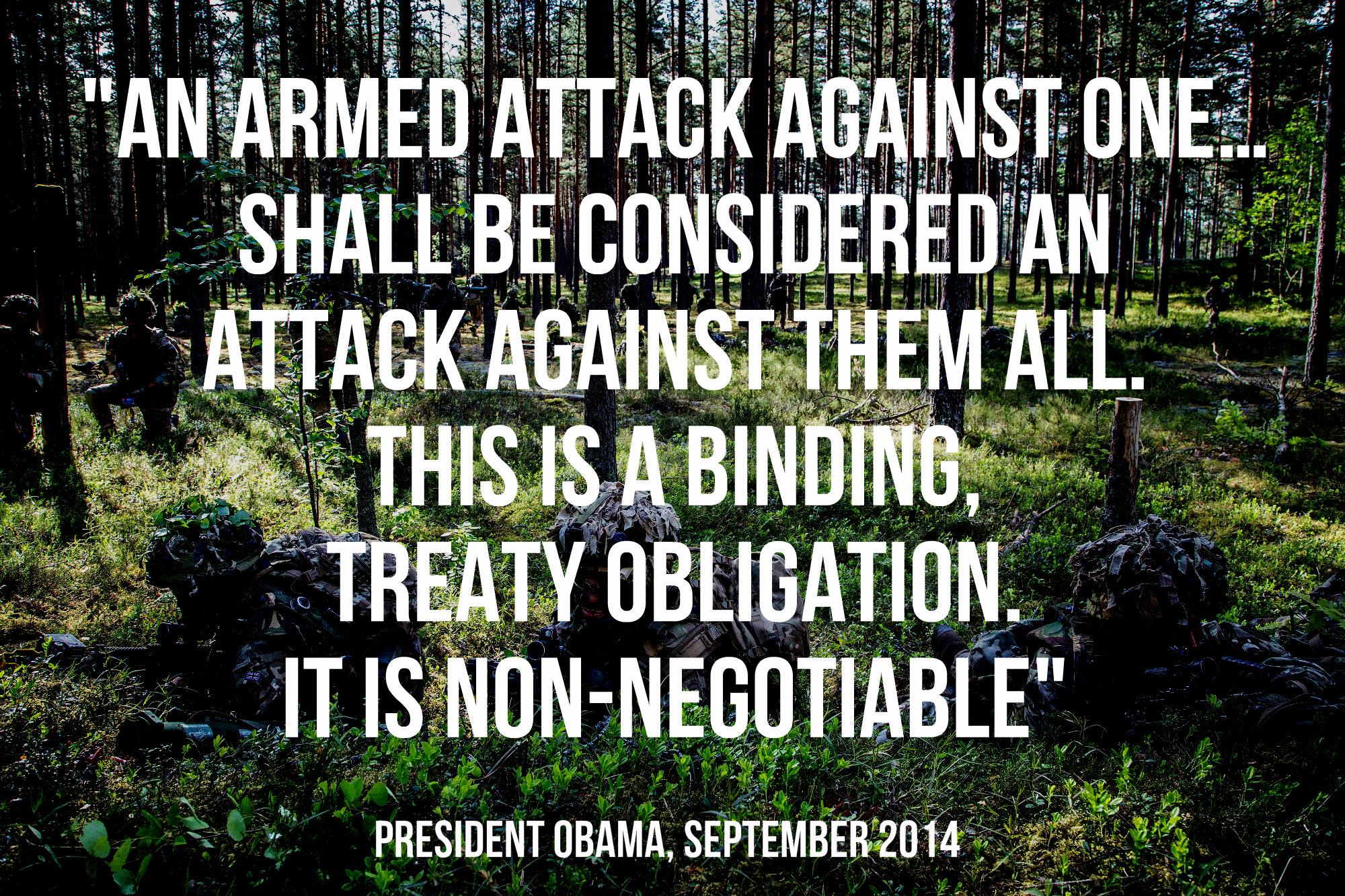
But I then had to modify this, as I have no doubt that the US will respond to any attack on a NATO ally as if it is an attack on the US because ... it would be. American credibility and interests are inextricably tied to the members of NATO, which is why the other category "major non-NATO ally" is so fuzzy by comparison. Of course, the opt out clause in Article V--as each deems necessary--was written so that the treaty would get past the US Senate. However, much has changed since then--that NATO has come to define the US commitment to defend its allies. Since the formation of NATO, the US has done a great deal to defend that commitment, to reassure those allies, that the US will show up, even when the stakes are defined as "Chicago for Bonn."
One could argue that Vietnam was mostly about NATO, as the US was trying to demonstrate that it would not abandon allies. If the US is willing to sacrifice 57k lives for some place that it does not really care about, then the commitment to the places that are central to American foreign policy and definitions of American national interests is about as solid as it can be.
Over the past year plus since Putin/Russia aggressed against Ukraine and upset the post-Helsinki order, the US has repeatedly sought to demonstrate its resolve and commitment to NATO. Any American President will continue to do the same. The pivot, now overcome by events, was all about relying on Europe to carry more of its share so that the US could shift resources to deal with the rising challenge in the Pacific. Europe has been a mix with some allies increasing defense budgets and making credible commitments and others not so much. Some of these countries could opt out (as flawed opinion polls might suggest), but even those are likely to act if a NATO country is attacked by Russia.
So, I was largely being pedantic and self-promoting when I tweeted back at @USNATO. Article V does have a key loophole, but it is not likely to be that relevant if "the balloon goes up" as most of NATO will show up, and who needs the Greeks anyway?
Obama has apparently not read it carefully: each country responds as each deems necessary. Sorry. https://t.co/Ny1nJCVWEH— Steve Saideman (@smsaideman) June 12, 2015
But I then had to modify this, as I have no doubt that the US will respond to any attack on a NATO ally as if it is an attack on the US because ... it would be. American credibility and interests are inextricably tied to the members of NATO, which is why the other category "major non-NATO ally" is so fuzzy by comparison. Of course, the opt out clause in Article V--as each deems necessary--was written so that the treaty would get past the US Senate. However, much has changed since then--that NATO has come to define the US commitment to defend its allies. Since the formation of NATO, the US has done a great deal to defend that commitment, to reassure those allies, that the US will show up, even when the stakes are defined as "Chicago for Bonn."
One could argue that Vietnam was mostly about NATO, as the US was trying to demonstrate that it would not abandon allies. If the US is willing to sacrifice 57k lives for some place that it does not really care about, then the commitment to the places that are central to American foreign policy and definitions of American national interests is about as solid as it can be.
Over the past year plus since Putin/Russia aggressed against Ukraine and upset the post-Helsinki order, the US has repeatedly sought to demonstrate its resolve and commitment to NATO. Any American President will continue to do the same. The pivot, now overcome by events, was all about relying on Europe to carry more of its share so that the US could shift resources to deal with the rising challenge in the Pacific. Europe has been a mix with some allies increasing defense budgets and making credible commitments and others not so much. Some of these countries could opt out (as flawed opinion polls might suggest), but even those are likely to act if a NATO country is attacked by Russia.
So, I was largely being pedantic and self-promoting when I tweeted back at @USNATO. Article V does have a key loophole, but it is not likely to be that relevant if "the balloon goes up" as most of NATO will show up, and who needs the Greeks anyway?
Thursday, June 11, 2015
Canadian Political Reform is Looking in the Wrong Place
How are advocates of reforming the Canadian senate like the Nazis in Raiders of the Lost Art? They are looking in the wrong place (and, no, I am not calling them Nazis). Let a friend of mine rant for me via my storifying of his tweets.
I cannot disagree.... The big challenge in Canada is that any significant reform runs into the same problem--constitutional reform might stir up Quebec separatism, so let's leave things along. And, to be fair, things in Canada are not awful, so doing nothing might be better than trying to fix it. On the other hand, complacency is not usually a winning strategy either.
I cannot disagree.... The big challenge in Canada is that any significant reform runs into the same problem--constitutional reform might stir up Quebec separatism, so let's leave things along. And, to be fair, things in Canada are not awful, so doing nothing might be better than trying to fix it. On the other hand, complacency is not usually a winning strategy either.
Wednesday, June 10, 2015
Blogging the Gap
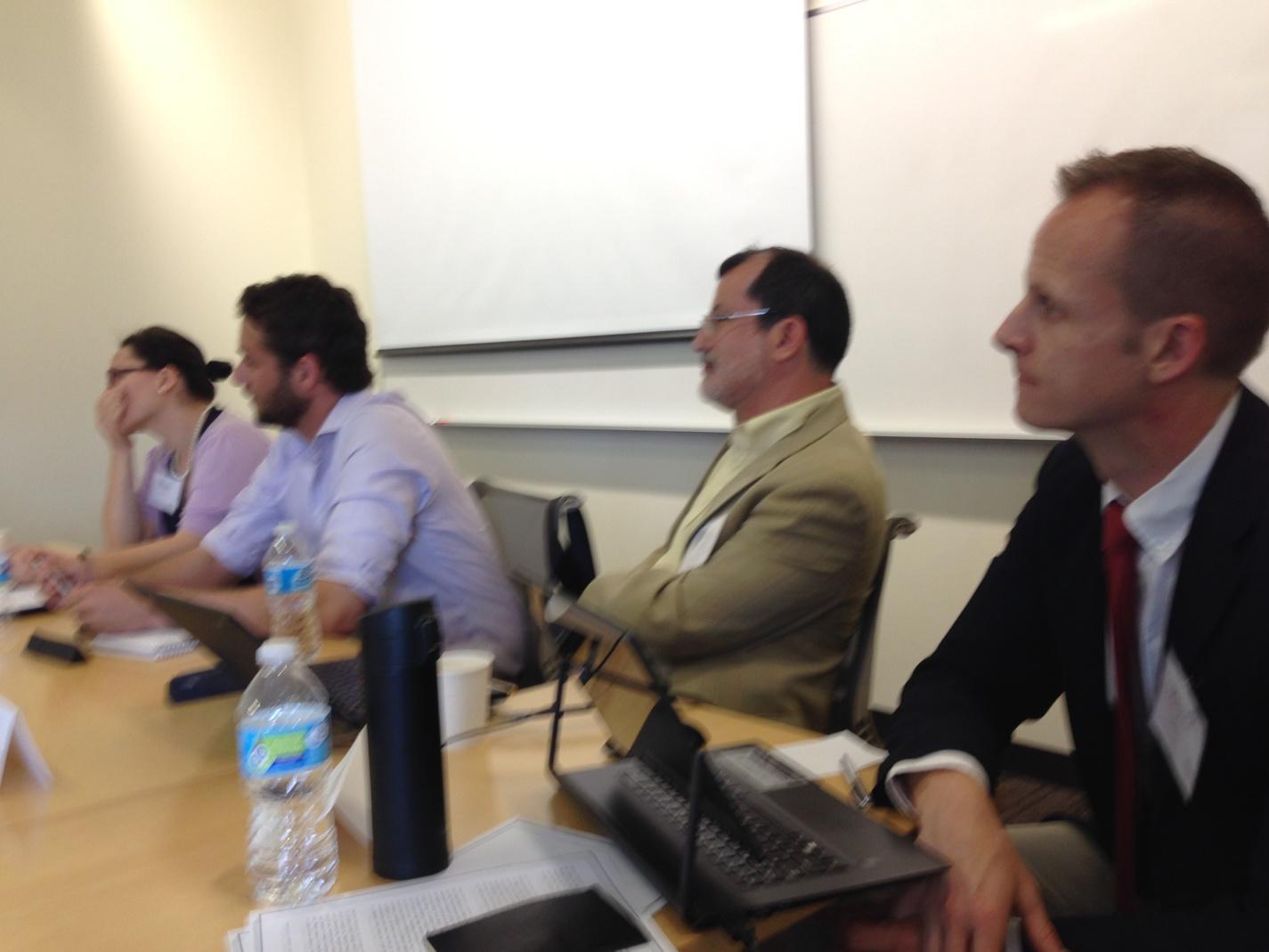 Yesterday, I had the chance to participate in the Bridging the Gap workshop led by Bruce Jentleson. It is an effort every summer to help younger scholars figure out how to engage the policy world in a variety of ways, including figuring out how to write and publish op-eds, how to get into government for short periods of time (like the Council on Foreign Relations International Affairs Fellowship that changed my career/life), how to engage think tanks and more.
I arrived the day before and watched other folks (Michael Horowitz, Emily Goldman, Peter Feaver) talk about their government experiences, and then heard some editors talk about writing for magazines (Jacob Heilbrunn of the National Interest [we knew each other long ago at Oberlin], Ben Pauker of Foreignpolicy.com, Steve Clemons of The Atlantic). I found both panels quite interesting and really enjoyed the deja vu from the first one as Mike and Peter, in particular, had experiences and reactions that were ones with which I heavily identified.
Anyhow, my job was, along with Ryan Evans of War on the Rocks and Kim Yi Dionne of the Monkey Cage, was to talk about blogging and other social media as well as the Online Media Caucus. What did I say?
That blogging is now in its third generation--from random folks having small audiences and mostly talking to each other, to more prominent folks engaging wider audiences, to now a proliferation not just of blogs but of blogging collectives (Monkey Cage, Duck of Minerva, Political Violence at a Glance, etc) where the challenge is now getting one's blog noticed in the crowded space.
I discussed some of the pro's and con's of blogging (which mostly also apply to twitter):

Should blogging/social media just be for tenured folks? No, because we all should be disseminating our knowledge. And blogging/twitter do lead to things like more citations, more engagement, more networking and this can actually help one get tenure as long as one does not see one's blog as a publication. It does not count as a pub but as service. Perhaps the easiest/least taxing/least risky way to blog as a junior faculty member or even student is to guest post. This allows one to stake claims and gain visibility without appearing to be wasting time on non-pubs (old attitudes linger among the dinosaurs who have tenure). For an engaging example of such a guest post, see this.
I also discussed twitter since I had heard they wanted more info on it. I did admit that twitter can be a time suck if one gets engaged in long conversations or watches one's feed too much. I insisted that not everyone should tweet but all scholars should be on twitter. Huh? That one can lurk and follow other researchers to learn about new research (I cited Jason Lyall as example) as well as follow key actors such as the NATO Secretary General (or my fave: @CanadaNATO and @USNATO) in one's research area, as well as the muse of the National Security twitter community (@morgfair). One can find out lots of stuff without ever tweeting.
But if you want to make connections to journalists, experts, government folks and the like, then engage on twitter. Ask them questions, retweet them if they say stuff that is interesting, offer one's views. It is because of my engagement of the aforementioned NATO folks that when I was in Brussels, I ended up having real contact with real people and talked about the current dynamics within NATO regarding Ukraine and Russia. I got in this business due to my curiosity--I want to know more about much--and twitter allows me to engage my curiosity in ways that foster my research and teaching and in ways that just entertain me.
How much can one say in 140 characters? This central mystery deters many people from twitter: I can barely say something in 8000 words, so 140c? My answer is that the 140 c constraint is a myth--as one can include links in tweets (to blog posts or whatever), that if pictures are a thousand words, then tweets can be a thousand words with the right pic attached, that one can have a series of tweets to make a point), and that conversations of 140c's back and forth add up to engagement.
I concluded by plugging the Online Media Caucus, as both an advocate for those who use online media and as a focal point for talking about research, teaching, service and engagement via online media--how to do it better, how to understand it better.
Despite recent events, I think that we need to engage beyond academia more, not less, and the Bridging the Gap effort is an excellent way to help those who are interested in doing so. I was glad I was able to attend and participate. Not a bad way to spend a hot week in DC.
Public Opinion and NATO: Some Europeans Are ... Weenies
This NYT piece reports on a survey that is causing much angina--that the populations of the big European countries are divided on "an attack upon one is an attack upon all." I have many reactions to this, so let me just bullet them:
* About the oldest pop culture reference I could make here.
UPDATE: See Dan Nexon's post on the limitations of the survey
- We cannot rely on the Germans, the Italians or the French? Really? Well, aside from the French, well, yeah, of course. I have already argued that having the Italians and the Germans be among the first contributors to the Very High Readiness Joint Task Force (VJTF) is quite problematic.
- Other publics are more NATO supportive: US, Canada (not entirely sure how the PM feels, but as long as there are diasporic votes in it), UK (with what military, given the deep, thoughtless cuts?), Poland (of course), and Spain (maybe this might mean less caveats).
- Seems like German reunification comes at a cost as much of the opposition comes from East Germany. Verrrrry interesting.*
- Putin's stances continue to play well among Russians even as the costs rise. Well, sanctions are not an instant fix. But the moves to hide the costs (banning reporting of the Russians killed in this adventure) suggests some vulnerability. Still, I don't expect Putin to make real peace in Ukraine.
- Which raises a question related to the "how implausible can plausible deniability be and still be useful"--how many violations of a ceasefire agreement can happen and still consider the agreement to be operative.
* About the oldest pop culture reference I could make here.
UPDATE: See Dan Nexon's post on the limitations of the survey
Monday, June 8, 2015
The Starting Points Visited and Re-visited
 |
| Manhattan looked great from the other side |
 |
| Twas a very modular main room--reconfigured again and again over the years. |
 Of course, the history of the US and its immigration is not all peaches and creme. I was glad to see several displays featuring the backlashes against immigration. No, I am not a fan of xenophobia even if it played a key role in the Bill and Steve book (being re-printed as a paperback this August thanks to our pal Putin).
 The timing was particularly apt as I recently got into an argument with a Canadian journalist who insisted that the US needed to make Spanish an official language of the US. Given that English is not an official language, this seemed strange to me. Indeed, after ten years in Quebec, I am more firmly convinced that the American strategy is the better one: rather than forcing folks to learn English, the US government lets the market and the society induce people to learn English. The great consistency over the centuries has been this: the first generation may not learn English but the second one will pick up enough and the third will be fluent. Which is why the picture to the right struck me: the many languages people spoke and wrote when they came over. Again, American history is chock full of conflict and the union still needs to be perfected, but there are some good reasons why people still want to move to the United States. I don't think Russia or China have the same pressures caused by people wanting to immigrate. People do indeed vote with their feet.
Maybe I am being overly patriotic because I found this while walking around Ellis Island:


We learned that these panels were not of all immigrants who went through, but those immigrants who entered somewhere and had family members recognize them (pay $, I suppose). Still, the idea that I was standing near where my ancestor came across more than a century ago gave me some chills.
And, of course, maybe it has to do with how beautiful the Lady was yesterday:

Saturday, June 6, 2015
The Ties That Divide Still Bind
In my work and in my life, I have always been quite critical and even cynical about religion. I have argued in my work that religion, like other ethnic ties, are used by politicians to distract and divide. Yet today as I was in the audience during a relative's religious rite of passage (Bar Mitzvah), I was struck by how much of the prayers, songs, chants and other rituals are burned into my brain.
 I hated going to services growing up, and spent most of my time in the synagogue figuring out how to climb to the top (twas a Frank Lloyd Wright design as you can see to the right). I stopped going to services after my Bar Mitzvah (which was a painful experience given how little I wanted to prepare for it) except for the high holiday services (Rosh Hashanah and Yom Kippur) when I was a teen and except for the occasional Bar Mitzvah of the next generation. Yet I found today's service (quite long) magnetic? That the songs and all the rest helped to generate a sense of commonality/community. Which is, of course, the point.
I still found myself outside more than inside. That even though I was born and raised in this community, I am an outsider as I do not believe. People can say that it is an ethnic community and one can belong even if one does not believe, but the core of the community is a shared belonging to a religious identity. While I remember how the songs are sung and how to say/chant the prayers, I do not do so because I am not willing to celebrate or promise my allegiance to this or any other god.
 And this reminds me that any identification creates a sense of us and them. I was very much a them today despite the appearances of us-ness--the garb, the physical similarities to those around me. I was reminded of the title to my first book and its snazzy cover that neatly demonstrated the concept--that ties that bring (some) people together are also divisive.
I participated because family is more important to me than religious identity or differences. But I was uncomfortable and always will be at occasions like this.... until we get to the eating and drinking part. Oh, and the occasional dancing is ok, too.
One of my cousin's asked me to Semi-Spew today, but I am not sure this is what he was looking for. Oh well, you get what you pay for.
 I hated going to services growing up, and spent most of my time in the synagogue figuring out how to climb to the top (twas a Frank Lloyd Wright design as you can see to the right). I stopped going to services after my Bar Mitzvah (which was a painful experience given how little I wanted to prepare for it) except for the high holiday services (Rosh Hashanah and Yom Kippur) when I was a teen and except for the occasional Bar Mitzvah of the next generation. Yet I found today's service (quite long) magnetic? That the songs and all the rest helped to generate a sense of commonality/community. Which is, of course, the point.
 I still found myself outside more than inside. That even though I was born and raised in this community, I am an outsider as I do not believe. People can say that it is an ethnic community and one can belong even if one does not believe, but the core of the community is a shared belonging to a religious identity. While I remember how the songs are sung and how to say/chant the prayers, I do not do so because I am not willing to celebrate or promise my allegiance to this or any other god.
 And this reminds me that any identification creates a sense of us and them. I was very much a them today despite the appearances of us-ness--the garb, the physical similarities to those around me. I was reminded of the title to my first book and its snazzy cover that neatly demonstrated the concept--that ties that bring (some) people together are also divisive.
I participated because family is more important to me than religious identity or differences. But I was uncomfortable and always will be at occasions like this.... until we get to the eating and drinking part. Oh, and the occasional dancing is ok, too.
One of my cousin's asked me to Semi-Spew today, but I am not sure this is what he was looking for. Oh well, you get what you pay for.
Friday, June 5, 2015
New Oversight Styling: The Independent Review Panel
This week, the Canadian government announced the "Independent Review Panel for Defence Acquisition." The Terms of Reference specify what the panel is and is not. The panel is an effort to improve the Canadian defence procurement project, but is only one part of a larger effort. I am interested in this panel for a few reasons:
The reason why this panel seems to be needed is that there is a credibility gap between the Canadian Forces and the government/parliament/public/media/etc: that the military has previously stated requirements it needs and has done so that has limited the options for procurement. My guess is that this panel is in part driven by F-35 regret--that perception that the Air Force had a particular outcome in mind and then designed the requirements to lead to that outcome.
This panel is designed to examine and challenge the assessments of the military long before it gets to contracts and the like--is there a real capability gap? What are the ways to fill it? Which leads to one of the big problems that this panel cannot fix: that the reigning policy statement that defines the threat environment and the basic missions of the Canadian Forces--the Canada First Defence Strategy [CFDS]--is obsolete. It has been overcome by events--most importantly the fiscal crisis that reduced funding for the military and the government's desire to fund the military. Other intervening events include the end of the Afghanistan mission, the new ISIS missions, and, oh yeah, the new Cold War with Russia (you can call it whatever you want, but Russia is not the friendly partner that folks might have been imagining in 2008 but an opportunistic, aggressive country engaged in provocative land grabs). But the panel's job is not to evaluate the threat environment nor how the government intends to deal with the threat environment but the capabilities and the lack of same in dealing with such threats. [Nor is the Panel revising the implications of the Jenkins report that makes industrial benefits (jobs/votes) a key priority in making decisions]
Back to item #1, I have found the various discussions very interesting and very relevant for the Steve/Phil/Dave project on legislatures and militaries, as this is very much about oversight. That the government has decided that the agent (the military) needs to be overseen better, given the procurement problems of the past and present. The innovation here is to have an independent panel (some retired public servants, some folks from industry who have severed any ties that might produce conflicts of interest, and one not so random academic) shine a spotlight on the early stages. The idea is not just investigate problematic statements of requirements but also to cause the military to anticipate the spotlight and thus compel the military to do a better job of developing their requirements and explaining them in non-military-ese. It also is somewhat an indictment of the parliament's ability to do oversight (which they often say is not their job).
The good news is also the bad news. The panel has the ear of the Minister as it is a creature/creation of the minister. Their reports will be advice to the Minister/Cabinet. This means they can be blunt. Which is good. The bad news? An effort to build confidence and trust in the procurement process will be entirely behind closed doors. Advice to ministers is the stuff that Access to Information Requests go to die--that these things do not come to light. Panelists can refuse to answer the questions of the Defence Committee as they are obligated to report only to the Minister. The members of parliament can ask the Minister what the panel said, but they cannot ask the panel what they tell the Minister.
So, the only way that the media, the public, and the parliament will develop more trust and confidence in the procurement process is if this panel does such a good job in scrubbing the statements of requirements and the options analyses that Canadian defence procurements stop having heaps of overruns, delays, and the like. Since the panel is only involved at the very start and much can go wrong even if they do a terrific job, it will be really hard to tell if this process works.
Still, the idea seems to be a good one, and the people chosen are sharp, responsible folks. I think it will improve Canadian procurement processes, but I am not sure that we (the public, random academics, etc) will ever be able to discern the impact of this panel given that this is a complex process and one that is still covered in secret sauce that parliamentarians cannot penetrate.
- These days, I am obsessed with oversight as that is the key issue at the core of the big project for the next five years (thanks SSHRC!).
- I have long been critical of Canadian defence procurement. But to be fair, all democracies mess this up, so it will be interesting to see how much this panel "fixes" it.
- My friend and co-author, Philippe Lagassé, is one of the panelists, so I will have much fun teasing him, trying to get him to spill the various beans.
The reason why this panel seems to be needed is that there is a credibility gap between the Canadian Forces and the government/parliament/public/media/etc: that the military has previously stated requirements it needs and has done so that has limited the options for procurement. My guess is that this panel is in part driven by F-35 regret--that perception that the Air Force had a particular outcome in mind and then designed the requirements to lead to that outcome.
This panel is designed to examine and challenge the assessments of the military long before it gets to contracts and the like--is there a real capability gap? What are the ways to fill it? Which leads to one of the big problems that this panel cannot fix: that the reigning policy statement that defines the threat environment and the basic missions of the Canadian Forces--the Canada First Defence Strategy [CFDS]--is obsolete. It has been overcome by events--most importantly the fiscal crisis that reduced funding for the military and the government's desire to fund the military. Other intervening events include the end of the Afghanistan mission, the new ISIS missions, and, oh yeah, the new Cold War with Russia (you can call it whatever you want, but Russia is not the friendly partner that folks might have been imagining in 2008 but an opportunistic, aggressive country engaged in provocative land grabs). But the panel's job is not to evaluate the threat environment nor how the government intends to deal with the threat environment but the capabilities and the lack of same in dealing with such threats. [Nor is the Panel revising the implications of the Jenkins report that makes industrial benefits (jobs/votes) a key priority in making decisions]
Back to item #1, I have found the various discussions very interesting and very relevant for the Steve/Phil/Dave project on legislatures and militaries, as this is very much about oversight. That the government has decided that the agent (the military) needs to be overseen better, given the procurement problems of the past and present. The innovation here is to have an independent panel (some retired public servants, some folks from industry who have severed any ties that might produce conflicts of interest, and one not so random academic) shine a spotlight on the early stages. The idea is not just investigate problematic statements of requirements but also to cause the military to anticipate the spotlight and thus compel the military to do a better job of developing their requirements and explaining them in non-military-ese. It also is somewhat an indictment of the parliament's ability to do oversight (which they often say is not their job).
The good news is also the bad news. The panel has the ear of the Minister as it is a creature/creation of the minister. Their reports will be advice to the Minister/Cabinet. This means they can be blunt. Which is good. The bad news? An effort to build confidence and trust in the procurement process will be entirely behind closed doors. Advice to ministers is the stuff that Access to Information Requests go to die--that these things do not come to light. Panelists can refuse to answer the questions of the Defence Committee as they are obligated to report only to the Minister. The members of parliament can ask the Minister what the panel said, but they cannot ask the panel what they tell the Minister.
So, the only way that the media, the public, and the parliament will develop more trust and confidence in the procurement process is if this panel does such a good job in scrubbing the statements of requirements and the options analyses that Canadian defence procurements stop having heaps of overruns, delays, and the like. Since the panel is only involved at the very start and much can go wrong even if they do a terrific job, it will be really hard to tell if this process works.
Still, the idea seems to be a good one, and the people chosen are sharp, responsible folks. I think it will improve Canadian procurement processes, but I am not sure that we (the public, random academics, etc) will ever be able to discern the impact of this panel given that this is a complex process and one that is still covered in secret sauce that parliamentarians cannot penetrate.
Wednesday, June 3, 2015
Speed Vs. Armor, Academic Style
One of the classic tradeoffs in building weapons is the tradeoff between speed and armor. The more protection a ship or tank or plane has, the slower it will go. Put on a belt of armor on a ship and it will be able to take more punishment but will be less likely to evade attacks. This was nicely illustrated in the Viper vs. the Mountain battle in last season's Game of Thrones.
 Why is this relevant today? Because I am trying to figure out what I would be doing if I had remained at Texas Tech. With students now being allowed to carry weapons in the classroom, the question for professors will become: do I wear armor or will that slow down my ability to dodge, dip, duck, dive and/or DRAW? That is, should one practice a speed draw so that one can shoot students who reach for their
 pens phones gun?
I guess profs will have to figure out their strengths and weaknesses. If they do not have quick reflexes, then armoring up is probably the way to go. I do wonder if infrastructure grants will allow one to spend money on kevlar podiums.
Another lecturing conundrum: should one stand behind the podium or move around? I tend to move around as I lecture, which means I wouldn't have the protection of a podium. On the other hand, hitting a moving target is more difficult. However, many of these students may have some hunting experience, and I would not be moving that fast.
Hmmm, difficult choices. Perhaps not letting folks walk around with guns might have been a better option?

I guess profs will have to figure out their strengths and weaknesses. If they do not have quick reflexes, then armoring up is probably the way to go. I do wonder if infrastructure grants will allow one to spend money on kevlar podiums.
Another lecturing conundrum: should one stand behind the podium or move around? I tend to move around as I lecture, which means I wouldn't have the protection of a podium. On the other hand, hitting a moving target is more difficult. However, many of these students may have some hunting experience, and I would not be moving that fast.
Hmmm, difficult choices. Perhaps not letting folks walk around with guns might have been a better option?
Tuesday, June 2, 2015
Baby, Bathwater, Fraud and Academic Outreach
Ah, the backlash has begun. Michael LaCour's fraud got bigger play because the original work got big play--not just in Science but in the media. Should this cause us to rethink engaging the public? Some are asking that. I believe this is throwing out the baby with the bathwater. How so?
First, there are limited lessons to be learned from LaCour-ghazi. It is becoming increasingly clear this was not the product of job market pressures but of pathology. If this is true, then whatever systematic problems we have in the discipline, this fraud (I would not call it a con job since that suggests something that is strategic rather than tactical, rational rather than pathological) is not a product of the machine and is likely to be rare rather than built into the next generation of professors (these kids today and all that crap).
Second, yes, sending out pre-peer-reviewed work for media attention is problematic when errors are found. But most of the public engagement these days, the stuff at Monkey Cage, the stuff at Duck of Minerva, etc, is actually about taking stuff that has survived peer-review and translating that into shorter, more accessible pieces that either mass publics or attentive publics or narrow groups of policy-types.
Third, much of the rest of public outreach is not of specific peer-reviewed works, but of the deployment of expert opinion. Blogs, op-eds, twitter, TV appearances, and the like are often not taking a piece of academic work and translating it, but of about asking an expert, identified by the body of work, to opine about events of the day. And with opinions, people have to take all of it with a grain of salt--that political scientists disagree with each other just as economists do. [When there is consensus (hey, let's not invade Iraq), it can get ignored if politically inconvenient.]
Fourth and most important, the alternative to widely disseminating and sharing new insights is what? Fostering ignorance? Protecting our information so that it does no harm if it might be wrong? Building up walls between scholars (since one or two of us might be frauds) and the real world? Exactly. There is no option but to share our research, especially when the funding comes from the public.
This does not mean we cannot do better--that we replicate, that we share data, that we remain more vigilant, that we ponder how peer review might have gone wrong. We can always do better. I prefer that path than choosing silence because what good is our enterprise, of creating knowledge, of providing better understandings of the world, if it must be kept in the tower, understood only by the monks who are privileged to read the sacred texts?
First, there are limited lessons to be learned from LaCour-ghazi. It is becoming increasingly clear this was not the product of job market pressures but of pathology. If this is true, then whatever systematic problems we have in the discipline, this fraud (I would not call it a con job since that suggests something that is strategic rather than tactical, rational rather than pathological) is not a product of the machine and is likely to be rare rather than built into the next generation of professors (these kids today and all that crap).
Second, yes, sending out pre-peer-reviewed work for media attention is problematic when errors are found. But most of the public engagement these days, the stuff at Monkey Cage, the stuff at Duck of Minerva, etc, is actually about taking stuff that has survived peer-review and translating that into shorter, more accessible pieces that either mass publics or attentive publics or narrow groups of policy-types.
Third, much of the rest of public outreach is not of specific peer-reviewed works, but of the deployment of expert opinion. Blogs, op-eds, twitter, TV appearances, and the like are often not taking a piece of academic work and translating it, but of about asking an expert, identified by the body of work, to opine about events of the day. And with opinions, people have to take all of it with a grain of salt--that political scientists disagree with each other just as economists do. [When there is consensus (hey, let's not invade Iraq), it can get ignored if politically inconvenient.]
Fourth and most important, the alternative to widely disseminating and sharing new insights is what? Fostering ignorance? Protecting our information so that it does no harm if it might be wrong? Building up walls between scholars (since one or two of us might be frauds) and the real world? Exactly. There is no option but to share our research, especially when the funding comes from the public.
This does not mean we cannot do better--that we replicate, that we share data, that we remain more vigilant, that we ponder how peer review might have gone wrong. We can always do better. I prefer that path than choosing silence because what good is our enterprise, of creating knowledge, of providing better understandings of the world, if it must be kept in the tower, understood only by the monks who are privileged to read the sacred texts?
Subscribe to:
Posts (Atom)